Close Menu
TechCentralTechCentral

    Subscribe to the newsletter

    Get the best South African technology news and analysis delivered to your e-mail inbox every morning.

    Facebook X (Twitter) YouTube LinkedIn
    WhatsApp Facebook X (Twitter) LinkedIn YouTube
    TechCentralTechCentral
    • News
      How AI agents are reshaping banking in South Africa - Lindelani Ramukumba, Absa

      How agentic AI is reshaping banking in South Africa

      5 April 2026
      South Africa's 5G boom is bypassing rural areas: Icasa

      South Africa’s 5G boom is bypassing rural areas: Icasa

      5 April 2026
      WhatsApp is eating South African operators' revenue

      WhatsApp is eating South African operators’ revenue

      4 April 2026
      DeepSeek V4 to run on Huawei silicon as China builds its own AI stack

      DeepSeek V4 to run on Huawei silicon as China builds its own AI stack

      4 April 2026
      Gaping holes in South African government cyber defences

      Gaping holes in South African government cyber defences

      2 April 2026
    • World
      Amazon in talks to buy satellite operator Globalstar

      Amazon in talks to buy satellite operator Globalstar

      2 April 2026

      Apple plans to open Siri to rival AI services

      27 March 2026
      It's official: ads are coming to ChatGPT

      It’s official: ads are coming to ChatGPT

      23 March 2026
      Mystery Chinese AI model revealed to be Xiaomi's

      Mystery Chinese AI model revealed to be Xiaomi’s

      19 March 2026
      A mystery AI model has developers buzzing

      A mystery AI model has developers buzzing

      18 March 2026
    • In-depth
      The biggest untapped EV market on Earth is hiding in plain sight

      The biggest untapped EV market on Earth is hiding in plain sight

      1 April 2026
      The R18-billion tech giant hiding in plain sight - Jens Montanana

      The R16-billion tech giant hiding in plain sight

      26 March 2026
      The last generation of coders

      The last generation of coders

      18 February 2026
      Sentech is in dire straits

      Sentech is in dire straits

      10 February 2026
      How liberalisation is rewiring South Africa's power sector

      How liberalisation is rewiring South Africa’s power sector

      21 January 2026
    • TCS
      TCS | MTN's Divysh Joshi on the strategy behind Pi - Divyesh Joshi

      TCS | MTN’s Divyesh Joshi on the strategy behind Pi

      1 April 2026
      Anoosh Rooplal

      TCS | Anoosh Rooplal on the Post Office’s last stand

      27 March 2026
      Meet the CIO | HealthBridge CTO Anton Fatti on the future of digital health

      Meet the CIO | Healthbridge CTO Anton Fatti on the future of digital health

      23 March 2026
      TCS+ | Arctic Wolf unpacks the evolving threat landscape for SA businesses - Clare Loveridge and Jason Oehley

      TCS+ | Arctic Wolf unpacks the evolving threat landscape for SA businesses

      19 March 2026
      TCS+ | Vox Kiwi: a wireless solution promising a fibre-like experience - Theo van Zyl

      TCS+ | Vox Kiwi: a wireless solution promising a fibre-like experience

      13 March 2026
    • Opinion
      The conflict of interest at the heart of PayShap's slow adoption - Cheslyn Jacobs

      The conflict of interest at the heart of PayShap’s slow adoption

      26 March 2026
      South Africa's energy future hinges on getting wheeling right - Aishah Gire

      South Africa’s energy future hinges on getting wheeling right

      10 March 2026
      Hold the doom: the case for a South African comeback - Duncan McLeod

      Apple just dropped a bomb on the Windows world

      5 March 2026
      VC's centre of gravity is shifting - and South Africa is in the frame - Alison Collier

      VC’s centre of gravity is shifting – and South Africa is in the frame

      3 March 2026
      Hold the doom: the case for a South African comeback - Duncan McLeod

      Hold the doom: the case for a South African comeback

      26 February 2026
    • Company Hubs
      • 1Stream
      • Africa Data Centres
      • AfriGIS
      • Altron Digital Business
      • Altron Document Solutions
      • Altron Group
      • Arctic Wolf
      • Ascent Technology
      • AvertITD
      • BBD
      • Braintree
      • CallMiner
      • CambriLearn
      • CYBER1 Solutions
      • Digicloud Africa
      • Digimune
      • Domains.co.za
      • ESET
      • Euphoria Telecom
      • HOSTAFRICA
      • Incredible Business
      • iONLINE
      • IQbusiness
      • Iris Network Systems
      • Kaspersky
      • LSD Open
      • Mitel
      • NEC XON
      • Netstar
      • Network Platforms
      • Next DLP
      • Ovations
      • Paracon
      • Paratus
      • Q-KON
      • SevenC
      • SkyWire
      • Solid8 Technologies
      • Telit Cinterion
      • Telviva
      • Tenable
      • Vertiv
      • Videri Digital
      • Vodacom Business
      • Wipro
      • Workday
      • XLink
    • Sections
      • AI and machine learning
      • Banking
      • Broadcasting and Media
      • Cloud services
      • Contact centres and CX
      • Cryptocurrencies
      • Education and skills
      • Electronics and hardware
      • Energy and sustainability
      • Enterprise software
      • Financial services
      • HealthTech
      • Information security
      • Internet and connectivity
      • Internet of Things
      • Investment
      • IT services
      • Lifestyle
      • Motoring
      • Policy and regulation
      • Public sector
      • Retail and e-commerce
      • Satellite communications
      • Science
      • SMEs and start-ups
      • Social media
      • Talent and leadership
      • Telecoms
    • Events
    • Advertise
    TechCentralTechCentral
    Home » Sections » Retail and e-commerce » Covid-19 crisis to lead to unprecedented digital disruption

    Covid-19 crisis to lead to unprecedented digital disruption

    By Ciaran Ryan14 April 2020
    Twitter LinkedIn Facebook WhatsApp Email Telegram Copy Link
    News Alerts
    WhatsApp

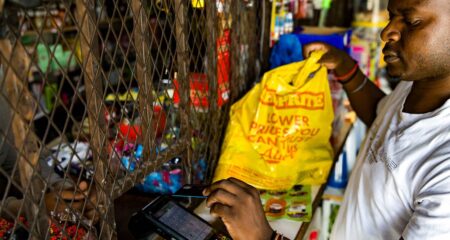
    Last month, Pick n Pay launched an online scheduled delivery service to help quarantined customers get their grocery essentials. Customers can select the products they want delivered routinely, and have them delivered on a set day of the week or month.

    Last week, it upped the ante, announcing the introduction of its new same-day grocery delivery app. This came shortly before President Cyril Ramaphosa announced that the country’s lockdown was being extended by two weeks – for a total of five weeks.

    In November last year, Shoprite launched a one-hour delivery service called Sixty60. Makro has offered online buying for years. Takealot resumed online selling of essential items at the start of this month, after a brief shutdown in March.

    South Africans do just 1.4% of their buying online according to card company Visa, but that figure is likely exploding during lockdown

    Officially, South Africans do just 1.4% of their buying online according to card company Visa, but that figure is likely exploding during lockdown.

    While the real economy could contract 10% for calendar 2020, it is already likely down 40-50% of normal production for this time of year and will require a robust reboot later in the year to salvage the country from an economic wipe-out.

    That’s not to say that segments of the economy aren’t booming. Content streaming services such as Netflix, anime content provider Funimation, Prime View and Disney+ couldn’t be happier as millions plonk themselves in front of screens to stave off boredom during lockdown.

    Online conferencing tools such as Microsoft Teams, Zoom, Google Hangouts and Slack are also having to scale up to handle a massive increase in new subscribers.

    IP traffic

    Global Internet protocol traffic, a proxy for data flows, grew from about 100GB/day in 1992 to more than 45TB/s in 2017. And the world is only in the early days of the data-driven economy; by 2022 global IP traffic is projected to reach 150.7TB/s, fuelled by more and more people coming online for the first time and by the expansion of the Internet of things. That’s according to the 2019 Digital Economy Report by the United Nations Conference on Trade and Industry.

    Conferences that were planned for this time of year have been postponed or have gone online. The South African Institute of Business Accountants (Saiba) moved its planned Practice Management Conference online, making it available to its 10 000-plus members scattered across the sub-continent.

    Nicolaas van Wyk, CEO of Saiba, says in years to come we will evaluate the world as pre- and post- Covid-19, in much the same way as our calendars refer to BC and AD.

    “Everything is digital now. Going digital was only a discussion point for many businesses but now it’s the only reality. A shrinking economy means fewer sales and if we want to maintain profit levels the only thing left is cost cutting. Digital technology empowers you to do this.

    “Our whole business environment is undergoing a cataclysmic transformation. As a result, we see clear fault lines appearing.

    “As a service organisation, we handle hundreds of membership applications each month. These will now all be automated. Support will be provided via video and robots with consultants having to focus on sales.”

    Service companies such as law firms, accountants and consultants have been subjected to a crash course in remote delivery and digitalisation

    Van Wyk says many companies will be forced to overhaul their remuneration models, with salaries based on sales rather than hours spent. Companies are going to have to work smarter and harder to attract clients.

    The post-Covid environment will drive convergence with a sense of urgency.

    “Combining and integrating service sectors will become the norm. As a professional body we will sell memberships, insurance and software,” he says.

    Even government departments are having to embrace digital engagement with urgency. While the South African Revenue Service has offered the electronic filing of tax returns for years, Namibia required source documents for VAT to be hand-delivered to its offices in Windhoek. Since lockdown, these can now be submitted electronically.

    Sars has closed its physical offices and opened electronic channels for virtually all services, including disputes, complaints, account queries and requests for statements of account.

    Rise of the fintechs

    Service companies such as law firms, accountants and consultants have been subjected to a crash course in remote delivery and digitalisation.

    Banks, too, are having to accelerate the roll-out of their digital platforms as reports abound of customers seeking loan repayment holidays being unable to speak to a banking consultant. This opens the door for online competitors and fintechs with more flexible lending arrangements that typically offered by banks.

    A Gartner survey of 192 chief financial officers and finance executives in small organisations suggests 54% of them plan to slow payment to vendors to preserve cash in the coming weeks. Larger organisations are already drawing down on existing credit lines, while smaller organisations are twice as likely as large organisations to withhold rent for April and May.

    Another Gartner study shows three-quarters of companies surveyed plan to shift some employees to remote working permanently as part of cost-cutting.

    Expect to see more office rental space going for bargain prices in the coming months, while real estate prices take a tumble. Fintech companies offering short-term financing to cash-strapped businesses are being slammed with online enquiries for help.

    The advantage some of these companies offer over traditional banking is a fully automated application process with a turnaround time of 90 minutes or less. For that the company applying needs QuickBooks Online or a similar accounting package, or if that’s not possible the company’s bank statements, which allow the fintech to plug into its financials and make a rapid risk assessment.

    Expect to see more office rental space going for bargain prices in the coming months, while real estate prices take a tumble

    Bridgement CEO Daniel Goldberg says the speed with which applications are assessed and money transferred to borrowers contrasts with the typical banking process, where reams of documents are required, often resulting in delays of weeks or even months before loan applications are accepted or rejected.

    “Especially in these times, businesses need quick turnaround times and a simple application process. They are struggling to meet their month-end payroll, and are having to stretch their creditors. They cannot wait weeks to find out if their application has been successful or not.”

    Bridgement’s average loan size is R500 000, either through revolving credit facilities or advances of up to R5-million available through its invoice discounting scheme.

    2.8x oversubscribed

    A week ago, Business Partners went live with its portal accepting applications for R25 000 grants and interest-free loans for 12 months (whereafter loans are charged at prime lending rates) but shut it down after a few days after being 2.8 times oversubscribed.

    Surprisingly, only 60% of the R100-million set aside for grants had been taken up, probably because of the need for sole proprietors to be tax compliant.

    Bridgement and other fintechs are less concerned about tax compliance or the so-called commercial solvency test being imposed on applicants for small business funding at Business Partners and other official providers of assistance to small businesses. Goldberg explains that solvency can easily be misinterpreted: many companies get through brief periods of insolvency as a result of seasonal trading patterns. Such tests do not mean it is unable to repay its bills.

    Another fintech riding the digital wave during lockdown is Merchant Capital, which has an online application process and an approval process that is usually completed in hours. Founder and CEO Dov Girnun says the company has seen a spike in enquiries for short-term funding as a result of the lockdown.

    “We’re not lending recklessly, and our focus right now is on essential businesses. For example, we are trying to support essential businesses with working capital to ensure they have sufficient stock on their shelves to match the demand. Supporting non-essential businesses such as a restaurant that is shut down because of the lockdown is more difficult.”

    Merchant Capital’s loan repayment model also makes it attractive for businesses that might have short-term cash flow problems, particularly for retailers: it takes a small percentage of every card or electronic purchase until the loan is settled, which makes it less painful for business owners who are experiencing lower turnover due to the Covid-19 pandemic.

    Confronted with this emergency, companies can now attack costs in a way that was inconceivable just two months ago

    Once 70% of the loan has been repaid, the borrower qualifies for a new loan on the same terms or better. Four out of five borrowers come back for second or third loans as their business expansion requires, says Girnun.

    It’s naive to imagine the world will return to normal once the Covid-19 crisis has passed.

    Virtually every aspect of our working lives will have changed. Bills will be delayed and some may never be paid as potentially thousands of businesses go bust. Workers will be nervous about their jobs and union power will surely be weakened. Confronted with this emergency, however, companies can now attack costs in a way that was inconceivable just two months ago, through enhanced use of technology.

    As some doors close, others are opening – and they are increasingly likely to be online.

    • This article was originally published on Moneyweb and is used here with permission

    Follow TechCentral on Google News Add TechCentral as your preferred source on Google


    Bridgement Checkers Daniel Goldberg Nicolaas van Wyk Pick n Pay Saiba Sars Shoprite top
    WhatsApp YouTube
    Share. Facebook Twitter LinkedIn WhatsApp Telegram Email Copy Link
    Previous ArticleApple, Google contact tracing will require verification
    Next Article Covid-19 will drive big changes in digital customer service

    Related Posts

    Sars to give every taxpayer a digital identity in sweeping tech overhaul

    Sars to give every taxpayer a digital identity in sweeping tech overhaul

    1 April 2026
    Shoprite takes majority stake in R&A Cellular

    Shoprite takes majority stake in R&A Cellular

    16 March 2026
    AI is coming to your accounting software

    Sage bets AI can save small business owners from admin hell

    13 March 2026
    Company News
    Synthesis helps financial enterprises transform with new Gemini Enterprise - Digicloud Africa

    Synthesis helps financial enterprises transform with new Gemini Enterprise

    2 April 2026
    The next churn wave is already in your contact centre conversations - CallMiner

    The next churn wave is already in your contact centre conversations

    2 April 2026
    Mining's problem isn't output, it's execution - Workday

    Mining’s problem isn’t output, it’s execution – Workday

    1 April 2026
    Opinion
    The conflict of interest at the heart of PayShap's slow adoption - Cheslyn Jacobs

    The conflict of interest at the heart of PayShap’s slow adoption

    26 March 2026
    South Africa's energy future hinges on getting wheeling right - Aishah Gire

    South Africa’s energy future hinges on getting wheeling right

    10 March 2026
    Hold the doom: the case for a South African comeback - Duncan McLeod

    Apple just dropped a bomb on the Windows world

    5 March 2026

    Subscribe to Updates

    Get the best South African technology news and analysis delivered to your e-mail inbox every morning.

    Latest Posts
    How AI agents are reshaping banking in South Africa - Lindelani Ramukumba, Absa

    How agentic AI is reshaping banking in South Africa

    5 April 2026
    South Africa's 5G boom is bypassing rural areas: Icasa

    South Africa’s 5G boom is bypassing rural areas: Icasa

    5 April 2026
    WhatsApp is eating South African operators' revenue

    WhatsApp is eating South African operators’ revenue

    4 April 2026
    DeepSeek V4 to run on Huawei silicon as China builds its own AI stack

    DeepSeek V4 to run on Huawei silicon as China builds its own AI stack

    4 April 2026
    © 2009 - 2026 NewsCentral Media
    • Cookie policy (ZA)
    • TechCentral – privacy and Popia

    Type above and press Enter to search. Press Esc to cancel.

    Manage consent

    TechCentral uses cookies to enhance its offerings. Consenting to these technologies allows us to serve you better. Not consenting or withdrawing consent may adversely affect certain features and functions of the website.

    Functional Always active
    The technical storage or access is strictly necessary for the legitimate purpose of enabling the use of a specific service explicitly requested by the subscriber or user, or for the sole purpose of carrying out the transmission of a communication over an electronic communications network.
    Preferences
    The technical storage or access is necessary for the legitimate purpose of storing preferences that are not requested by the subscriber or user.
    Statistics
    The technical storage or access that is used exclusively for statistical purposes. The technical storage or access that is used exclusively for anonymous statistical purposes. Without a subpoena, voluntary compliance on the part of your Internet Service Provider, or additional records from a third party, information stored or retrieved for this purpose alone cannot usually be used to identify you.
    Marketing
    The technical storage or access is required to create user profiles to send advertising, or to track the user on a website or across several websites for similar marketing purposes.
    • Manage options
    • Manage services
    • Manage {vendor_count} vendors
    • Read more about these purposes
    View preferences
    • {title}
    • {title}
    • {title}