

Close Menu
TechCentralTechCentral

    Subscribe to the newsletter

    Get the best South African technology news and analysis delivered to your e-mail inbox every morning.

    Facebook X (Twitter) YouTube LinkedIn
    WhatsApp Facebook X (Twitter) LinkedIn YouTube
    TechCentralTechCentral
    • News
      Digital authoritarianism grows as African states normalise internet blackouts

      Digital authoritarianism grows as African states normalise internet blackouts

      19 December 2025
      Starlink satellite anomaly creates debris in rare orbital mishap

      Starlink satellite anomaly creates debris in rare orbital mishap

      19 December 2025
      TechCentral's South African Newsmakers of 2025

      TechCentral’s South African Newsmakers of 2025

      18 December 2025
      Malatsi buries Post Office's long-dead monopoly

      Malatsi buries Post Office monopoly the market ignored

      18 December 2025
      China races to crack EUV as chip war with the West intensifies

      China races to crack EUV lithography as chip war with the West intensifies

      18 December 2025
    • World
      Trump space order puts the moon back at centre of US, China rivalry - US President Donald Trump

      Trump space order puts the moon back at centre of US, China rivalry

      19 December 2025
      Warner Bros slams the door on Paramount

      Warner Bros slams the door on Paramount

      17 December 2025
      X moves to block bid to revive Twitter brand

      X moves to block bid to revive Twitter brand

      17 December 2025
      Oracle’s AI ambitions face scrutiny on earnings miss

      Oracle’s AI ambitions face scrutiny on earnings miss

      11 December 2025
      China will get Nvidia H200 chips - but not without paying Washington first

      China will get Nvidia H200 chips – but not without paying Washington first

      9 December 2025
    • In-depth
      Black Friday goes digital in South Africa as online spending surges to record high

      Black Friday goes digital in South Africa as online spending surges to record high

      4 December 2025
      Canal+ plays hardball - and DStv viewers feel the pain

      Canal+ plays hardball – and DStv viewers feel the pain

      3 December 2025
      Jensen Huang Nvidia

      So, will China really win the AI race?

      14 November 2025
      Valve's Linux console takes aim at Microsoft's gaming empire

      Valve’s Linux console takes aim at Microsoft’s gaming empire

      13 November 2025
      iOCO's extraordinary comeback plan - Rhys Summerton

      iOCO’s extraordinary comeback plan

      28 October 2025
    • TCS
      TCS+ | Africa's digital transformation - unlocking AI through cloud and culture - Cliff de Wit Accelera Digital Group

      TCS+ | Cloud without culture won’t deliver AI: Accelera’s Cliff de Wit

      12 December 2025
      TCS+ | How Cloud on Demand helps partners thrive in the AWS ecosystem - Odwa Ndyaluvane and Xenia Rhode

      TCS+ | How Cloud On Demand helps partners thrive in the AWS ecosystem

      4 December 2025
      TCS | MTN Group CEO Ralph Mupita on competition, AI and the future of mobile

      TCS | Ralph Mupita on competition, AI and the future of mobile

      28 November 2025
      TCS | Dominic Cull on fixing South Africa's ICT policy bottlenecks

      TCS | Dominic Cull on fixing South Africa’s ICT policy bottlenecks

      21 November 2025
      TCS | BMW CEO Peter van Binsbergen on the future of South Africa's automotive industry

      TCS | BMW CEO Peter van Binsbergen on the future of South Africa’s automotive industry

      6 November 2025
    • Opinion
      Netflix, Warner Bros deal raises fresh headaches for MultiChoice - Duncan McLeod

      Netflix, Warner Bros deal raises fresh headaches for MultiChoice

      5 December 2025
      BIN scans, DDoS and the next cybercrime wave hitting South Africa's banks - Entersekt Gerhard Oosthuizen

      BIN scans, DDoS and the next cybercrime wave hitting South Africa’s banks

      3 December 2025
      Your data, your hardware: the DIY AI revolution is coming - Duncan McLeod

      Your data, your hardware: the DIY AI revolution is coming

      20 November 2025
      Zero Carbon Charge founder Joubert Roux

      The energy revolution South Africa can’t afford to miss

      20 November 2025
      It's time for a new approach to government IT spend in South Africa - Richard Firth

      It’s time for a new approach to government IT spend in South Africa

      19 November 2025
    • Company Hubs
      • Africa Data Centres
      • AfriGIS
      • Altron Digital Business
      • Altron Document Solutions
      • Altron Group
      • Arctic Wolf
      • AvertITD
      • Braintree
      • CallMiner
      • CambriLearn
      • CYBER1 Solutions
      • Digicloud Africa
      • Digimune
      • Domains.co.za
      • ESET
      • Euphoria Telecom
      • Incredible Business
      • iONLINE
      • IQbusiness
      • Iris Network Systems
      • LSD Open
      • NEC XON
      • Netstar
      • Network Platforms
      • Next DLP
      • Ovations
      • Paracon
      • Paratus
      • Q-KON
      • SevenC
      • SkyWire
      • Solid8 Technologies
      • Telit Cinterion
      • Tenable
      • Vertiv
      • Videri Digital
      • Vodacom Business
      • Wipro
      • Workday
      • XLink
    • Sections
      • AI and machine learning
      • Banking
      • Broadcasting and Media
      • Cloud services
      • Contact centres and CX
      • Cryptocurrencies
      • Education and skills
      • Electronics and hardware
      • Energy and sustainability
      • Enterprise software
      • Financial services
      • Information security
      • Internet and connectivity
      • Internet of Things
      • Investment
      • IT services
      • Lifestyle
      • Motoring
      • Public sector
      • Retail and e-commerce
      • Satellite communications
      • Science
      • SMEs and start-ups
      • Social media
      • Talent and leadership
      • Telecoms
    • Events
    • Advertise
    TechCentralTechCentral
    Home » Sections » Internet and connectivity » Digital authoritarianism grows as African states normalise internet blackouts

    Digital authoritarianism grows as African states normalise internet blackouts

    Internet shutdowns are increasing dramatically across the Africa continent – a new book explains why.
    By The Conversation19 December 2025
    Twitter LinkedIn Facebook WhatsApp Email Telegram Copy Link
    News Alerts
    WhatsApp

    Digital authoritarianism grows as African states normalise internet blackouts

    Between 2016 and 2024, there were 193 internet shutdowns imposed in 41 African countries. This form of social control is a growing trend in the continent, according to a new open-access source book. It has provided the first-ever comparative analysis of how and why African states use blackouts – written by African researchers.

    The book, co-edited by digital rights activist and internet shutdown specialist Felicia Anthonio and digital researcher Tony Roberts, offers 11 in-depth case studies of state-sponsored shutdowns. We asked five questions about it.

    How do you define an internet shutdown and why do they happen?

    Put simply, an internet shutdown is an intentional disruption of online or mobile communications. They’re usually ordered by the state and implemented by private companies, internet service providers or mobile phone companies, or a combination of those.

    The book argues that internet shutdowns are not legal, necessary or proportional in accordance with international human rights law. Shutdowns intentionally prevent the free flow of information and communication. They disrupt online social, economic and political life. So, each internet shutdown typically violates the fundamental human rights of millions of citizens. This includes their rights to freedom of expression, trade and commerce, democratic debate, and civic participation online.

    Our research looked at case studies from 11 countries between 2016 and 2024. It reveals these shutdowns are timed to coincide with elections or peaceful protests in order to repress political opposition and prevent online reporting.

    • In Senegal five politically motivated shutdowns in just three years transformed the country’s digital landscape. It cut off citizens’ access to online work, education and healthcare information.
    • The Uganda chapter shows how the government-imposed social media is shut down during elections. They were fearful of dissenting voices online including that of musician and politician Bobi Wine.
    • In Ethiopia internet shutdowns are timed to coincide with opposition protests and to prevent live coverage of state violent repression.
    • In Zimbabwe, the government cut off the internet in 2019 to quell anti-government demonstrations.

    It should be a concern that regimes are imposing these digital authoritarian practices with increasing frequency and with impunity.

    What are the big trends?

    The report warns that internet shutdowns are being used to retain power through authoritarian controls. Across Africa, governments are normalising their use to suppress dissent, quell protests and manipulate electoral outcomes.

    These blackouts are growing in scale and frequency from a total of 14 shutdowns in 2016 to 28 shutdowns in 2024. There have been devastating consequences in an ever-more digitally connected world.

    Internet shutdowns have also increased in sophistication. Partial shutdowns can target specific provinces or websites, so that opposition areas can be cut off. In recent years foreign states, military regimes and warring parties have also resorted to the use of internet shutdown as a weapon of war. This was done by targeting and destroying telecommunications infrastructure.

    Ethiopia has experienced the most internet shutdowns in Africa – 30 in the last 10 years. They’ve become a go-to tactic of the state in its attempt to silence dissent in the Oromo and Amhara regions. Shutdowns are timed to coincide with state crackdowns on protests or with military actions – preventing live reporting of human rights violations. Ethiopia is a clear example of how internet shutdowns both reflect and amplify existing political and ethnic power interests.

    Zimbabwe is one of many examples in the book of the colonial roots of shutdowns. The first media shutdowns in Zimbabwe were imposed by the British, who closed newspapers to silence calls for political independence. After liberation, the new government used its own authoritarian control over the media to disseminate disinformation and curtail opposition calls for justice and full democracy.

    Towards the end of former President Robert Mugabe’s rule, the government imposed a variety of nationwide internet shutdowns. It also throttled the speed of the mobile internet, degrading the service enough to significantly disrupt opposition expression and organisation.

    Sudan has experienced 21 internet shutdowns in the last decade. These have increased in recent years as the political and military action has intensified. Intentional online disruption has been consistently deployed by the state during protests and periods of political unrest, particularly in response to resistance movements and civil uprisings during the ongoing conflict.

    Has there been effective resistance to shutdowns?

    Activists resist by using virtual private network software (VPNs) to disguise their location. Or by using satellite connections not controlled by the government and foreign Sim cards. They also mobilise offline protests despite violent repression.

    Nigeria has not suffered the same volume of internet shutdowns as Sudan or Ethiopia. This is partly because civil society is stronger and is able to mount a more robust response in the face of state disruption of the right to free expression. When an internet shutdown has been imposed in Nigeria, the state has not enjoyed the same impunity as the government in Zimbabwe or elsewhere.

    When Nigerians were unable to work online or participate in the online social and political life of the community, they took decisive action by acting collectively. They selectively litigated against the government. This led to the courts ruling that the internet shutdown was not lawful, necessary or proportionate. The government was forced to lift the ban.
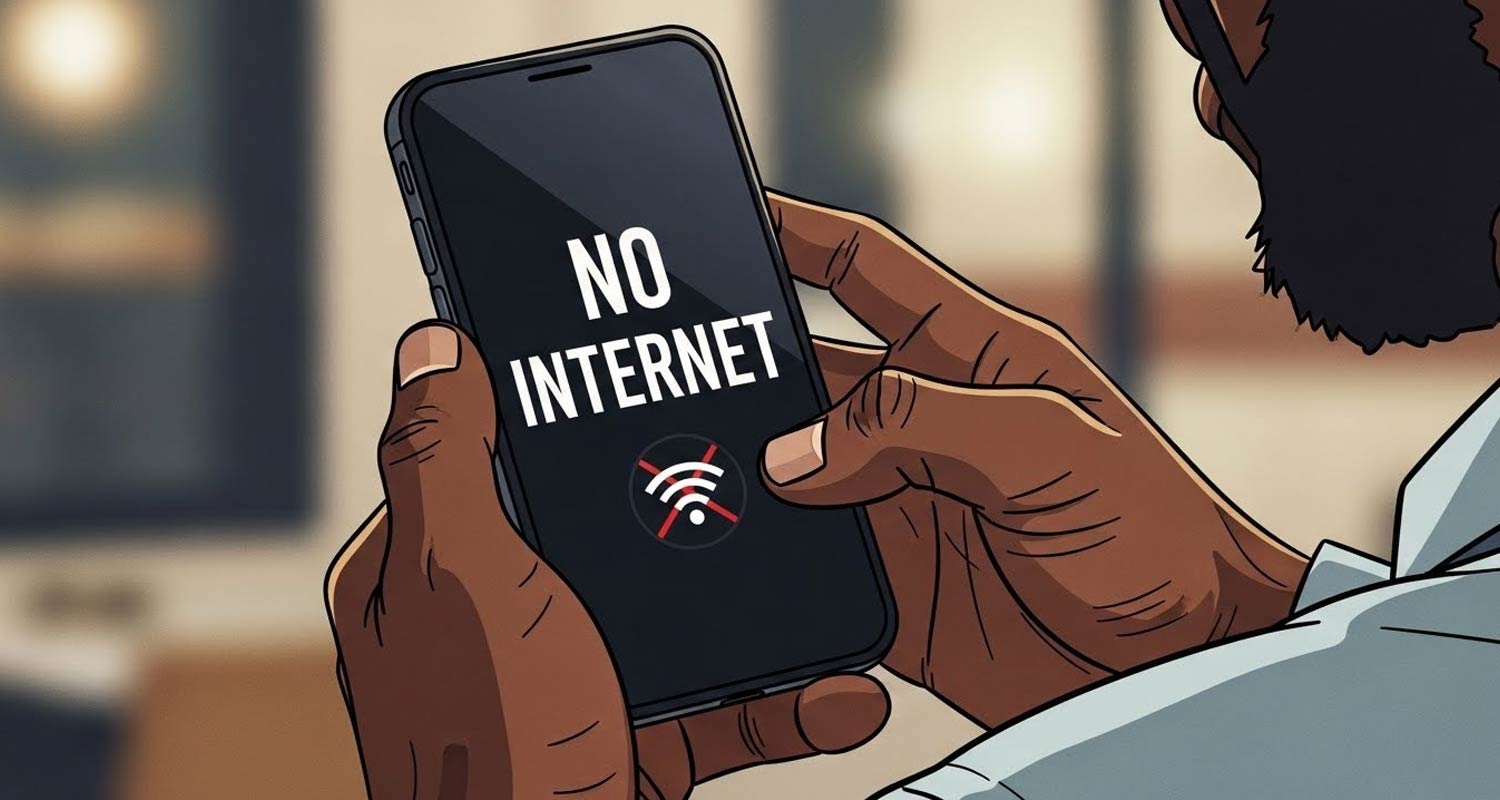
    Digital authoritarianism grows as African states normalise internet blackouts

    How has 2025 fared when it comes to shutdowns?

    We have seen both positive and negative trends in 2025. The total number of internet shutdowns across the continent continues to grow. The increasing ability of regimes to narrowly target shutdowns on specific areas is of great concern as it allows the state to punish opposition areas while privileging others.

    On the positive side, we have seen resistance rise: both in terms of the use of circumvention technologies but also in the emerging ability of civil society organisations to stand up to repressive governments.

    What must happen to prevent shutdowns?

    The right to work, freedom of expression and association, and the right to access education are fundamental human rights both offline and online. African governments are signatories to both the Universal Convention on Human Rights and to the Africa Union Charter on Human and People’s Rights. Yet, politicians in power too often ignore these commitments to preserve their personal hold on power.

    In some African countries, citizens are now exercising their own power to hold governments to account but this is easier in countries that have strong civil society, independent courts and relatively free media. Even where this is not the case the constitutional court is an option for raising objections when the state curtails fundamental freedoms.

    And while it is states that order internet shutdowns, it is private mobile and internet companies that implement them. Private companies have obligations to promote and protect human rights. If companies agreed collectively not to contribute to rights violations and refused to impose internet shutdowns, it would be a great leap forward in ending this authoritarian practice.The Conversation

    • The author, Tony Roberts, is digital research fellow, Institute of Development Studies
    • This article is republished from The Conversation under a Creative Commons licence. Read the original article


    Institute of Development Studies Tony Roberts
    Subscribe to TechCentral Subscribe to TechCentral
    Share. Facebook Twitter LinkedIn WhatsApp Telegram Email Copy Link
    Previous ArticleStarlink satellite anomaly creates debris in rare orbital mishap
    Company News
    Why TechCentral is the most powerful platform for reaching IT decision makers

    Why TechCentral is the most powerful platform for reaching IT decision makers

    17 December 2025
    Business trends to watch in 2026 - Domains.co.za

    Business trends to watch in 2026

    17 December 2025
    MTN Zambia launches world's first 4G cloud smartphone solution - Huawei

    MTN Zambia launches world’s first 4G cloud smartphone solution

    17 December 2025
    Opinion
    Netflix, Warner Bros deal raises fresh headaches for MultiChoice - Duncan McLeod

    Netflix, Warner Bros deal raises fresh headaches for MultiChoice

    5 December 2025
    BIN scans, DDoS and the next cybercrime wave hitting South Africa's banks - Entersekt Gerhard Oosthuizen

    BIN scans, DDoS and the next cybercrime wave hitting South Africa’s banks

    3 December 2025
    Your data, your hardware: the DIY AI revolution is coming - Duncan McLeod

    Your data, your hardware: the DIY AI revolution is coming

    20 November 2025

    Subscribe to Updates

    Get the best South African technology news and analysis delivered to your e-mail inbox every morning.

    Latest Posts
    Digital authoritarianism grows as African states normalise internet blackouts

    Digital authoritarianism grows as African states normalise internet blackouts

    19 December 2025
    Starlink satellite anomaly creates debris in rare orbital mishap

    Starlink satellite anomaly creates debris in rare orbital mishap

    19 December 2025
    Trump space order puts the moon back at centre of US, China rivalry - US President Donald Trump

    Trump space order puts the moon back at centre of US, China rivalry

    19 December 2025
    TechCentral's South African Newsmakers of 2025

    TechCentral’s South African Newsmakers of 2025

    18 December 2025
    © 2009 - 2025 NewsCentral Media
    • Cookie policy (ZA)
    • TechCentral – privacy and Popia

    Type above and press Enter to search. Press Esc to cancel.

    Manage consent

    TechCentral uses cookies to enhance its offerings. Consenting to these technologies allows us to serve you better. Not consenting or withdrawing consent may adversely affect certain features and functions of the website.

    Functional Always active
    The technical storage or access is strictly necessary for the legitimate purpose of enabling the use of a specific service explicitly requested by the subscriber or user, or for the sole purpose of carrying out the transmission of a communication over an electronic communications network.
    Preferences
    The technical storage or access is necessary for the legitimate purpose of storing preferences that are not requested by the subscriber or user.
    Statistics
    The technical storage or access that is used exclusively for statistical purposes. The technical storage or access that is used exclusively for anonymous statistical purposes. Without a subpoena, voluntary compliance on the part of your Internet Service Provider, or additional records from a third party, information stored or retrieved for this purpose alone cannot usually be used to identify you.
    Marketing
    The technical storage or access is required to create user profiles to send advertising, or to track the user on a website or across several websites for similar marketing purposes.
    • Manage options
    • Manage services
    • Manage {vendor_count} vendors
    • Read more about these purposes
    View preferences
    • {title}
    • {title}
    • {title}