Discovery Bank is cementing its place as a serious digital challenger in the South African market. In its full-year results released published last week, for the period ending 30 June 2025, the bank reported positive customer growth numbers, even breaking even for the first time.
In this in-depth interview, Discovery Bank CEO Hylton Kallner tells TechCentral’s Nkosinathi Ndlovu and Duncan McLeod about the progress it has made in its strategy, where its newly acquired customers are coming from, his views on upcoming changes to the National Payment System, the role of stablecoins and cryptocurrencies, and more.
TechCentral: Where is Discovery Bank now relative to its business plan?
Hylton Kallner: We’re ahead in terms of virtually every metric: client growth has outpaced the business plan, we’ve broken even ahead of plan and capital [spending] has been below plan. Also, the balance sheet, particularly in deposits, is ahead of plan.
Qualitatively, the bank is far ahead of what we expected when we set out to build it. The bank’s progression qualitatively has thus far exceeded expectation in terms of the relevance to the group and the appeal to all South Africans, outside of the immediate Discovery ecosystem and client base.
The product offering, I think, is much broader and wider than what we would have probably anticipated. Everything in the bank has played out pleasingly and ahead of expectation.
Customers
TC: What about the customers you are bringing on board; what sort of LSM are they and is that the LSM you were initially targeting when you launched the bank? Allied to that, do you have plans to compete in the mass market as the years progress?
HK: What’s interesting about the bank is it’s appealed across the income, age and demographic spectrum. The client base today reflects pretty much the norms across South Africa. The product suite is broad enough that there’s almost a product for everybody.
We tend to over-index slightly in the young professional/graduate market where I think the digital nature of the product tends to have real appeal. People that live online and have grown up with mobile phones wouldn’t dream of walking into a bank to do their banking.
Read: Discovery Bank launches panic code to combat banking app kidnappings
We over-index in the private banking segment as well – so right at the top end. There we have strong market share with our “purple” product range. It’s interesting that we we’re over-indexing slightly in both extremes, but we are still attracting clients from across the entire spectrum in between. So, I guess we are really playing in the mainstream market.
What’s interesting as well is we bias towards the urban centres where you have higher economically active proportions of our population. But we have clients across the whole of South Africa because we are not bound by physical branches, so the product tends to play well whether you are living in an urban centre or outside as well.
 TC: Do you see yourself ever targeting that mass market, semi-banked to unbanked segment that the likes of TymeBank and maybe Capitec, to some extent, have gone after, or is that not Discovery’s space?
HK: I think that the nature of the offering is pretty comprehensive; it talks more to people who are aspiring to be financially healthy and that tends to be income agnostic. The only segment that maybe we don’t tend to have significant take up in is the lowest, unbanked segment.
TC: How many customers do you have on your books now and where are your next million customers going to come from?
HK: We have about 1.3 million clients in Discovery Bank. We’re growing at about 1 300 a day and about two-thirds of those, so just under a thousand or so, are completely new to the group.
That we are growing much faster outside of the Discovery ecosystem than among those who are already Discovery clients talks to the that broad appeal of the [banking] product. When you think about it that way, there’s a lot of runway and a lot of opportunity for the bank to continue to grow.
TC: It sounds like there’s a cross-sell opportunity there as well. If many of these new customers are coming from outside the bank, you can then start to sell them other Discovery products.
HK: That’s exactly the opportunity that we see now. A lot of the products offered across the group are completely available in the banking app, including the behavioural rewards that that manifest for our clients, like if they are physically active and earn miles for achieving their weekly fitness goals.
What’s now almost flipped over is the fact that the proportion of clients in the bank who don’t have another Discovery product is the same or larger than those that do. So, the opportunity has almost reversed from, ‘Let’s offer bank products to our existing client base’, to ‘Let’s offer Discovery products to the bank client base.’ That’s the real high-growth opportunity that we now see. In time, you’ll see that you’ll be able to activate all of the other group products directly in the bank app itself.
…article continues below…
 TC: Is the data you’re able to collect through the banking app helping build the profiles that will then inform the decisions you make on insurance and your other products?
HK: For sure, the data is just incredible. Motor insurance, for example, is interesting because we can make inferences based on how you how you spend in your bank account. We can measure how far you typically would be driving, when you are most likely to be driving, and so on. We have geolocated every single point-of-sale device in the country and through that data we are able to calculate key indicators and risk factors for motor insurance.
The sophistication in our motor insurance product is such that we know which roads have more potholes than others and therefore have higher claims associated with them. So, all those things coalesce to allow us to offer clients of the bank the most accurate motor insurance premium possible without any additional information.
We also see correlations, like people that manage their health well typically manage their finances well and so we can offer them a lower cost of credit. All that data is unique and it’s the biggest data set of its kind globally. So, it is truly an asset.
TC: What is your take on what’s happening in the payment space in South Africa. We’ve seen the launch, or the renaming, of BankservAfrica to PayInc and the Reserve Bank’s investment there. Is Discovery Bank a shareholder?
HK: No, not yet, but I think there are plans to broaden the ownership so we see an opportunity there.
TC: Clearly the Reserve Bank thinks there a big opportunity in the payments space here, especially considering what has happened in Brazil, India and elsewhere. What is your take on what we’ve seen so far with PayShap and where do you see the tech-led payment space going in the next few years?
HK: We were the earliest adopter of PayShap at scale in the industry. And the way that we did that was we automatically routed all real-time payments onto the PayShap rails, even if a PayShap ID wasn’t used or the client didn’t select PayShap as a payment method.
We were unique in, in that sense, in that we didn’t require clients to change their behaviour. All our customers were automatically opted in for PayShap because it was and remains the cheapest payment rail. You didn’t have to change anything about how you pay.
PayShap rails
Overnight, we moved over 95% of our real-time payments onto PayShap rails. So, for the longest of time, we were the biggest users of PayShap, despite the fact that we were a small start-up bank at the time.
What we demonstrated is you don’t need to necessarily legislate or regulate or have ownership of the system; all you need are really good customer journeys to effectively change the way that the payment systems are running for the benefit of clients.
About 6% of our PayShap payments are to PayShap IDs. Most go directly to a bank account via actual beneficiary details. That’s also because a lot of our clients had beneficiary details captured already.
 TC: What do you think of what the Reserve Bank is doing to try to open up the payments space? In places like India, for example, that you can make a person-to-person payment in WhatsApp.
HK: We will certainly facilitate that. That’s a good example, because our WhatsApp channel is fully AI driven, with sophisticated capabilities. It allows for detailed analytics, but the next phase of that will be true agentic AI services, where you’ll be able to give an instruction to make a payment to one of your beneficiaries, or an invoice, for example, that you’ve received in one of your other WhatsApp chats.
And once you get that right, then you don’t have to change the payments system itself. Effectively you’re just bridging the gap between the client and the channel that they’re in and the payment rails themselves.
TC: There are risks with using agentic AI. We know about the hallucination problems with AI, that it makes mistakes. Do you have human beings checking all this stuff?
HK: An instruction to pay is pretty objective, so that’s really clear. Also, we’ll always reflect it back to the client to confirm. For more ambiguous tasks and requests, we’ve got very, very tough guardrails in place.
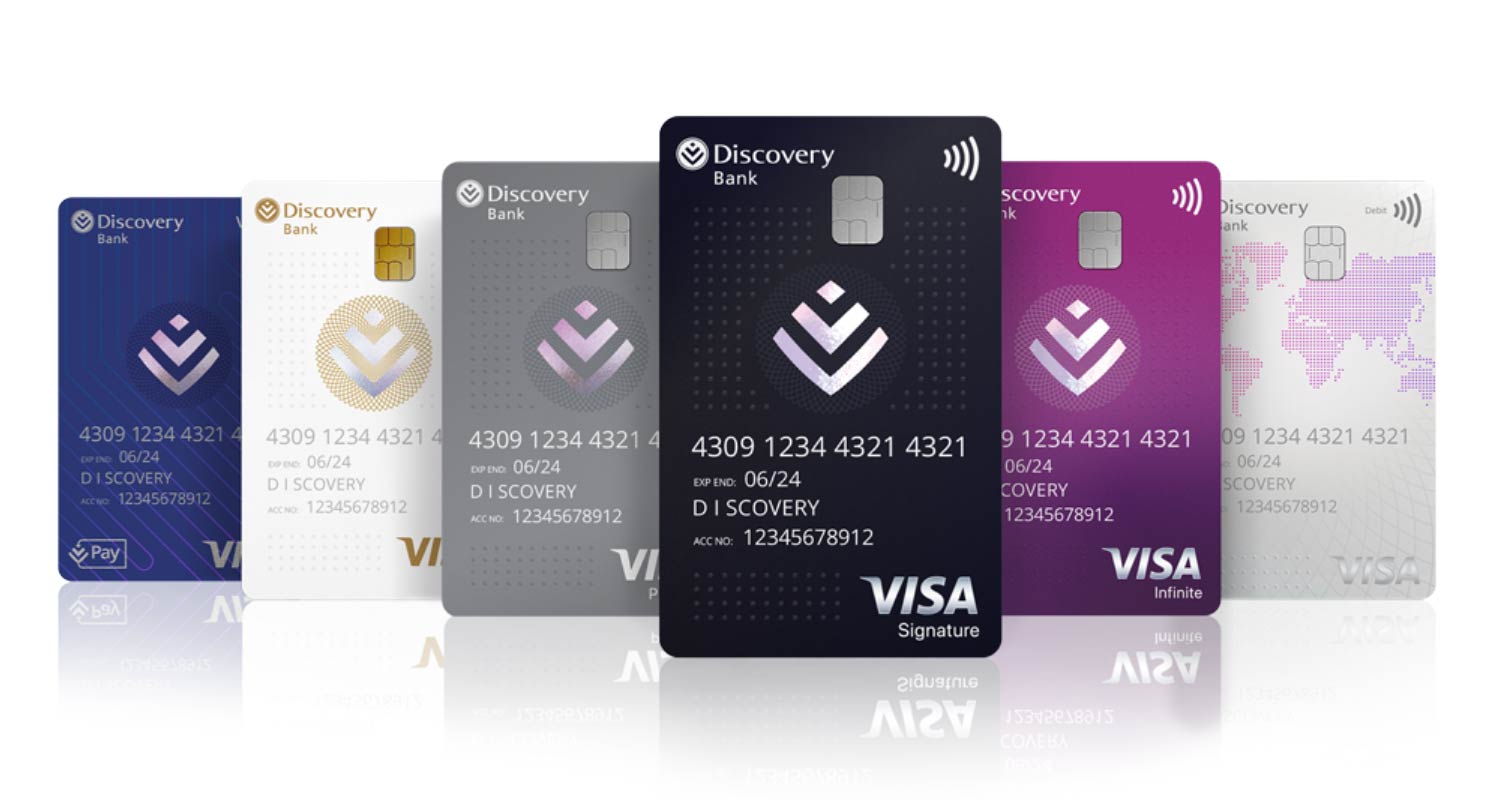
TC: What about tokenisation. We see increasingly consumers are quite used to tap-to-pay functionality. Are physical plastic cards living on borrowed time?
HK: There are still a few, very specific use cases for plastic, like ATMs. People that understand tokenisation feel comfortable using the phone as the single source of cards, and we promote virtual cards as the preferred mechanism from a security perspective.
There are still a lot of people that that like the fact that the plastic card is in the under their control and there’s a Pin code that’s associated with it – they like inferred security that comes with that. Having said that, more and more you will see virtual cards becoming completely ubiquitous.
Tokenised cards
TC: Does that mean we’re going to get to get to the point where Discovery Bank, for example, might say to a new client, would you like a plastic card with that as well?
HK: We effectively do that already. It depends on the client. A lot of clients say that they do want the card, but when you open an account with us you have the option to activate the virtual card in your app and not ask for a physical one because you don’t need it. We have clients that actually don’t take one.
TC: What’s your take on stablecoins, and more broadly, cryptocurrencies, specifically in the South African financial system?
Read: Fintechs and crypto shake Africa’s banking foundations
HK: There is no doubt this is where the market will move to, especially for cross-border payments, where the current rails are more expensive. The compliance around anti-money laundering and exchange controls in South Africa is, certainly for banks, a key consideration.
So, we are watching this space very closely and I think as opportunities emerge and the regulatory environment is enabling for it, we will start to look at those options. – © 2025 NewsCentral Media
Get breaking news from TechCentral on WhatsApp. Sign up here.