
Close Menu
TechCentralTechCentral

    Subscribe to the newsletter

    Get the best South African technology news and analysis delivered to your e-mail inbox every morning.

    Facebook X (Twitter) YouTube LinkedIn
    WhatsApp Facebook X (Twitter) LinkedIn YouTube
    TechCentralTechCentral
    • News
      Blu Label takes R5.2-billion Cell C hit, touts clean slate ahead

      Blu Label takes R5.2-billion Cell C hit, touts clean slate ahead

      19 February 2026
      MeerKAT detects most powerful natural radio laser ever observed

      MeerKAT detects most powerful natural radio laser ever observed

      19 February 2026
      How AI is rewriting the rules of consulting - Mark Allderman

      How AI is rewriting the rules of consulting

      19 February 2026
      Crackdown on students gambling away Nsfas money online

      Crackdown on students gambling away Nsfas money online

      19 February 2026
      Meta may launch AI-powered smartwatch in 2026

      Meta may launch AI-powered smartwatch in 2026

      19 February 2026
    • World
      Prominent Southern African journalist targeted with Predator spyware

      Prominent Southern African journalist targeted with Predator spyware

      18 February 2026
      More drama in Warner Bros tug of war

      More drama in Warner Bros tug of war

      17 February 2026
      Russia bans WhatsApp

      Russia bans WhatsApp

      12 February 2026
      EU regulators take aim at WhatsApp

      EU regulators take aim at WhatsApp

      9 February 2026
      Musk hits brakes on Mars mission

      Musk hits brakes on Mars mission

      9 February 2026
    • In-depth
      How liberalisation is rewiring South Africa's power sector

      How liberalisation is rewiring South Africa’s power sector

      21 January 2026
      The top-performing South African tech shares of 2025

      The top-performing South African tech shares of 2025

      12 January 2026
      Digital authoritarianism grows as African states normalise internet blackouts

      Digital authoritarianism grows as African states normalise internet blackouts

      19 December 2025
      TechCentral's South African Newsmakers of 2025

      TechCentral’s South African Newsmakers of 2025

      18 December 2025
      Black Friday goes digital in South Africa as online spending surges to record high

      Black Friday goes digital in South Africa as online spending surges to record high

      4 December 2025
    • TCS
      Watts & Wheels S1E4: 'We drive an electric Uber'

      Watts & Wheels S1E4: ‘We drive an electric Uber’

      10 February 2026
      TCS+ | How Cloud On Demand is helping SA businesses succeed in the cloud - Xhenia Rhode, Dion Kalicharan

      TCS+ | Cloud On Demand and Consnet: inside a real-world AWS partner success story

      30 January 2026
      Watts & Wheels S1E4: 'We drive an electric Uber'

      Watts & Wheels S1E3: ‘BYD’s Corolla Cross challenger’

      30 January 2026
      Watts & Wheels S1E4: 'We drive an electric Uber'

      Watts & Wheels S1E2: ‘China attacks, BMW digs in, Toyota’s sublime supercar’

      23 January 2026

      TCS+ | Why cybersecurity is becoming a competitive advantage for SA businesses

      20 January 2026
    • Opinion
      A million reasons monopolies don't work - Duncan McLeod

      A million reasons monopolies don’t work

      10 February 2026
      The author, Business Leadership South Africa CEO Busi Mavuso

      Eskom unbundling U-turn threatens to undo hard-won electricity gains

      9 February 2026
      South Africa's skills advantage is being overlooked at home - Richard Firth

      South Africa’s skills advantage is being overlooked at home

      29 January 2026
      Why Elon Musk's Starlink is a 'hard no' for me - Songezo Zibi

      Why Elon Musk’s Starlink is a ‘hard no’ for me

      26 January 2026
      A million reasons monopolies don't work - Duncan McLeod

      South Africa’s new fibre broadband battle

      20 January 2026
    • Company Hubs
      • Africa Data Centres
      • AfriGIS
      • Altron Digital Business
      • Altron Document Solutions
      • Altron Group
      • Arctic Wolf
      • AvertITD
      • Braintree
      • CallMiner
      • CambriLearn
      • CYBER1 Solutions
      • Digicloud Africa
      • Digimune
      • Domains.co.za
      • ESET
      • Euphoria Telecom
      • Incredible Business
      • iONLINE
      • IQbusiness
      • Iris Network Systems
      • LSD Open
      • Mitel
      • NEC XON
      • Netstar
      • Network Platforms
      • Next DLP
      • Ovations
      • Paracon
      • Paratus
      • Q-KON
      • SevenC
      • SkyWire
      • Solid8 Technologies
      • Telit Cinterion
      • Tenable
      • Vertiv
      • Videri Digital
      • Vodacom Business
      • Wipro
      • Workday
      • XLink
    • Sections
      • AI and machine learning
      • Banking
      • Broadcasting and Media
      • Cloud services
      • Contact centres and CX
      • Cryptocurrencies
      • Education and skills
      • Electronics and hardware
      • Energy and sustainability
      • Enterprise software
      • Financial services
      • Information security
      • Internet and connectivity
      • Internet of Things
      • Investment
      • IT services
      • Lifestyle
      • Motoring
      • Public sector
      • Retail and e-commerce
      • Satellite communications
      • Science
      • SMEs and start-ups
      • Social media
      • Talent and leadership
      • Telecoms
    • Events
    • Advertise
    TechCentralTechCentral
    Home » Opinion » Alistair Fairweather » Don’t blame the rich

    Don’t blame the rich

    By Alistair Fairweather27 January 2014
    Twitter LinkedIn Facebook WhatsApp Email Telegram Copy Link
    News Alerts
    WhatsApp

    Alistair-Fairweather-180-profileThe rich are getting richer and the poor are getting poorer. It’s the phrase that’s launched a thousand editorials, most of them decrying the manifest evils of the insatiable 1%. But a large part of this increased inequality is driven not by greed or manipulation, but by technology. And it’s only going to get worse.

    Take a look at the the youngest billionaires of 2013: twenty-nine people under the age of 40 who are all worth more than US$1bn. Ten of them — more than a third — made their fortunes in technology. The two youngest — Facebook founders Dustin Moskovitz and Mark Zuckerberg — are both under 30.

    If we exclude the 12 youngsters who inherited their wealth, we find that 60% of self-made billionaires earned their money in technology. Only seven earned their status via more traditional wealth sources like finance or energy. What’s more, the technology magnates are, on average, four times wealthier.

    And this doesn’t apply only to billionaires. The vast majority of well paid jobs created in the past two decades have revolved in one way or another around technology. Real wages for more traditional work — particularly in manufacturing, administrative and clerical jobs — have been either flat or falling since the 1970s.

    The Economist argues that the persistent level of unemployment in the developed world is largely due to a fundamental shift in the world’s economy — a shift being driven by technology. Machines are not just getting better at thinking (software), they are getting better at doing (robotics).

    This shift has exposed once safe jobs — accounting, technical writing, skilled manufacturing, real estate — to the perils of automation. Those fortunate enough to have skills complementary to this new wave — computer programmers, robotics experts, interface designers, data scientists — are reaping disproportionate benefits. As William Gibson said, the future is already here — it’s just not evenly distributed.

    This is because technology is, at its heart, an evolutionary advantage. Its ability to augment our limited human capabilities has allowed us to dominate this planet (often to its detriment). Throughout human history, those able to master new technologies quickly have reaped the benefits. The first farmers to invent the plough could feed much larger families and thus came to dominate their communities and then the planet.

    But this advantage is always temporary. Better, cheaper and faster technologies arrive and displace the old ones. What has changed is how quickly this happens. The two centuries from 1750 to 1950 produced more technological advancements than the entire millennium before that.

    The past four decades have seen us triple even that incredible progress in one fifth of the time.

    And while technology changes ever more quickly, society does not. Most human beings favour comfort, stability and certainty. This means that the politicians who serve them try to avoid nasty surprises and unpleasant medicine whenever possible. And there’s nothing more unpleasant than being told your hard-won skills are not useful or valuable anymore.

    But these hard truths need to be accepted before solutions can be sought. Too much of our energy is spent debating about how to appropriately punish the rich for their good fortune, and how to return “decent jobs” to the masses (by force if necessary). Not nearly enough is spent on preparing ourselves and our children for this new technological reality.

    One area crying out for attention is education — and not just in South Africa’s particularly dysfunctional case. Around the world, the vast majority of primary and secondary education is grounded in a dead paradigm. Most schools still focus on rote and process learning, favouring consensus and uniformity over free thought and dissent. This produces obedient clerks and machine shop workers — not creative technology entrepreneurs.

    Another area in which governments could make a huge positive impact is to embrace technology rather than resisting it. Organised labour will fight tooth and nail to protect industries that have reached the end of their natural lives, but that will not stop their demise. Rather than pander to the current crop of workers we should find ways — tax incentives, smarter regulations, infrastructure — to plant the seeds for the next one.
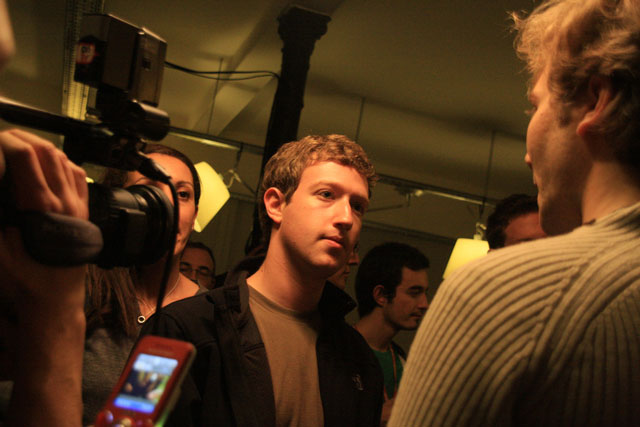
    Twenty-nine year-old billionaire Mark Zuckerberg of Facebook - image Ludovic Toinel
    Twenty-nine year-old billionaire Mark Zuckerberg of Facebook – image Ludovic Toinel

    Regardless of whether we choose to act, this wave will sweep over us. The technology revolution is only just getting into its stride. Like the industrial revolution before it, it will cause untold misery for the people displaced by its relentless and implacable reality.

    We are looking for cartoon villains to blame but this has more to do with biology than justice. Technologists aren’t better or more deserving people, they’re just better adapted to the current (and future) reality. Most animals go extinct not because of hunting, but because their habitat has disappeared.

    But all is not lost. The second half of the industrial revolution was marked by huge increases in the average wages of workers, and the rise of the middle class majority that now dominates the developed world. What changed? Better education — surprise, surprise — led the charge.

    We need not repeat the mistakes that made Dickensian England so unbearably grim and cruel. But we need to ignore the armchair activists calling for another Marxist revolution and focus instead on finding solutions.  — (c) 2014 Mail & Guardian

    • Alistair Fairweather is chief technology officer at the Mail & Guardian
    • Visit the Mail & Guardian Online, the smart news source


    Alistair Fairweather Dustin Moskovitz Facebook Mark Zuckerberg William Gibson
    WhatsApp YouTube Follow on Google News Add as preferred source on Google
    Share. Facebook Twitter LinkedIn WhatsApp Telegram Email Copy Link
    Previous ArticleWhatsApp, WeChat in race for IM dominance
    Next Article Reading keeps Carrim in the (local) loop

    Related Posts

    Meta, TikTok, YouTube to stand trial on youth addiction claims

    Meta, TikTok, YouTube to stand trial on youth addiction claims

    27 January 2026
    Australia has banned kids from social media. Should South Africa follow suit?

    Australia has banned kids from social media. Should South Africa follow suit?

    11 December 2025
    Australia fires starting gun on global social media reform

    Australia fires starting gun on global social media reform

    10 December 2025
    Company News
    Customers have new expectations. Is your CX ready? 1Stream

    Customers have new expectations. Is your CX ready?

    19 February 2026
    South Africa's cybersecurity challenge is not a tool problem - Nicholas Applewhite, Trinexia South Africa

    South Africa’s cybersecurity challenge is not a tool problem

    19 February 2026
    The quiet infrastructure powering AI: why long-life IOT networks matter more than ever - Sigfox South Africa

    The quiet infrastructure powering AI: why long-life IoT networks matter more than ever

    18 February 2026
    Opinion
    A million reasons monopolies don't work - Duncan McLeod

    A million reasons monopolies don’t work

    10 February 2026
    The author, Business Leadership South Africa CEO Busi Mavuso

    Eskom unbundling U-turn threatens to undo hard-won electricity gains

    9 February 2026
    South Africa's skills advantage is being overlooked at home - Richard Firth

    South Africa’s skills advantage is being overlooked at home

    29 January 2026

    Subscribe to Updates

    Get the best South African technology news and analysis delivered to your e-mail inbox every morning.

    Latest Posts
    Blu Label takes R5.2-billion Cell C hit, touts clean slate ahead

    Blu Label takes R5.2-billion Cell C hit, touts clean slate ahead

    19 February 2026
    MeerKAT detects most powerful natural radio laser ever observed

    MeerKAT detects most powerful natural radio laser ever observed

    19 February 2026
    How AI is rewriting the rules of consulting - Mark Allderman

    How AI is rewriting the rules of consulting

    19 February 2026
    Crackdown on students gambling away Nsfas money online

    Crackdown on students gambling away Nsfas money online

    19 February 2026
    © 2009 - 2026 NewsCentral Media
    • Cookie policy (ZA)
    • TechCentral – privacy and Popia

    Type above and press Enter to search. Press Esc to cancel.

    Manage consent

    TechCentral uses cookies to enhance its offerings. Consenting to these technologies allows us to serve you better. Not consenting or withdrawing consent may adversely affect certain features and functions of the website.

    Functional Always active
    The technical storage or access is strictly necessary for the legitimate purpose of enabling the use of a specific service explicitly requested by the subscriber or user, or for the sole purpose of carrying out the transmission of a communication over an electronic communications network.
    Preferences
    The technical storage or access is necessary for the legitimate purpose of storing preferences that are not requested by the subscriber or user.
    Statistics
    The technical storage or access that is used exclusively for statistical purposes. The technical storage or access that is used exclusively for anonymous statistical purposes. Without a subpoena, voluntary compliance on the part of your Internet Service Provider, or additional records from a third party, information stored or retrieved for this purpose alone cannot usually be used to identify you.
    Marketing
    The technical storage or access is required to create user profiles to send advertising, or to track the user on a website or across several websites for similar marketing purposes.
    • Manage options
    • Manage services
    • Manage {vendor_count} vendors
    • Read more about these purposes
    View preferences
    • {title}
    • {title}
    • {title}