
Close Menu
TechCentralTechCentral

    Subscribe to the newsletter

    Get the best South African technology news and analysis delivered to your e-mail inbox every morning.

    Facebook X (Twitter) YouTube LinkedIn
    WhatsApp Facebook X (Twitter) LinkedIn YouTube
    TechCentralTechCentral
    • News
      Africa's most popular phones have a tracking problem

      Africa’s most popular phones have a tracking problem

      24 July 2026
      Vodacom taps UJ, AWS to build its AI talent pipeline - Vodacom Group CEO Shameel Joosub

      Vodacom taps UJ, AWS to build its AI talent pipeline

      24 July 2026
      Intel is back in the game - Intel CEO Lip-Bu Tan. Laure Andrillon/Reuters

      Intel is back in the game

      24 July 2026
      Fat bonuses at Telkom despite group missing own targets - Serame Taukobong

      Fat bonuses at Telkom despite group missing own targets

      23 July 2026
      Massive changes coming to Amazon Prime Video - Jeff Bezos

      Massive changes coming to Amazon Prime Video

      23 July 2026
    • World
      Meta AI will now tell parents if their teen is in crisis

      Meta AI will now tell parents if their teen is in crisis

      17 July 2026
      IBM shares crash 25% as AI upends software spending - Arvind Krishna

      IBM shares crash 25% as AI upends software spending

      15 July 2026
      Jony Ive's first OpenAI device: an AI smart speaker - Jony Ive and Sam Altman

      Jony Ive’s first OpenAI device: an AI smart speaker

      15 July 2026
      Stripe, Advent in talks to buy PayPal for $53-billion

      Stripe, Advent in talks to buy PayPal for $53-billion

      15 July 2026
      Memory crisis sends smartphone market into steep decline

      Memory crisis sends smartphone market into steep decline

      13 July 2026
    • In-depth
      The plan to stop AI from breaking the world - Google DeepMind CEO Demis Hassabis. Image: John Sears

      The plan to stop AI from breaking the world

      16 July 2026
      The internet has a Strait of Hormuz problem

      The internet has a Strait of Hormuz problem

      15 July 2026
      AI boom sparks rally, frenzy and fear

      AI boom sparks rally, frenzy and fear

      11 June 2026
      Every plug-in hybrid on sale in South Africa, ranked by price - Lamborghini Temerario

      Every plug-in hybrid on sale in South Africa, ranked by price

      7 June 2026
      What Wi-Fi 8 will mean for wireless networks

      What Wi-Fi 8 will mean for wireless networks

      1 June 2026
    • TCS
      TCS | How Optasia lends billions to people banks can't see - Salvador Anglada

      TCS | How Optasia lends billions to people banks can’t see

      23 July 2026
      The rands-and-cents case for electric trucks - William Kelly Watts & Wheels with Wills

      The rands-and-cents case for electric trucks

      20 July 2026
      Watts & Wheels S1E7: 'Ferrari's EV breaks the internet'

      Watts & Wheels S1E7: ‘Ferrari’s EV breaks the internet’

      8 July 2026
      TCS | Pick n Pay's Enrico Ferigolli on Penny, the AI that shops for you

      TCS | Pick n Pay’s Enrico Ferigolli on Penny, the AI that shops for you

      2 July 2026
      TCS+ | How Tracker is turning vehicle data into business strategy - Silvia Schollenberger

      TCS+ | How Tracker is turning vehicle data into business strategy

      1 July 2026
    • Opinion
      Selling vapour is corporate suicide in slow motion - Jannie van Zyl

      Selling vapour is corporate suicide in slow motion

      16 July 2026
      Brazil's online gambling crackdown is a lesson for South Africa

      How Amazon outmanoeuvred Starlink in South Africa

      15 July 2026
      The Popia problem with agentic AI - Herman Haasbroek

      The Popia problem with agentic AI

      14 July 2026
      The author, Fanie van Rooyen

      South Africa can still catch the AI wave – here’s how

      7 July 2026
      The author, Fanie van Rooyen

      The AI utopia South Africa can’t afford

      1 July 2026
    • Company Hubs
      • 1Stream
      • Africa Data Centres
      • AfriGIS
      • Altron Digital Business
      • Altron Document Solutions
      • Altron Group
      • Arctic Wolf
      • Ascent Technology
      • AvertITD
      • BBD
      • Braintree
      • CallMiner
      • CambriLearn
      • CM Telecom
      • Contactable
      • CYBER1 Solutions
      • Digicloud Africa
      • Digimune
      • Domains.co.za
      • ESET
      • Euphoria Telecom
      • HOSTAFRICA
      • Incredible Business
      • iONLINE
      • IQbusiness
      • Iris Network Systems
      • Kaspersky
      • LSD Open
      • Mitel
      • NEC XON
      • Netstar
      • Network Platforms
      • Next DLP
      • Ovations
      • Paracon
      • Paratus
      • Q-KON
      • SevenC
      • SkyWire
      • Solid8 Technologies
      • Telit Cinterion
      • Telviva
      • Tenable
      • Vertiv
      • Videri Digital
      • Vodacom Business
      • Vox
      • Wipro
      • Workday
      • XLink
    • Sections
      • AI and machine learning
      • Banking
      • Broadcasting and Media
      • Cloud services
      • Contact centres and CX
      • Cryptocurrencies
      • Education and skills
      • Electronics and hardware
      • Energy and sustainability
      • Enterprise software
      • Financial services
      • HealthTech
      • Information security
      • Internet and connectivity
      • Internet of Things
      • Investment
      • IT services
      • Lifestyle
      • Policy and regulation
      • Public sector
      • Retail and e-commerce
      • Satellite communications
      • Science
      • SMEs and start-ups
      • Social media
      • Talent and leadership
      • Telecoms
      • Watts & Wheels
    • Events
    • Advertise
    TechCentralTechCentral
    Home » Sections » Talent and leadership » World’s 500 richest people lost $1.4-trillion in 2022

    World’s 500 richest people lost $1.4-trillion in 2022

    For the vast majority of the world’s wealthiest people, 2022 was a year to forget.
    By Agency Staff30 December 2022
    Twitter LinkedIn Facebook WhatsApp Email Telegram Copy Link
    News Alerts
    WhatsApp

    For the vast majority of the world’s wealthiest people, 2022 was a year to forget.

    It’s not just the money that was lost, though it was staggering — almost US$1.4-trillion (R24-trillion) was wiped from the fortunes of the richest 500 alone, according to the Bloomberg Billionaires Index. Plenty of the pain, it turns out, was self-inflicted: the alleged fraud by onetime crypto wunderkind Sam Bankman-Fried; the devastating war waged by Russia on Ukraine that spurred crippling sanctions on its business titans; and, of course, the antics of Elon Musk, the new owner of Twitter who’s worth $138-billion less than he was on 1 January.

    Combined with a backdrop of widespread inflation and aggressive central bank tightening, the year was a dramatic comedown for a group of billionaires whose fortunes swelled to unfathomable heights in the Covid era of easy money. In most cases, the bigger the rise, the more dramatic the fall: Musk, Jeff Bezos, Changpeng Zhao and Mark Zuckerberg alone saw some $392-billion erased from their cumulative net worth.

    It wasn’t all bad news for the billionaire class, though. India’s Gautam Adani surpassed Bill Gates and Warren Buffett on the wealth index, while some of the world’s richest families, like the Kochs and the Mars clan, also added to their fortunes. Sports franchises only became more valuable, growing increasingly unobtainable for anyone outside the top 0.0001%.

    Here’s a month-by-month review of the data and stories that defined a tumultuous year for billionaires.

    January: Warning shots

    Musk, the world’s richest person at the time, loses $25.8-billion on 27 January after Tesla warns about supply challenges. It’s the fourth steepest one-day fall in the history of the Bloomberg wealth index and foreshadows a rocky year ahead for Musk, both personally and financially.

    February: Oligarch wealth obliterated

    Russia’s richest people collectively lose $46.6-billion on 24 February, the day Vladimir Putin orders his army to invade Ukraine. In short order, authorities in the European Union, UK and US target Russia’s “oligarchs” and their companies with sanctions that make it next to impossible for the business tycoons to keep control of their assets in the West. Superyachts are grounded, London’s ultra-luxury property market braces for a slowdown and Roman Abramovich announces he’s selling Chelsea FC of the Premier League. The wealthiest Russians go on to lose another $47-billion over the course of 2022 as the war grinds on.

    March: China’s fortunes crushed

    China’s markets go from bad to worse, erasing $64.6-billion from the fortunes of the country’s wealthiest people on 14 March. They lose another $164-billion in 2022 as strenuous Covid-containment efforts, a buckling property market, heightened scrutiny of the tech industry and trade tensions with the US drag on the world’s second largest economy. That, combined with President Xi Jinping’s populist rhetoric, has more affluent Chinese plotting to get themselves — and their money — out of the country.
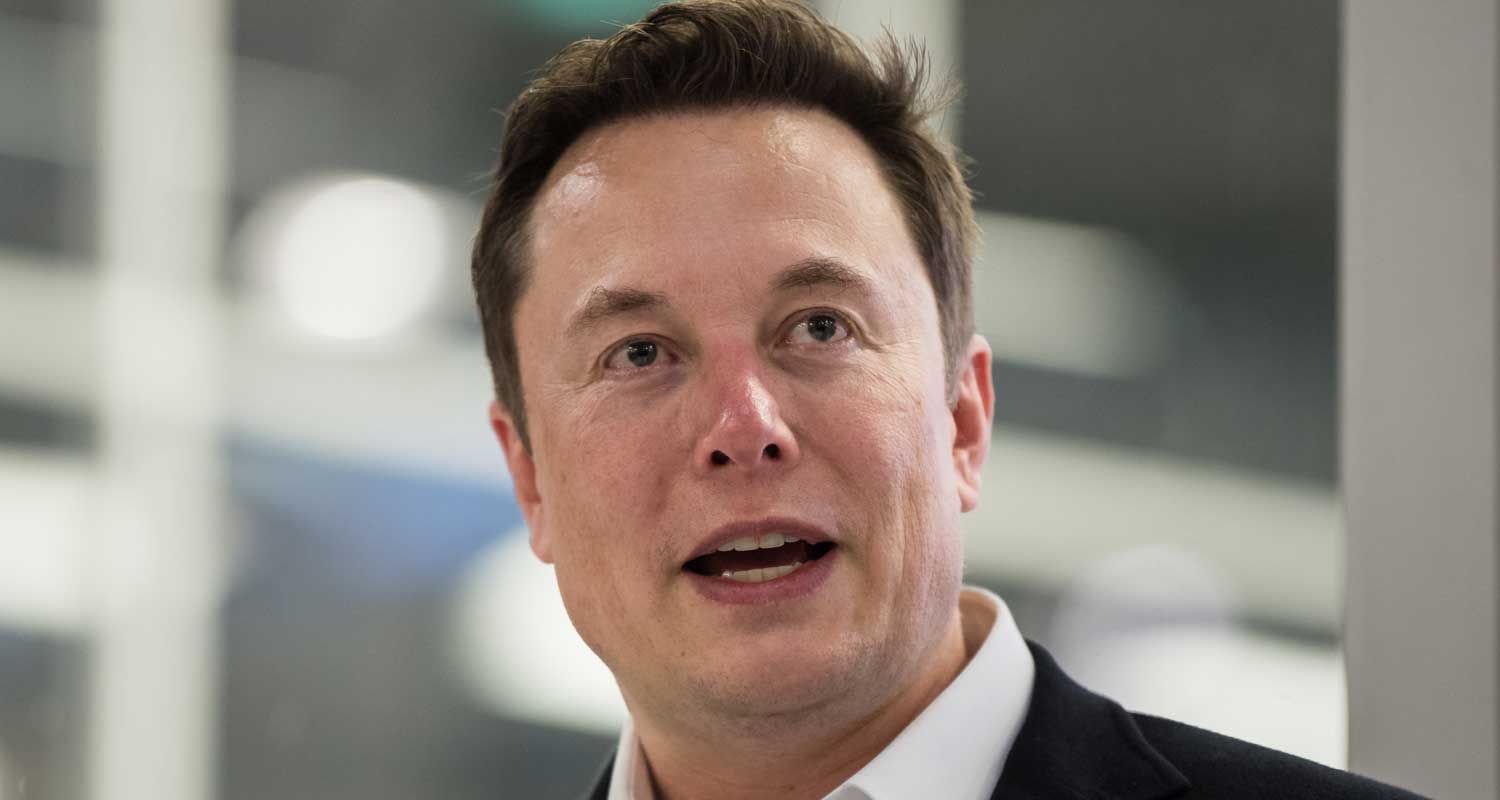
    Elon Musk. Image c/o Nasa (CC BY-NC-ND 2.0 licence)

    April: Musk’s Twitter gambit

    Soon after revealing a 9.1% stake in Twitter, Musk offers to buy the company outright on 14 April at a $44-billion valuation. It’s a steep price, even for him. To finance the deal, he initially plans to borrow billions, leverage more of his Tesla shares and stump up $21-billion in cash, which analysts correctly predict will require offloading Tesla stock. Markets deteriorate in the coming months and Musk tries to devise an escape route, kicking off a months-long legal wrangle with Twitter. By the time the deal is completed in October, Musk’s net worth is $39-billion lower than when he made his initial offer.

    May: Boehly buys Chelsea

    A group helmed by finance billionaire Todd Boehly clinches the £4.25-billion winning bid for Chelsea. It’s the highest price ever paid for a sports team, and it caps a frenzied two-month process that attracted more than 100 bidders from all over the world, including British billionaire Jim Ratcliffe, Apollo Global Management co-founder Josh Harris, Bain Capital co-chairman Steve Pagliuca and Citadel’s Ken Griffin with the Ricketts family. The net proceeds from the sale, including £1.6-billion in waived debt owed to Abramovich by the team, is earmarked for charity benefiting Ukraine.

    June: Waltons win Broncos

    Rob Walton, heir to the Walmart fortune, agrees to buy the Denver Broncos for $4.65-billion, setting a record for a US sports team, and underscoring the enduring appeal of owning an NFL franchise. The Walton consortium includes Rob’s daughter Carrie, her husband Greg Penner, Ariel Investments president Mellody Hobson, racecar driver Lewis Hamilton and former US secretary of state Condoleezza Rice. The deal made Hobson and Rice the first black women to hold an ownership stake in an NFL team. The Walton-led offer trumped those from Clearlake Capital Group founder Jose Feliciano, United Wholesale Mortgage CEO Mat Ishbia and, again, Harris.

    July: China’s homebuilders crumble

    Yang Huiyan loses the title of Asia’s wealthiest woman after her fortune more than halves over seven months amid China’s unfolding property crisis. Country Garden Holdings, the developer that Yang inherited from her father in 2005, benefited from a dizzying homebuilding spree in recent years. But the country’s efforts to curb real estate prices and Xi’s crackdown on consumption put a stranglehold on the sector, stalling projects and leading frustrated homeowners to quit paying mortgages on halted developments. Country Garden’s stock price — and Yang’s wealth — has yet to recover.

    August: Adani ascends

    Coal tycoons sound like a relic of another era. But with the world roiled by the war in Ukraine, Adani, an Indian coal miner with a fast-expanding empire, surges past Gates and France’s Bernard Arnault to become the world’s third richest person at the end of August. It marks the highest ranking ever for an Asian billionaire. Aligning himself with Indian Prime Minister Narendra Modi, Adani has used debt to rapidly diversify his relatively opaque conglomerate, Adani Group, into ports, data centres, highways and, controversially, green energy. In September, he briefly passed Bezos to become the world’s second richest person.
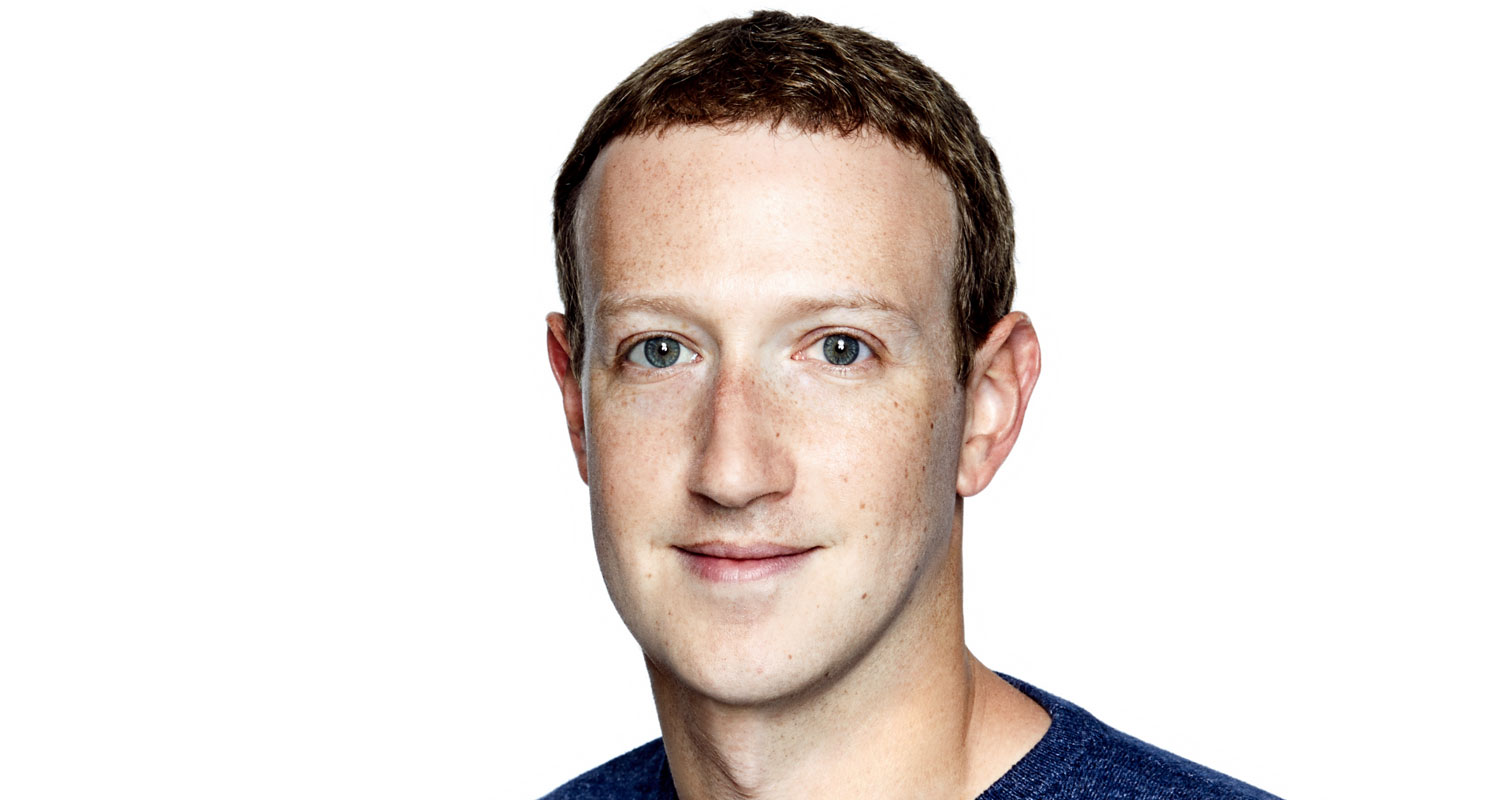
    Mark Zuckerberg

    September: Zuckerberg’s wipeout

    Even in a rough year for US tech titans, Zuckerberg’s losses stand out. By mid-September his net worth has plunged by $71-billion since 1 January — a 57% loss — on account of a costly pivot to the metaverse and the industry-wide downturn that’s dragged down the stock price of Meta Platforms. Over the course of the year, he’ll fall 19 ranks on the Bloomberg wealth index, finishing 2022 at 25th, his lowest position since 2014.

    October: Covid billionaires collapse

    The bubble of the Covid economy is deflating fast and with it, the fortunes of the so-called Covid billionaires — those moguls who minted enormous fortunes from vaccines (Moderna’s Stephane Bancel), used cars (Carvana’s Ernie Garcia II and Ernie Garcia III), online shopping (Coupang’s Bom Kim) and, of course, Zoom (Eric Yuan). The 58 billionaires whose fortunes multiplied at a blistering pace from such pandemic industries saw an average decline in the value of their assets of 58% from their peak, a far sharper fall than the other constituents of the wealth index.

    November: $16-billion to zero

    Bankman-Fried’s crypto exchange FTX collapses after a liquidity crunch reveals gaping holes in his empire’s balance sheet and an absence of risk controls. The 30-year-old’s $16-billion fortune is erased in less than a week. At its peak, his net worth was $26-billion. The debacle taints numerous Washington politicians who took his donations, stiffs many charities, humiliates investors in Silicon Valley and beyond, and leaves some one million clients in limbo and wondering if they’ll get their money back. Binance CEO Zhao, known in the crypto world as CZ, has seen his net worth tumble by about $84-billion this year, while other crypto billionaires like Cameron and Tyler Winklevoss, Michael Novogratz and Brian Armstrong look to distance themselves from FTX’s collapse.

    December: Musk dethroned

    Musk is unseated as the world’s richest person by Arnault, the French luxury tycoon behind LVMH. While Arnault hasn’t been immune to the tough 2022, down about $16-billion for the year, it pales next to Musk’s losses of more than $138-billion. How did we get here? Take a market downturn, add an impulse purchase of an unprofitable, lightning rod social media company, mix in a heap of leverage, more supply-chain woes and an insatiable desire for attention. Easy come, easy go.  — Devon Pendleton, with Jack Witzig, (c) 2022 Bloomberg LP

    Get TechCentral’s free daily newsletter

    Follow TechCentral on Google News Add TechCentral as your preferred source on Google


    Elon Musk FTX Mark Zuckerberg Meta Platforms Sam Bankman-Fried Twitter
    WhatsApp YouTube
    Share. Facebook Twitter LinkedIn WhatsApp Telegram Email Copy Link
    Previous ArticleHuawei sees ‘business as usual’ as US sanctions impact wanes
    Next Article FNB is most valuable financial services brand for third successive year

    Related Posts

    Intel is back in the game - Intel CEO Lip-Bu Tan. Laure Andrillon/Reuters

    Intel is back in the game

    24 July 2026
    From care homes to production lines, the robots are coming

    From care homes to production lines, the robots are coming

    21 July 2026
    Meta could become Anthropic's landlord in $10-billion deal

    Meta could become Anthropic’s landlord in $10-billion deal

    20 July 2026
    Company News
    Why Europe is turning to South Africa for cross-border innovation - BBD Software

    Why Europe is turning to South Africa for cross-border innovation

    24 July 2026
    Green dashboards, stalled change: the CIO's blind spot - Change Logic Marchant van den Heever

    Green dashboards, stalled change: the CIO’s blind spot

    24 July 2026
    Why Africa's cloud needs more than one path - Africa Data Centres

    Why Africa’s cloud needs more than one path

    23 July 2026
    Opinion
    Selling vapour is corporate suicide in slow motion - Jannie van Zyl

    Selling vapour is corporate suicide in slow motion

    16 July 2026
    Brazil's online gambling crackdown is a lesson for South Africa

    How Amazon outmanoeuvred Starlink in South Africa

    15 July 2026
    The Popia problem with agentic AI - Herman Haasbroek

    The Popia problem with agentic AI

    14 July 2026

    Subscribe to Updates

    Get the best South African technology news and analysis delivered to your e-mail inbox every morning.

    Latest Posts
    Africa's most popular phones have a tracking problem

    Africa’s most popular phones have a tracking problem

    24 July 2026
    Vodacom taps UJ, AWS to build its AI talent pipeline - Vodacom Group CEO Shameel Joosub

    Vodacom taps UJ, AWS to build its AI talent pipeline

    24 July 2026
    Intel is back in the game - Intel CEO Lip-Bu Tan. Laure Andrillon/Reuters

    Intel is back in the game

    24 July 2026
    Why Europe is turning to South Africa for cross-border innovation - BBD Software

    Why Europe is turning to South Africa for cross-border innovation

    24 July 2026
    © 2009 - 2026 NewsCentral Media
    Built and maintained by Chronon
    • Cookie policy (ZA)
    • TechCentral – privacy and Popia

    Type above and press Enter to search. Press Esc to cancel.

    Manage consent

    TechCentral uses cookies to enhance its offerings. Consenting to these technologies allows us to serve you better. Not consenting or withdrawing consent may adversely affect certain features and functions of the website.

    Functional Always active
    The technical storage or access is strictly necessary for the legitimate purpose of enabling the use of a specific service explicitly requested by the subscriber or user, or for the sole purpose of carrying out the transmission of a communication over an electronic communications network.
    Preferences
    The technical storage or access is necessary for the legitimate purpose of storing preferences that are not requested by the subscriber or user.
    Statistics
    The technical storage or access that is used exclusively for statistical purposes. The technical storage or access that is used exclusively for anonymous statistical purposes. Without a subpoena, voluntary compliance on the part of your Internet Service Provider, or additional records from a third party, information stored or retrieved for this purpose alone cannot usually be used to identify you.
    Marketing
    The technical storage or access is required to create user profiles to send advertising, or to track the user on a website or across several websites for similar marketing purposes.
    • Manage options
    • Manage services
    • Manage {vendor_count} vendors
    • Read more about these purposes
    View preferences
    • {title}
    • {title}
    • {title}