Close Menu
TechCentralTechCentral

    Subscribe to the newsletter

    Get the best South African technology news and analysis delivered to your e-mail inbox every morning.

    Facebook X (Twitter) YouTube LinkedIn
    WhatsApp Facebook X (Twitter) LinkedIn YouTube
    TechCentralTechCentral
    • News
      How Elon Musk's Hyperloop sucked up billions and delivered nothing

      How Elon Musk’s Hyperloop sucked up billions and delivered nothing

      22 March 2026
      SA start-up HyperDev wants to turn your AI-built app into a real company - Anton Moulder

      SA start-up HyperDev wants to turn your AI-built app into a real company

      22 March 2026
      Amazon set to take another shot at the smartphone market - Jeff Bezos

      Amazon set to take another shot at the smartphone market

      22 March 2026
      MTN and Vodacom dwarf South Africa's listed tech sector

      MTN and Vodacom dwarf South Africa’s listed tech sector

      20 March 2026
      SA firm opens Africa's largest space hardware factory

      SA firm opens Africa’s largest space hardware factory

      20 March 2026
    • World
      Mystery Chinese AI model revealed to be Xiaomi's

      Mystery Chinese AI model revealed to be Xiaomi’s

      19 March 2026
      A mystery AI model has developers buzzing

      A mystery AI model has developers buzzing

      18 March 2026
      Samsung's trifold gamble ends in retreat

      Samsung’s trifold gamble ends in retreat

      17 March 2026
      Nvidia targets $1-trillion in AI chip sales as inference demand surges - Jensen Huang

      Nvidia targets $1-trillion in AI chip sales as inference demand surges

      17 March 2026
      Peter Thiel's secretive Rome conference draws Church attention

      Peter Thiel’s secretive Rome conference draws Church attention

      16 March 2026
    • In-depth
      The last generation of coders

      The last generation of coders

      18 February 2026
      Sentech is in dire straits

      Sentech is in dire straits

      10 February 2026
      How liberalisation is rewiring South Africa's power sector

      How liberalisation is rewiring South Africa’s power sector

      21 January 2026
      The top-performing South African tech shares of 2025

      The top-performing South African tech shares of 2025

      12 January 2026
      Digital authoritarianism grows as African states normalise internet blackouts

      Digital authoritarianism grows as African states normalise internet blackouts

      19 December 2025
    • TCS
      TCS+ | Arctic Wolf unpacks the evolving threat landscape for SA businesses - Clare Loveridge and Jason Oehley

      TCS+ | Arctic Wolf unpacks the evolving threat landscape for SA businesses

      19 March 2026
      TCS+ | Vox Kiwi: a wireless solution promising a fibre-like experience - Theo van Zyl

      TCS+ | Vox Kiwi: a wireless solution promising a fibre-like experience

      13 March 2026
      TCS+ | Flipping the narrative on AI in the Global South - Josefin Rosén

      TCS+ | Flipping the narrative on AI in the Global South

      13 March 2026
      TCS | Sink or swim? Antony Makins on how AI is rewriting the rules of work

      TCS | Sink or swim? Antony Makins on how AI is rewriting the rules of work

      5 March 2026
      TCS+ | Bolt ups the ante on platform safety - Simo Kalajdzic

      TCS+ | Bolt ups the ante on platform safety

      4 March 2026
    • Opinion
      South Africa's energy future hinges on getting wheeling right - Aishah Gire

      South Africa’s energy future hinges on getting wheeling right

      10 March 2026
      Hold the doom: the case for a South African comeback - Duncan McLeod

      Apple just dropped a bomb on the Windows world

      5 March 2026
      VC's centre of gravity is shifting - and South Africa is in the frame - Alison Collier

      VC’s centre of gravity is shifting – and South Africa is in the frame

      3 March 2026
      Hold the doom: the case for a South African comeback - Duncan McLeod

      Hold the doom: the case for a South African comeback

      26 February 2026
      The AI fraud crisis your bank is not ready for - Andries Maritz

      The AI fraud crisis your bank is not ready for

      18 February 2026
    • Company Hubs
      • 1Stream
      • Africa Data Centres
      • AfriGIS
      • Altron Digital Business
      • Altron Document Solutions
      • Altron Group
      • Arctic Wolf
      • AvertITD
      • Braintree
      • CallMiner
      • CambriLearn
      • CYBER1 Solutions
      • Digicloud Africa
      • Digimune
      • Domains.co.za
      • ESET
      • Euphoria Telecom
      • HOSTAFRICA
      • Incredible Business
      • iONLINE
      • IQbusiness
      • Iris Network Systems
      • LSD Open
      • Mitel
      • NEC XON
      • Netstar
      • Network Platforms
      • Next DLP
      • Ovations
      • Paracon
      • Paratus
      • Q-KON
      • SevenC
      • SkyWire
      • Solid8 Technologies
      • Telit Cinterion
      • Tenable
      • Vertiv
      • Videri Digital
      • Vodacom Business
      • Wipro
      • Workday
      • XLink
    • Sections
      • AI and machine learning
      • Banking
      • Broadcasting and Media
      • Cloud services
      • Contact centres and CX
      • Cryptocurrencies
      • Education and skills
      • Electronics and hardware
      • Energy and sustainability
      • Enterprise software
      • Financial services
      • HealthTech
      • Information security
      • Internet and connectivity
      • Internet of Things
      • Investment
      • IT services
      • Lifestyle
      • Motoring
      • Policy and regulation
      • Public sector
      • Retail and e-commerce
      • Satellite communications
      • Science
      • SMEs and start-ups
      • Social media
      • Talent and leadership
      • Telecoms
    • Events
    • Advertise
    TechCentralTechCentral
    Home » Sections » Motoring » How Elon Musk’s Hyperloop sucked up billions and delivered nothing

    How Elon Musk’s Hyperloop sucked up billions and delivered nothing

    It should have been obvious from the start that Elon Musk’s Hyperloop was just a boy’s own fantasy and could never work.
    By Ivo Vegter22 March 2026
    Twitter LinkedIn Facebook WhatsApp Email Telegram Copy Link
    News Alerts
    WhatsApp
    How Elon Musk's Hyperloop sucked up billions and delivered nothing
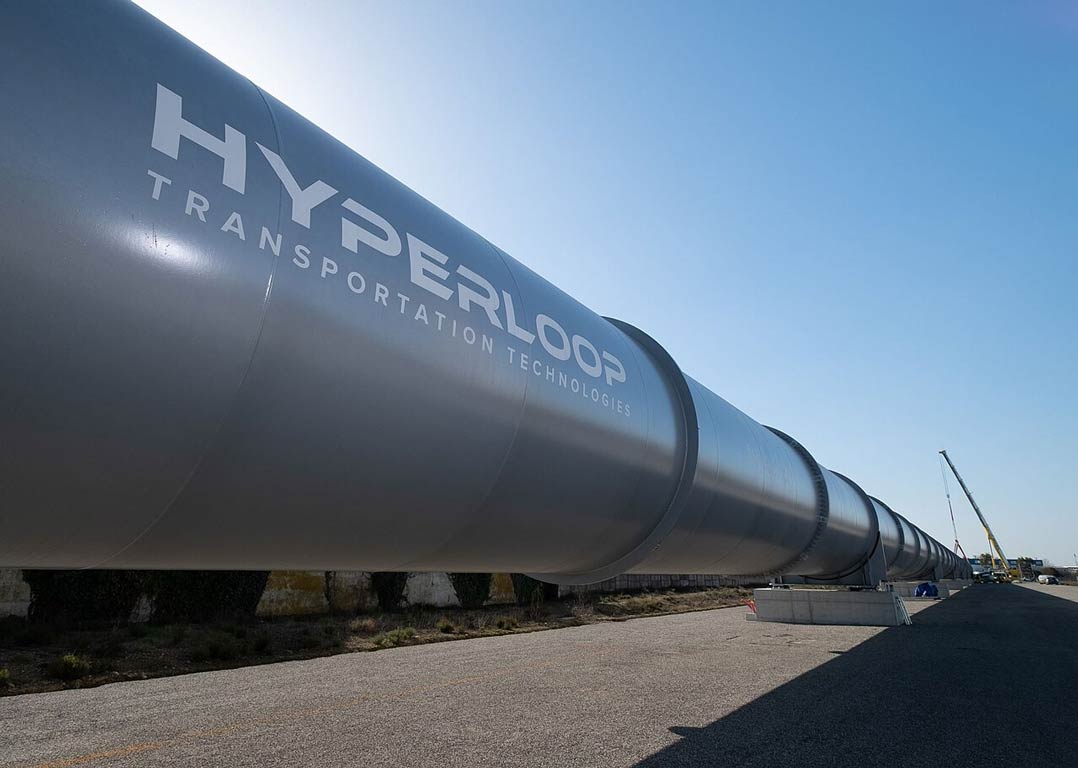
    Hyperloop Transportation Technologies test facility in 2019 in Toulouse, France. Photo: Wikipedia user Ryn88668, 19 June 2019, under CC BY-SA 4.0 International licence

    In 2013, PayPal mafia don and head of Tesla and SpaceX Elon Musk got caught up in the libertarian opposition to California’s overdue, over-budget and under-delivering high-speed rail project.

    He called it “the slowest bullet train in the world and the most expensive bullet train per mile in the world”. (It was neither, but he wasn’t that far wrong.)

    Musk proposed a futuristic alternative. Now, whenever a tech whiz kid with no transport engineering background “invents” a new public transit system on paper, it is wise to treat it with healthy scepticism – and an eye for ulterior motives.

    But let’s start at the beginning.
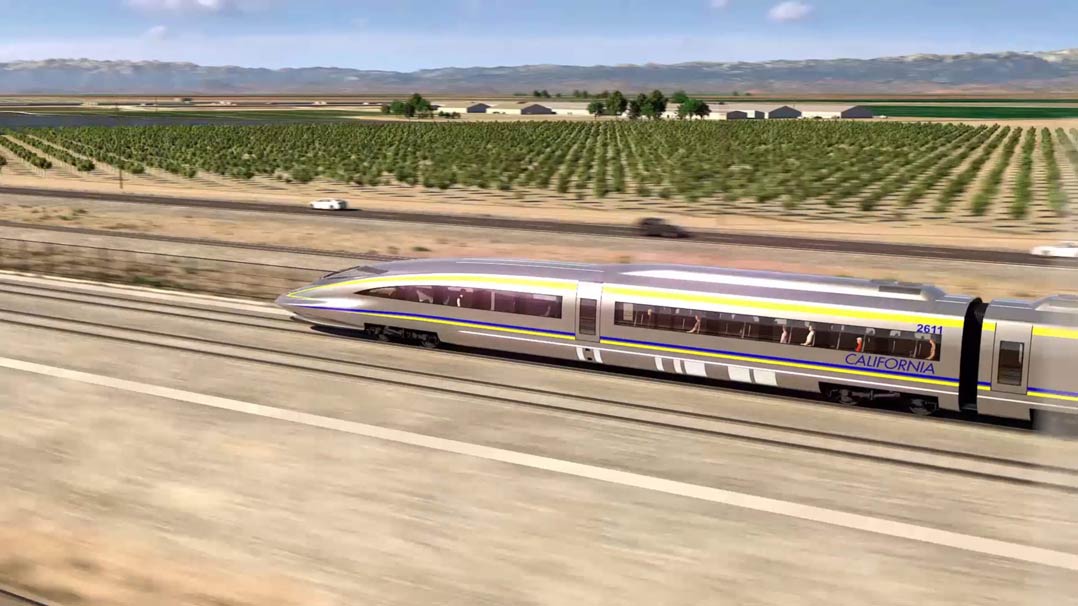
    An artist’s impression of a high-speed train speeding along California’s Central Valley. Trainsets have yet to be acquired, so this is purely illustrative. Image: California High-Speed Rail Authority, public domain
    An artist’s impression of a high-speed train speeding along California’s Central Valley. Trainsets have yet to be acquired, so this is purely illustrative. Image: California High-Speed Rail Authority, public domain

    Authorised by referendum in 2008, California’s bullet train was supposed to link San Francisco and Los Angeles with a two hour, 40 minute train journey at up to 350km/h, a trip that conventionally takes six hours by car or an hour and 20 minutes (plus airport transfer and waiting times) by air.

    Success would have an obvious impact on the sales of alternative modes of transport, such as the electric cars that were becoming popular on the west coast at the time, and which, by a crazy coincidence, Tesla sold.

    Musk’s instinct about the train was right, to be fair. Almost 20 years later, the project is a mess. Its “initial operating segment” is expected to start running in 2032, and only stretches from Bakersfield to Merced, each of which is about a third of the way from the cities at either end.

    …article continues below…
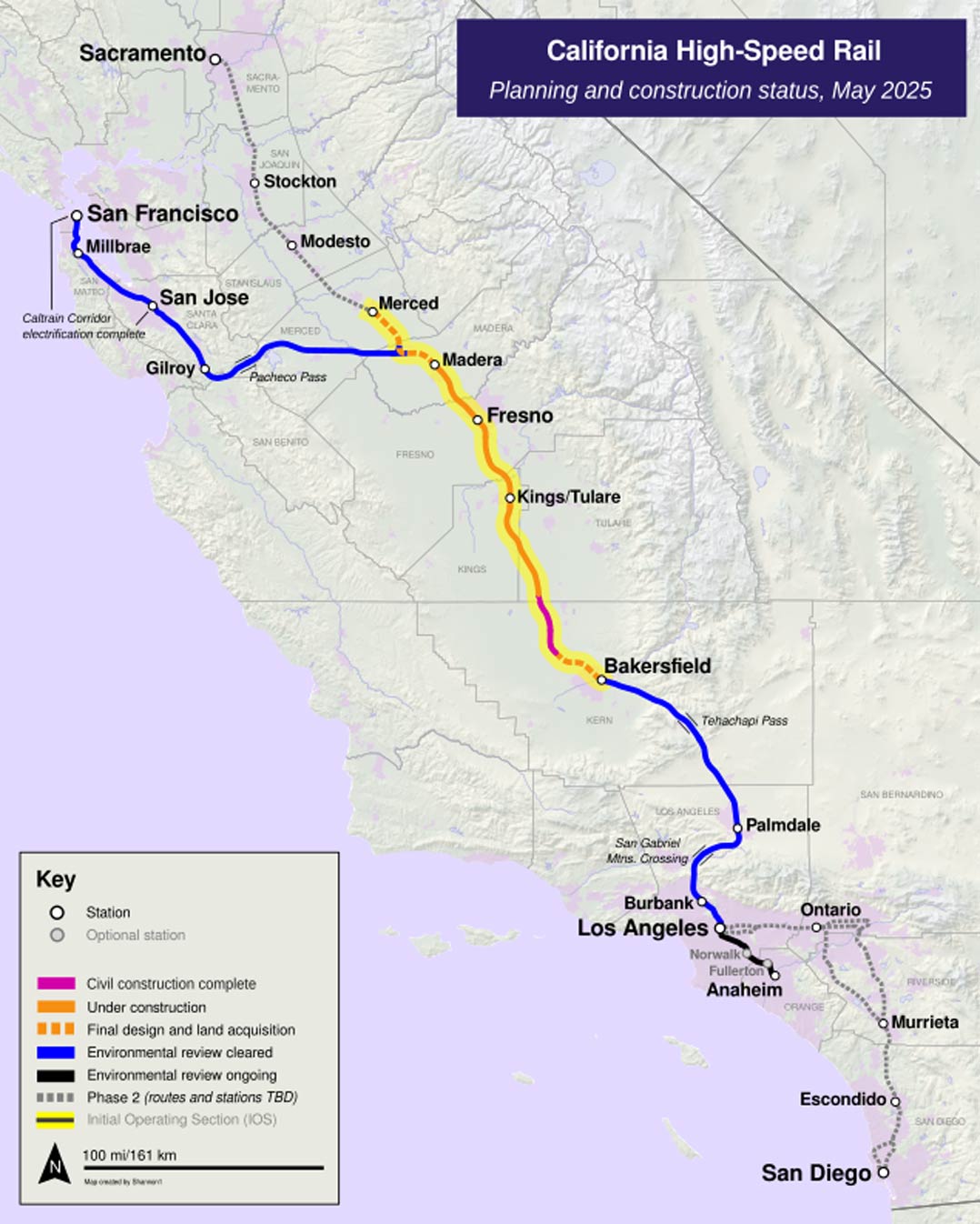
    A map indicating the progress, or lack thereof, of California’s high-speed rail project that may one day connect Los Angeles, Sacramento and San Francisco. Image: California High-Speed Rail Authority, public domain
    A map indicating the progress, or lack thereof, of California’s high-speed rail project that may one day connect Los Angeles, Sacramento and San Francisco. Image: California High-Speed Rail Authority, public domain

    So far, it looks like a bullet train from nowhere to nowhere.

    The main reason for this mess is that it is exceedingly difficult to make the required property purchases or expropriations, especially in the urban and suburban regions of expensive cities. The closer you get to either Frisco or LA, the worse it gets.

    If establishing a route wasn’t difficult enough, California’s politics and regulatory red tape drive up the costs of any megaproject, and that’s before you’ve budgeted for the inevitable lawsuits.

    This makes California’s high-speed rail project multiple times more expensive and slower to build than an identical project would be in the boondocks, or under an authoritarian regime that can easily cut through red tape.

    Saying that he didn’t have time to actually pursue the project, Musk open-sourced it

    This conundrum required, Musk thought, some of his trademark out-of-the-box thinking. He was after a mode of transport that – compared to cars, trains or aeroplanes – was “safer, faster, lower cost, more convenient, immune to weather, sustainably self-powering, resistant to earthquakes and not disruptive to those along the route”.

    That is quite the wish list.

    “Is there truly a new mode of transport – a fifth mode after planes, trains, cars and boats – that meets those criteria and is practical to implement?” Musk mused in a white paper published on Tesla’s blog on 22 August 2013, entitled “Hyperloop Alpha”.

    That is quite the ambition.

    Mach 0.99

    In the paper, he describes a system of metal tubes from which most of the air has been evacuated, inside which capsules whizz suspended on air cushions.

    These passenger capsules would be accelerated to a staggering 1 220km/h (or Mach 0.99) by linear electric motors, maintaining their speed by means of front-mounted air intake fans that negate air resistance and also provide pressurised air for the suspension. The giant fans make them look a little like the sandworms from Dune.
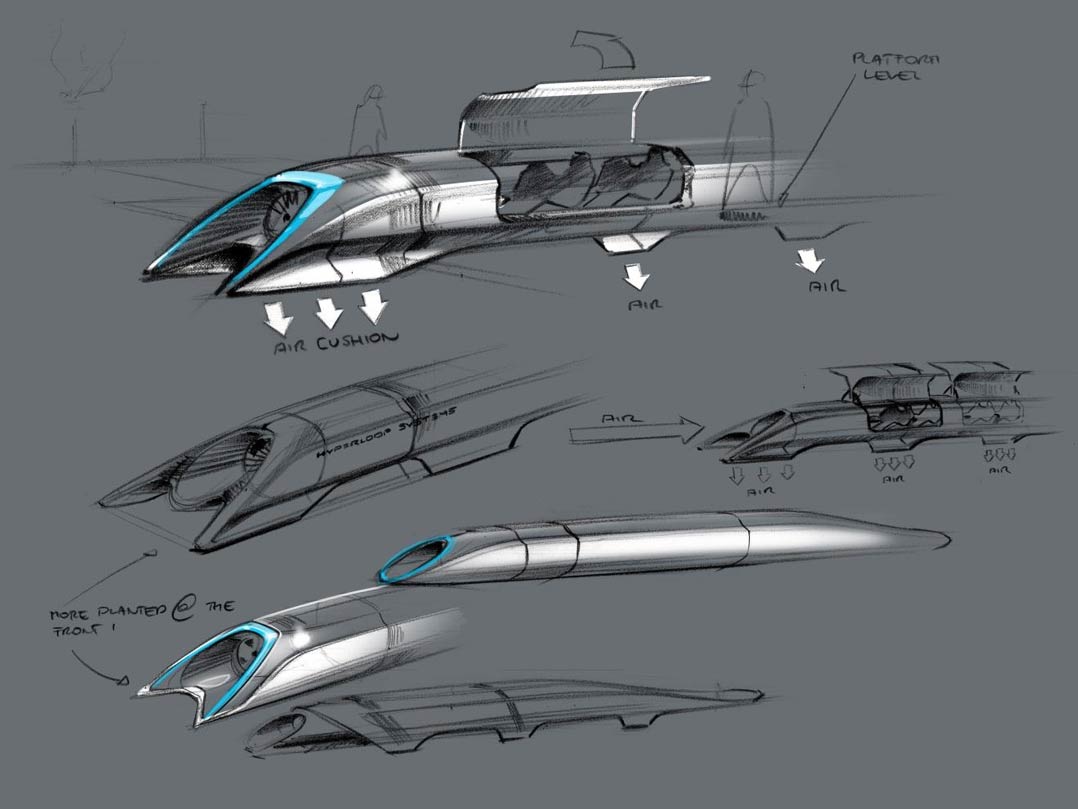
    A conceptual design sketch for Hyperloop capsules, included in Elon Musk’s initial white paper. Image: Hyperloop Alpha, by Elon Musk, 22 August 2013, page 13
    A conceptual design sketch for Hyperloop capsules, included in Elon Musk’s initial white paper. Image: Hyperloop Alpha, by Elon Musk, 22 August 2013, page 13

    The tubes would be raised on 25 000 pillars to minimise ground-level obstructions.

    Each capsule would carry 28 passengers, and departing as often as once every 30 seconds during peak hours, giving it the ability to carry all present commuter traffic between the two cities.

    The whole thing would cost US$6-billion for a passenger-only system, or $7.5-billion for a larger, more versatile version, which works out to less than 10% of the cost of the high-speed rail system California is presently building. Musk estimated tickets would cost $20.

    Saying that he didn’t have time to actually pursue the project, he open-sourced it to let other companies have a go at implementing it.

    The whizbang renders, along with the megaphone of Musk’s name, attracted a bevy of start-ups, including Hyperloop Transportation Technologies, Virgin Hyperloop One and TransPod.
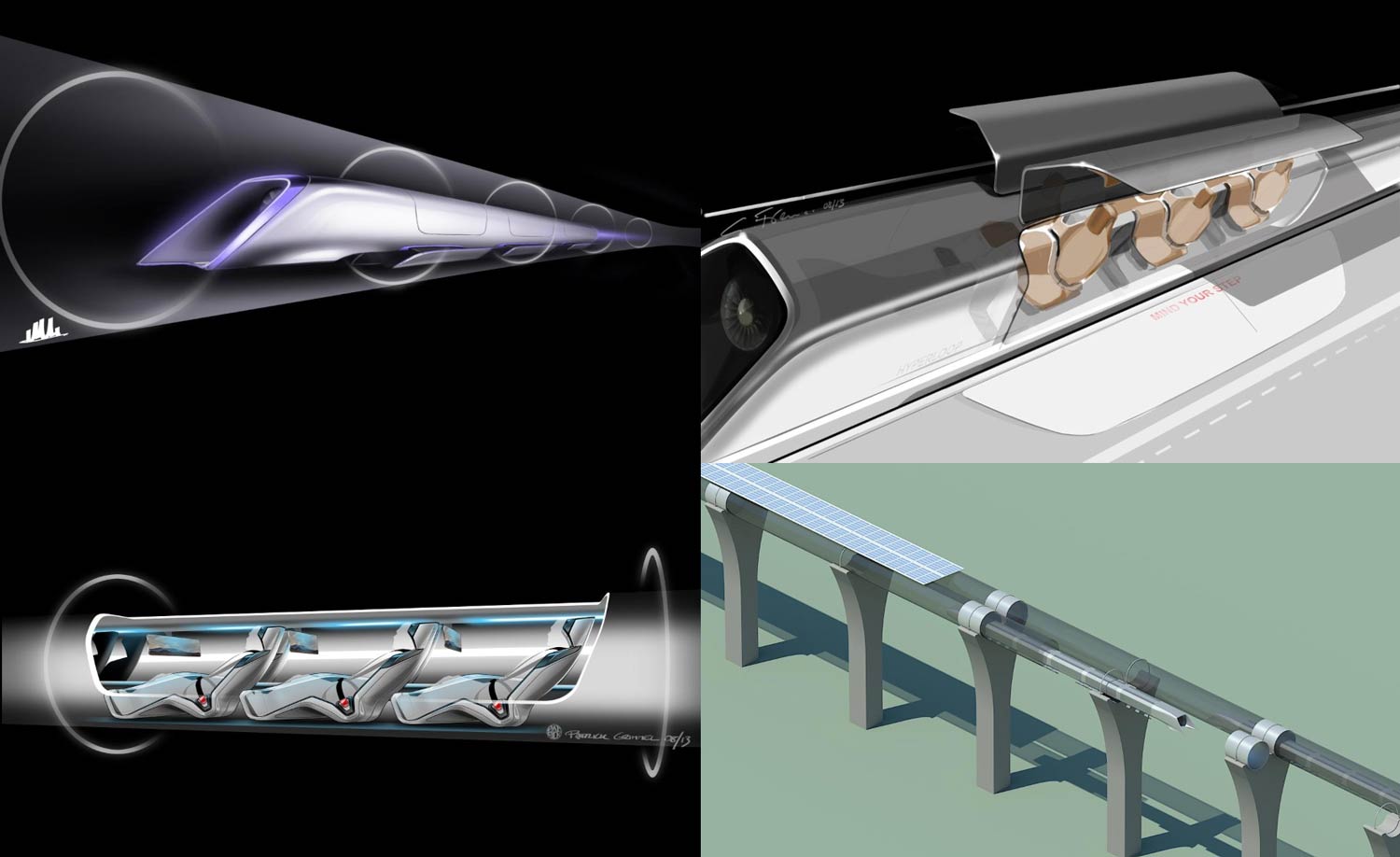
    Renders of Hyperloop tubes and passenger capsules included in Musk’s white paper. Image: Hyperloop Alpha, by Elon Musk, 22 August 2013, pages 14, 16 and 26
    Renders of Hyperloop tubes and passenger capsules included in Musk’s white paper. Image: Hyperloop Alpha, by Elon Musk, 22 August 2013, pages 14, 16 and 26

    Universities launched research projects and had graduate students build prototypes and test tracks.

    The engineering challenges, however, proved far more severe than the early optimism suggested. The original Musk design ran into trouble almost immediately. His proposed air cushion levitation system was found to require an outrageous amount of energy to compress air, making the system less fuel-efficient than air travel. The resulting air gap was also too thin for real-world conditions, where even millimetre-scale misalignments from shifting earth or ordinary wear could cause fatal accidents.

    Hundreds of millions of dollars of investor funding was sunk into these companies and research projects.

    Many adaptations were made, such as finding lighter and stronger materials to construct the conveyor tubes, and replacing air cushion levitation with electromagnetic levitation (read: The train that never came – how maglev technology was derailed).
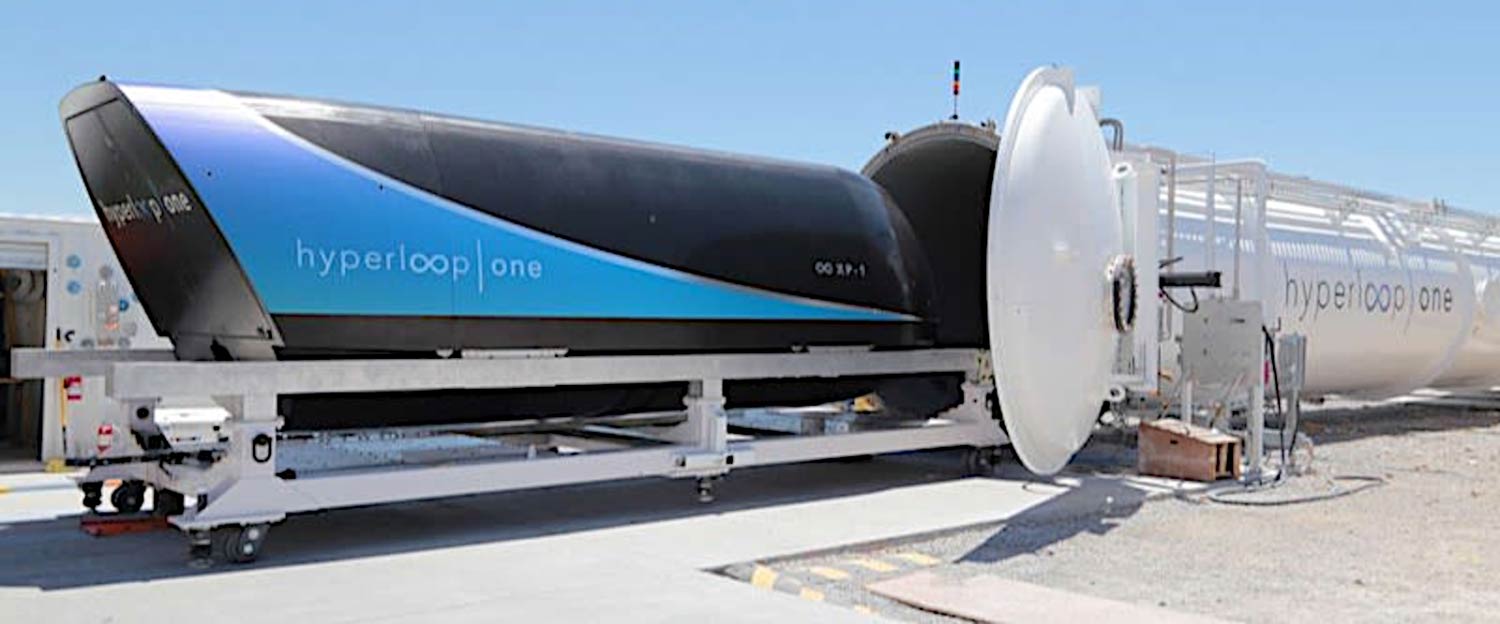
    Richard Branson’s Virgin invested heavily into Hyperloop One, but bailed several years before the company finally hit the wall in 2023. Photo: Virgin Hyperloop One, 2017
    Richard Branson’s Virgin invested heavily into Hyperloop One, but bailed several years before the company finally hit the wall in 2023. Photo: Virgin Hyperloop One, 2017

    Yet none of these companies ever produced a working prototype that got even close to the performance and efficiency required to make the Hyperloop feasible, even as a subsidised public works project.

    Within 10 years, virtually all of them were defunct (although a few stragglers and university research programmes have yet to get the memo).

    The technical challenges were simply too great. As it turns out, centuries’ worth of tried-and-tested engineering experience wasn’t just old-fashioned and unimaginative. It represented the combined knowledge of generations of engineers about what was both practically feasible and economically viable.

    The reduction in air pressure alone, if all else remains equal, would surely make trains far more fuel efficient?

    Everyone should have seen this coming.

    If it was feasible to depressurise tunnels that are hundreds of kilometres long to 0.1% of atmospheric pressure, why has no high-speed railway system ever proposed doing so? The reduction in air pressure alone, if all else remains equal, would surely make trains far more fuel efficient?

    If air cushion levitation, which Musk likened to that of an air hockey table, was a viable means of reducing friction in such a depressurised tunnel, why has that never been used on normal high-speed trains at atmospheric pressure, which can gulp in far denser air to create such a cushion?

    If solar panels, which Musk wanted to mount atop the tubes to power the entire system, can power Hyperloop capsules to the speed of sound, why haven’t railways built solar panels above their tracks to power their perfectly ordinary trains?

    The final blow

    If the conveyor tubes are to be almost entirely depressurised, how will the system cope with branch lines and multiple stations?

    What happens in an accident that pierces the skin of the capsule? Does everyone just suffocate?

    How will metal tubes hundreds of kilometres long deal with thermal expansion and seismic movement, while retaining airtight seals?

    These objections are obvious, even to this ageing tech journalist with no engineering background at all, and research engineers weren’t able to solve any of them.

    Read: The most overhyped but underwhelming product in history

    The economics were the final blow. Researchers at the Technical University of Delft, which specialises in novel forms of transit, found that Hyperloop fares would have to exceed €0.30 per passenger-kilometre for profitability, compared to only €0.174 for high-speed rail. Musk’s original claim of $20 tickets for trips between Los Angeles and San Francisco proved wildly unrealistic. Transportation economists worked out that a reasonable return on infrastructure investment would require fares in excess of $1 000.

    Read: Why smart glasses keep failing – it’s not the tech

    That would make cars, trains, planes, ships, motorcycles, bicycles, rickshaws and donkey carts superior forms of transport to the Hyperloop.

    The best question, however, is this: if the Hyperloop were such a brilliant idea, then why hadn’t anyone thought of it before? Is Elon Musk uniquely brilliant and innovative?

    In his paper, Musk nodded briefly at prior art, including patents by Robert Goddard, filed for in 1945 and granted in 1950, and subsequent proposals by the Rand Corporation and ET3.
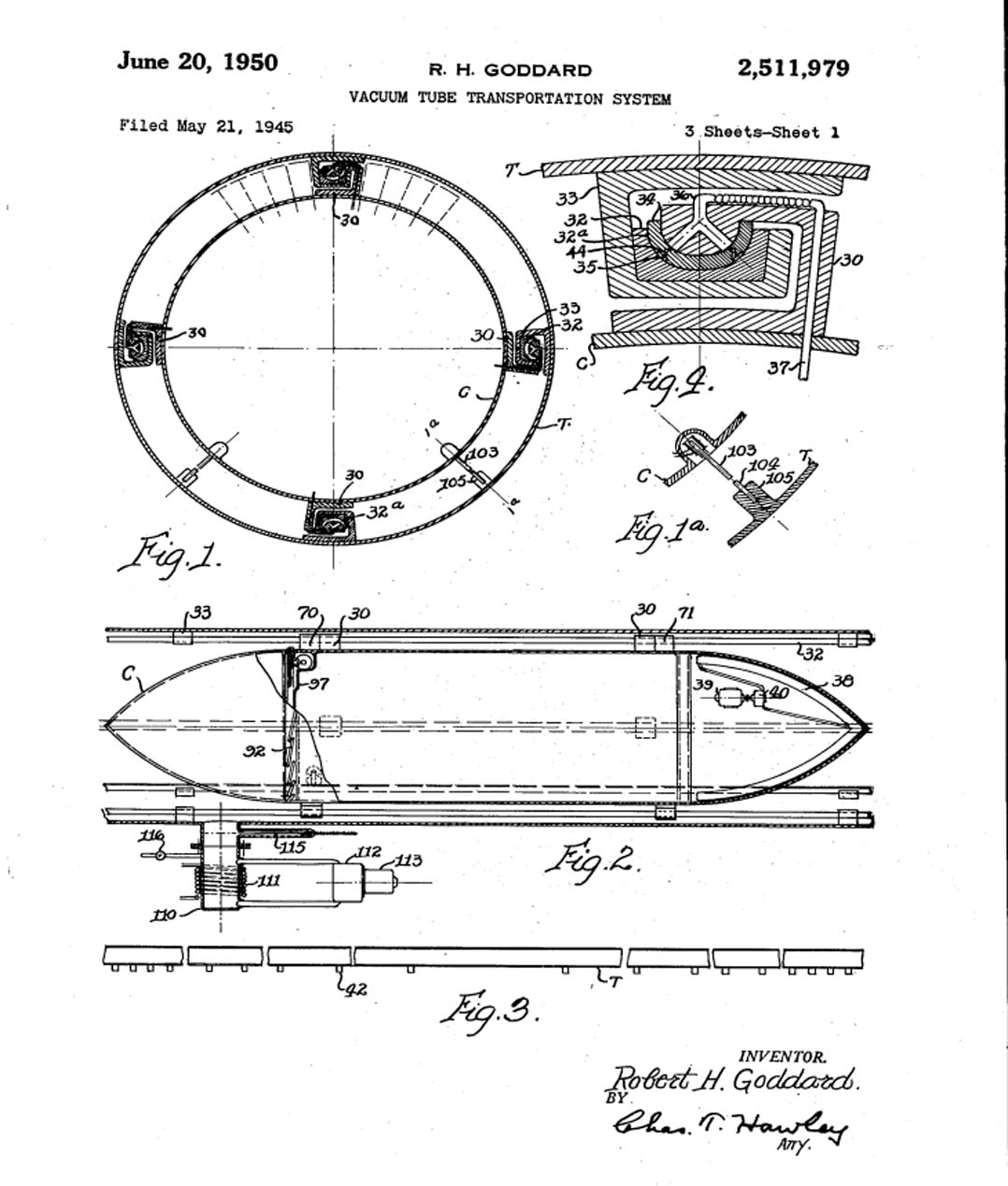
    A patent granted in 1950 to rocket pioneer Robert Goddard for a vacuum tube passenger transit system. Image: US Patent Office
    A patent granted in 1950 to rocket pioneer Robert Goddard for a vacuum tube passenger transit system. Image: US Patent Office

    “Unfortunately, none of these has panned out,” wrote Musk. He speculated briefly and superficially about some possible reasons why they haven’t panned out, before moving on to his own spin on those ideas.

    What Musk omitted in his paper is the fact that the idea goes back much further than Goddard’s 1950 patent.

    The use of pneumatics to power a railway goes back to the early 19th century, more than 200 years ago. In 1810, George Medhurst, an engineer living in London, published a pamphlet entitled “A New Method of Conveying Letters and Goods with Great Certainty and Rapidity by Air”.

    Various 19th-century engineers developed variations on the idea, known as ‘atmospheric railways’

    Two years later, he expanded the diameter of the tube proposed in his first pamphlet, and published “Calculations and Remarks Tending to Prove the Practicability, Effects, and Advantages of a Plan for the Rapid Conveyance of Goods and Passengers upon an Iron Road through a Tube of 30 Feet in Area, by the Power and Velocity of Air”.

    This title not being sufficiently explanatory, he published another tract in the year of his death, 1827: “A New System of Inland Conveyance, for Goods and Passengers, Capable of Being Extended throughout the Country, and of Conveying all Kinds of Goods, Cattle, and Passengers with the Velocity of Sixty Miles in an Hour, at an Expense that will not Exceed the One-fourth Part of the Present Mode of Travelling, without the Aid of Horses or Any Animal Power”.

    Read: The train that never came – how maglev technology was derailed

    It fell to one John Vallance to build the first practical prototype, however. Motivated, like Musk, by the apparent cost, sluggishness and inefficiency of conventional railways, he built a model of a system that worked by suctioning a carriage through a pipe by pumping out the air ahead of it.

    Various 19th-century engineers, among them the redoubtable Isambard Kingdom Brunel, developed variations on the idea, known as “atmospheric railways”.

    To avoid the need to pump out vast volumes of air, most newer variants connected carriages to a piston that ran inside a pipe embedded in the track between the rails.

    …article continues below…
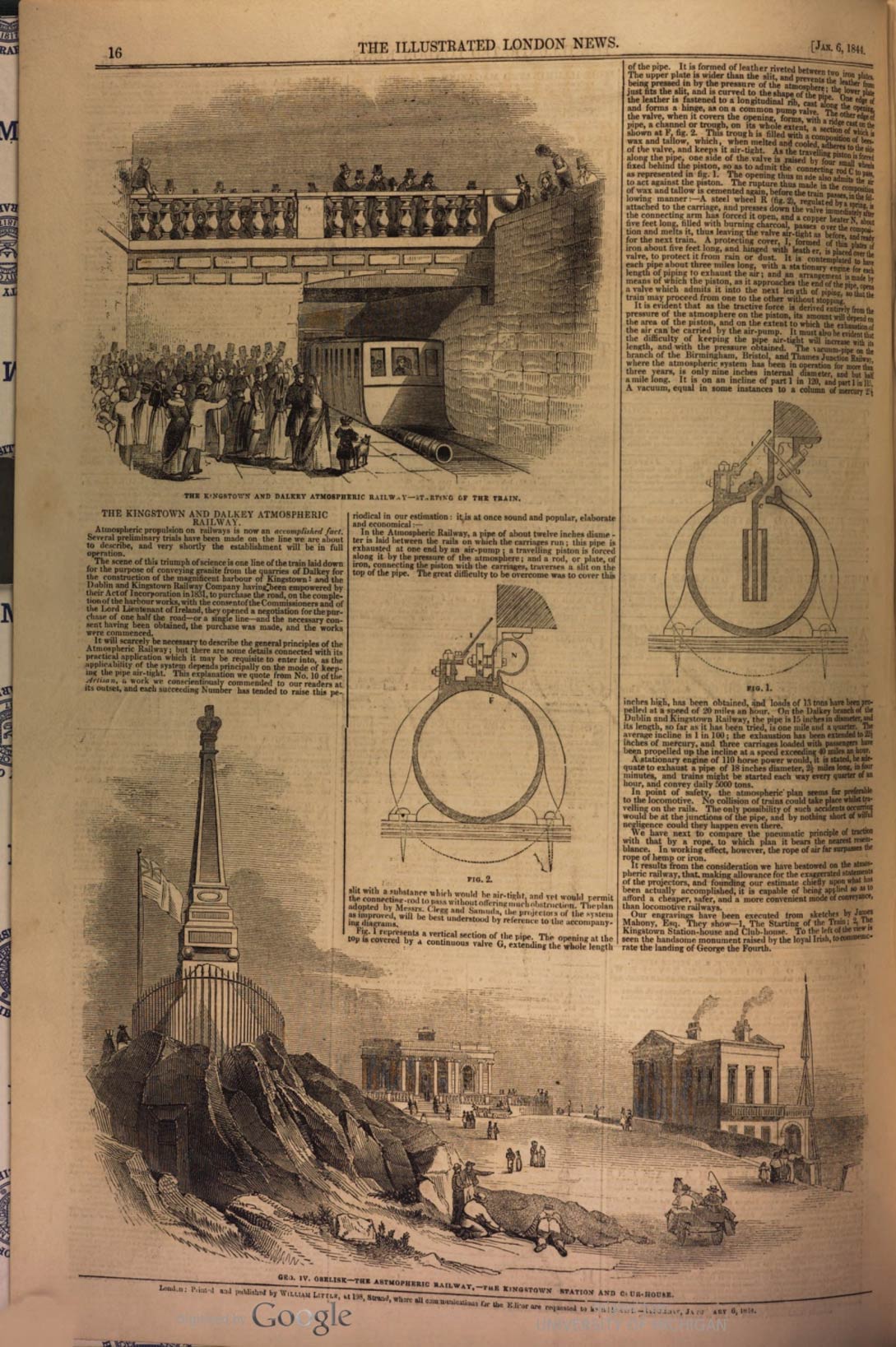
    An 1844 newspaper page, describing how the Kingstown-Dalkey Atmospheric Railway works. Image: The Illustrated London News, 6 January 1844
    An 1844 newspaper page, describing how the Kingstown-Dalkey Atmospheric Railway works. Image: The Illustrated London News, 6 January 1844

    The great advantage of these systems was that the engine driving the system could remain stationary, instead of wasting tremendous amounts of energy conveying heavy locomotives along the track.
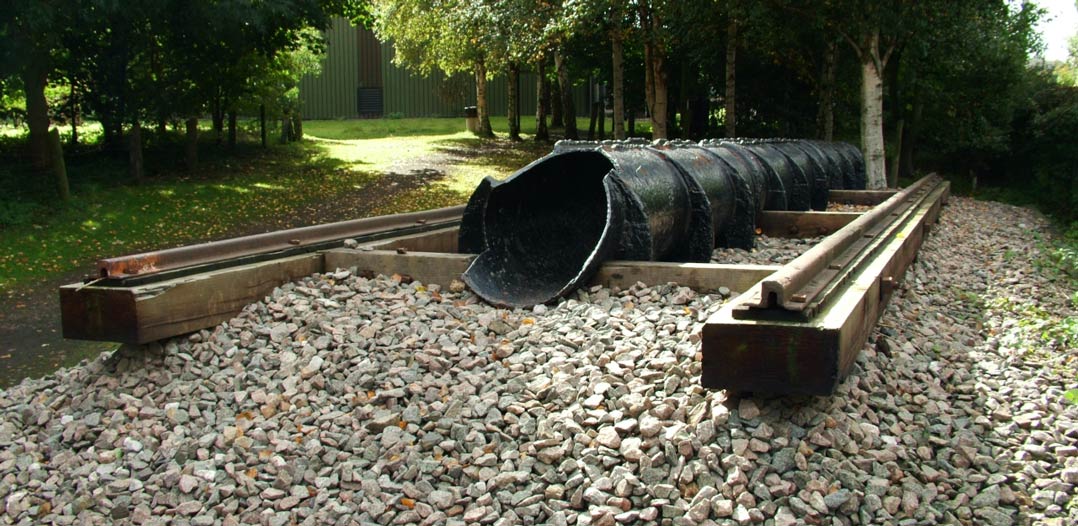
    Remains of the South Devon Railway’s atmospheric railway pipe, designed by Isambard Kingdom Brunel, now on display at Didcot Railway Centre in Oxfordshire. Photo: Wikipedia user Chowells, under CC BY 2.5 licence
    Remains of the South Devon Railway’s atmospheric railway pipe, designed by Isambard Kingdom Brunel, now on display at Didcot Railway Centre in Oxfordshire. Photo: Wikipedia user Chowells, under CC BY 2.5 licence

    Perhaps most colourfully, an early subway pioneer by the name of Alfred Ely Beach surprised New York’s public and politicians by unveiling, in 1870, a fully completed and luxuriously appointed pneumatic subway train that ran for 95 metres directly below Broadway.

    Because of political rivalry with William M Tweed, the boss of Tammany Hall, who had corrupt transit plans of his own, Beach, a prolific inventor with many patents to his name, was denied the right to construct a subway.

    His solution was to do so in secret, at night, and so present New York society with a fait accompli.

    The Beach Pneumatic Railway worked, albeit at a stately 10 miles an hour – far less than the 60mph Beach had initially promised. Still, it was extremely popular with the curious and thrill-seeking population of New York.
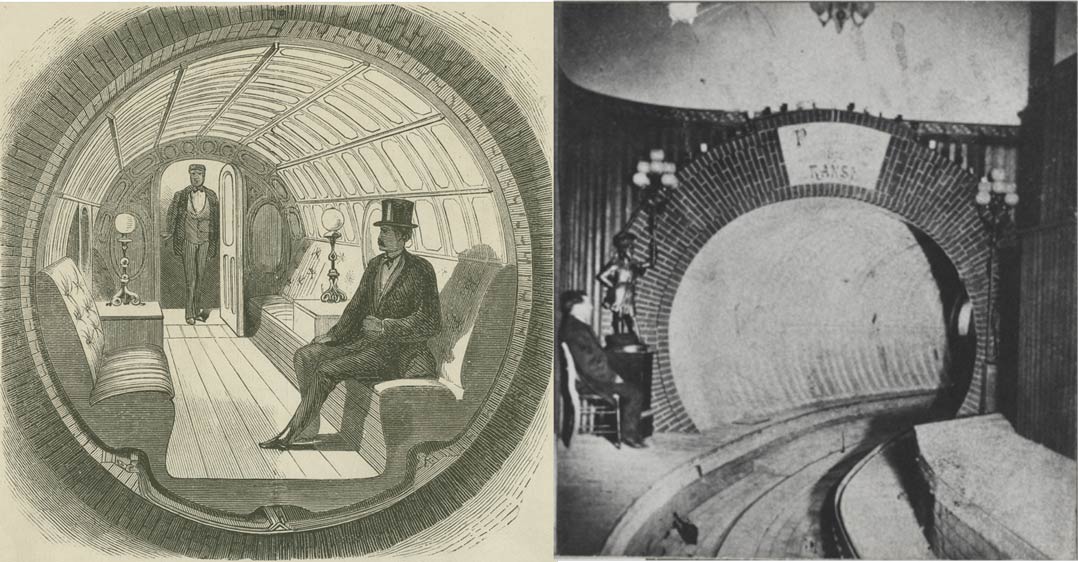
    A cutaway drawing of the Beach Pneumatic Railway, and a photograph of its tunnel entrance, circa 1870. Images: Museum of the City of New York
    A cutaway drawing of the Beach Pneumatic Railway, and a photograph of its tunnel entrance, circa 1870. Images: Museum of the City of New York

    Soon, competing bills – one for Tweed’s proposal, and one for that of Beach –  landed on the desk of the governor, John T Hoffman. Knowing where his political bread was buttered, Hoffman immediately signed Tweed’s bill and vetoed that of Beach.

    The pneumatic train ran up and down its short track for a year, but was then closed, buried and forgotten, until subway construction workers rediscovered it in 1912.

    For over 200 years, inventors have had pretty much the same idea that Elon Musk had. For over 200 years, ingenious engineers have tried to make the idea work. For over 200 years, they have failed.

    Musk probably outsourced much of it to his army of overworked flunkeys at Tesla and SpaceX

    The failure of the Hyperloop is but the most recent of numerous prior attempts. Yet it still has all the fundamental shortcomings that it has always had.

    It sucked up vast amounts of private and public capital around the world, diverting resources from more promising public transit projects – including conventional high-speed rail.

    But then, perhaps that is what Musk intended all along. This entire lark cost Musk the time it took to write a rushed white paper. He probably outsourced much of it to his army of overworked flunkeys at Tesla and SpaceX.

    By making it open source, he looks like he’s doing humanity a favour.

    Read: How 3D wowed the world, then flopped again and again

    Any distraction from, and additional friction for, a high-speed rail project that would reduce Tesla’s electric vehicle sales, at absolutely no cost to himself, must surely be chalked up as a great success for Elon Musk.  – © 2026 NewsCentral Media

    • Ivo Vegter is a columnist for The Daily Friend and a former technology journalist
    Follow TechCentral on Google News Add TechCentral as your preferred source on Google


    Elon Musk Hyperloop
    WhatsApp YouTube
    Share. Facebook Twitter LinkedIn WhatsApp Telegram Email Copy Link
    Previous ArticleSA start-up HyperDev wants to turn your AI-built app into a real company

    Related Posts

    Musk launches Macrohard in cheeky nod to Microsoft - Elon Musk

    Musk launches Macrohard in cheeky nod to Microsoft

    12 March 2026
    Musk hits brakes on Mars mission

    Musk hits brakes on Mars mission

    9 February 2026
    Starlink considers building its own phone - Elon Musk

    Starlink considers building its own phone

    5 February 2026
    Company News

    How South African executives can crack the AI ROI code

    20 March 2026
    Africa's first Nvidia RTX Pro GPU servers have landed

    Africa’s first Nvidia RTX Pro GPU servers have landed

    19 March 2026
    How Acer Africa is bridging the digital divide through local innovation

    How Acer Africa is bridging the digital divide through local innovation

    19 March 2026
    Opinion
    South Africa's energy future hinges on getting wheeling right - Aishah Gire

    South Africa’s energy future hinges on getting wheeling right

    10 March 2026
    Hold the doom: the case for a South African comeback - Duncan McLeod

    Apple just dropped a bomb on the Windows world

    5 March 2026
    VC's centre of gravity is shifting - and South Africa is in the frame - Alison Collier

    VC’s centre of gravity is shifting – and South Africa is in the frame

    3 March 2026

    Subscribe to Updates

    Get the best South African technology news and analysis delivered to your e-mail inbox every morning.

    Latest Posts
    How Elon Musk's Hyperloop sucked up billions and delivered nothing

    How Elon Musk’s Hyperloop sucked up billions and delivered nothing

    22 March 2026
    SA start-up HyperDev wants to turn your AI-built app into a real company - Anton Moulder

    SA start-up HyperDev wants to turn your AI-built app into a real company

    22 March 2026
    Amazon set to take another shot at the smartphone market - Jeff Bezos

    Amazon set to take another shot at the smartphone market

    22 March 2026
    MTN and Vodacom dwarf South Africa's listed tech sector

    MTN and Vodacom dwarf South Africa’s listed tech sector

    20 March 2026
    © 2009 - 2026 NewsCentral Media
    • Cookie policy (ZA)
    • TechCentral – privacy and Popia

    Type above and press Enter to search. Press Esc to cancel.

    Manage consent

    TechCentral uses cookies to enhance its offerings. Consenting to these technologies allows us to serve you better. Not consenting or withdrawing consent may adversely affect certain features and functions of the website.

    Functional Always active
    The technical storage or access is strictly necessary for the legitimate purpose of enabling the use of a specific service explicitly requested by the subscriber or user, or for the sole purpose of carrying out the transmission of a communication over an electronic communications network.
    Preferences
    The technical storage or access is necessary for the legitimate purpose of storing preferences that are not requested by the subscriber or user.
    Statistics
    The technical storage or access that is used exclusively for statistical purposes. The technical storage or access that is used exclusively for anonymous statistical purposes. Without a subpoena, voluntary compliance on the part of your Internet Service Provider, or additional records from a third party, information stored or retrieved for this purpose alone cannot usually be used to identify you.
    Marketing
    The technical storage or access is required to create user profiles to send advertising, or to track the user on a website or across several websites for similar marketing purposes.
    • Manage options
    • Manage services
    • Manage {vendor_count} vendors
    • Read more about these purposes
    View preferences
    • {title}
    • {title}
    • {title}