
Close Menu
TechCentralTechCentral

    Subscribe to the newsletter

    Get the best South African technology news and analysis delivered to your e-mail inbox every morning.

    Facebook X (Twitter) YouTube LinkedIn
    WhatsApp Facebook X (Twitter) LinkedIn YouTube
    TechCentralTechCentral
    • News
      Big Microsoft 365 price increases coming next year

      Big Microsoft price increases coming next year

      5 December 2025
      Vodacom to take control of Safaricom in R36-billion deal - Shameel Joosub

      Vodacom to take control of Safaricom in R36-billion deal

      4 December 2025
      Black Friday goes digital in South Africa as online spending surges to record high

      Black Friday goes digital in South Africa as online spending surges to record high

      4 December 2025
      BYD takes direct aim at Toyota with launch of sub-R500 000 Sealion 5 PHEV

      BYD takes direct aim at Toyota with launch of sub-R500 000 Sealion 5 PHEV

      4 December 2025
      'Get it now': Takealot in new instant deliveries pilot

      ‘Get it now’: Takealot in new instant deliveries pilot

      4 December 2025
    • World
      Amazon and Google launch multi-cloud service for faster connectivity

      Amazon and Google launch multi-cloud service for faster connectivity

      1 December 2025
      Google makes final court plea to stop US breakup

      Google makes final court plea to stop US breakup

      21 November 2025
      Bezos unveils monster rocket: New Glenn 9x4 set to dwarf Saturn V

      Bezos unveils monster rocket: New Glenn 9×4 set to dwarf Saturn V

      21 November 2025
      Tech shares turbocharged by Nvidia's stellar earnings

      Tech shares turbocharged by stellar Nvidia earnings

      20 November 2025
      Config file blamed for Cloudflare meltdown that disrupted the web

      Config file blamed for Cloudflare meltdown that disrupted the web

      19 November 2025
    • In-depth
      Jensen Huang Nvidia

      So, will China really win the AI race?

      14 November 2025
      Valve's Linux console takes aim at Microsoft's gaming empire

      Valve’s Linux console takes aim at Microsoft’s gaming empire

      13 November 2025
      iOCO's extraordinary comeback plan - Rhys Summerton

      iOCO’s extraordinary comeback plan

      28 October 2025
      Why smart glasses keep failing - no, it's not the tech - Mark Zuckerberg

      Why smart glasses keep failing – it’s not the tech

      19 October 2025
      BYD to blanket South Africa with megawatt-scale EV charging network - Stella Li

      BYD to blanket South Africa with megawatt-scale EV charging network

      16 October 2025
    • TCS
      TCS+ | How Cloud on Demand helps partners thrive in the AWS ecosystem - Odwa Ndyaluvane and Xenia Rhode

      TCS+ | How Cloud On Demand helps partners thrive in the AWS ecosystem

      4 December 2025
      TCS | MTN Group CEO Ralph Mupita on competition, AI and the future of mobile

      TCS | Ralph Mupita on competition, AI and the future of mobile

      28 November 2025
      TCS | Dominic Cull on fixing South Africa's ICT policy bottlenecks

      TCS | Dominic Cull on fixing South Africa’s ICT policy bottlenecks

      21 November 2025
      TCS | BMW CEO Peter van Binsbergen on the future of South Africa's automotive industry

      TCS | BMW CEO Peter van Binsbergen on the future of South Africa’s automotive industry

      6 November 2025
      TCS | Why Altron is building an AI factory - Bongani Andy Mabaso

      TCS | Why Altron is building an AI factory in Johannesburg

      28 October 2025
    • Opinion
      Your data, your hardware: the DIY AI revolution is coming - Duncan McLeod

      Your data, your hardware: the DIY AI revolution is coming

      20 November 2025
      Zero Carbon Charge founder Joubert Roux

      The energy revolution South Africa can’t afford to miss

      20 November 2025
      It's time for a new approach to government IT spend in South Africa - Richard Firth

      It’s time for a new approach to government IT spend in South Africa

      19 November 2025
      How South Africa's broken Rica system fuels murder and mayhem - Farhad Khan

      How South Africa’s broken Rica system fuels murder and mayhem

      10 November 2025
      South Africa's AI data centre boom risks overloading a fragile grid - Paul Colmer

      South Africa’s AI data centre boom risks overloading a fragile grid

      30 October 2025
    • Company Hubs
      • Africa Data Centres
      • AfriGIS
      • Altron Digital Business
      • Altron Document Solutions
      • Altron Group
      • Arctic Wolf
      • AvertITD
      • Braintree
      • CallMiner
      • CambriLearn
      • CYBER1 Solutions
      • Digicloud Africa
      • Digimune
      • Domains.co.za
      • ESET
      • Euphoria Telecom
      • Incredible Business
      • iONLINE
      • IQbusiness
      • Iris Network Systems
      • LSD Open
      • NEC XON
      • Netstar
      • Network Platforms
      • Next DLP
      • Ovations
      • Paracon
      • Paratus
      • Q-KON
      • SevenC
      • SkyWire
      • Solid8 Technologies
      • Telit Cinterion
      • Tenable
      • Vertiv
      • Videri Digital
      • Vodacom Business
      • Wipro
      • Workday
      • XLink
    • Sections
      • AI and machine learning
      • Banking
      • Broadcasting and Media
      • Cloud services
      • Contact centres and CX
      • Cryptocurrencies
      • Education and skills
      • Electronics and hardware
      • Energy and sustainability
      • Enterprise software
      • Financial services
      • Information security
      • Internet and connectivity
      • Internet of Things
      • Investment
      • IT services
      • Lifestyle
      • Motoring
      • Public sector
      • Retail and e-commerce
      • Satellite communications
      • Science
      • SMEs and start-ups
      • Social media
      • Talent and leadership
      • Telecoms
    • Events
    • Advertise
    TechCentralTechCentral
    Home » In-depth » End of the keyboard and mouse era

    End of the keyboard and mouse era

    By Editor27 August 2012
    Twitter LinkedIn Facebook WhatsApp Email Telegram Copy Link
    News Alerts
    WhatsApp
    Jarred Cinman

    The way we use computers has remained largely unchanged for nearly 40 years. Even with the advent of touch screens and tablets in the past 10 years, we have only experienced a slight modification of the familiar point-and-click paradigm.

    Efforts to improve the user interface have largely focused on making the content of what can be clicked on, or typed into, more intuitive. Although this field of user-experience design has created operating systems, websites and devices that are ever more user friendly, they still remain stubbornly tied within this traditional relationship between human and computer.

    Well, hang onto your mouse pads because everything is about to change. We are currently going through the most significant evolution in the way we work with computers since Steve Jobs launched the Macintosh in 1984.

    Here are the top seven user interface revolutions that were recently the domain only of science fiction. Each one listed here is now either a real product, or at least in prototype, and coming to a desktop near you in the next 10 years. Let’s look at what is happening now, what is coming in the next two to three years, three to five years hence, and lastly five to 10 years out and beyond.

    NOW

    1. Touch and multi-touch
    Perhaps it’s a little hasty to dismiss touch as merely a replacement for a mouse. While this was definitely true in the 1990s, Apple’s introduction of multi-touch (swiftly copied by other phones and tablets) changed everything.

    By now, the magical experience of swiping and pinching which we have all experienced on the iPad, as well seen on Microsoft’s Surface table, is commonplace. But touch is finally set to come to all our computing devices. The next generation of monitors and laptops will have this as a standard feature.
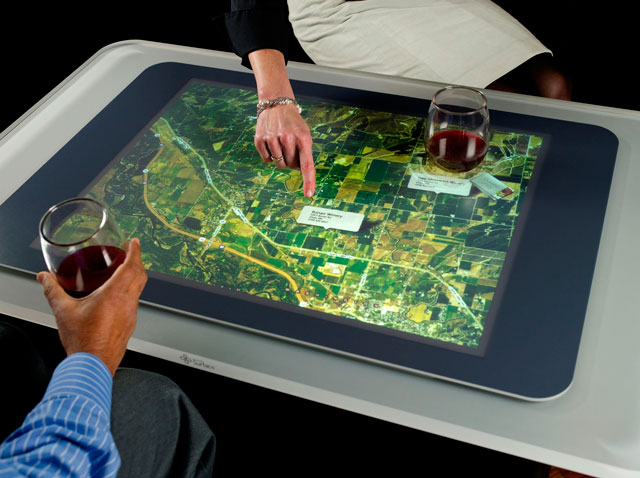
    Microsoft’s Surface table

    2. Gesture control
    The Nintendo Wii introduced the world to the idea of gesture-based user interfaces. That was followed by the Microsoft Kinect, currently the fastest-selling consumer electronics device in the world. But these are gaming accessories — how have they changed personal computing?

    A new class of gadgets — including a PC-version of the Kinect itself, but also most compellingly seen in the Leap Gesture Control — promises to break the mouse-keyboard partnership. The Leap is a tiny box, no bigger than USB stick, which can detect a full range of hand motions, including each finger individually.

    This is a highly visceral way of engaging with a computer because it mimics how we engage with everyday objects. Grabbing, pulling, flicking, swiping, pushing — all of these are now viable and programmable computer instructions. Perhaps the greatest concern is erasing your work by sipping your tea.
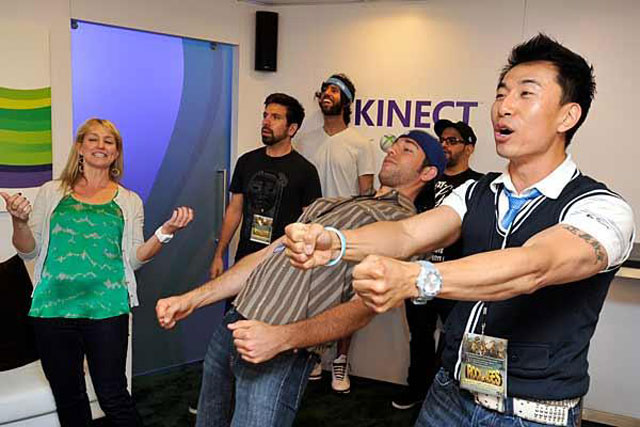
    Microsoft Kinect in action

    3. Voice
    Voice control can be viewed as sci-fi or mundane. In the former, we remember Dave trying to persuade HAL to open the pod bay doors or Captain Kirk asking the computer to locate Mr Spock. For the latter we have the experience of trying to convince our cellphones to “phone Candy” and ending up having an awkward conversation with Sandy.

    Siri, released with the Apple iPhone 4S, has improved voice instructions to the point that many common functions are now reliably handled by voice commands. It also has a sense of humour which has charmed its users.

    However, most voice recognition, and certainly speech synthesis in response, is still not quite good enough. But it’s close. The latest Mac OS X has dictation built in. And Windows 8 isn’t far behind.

    Voice is good for dictation but it’s also great for any hands-free environment. That includes phones but also a new range of portable, wearable and everyday devices that are also just around the corner.
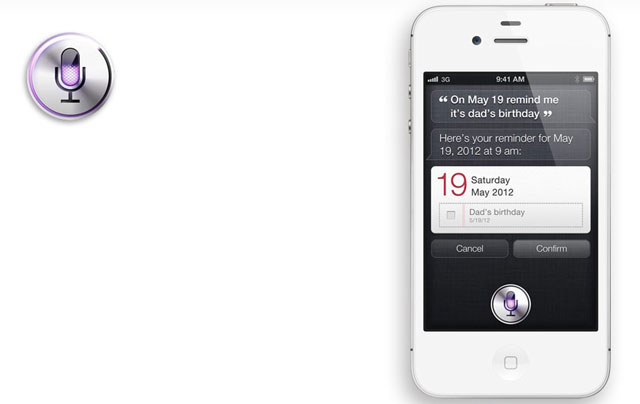
    Apple’s Siri

    TWO TO THREE YEARS

    4. Heads up

    Heads-up displays, or HUDs, have been around for some time, popularised through many Hollywood films about fighter pilots.

    The prototypical consumer “heads up display” came with the advent of apps like Layar for the iPhone where holding up the phone overlayed an informational layer between the viewer and the world using the phone camera.

    But Google Glass, one of the first major forays of the Internet giant into an Apple-like hardware play, takes things to the next level. These glasses put a computing film between the wearer and the world, with an almost endless array of potential applications such as giving directions, annotating physical locations with recommendations and regional information, and letting you answer your e-mail while walking.

    One step further is contact lenses that do the same thing without having to don a new accessory.

    Voice instruction would seem to be an essential pairing with this technology. But it’s here.
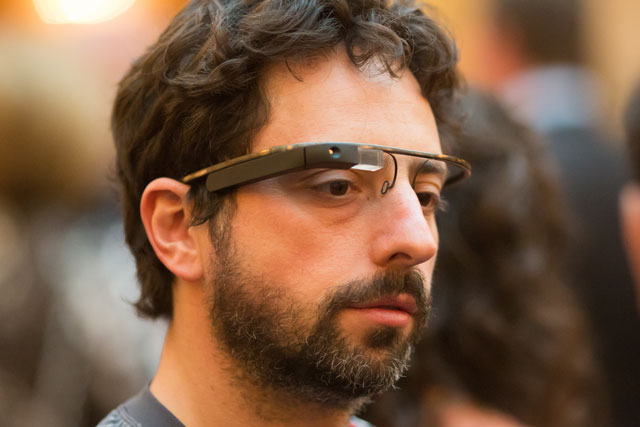
    Google co-founder Sergey Brin showing off the Project Glass computerised glasses

    5. Wearable computers
    From being something on the desk, to being something you can carry in a bag to in your pocket — computers have dramatically changed in the past 10 years.

    They’re going through another revolution now into things you can wear. The previously mentioned HUD is just one example. A wearable computer could track your every step, know your location, allow you to project an image onto a nearby surface, play music or make a payment in-store.

    This is the next generation of cellphone — the final break from the “phone” metaphor to something completely new. Phoning will still exist, but instead of a handset you will wear the computer on different parts of your body and its functions will be integrated with your daily activities.

    If this sounds fanciful, look at the Nike Fuelband that last year became one of the top selling gadgets in the world. It’s a tiny wearable computer that measures physical activity and helps you achieve your fitness goals.
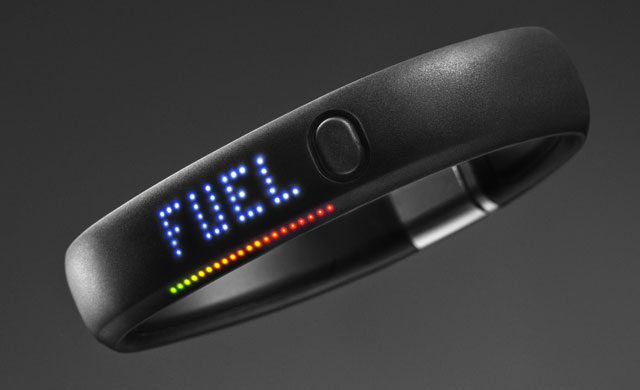
    The Nike Fuelband measures physical activity and helps people achieve their fitness goals

    THREE TO FIVE YEARS

    6. Holographic displays
    True holograms, projected with lasers, are too expensive and energy-hungry to be possible anytime soon. But recent innovations have seen faux-holograms (like the magical appearance of Tupac Shakur, who died 15 years ago, live on stage) step into view.

    Various technologies offer the possibility to project an image into 3D space, creating the illusion of a three dimensional object. Or, at the very least, a three-dimensional video image which would be perfectly acceptable for a meeting where the other parties appear three dimensionally around the table.

    Musion, the company behind the Tupac appearance, has already partnered with Cisco to show off what a holographic conference presentation might look like.

    It’s not quite the real thing, but it’s compelling and probably good enough to start becoming commonplace. A computer image that is no longer contained by a screen but appears to float in mid-air and can be walked around, viewed from many angles and manipulated in three dimensions would break another part of the paradigm we have become used to — the monitor.

    FIVE TO 10 YEARS (PERHAPS LONGER)

    7. Brain-machine interfaces
    As insane as it sounds, prototypes for connecting the human brain directly to computers have existed for some time. Recent reports say researchers at Caltech are working on a robotic probe that can implant electrodes into your brain to interface with particular neurons.

    The immediate application of this is for disabled people to control robotic limbs, get direct input from computerised eyes or ears and produce speech. But it’s a small leap to see how you could apply this to all computing applications. Think “search recipe for pasta” and a pasta recipe appears on your HUD.

    Even more intriguing is the idea that you could mimic telepathy by sending messages to someone else, simply by thinking it.

    A lot more progress needs to be made in understanding the brain before these kinds of complex interactions will be possible but basic actions — like opening your garage door simply by thinking about it — will be possible in the relatively near future.

    The mouse and the keyboard and, more recently, some more sophisticated gaming controllers, have defined how we have interacted with the machines we have made for decades. We are on the brink of a new era. This era will be marked by a more intimate and pervasive kind of engagement between humans and computers. They are becoming extensions of us, enhancing our bodies and extending our minds.

    The future is upon us.

    • Jarred Cinman is chief inventor at digital agency Native


    Jarred Cinman Native
    Subscribe to TechCentral Subscribe to TechCentral
    Share. Facebook Twitter LinkedIn WhatsApp Telegram Email Copy Link
    Previous ArticleWhat Apple’s court victory really means
    Next Article UniForum to hike .za domain fees

    Related Posts

    Bookly brings e-books to Mxit

    30 May 2013

    Redefining media for the digital age

    15 March 2011
    Company News
    AI is not a technology problem - iqbusiness

    AI is not a technology problem – iqbusiness

    5 December 2025
    Telcos are sitting on a data gold mine - but few know what do with it - Phillip du Plessis

    Telcos are sitting on a data gold mine – but few know what do with it

    4 December 2025
    Unlock smarter computing with your surface Copilot+ PC

    Unlock smarter computing with your Surface Copilot+ PC

    4 December 2025
    Opinion
    Your data, your hardware: the DIY AI revolution is coming - Duncan McLeod

    Your data, your hardware: the DIY AI revolution is coming

    20 November 2025
    Zero Carbon Charge founder Joubert Roux

    The energy revolution South Africa can’t afford to miss

    20 November 2025
    It's time for a new approach to government IT spend in South Africa - Richard Firth

    It’s time for a new approach to government IT spend in South Africa

    19 November 2025

    Subscribe to Updates

    Get the best South African technology news and analysis delivered to your e-mail inbox every morning.

    Latest Posts
    Big Microsoft 365 price increases coming next year

    Big Microsoft price increases coming next year

    5 December 2025
    AI is not a technology problem - iqbusiness

    AI is not a technology problem – iqbusiness

    5 December 2025
    Vodacom to take control of Safaricom in R36-billion deal - Shameel Joosub

    Vodacom to take control of Safaricom in R36-billion deal

    4 December 2025
    Black Friday goes digital in South Africa as online spending surges to record high

    Black Friday goes digital in South Africa as online spending surges to record high

    4 December 2025
    © 2009 - 2025 NewsCentral Media
    • Cookie policy (ZA)
    • TechCentral – privacy and Popia

    Type above and press Enter to search. Press Esc to cancel.

    Manage consent

    TechCentral uses cookies to enhance its offerings. Consenting to these technologies allows us to serve you better. Not consenting or withdrawing consent may adversely affect certain features and functions of the website.

    Functional Always active
    The technical storage or access is strictly necessary for the legitimate purpose of enabling the use of a specific service explicitly requested by the subscriber or user, or for the sole purpose of carrying out the transmission of a communication over an electronic communications network.
    Preferences
    The technical storage or access is necessary for the legitimate purpose of storing preferences that are not requested by the subscriber or user.
    Statistics
    The technical storage or access that is used exclusively for statistical purposes. The technical storage or access that is used exclusively for anonymous statistical purposes. Without a subpoena, voluntary compliance on the part of your Internet Service Provider, or additional records from a third party, information stored or retrieved for this purpose alone cannot usually be used to identify you.
    Marketing
    The technical storage or access is required to create user profiles to send advertising, or to track the user on a website or across several websites for similar marketing purposes.
    • Manage options
    • Manage services
    • Manage {vendor_count} vendors
    • Read more about these purposes
    View preferences
    • {title}
    • {title}
    • {title}