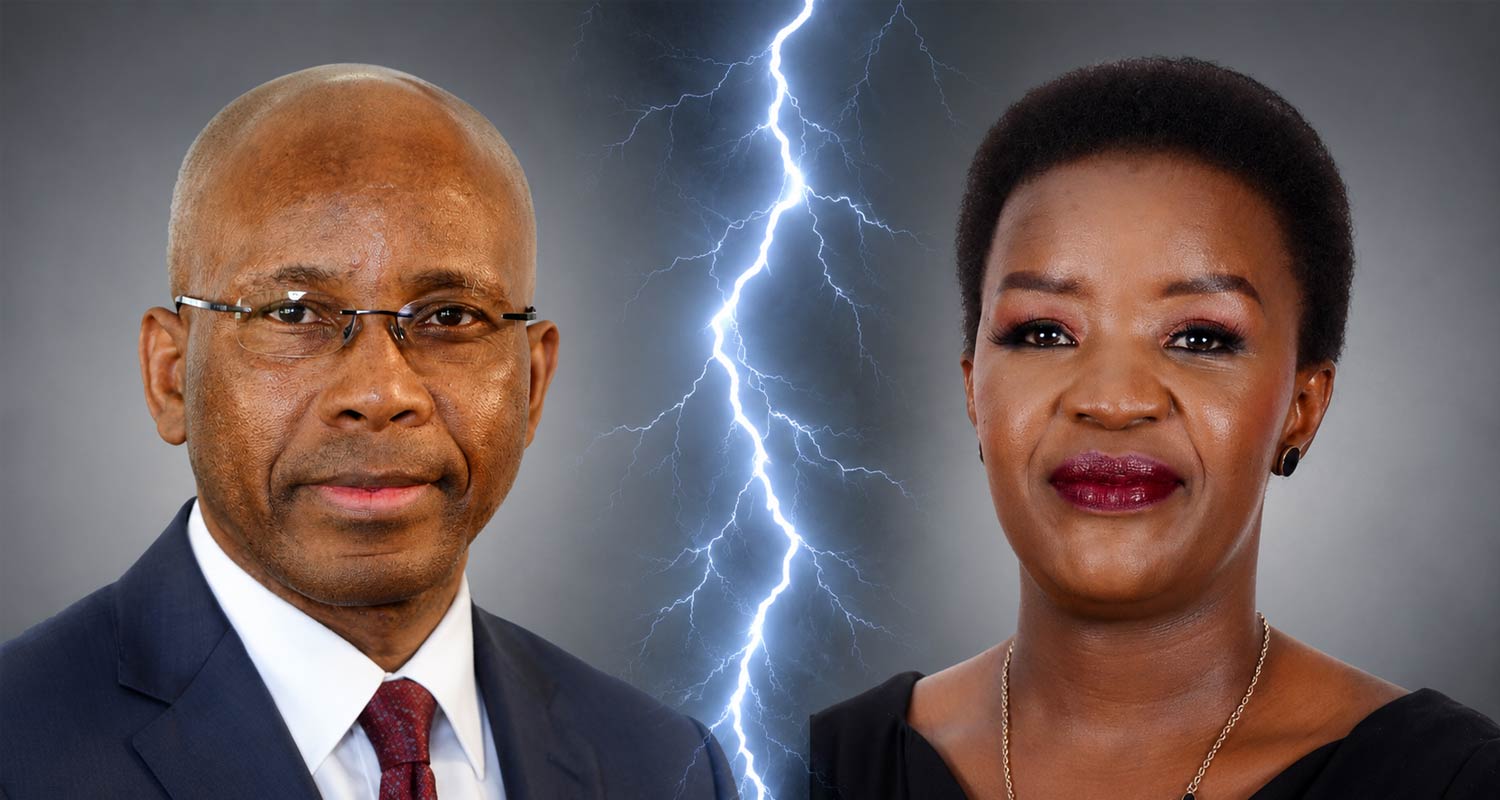
A rare public confrontation has erupted between Eskom board chairman Mteto Nyati and Business Leadership South Africa CEO Busisiwe Mavuso over the most consequential unresolved question in South Africa’s electricity reform programme: who will own the country’s transmission grid.
In a lengthy post on X last week, Nyati accused BLSA and Business Unity South Africa of hypocrisy, saying the two lobby groups – long vocal critics of state capture and political meddling in state-owned enterprises – were themselves guilty of advocating “political intervention” by pressing for the transfer of transmission assets to the planned independent transmission system operator (ITSO).
“These are the same bodies that insist on corporate governance and board independence. Where, then, is the role of the SOE board? What exactly do they believe in?” Nyati wrote, adding that he is regularly approached privately by business leaders asking him to intervene in operational and procurement matters at Eskom. Nyati’s post was widely reported, and he expanded on his views in a subsequent interview on Radio 702.
Mavuso hit back hard in her weekly newsletter on Monday, saying it was “alarming” to hear Nyati accuse business of the very interference it has campaigned against, and that “questioning BLSA’s integrity is not something I will leave unanswered”.
“Nyati is fundamentally mistaken both on the motives for our advocacy and what good governance demands of the Eskom board,” she wrote.
‘Settled policy’
At the heart of the dispute is the unbundling of Eskom’s transmission business. In December, energy minister Kgosientsho Ramokgopa approved a revised unbundling strategy under which the National Transmission Company South Africa (NTCSA) – and its grid assets – would remain a subsidiary of Eskom Holdings, with the ITSO established outside the group as system and market operator only.
Business objected strenuously, and President Cyril Ramaphosa publicly overruled the plan in his February state of the nation address, saying the independent entity “will have ownership and control of transmission assets and be responsible for operating the electricity market”. The presidency reaffirmed that position in June, alongside an extension for the Ramaphosa-appointed task team finalising the restructuring, whose report was due by the end of last month.
Read: The projects leading Eskom’s 32GW renewables charge
Mavuso argued that BLSA is asking for nothing more than the implementation of this settled policy, which she said is also required by section 34A of the Electricity Regulation Amendment Act. “Asking the president to implement his own government’s stated policy is the opposite of asking for an exception,” she wrote. “That is the essence of good governance, not a departure from it.”
She said Nyati’s position – that the assets should remain within NTCSA and Eskom – is the same one Eskom itself proposed in December “and which the president publicly overruled two months later”. Continuing to advocate for it in the media, she said, “raises legitimate concerns about governance and accountability”.
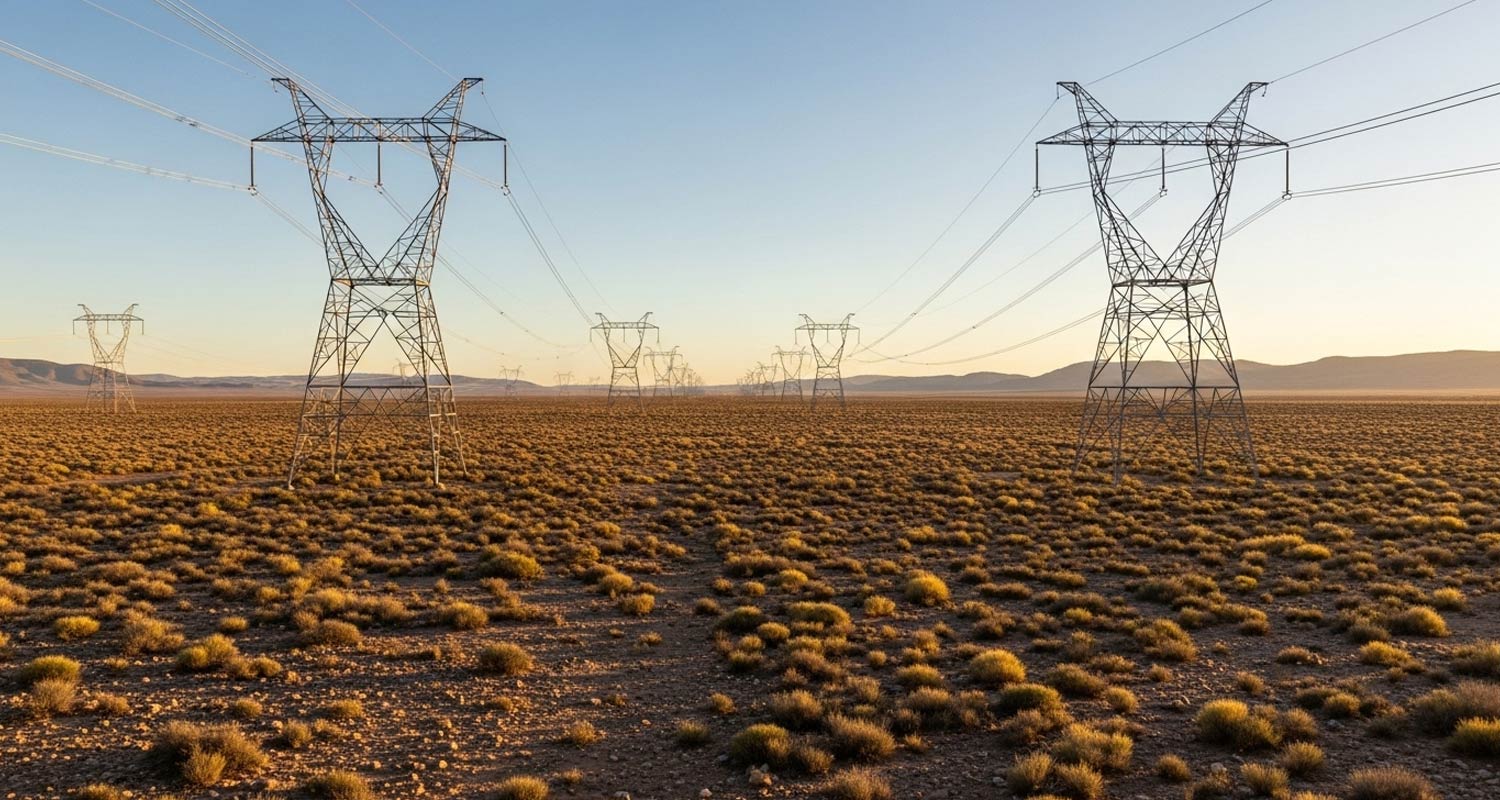
The financial stakes are enormous. An ITSO that operates but does not own the grid would have no balance sheet of its own, Mavuso argued, and therefore no capacity to raise the financing required for the R440-billion transmission expansion programme – some 14 000km of new power lines over the next decade – needed to connect new generation capacity and end the grid constraints throttling renewable energy investment.
She also rejected the suggestion that structural separation creates scope for interference, arguing the opposite: that separating ownership from Eskom removes the conflict of interest that arises when the same entity is both a generator and the gatekeeper of the grid on which its competitors depend.
Nyati has previously defended Eskom’s approach to unbundling, telling SAfm in March that the utility’s restructuring – including the creation of a renewables unit, Eskom Green – is about ensuring Eskom’s long-term survival as its coal fleet ages. Eskom CEO Dan Marokane has argued that immediate full legal separation of the transmission assets risks triggering cross-default clauses in Eskom’s lender agreements – a claim Mavuso has dismissed, saying bondholders are accustomed to such restructurings worldwide.
Mavuso said business remains committed to Eskom’s success, including its operational turnaround under Marokane, “but that support cannot extend to accepting a rewriting of settled policy”.
Read: The real prize is a competitive electricity market
In his X post, Nyati also criticised former DA leader Tony Leon over conflict-of-interest allegations raised by senior DA figures, citing it as further evidence of what he called “selective morality” among South Africa’s elite. – © 2026 NewsCentral Media
- Subscribe to TechCentral’s daily newsletter
- Get breaking news alerts on WhatsApp