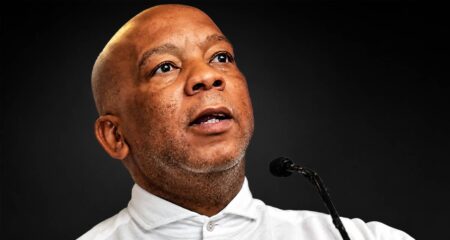
Eskom’s group executive for renewables, Rivoningo Mnisi, has put names and numbers to the projects that will come first under the new Eskom Green business, laying out a pipeline that runs from a solar plant already in the ground to a Komati solar-and-battery hybrid, a skills-transfer phase and, ultimately, utility-scale plants of at least 500MW each.
Speaking to TechCentral after Eskom Green’s launch this week – where the utility set a target of 32GW of renewable power by 2040 – Mnisi sketched out two distinct tranches of work: a first wave of comparatively small projects funded off Eskom’s own balance sheet, and a far larger utility-scale phase that will be taken to market and financed through special-purpose vehicles (SPVs).
The market phase is closer than many may expect. Mnisi said Eskom Green is about to go to market for partners on a 2-3GW tranche of renewables, plus a pumped-storage programme of about 1.5GW. “We should be going out to the market anytime from now. We were just finalising the necessary governance,” he said. “We’ll be going out to onboard the partners that want to work with us on this very soon.”
Those projects would be taken “to financial close in an SPV framework”, he said, with construction starting between 2027 and 2028. “That’s why we’re quite confident on the connection in terms of 2030.”
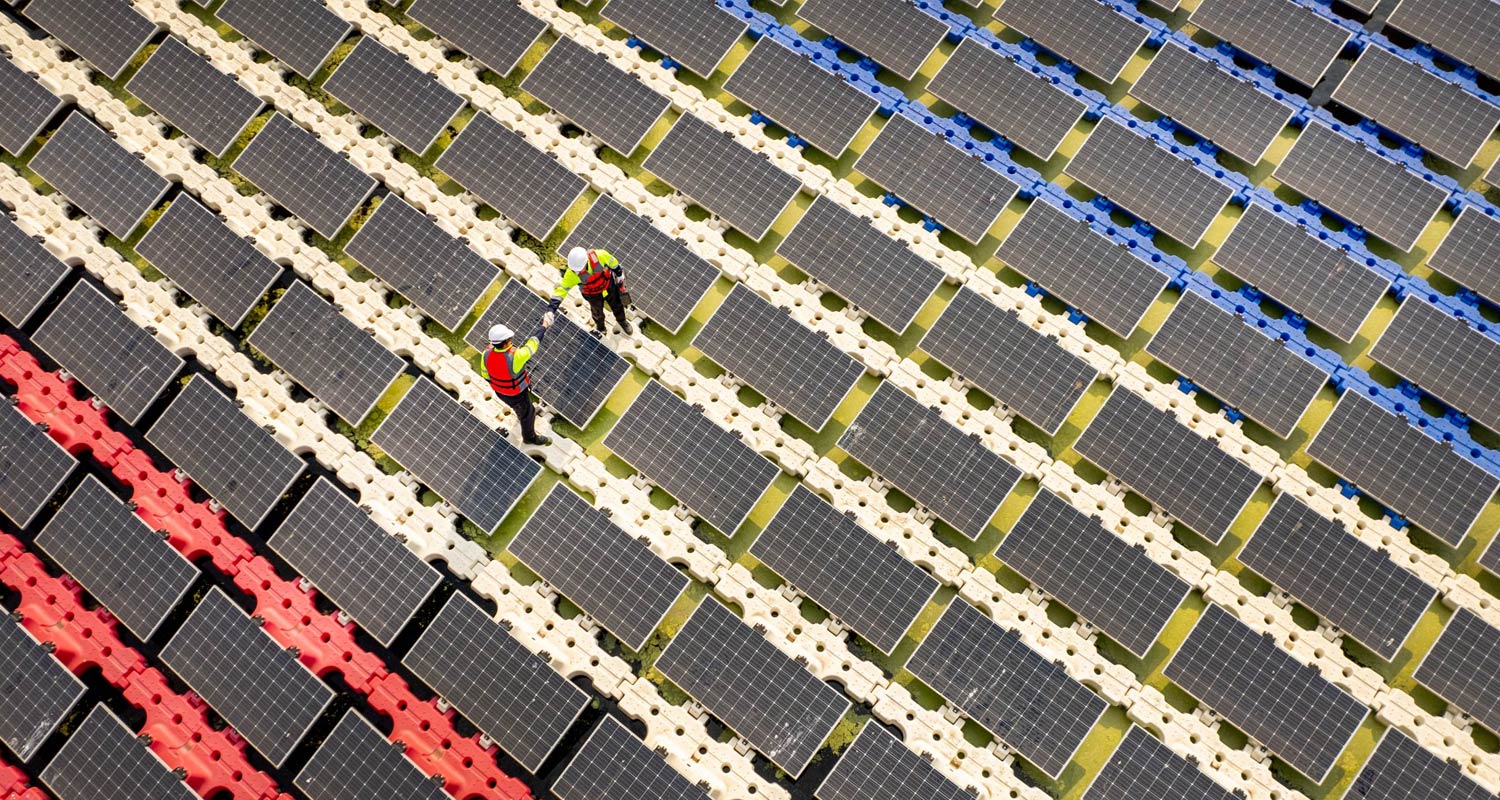
The first project is already under way: the Lethabo solar PV plant, Mnisi said. The R1.2-billion, 75MW plant alongside the Lethabo coal-fired station in the Free State broke ground in late May and is the first build under the Eskom Green banner.
Next in line is Komati, the decommissioned Mpumalanga coal station that has become the test bed for Eskom’s repurposing ambitions. “The second one is likely the sod-turning at Komati, which is going to be a Bess (battery energy storage system) and PV hybrid,” Mnisi said, putting the project at “about 72MW of PV, 150MWh of Bess”.
Adding megawatts
Beyond those two, Mnisi pointed to a further batch of smaller plants spread across Eskom’s power station footprint, pitched as much at building internal capability as at adding megawatts. “We’re also looking at … five other projects within the range of 30-70MW across our power stations,” he said. “[This is particularly true] for skills transfer, because we have a huge workforce that needs to understand and learn the technology.”
Those projects amount to 400-500MW in total and, like Lethabo and Komati, “we should be funding them from our own balance sheet”.
He added a hydro scheme to the near-term list: an Eastern Cape facility of 90-100MW that will be upgraded “to make sure that we connect those megawatts”.
Read: Eskom to go to market for 5.2GW of new nuclear within a year
The smaller projects, Mnisi stressed, are not what Eskom Green is ultimately about. “Eskom Green is really about the massive utility-scale,” he said. “When we talk about phase 2, we’re talking about a minimum of three projects that are … not less than 500MW per site. And on top of that, you add battery. We’re anticipating battery of not less than 800MWh in total within that portfolio.”
There is a further category beyond even that: strategic projects close to Eskom’s land and existing assets, where the utility could partner on infrastructure, “particularly on wind projects”. Eskom Green is “engaging on those for strategic partnership and acquisitions to make sure that we close the gap … in terms of the clean energy profile that we are aiming for”.
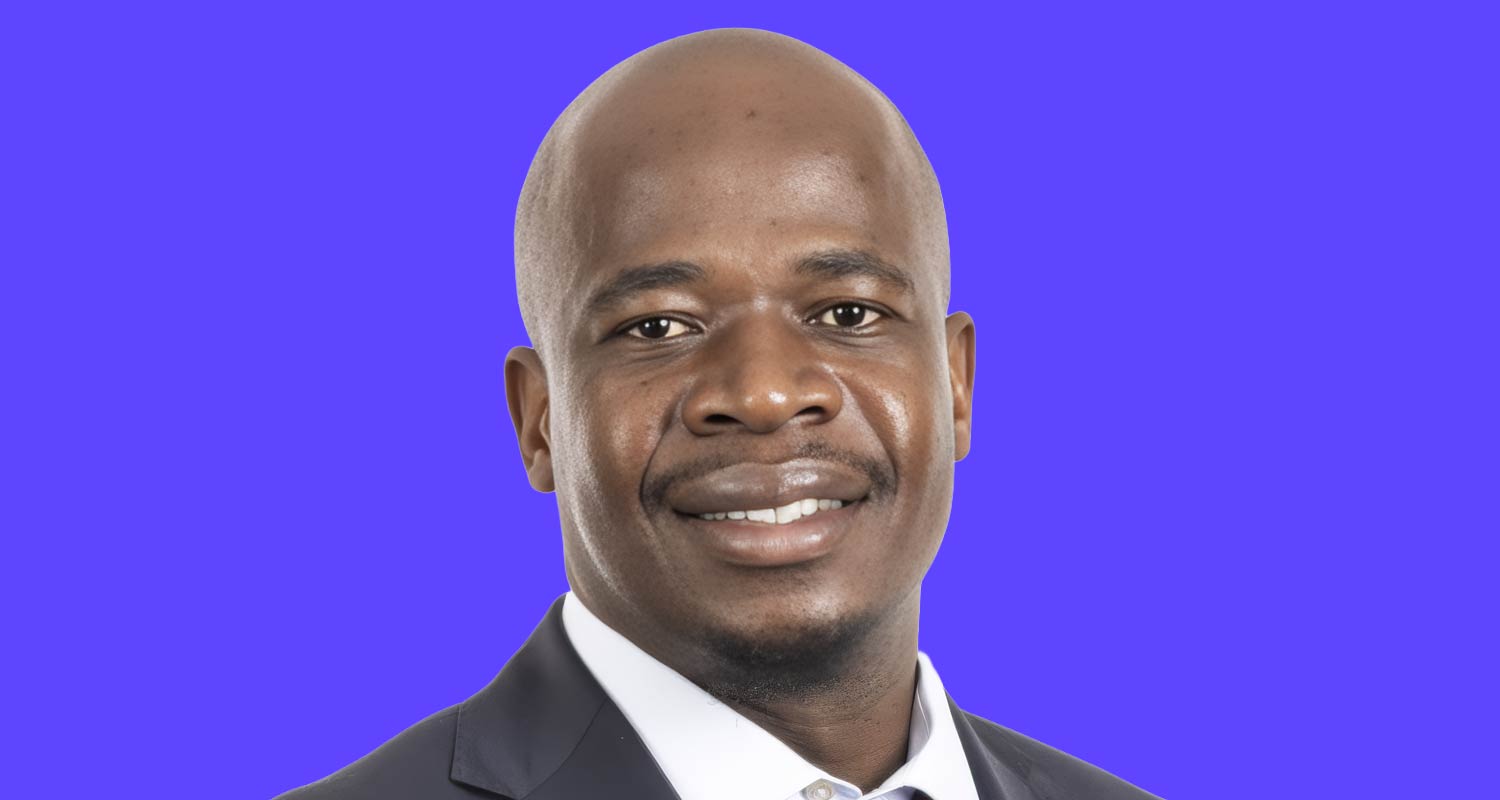
Eskom’s launch statement said it had identified 17 high-priority projects across its coal-fired power station footprint, leveraging established infrastructure to deliver roughly 6GW of additional capacity by 2030 – of which at least 2GW of renewables and pumped storage is expected to advance from 2026, anchored by Lethabo, with Komati next.
Eskom Green is today a unit within Eskom Holdings but will be separated into a wholly owned subsidiary with an independent board, subject to governance, regulatory and shareholder approvals.
The commercial model is built around Eskom Green acting as a customer’s primary energy provider, contracting to supply core renewable requirements firmed up with storage. The wholesale tariff will be passed through at cost, with network, wheeling and other regulated charges shown as a separate line item.
Read: Eskom breaks ground on R1.2-billion Lethabo solar plant
The foundation phase targets large industrial users in mining and manufacturing through allocations under the Integrated Resource Plan and bilateral power purchase agreements, underpinned by take-or-pay contracts that give the SPVs a firm revenue base. A second phase will serve the Eskom distribution market, the emerging South African Wholesale Electricity Market, the Southern African Power Pool and municipalities. – © 2026 NewsCentral Media
- Subscribe to TechCentral’s daily newsletter
- Get breaking news alerts on WhatsApp