Close Menu
TechCentralTechCentral

    Subscribe to the newsletter

    Get the best South African technology news and analysis delivered to your e-mail inbox every morning.

    Facebook X (Twitter) YouTube LinkedIn
    WhatsApp Facebook X (Twitter) LinkedIn YouTube
    TechCentralTechCentral
    • News
      Vuyani Jarana: Mobile coverage masks a deeper broadband failure

      Vuyani Jarana: Mobile coverage masks a deeper broadband failure

      30 January 2026
      SABC Plus to flight Microsoft AI training videos

      SABC Plus to flight Microsoft AI training videos

      30 January 2026
      Fibre ducts

      Fibre industry consolidation in KZN

      30 January 2026
      Watts & Wheels S1E3: 'BYD's Corolla Cross challenger'

      Watts & Wheels S1E3: ‘BYD’s Corolla Cross challenger’

      30 January 2026
      What ordinary South Africans really think of AI

      What ordinary South Africans really think of AI

      30 January 2026
    • World
      Apple acquires audio AI start-up Q.ai

      Apple acquires audio AI start-up Q.ai

      30 January 2026
      SpaceX IPO may be largest in history

      SpaceX IPO may be largest in history

      28 January 2026
      Nvidia throws AI at the weather

      Nvidia throws AI at weather forecasting

      27 January 2026
      Debate erupts over value of in-flight Wi-Fi

      Debate erupts over value of in-flight Wi-Fi

      26 January 2026
      Intel takes another hit - Intel CEO Lip-Bu Tan. Laure Andrillon/Reuters

      Intel takes another hit

      23 January 2026
    • In-depth
      How liberalisation is rewiring South Africa's power sector

      How liberalisation is rewiring South Africa’s power sector

      21 January 2026
      The top-performing South African tech shares of 2025

      The top-performing South African tech shares of 2025

      12 January 2026
      Digital authoritarianism grows as African states normalise internet blackouts

      Digital authoritarianism grows as African states normalise internet blackouts

      19 December 2025
      TechCentral's South African Newsmakers of 2025

      TechCentral’s South African Newsmakers of 2025

      18 December 2025
      Black Friday goes digital in South Africa as online spending surges to record high

      Black Friday goes digital in South Africa as online spending surges to record high

      4 December 2025
    • TCS
      TCS+ | How Cloud On Demand is helping SA businesses succeed in the cloud - Xhenia Rhode, Dion Kalicharan

      TCS+ | Cloud On Demand and Consnet: inside a real-world AWS partner success story

      30 January 2026
      Watts & Wheels S1E3: 'BYD's Corolla Cross challenger'

      Watts & Wheels S1E2: ‘China attacks, BMW digs in, Toyota’s sublime supercar’

      23 January 2026

      TCS+ | Why cybersecurity is becoming a competitive advantage for SA businesses

      20 January 2026
      Watts & Wheels S1E3: 'BYD's Corolla Cross challenger'

      Watts & Wheels: S1E1 – ‘William, Prince of Wheels’

      8 January 2026
      TCS+ | Africa's digital transformation - unlocking AI through cloud and culture - Cliff de Wit Accelera Digital Group

      TCS+ | Cloud without culture won’t deliver AI: Accelera’s Cliff de Wit

      12 December 2025
    • Opinion
      South Africa's skills advantage is being overlooked at home - Richard Firth

      South Africa’s skills advantage is being overlooked at home

      29 January 2026
      Why Elon Musk's Starlink is a 'hard no' for me - Songezo Zibi

      Why Elon Musk’s Starlink is a ‘hard no’ for me

      26 January 2026
      South Africa's new fibre broadband battle - Duncan McLeod

      South Africa’s new fibre broadband battle

      20 January 2026
      AI moves from pilots to production in South African companies - Nazia Pillay SAP

      AI moves from pilots to production in South African companies

      20 January 2026
      South Africa's new fibre broadband battle - Duncan McLeod

      ANC’s attack on Solly Malatsi shows how BEE dogma trumps economic reality

      14 December 2025
    • Company Hubs
      • Africa Data Centres
      • AfriGIS
      • Altron Digital Business
      • Altron Document Solutions
      • Altron Group
      • Arctic Wolf
      • AvertITD
      • Braintree
      • CallMiner
      • CambriLearn
      • CYBER1 Solutions
      • Digicloud Africa
      • Digimune
      • Domains.co.za
      • ESET
      • Euphoria Telecom
      • Incredible Business
      • iONLINE
      • IQbusiness
      • Iris Network Systems
      • LSD Open
      • NEC XON
      • Netstar
      • Network Platforms
      • Next DLP
      • Ovations
      • Paracon
      • Paratus
      • Q-KON
      • SevenC
      • SkyWire
      • Solid8 Technologies
      • Telit Cinterion
      • Tenable
      • Vertiv
      • Videri Digital
      • Vodacom Business
      • Wipro
      • Workday
      • XLink
    • Sections
      • AI and machine learning
      • Banking
      • Broadcasting and Media
      • Cloud services
      • Contact centres and CX
      • Cryptocurrencies
      • Education and skills
      • Electronics and hardware
      • Energy and sustainability
      • Enterprise software
      • Financial services
      • Information security
      • Internet and connectivity
      • Internet of Things
      • Investment
      • IT services
      • Lifestyle
      • Motoring
      • Public sector
      • Retail and e-commerce
      • Satellite communications
      • Science
      • SMEs and start-ups
      • Social media
      • Talent and leadership
      • Telecoms
    • Events
    • Advertise
    TechCentralTechCentral
    Home » Sections » Banking » Europe is planning its own e-currency: What we know so far

    Europe is planning its own e-currency: What we know so far

    By Agency Staff16 November 2020
    Twitter LinkedIn Facebook WhatsApp Email Telegram Copy Link
    News Alerts
    WhatsApp
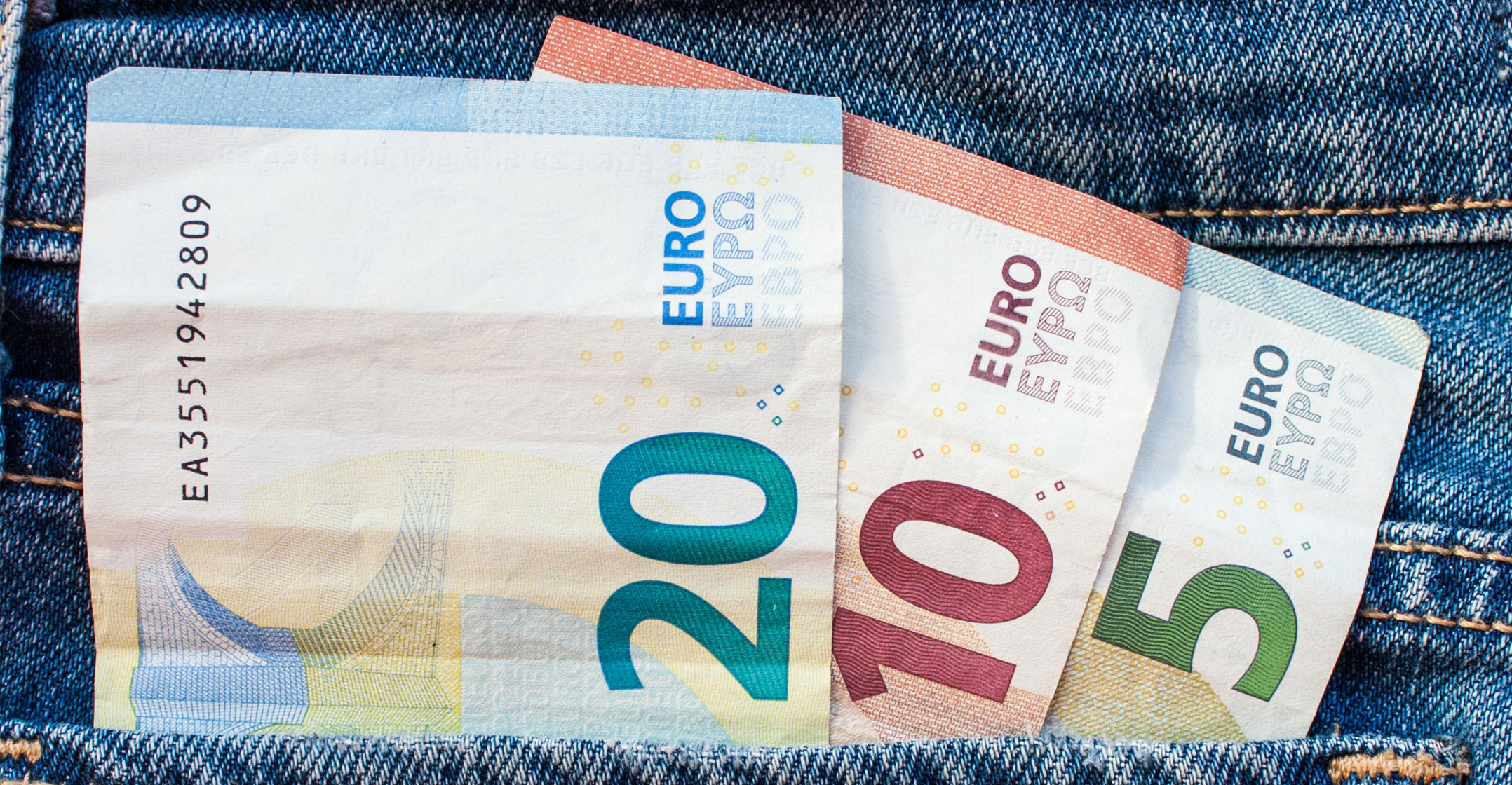
    Image: Maryna Yazbeck

    The European Central Bank appears serious about a digital euro. Barely a month after the central bank issued a major report on the topic, and opened a public consultation, its president, Christine Lagarde, has said “her hunch” is that the euro zone could have its own electronic currency within two to four years. Provided the rest of the institution’s governing council agrees with her, this could put the ECB well ahead of other major Western central banks — above all the US Federal Reserve.

    Lagarde’s eagerness appears, above all, strategic. The euro zone faces the same risks and opportunities as other economies in issuing a digital currency. But the currency union’s monetary guardians may sense a rare opportunity to challenge the dollar’s dominance, a long-coveted objective. The problem will be seizing this chance without compromising the smooth functioning of the financial system.

    The idea behind central bank digital currencies is relatively straightforward. The use of cash is declining, as consumers switch to electronic payments. There’s growing interest, too, in peer-to-peer payments that don’t rely on banks. Some private providers have been working on digital currencies, such as Facebook and Libra. As the custodians of legal tender and the monetary system, it makes sense for central banks to get involved. Digital currencies could also help them implement heterodox forms of monetary policy, including “helicopter drops” that would go directly to the digital wallets of individual citizens.

    There are significant risks, though. The main one is the relationship of an ‘e-euro’ with the banking system

    There are significant risks, though. The main one is the relationship of an “e-euro” with the banking system. Consumers may perceive central bank digital wallets as much safer than traditional bank deposits. After all, a central bank can’t go bust. So it’s possible money would flock to central banks, especially during times of financial stress. This could destroy the banking system as we know it or, at the very least, force lenders to pay higher deposit rates to keep customers.

    Some central banks are moving faster in their examination of digital currencies. The Riksbank in Sweden is the pioneer, while the People’s Bank of China is in the lead among the world’s main monetary authorities.

    Less widespread

    The ECB clearly doesn’t want to be left behind, although this doesn’t seem to be driven by Europe’s citizens suddenly going cold on cash. A study from the Bank for International Settlements shows the use of card payments in the euro area is far less widespread than in other areas: In 2016, they amounted to 15.6% of combined GDP, against 45.5% in the UK and 31.7% in the US.

    Card usage will have increased over the past few years, probably accelerated by the pandemic, but the value of electronic and cash payments at the point of sale in the euro area is still roughly equivalent, with cash accounting for roughly three-quarters of these transactions.

    So, why does Lagarde want to go faster than other Western central banks?

    Since the start of her presidency a year ago, she has tried to bring the ECB closer to the euro zone’s citizens. A digital currency may be one way to prove the central bank’s usefulness. The more obvious explanation is the challenge to the dollar’s longstanding dominance. The share of the euro across various indicators of international currency use averaged about 19% in 2019, close to historical lows. If one looks at international deposits, roughly 20% of the outstanding amount was in euros, while more than 50% was in the dollar.

    Europeans still prefer cash

    The ECB’s “Report on a Digital Euro”, published last month, said explicitly that “the Eurosystem might consider issuing a digital euro in part to support the international role of the euro, stimulating demand for the euro among foreign investors”. This makes sense. There is a clear first-mover advantage for a central bank digital currency, since international investors would flock to store their money with the ECB. The Fed has been much more cautious about digital currencies.

    There are always risks with being a pioneer. The ECB must ponder the implications for its banks, which could lose a cheap way of making money if their card businesses were sidelined. Writing in a personal capacity, Fabio Panetta, the member of the ECB executive board spearheading this exercise, and Ulrich Bindseil, a senior ECB official, have proposed a clever remuneration system to limit the amount of money stored at the central bank: Holdings of more than 3 000 e-euros would would carry an interest rate that’s less attractive than that of the commercial banks.

    While this strategy would be effective during times of financial calm, it’s unlikely to prevent a flight to safety during a panic. The two authors imagine that the central bank could lower that interest rate on bigger deposits during a financial crisis, to limit the risk of a bank run. But even that may be insufficient to dissuade depositors.

    The ECB’s right to consider digital currencies but it should proceed cautiously. The rush wouldn’t be worth a frailer banking system.  — Reported by Ferdinando Giugliano, (c) 2020 Bloomberg LP



    Christine Lagarde European Central Bank
    WhatsApp YouTube Follow on Google News Add as preferred source on Google
    Share. Facebook Twitter LinkedIn WhatsApp Telegram Email Copy Link
    Previous ArticleVodacom reinstates targets as it eyes spectrum auction
    Next Article Apple accused of tracking iPhone users without their consent

    Related Posts

    Tension in EU over proposed central bank bitcoin reserves

    Tension in EU over proposed central bank bitcoin reserves

    31 January 2025

    European Central Bank launches scathing attack on bitcoin and crypto

    30 November 2022

    ‘Britcoin’: UK mulls digital version of sterling

    19 April 2021
    Company News
    Huawei turns 25 in South Africa, celebrates with major device discounts

    Huawei turns 25 in South Africa, celebrates with major device discounts

    30 January 2026
    Phishing has not disappeared, but it has grown up - KnowBe4

    Phishing has not disappeared, but it has grown up

    30 January 2026
    Smartphone affordability: South Africa's new economic divide - PayJoy

    Smartphone affordability: South Africa’s new economic divide

    29 January 2026
    Opinion
    South Africa's skills advantage is being overlooked at home - Richard Firth

    South Africa’s skills advantage is being overlooked at home

    29 January 2026
    Why Elon Musk's Starlink is a 'hard no' for me - Songezo Zibi

    Why Elon Musk’s Starlink is a ‘hard no’ for me

    26 January 2026
    South Africa's new fibre broadband battle - Duncan McLeod

    South Africa’s new fibre broadband battle

    20 January 2026

    Subscribe to Updates

    Get the best South African technology news and analysis delivered to your e-mail inbox every morning.

    Latest Posts
    Vuyani Jarana: Mobile coverage masks a deeper broadband failure

    Vuyani Jarana: Mobile coverage masks a deeper broadband failure

    30 January 2026
    TCS+ | How Cloud On Demand is helping SA businesses succeed in the cloud - Xhenia Rhode, Dion Kalicharan

    TCS+ | Cloud On Demand and Consnet: inside a real-world AWS partner success story

    30 January 2026
    Huawei turns 25 in South Africa, celebrates with major device discounts

    Huawei turns 25 in South Africa, celebrates with major device discounts

    30 January 2026
    SABC Plus to flight Microsoft AI training videos

    SABC Plus to flight Microsoft AI training videos

    30 January 2026
    © 2009 - 2026 NewsCentral Media
    • Cookie policy (ZA)
    • TechCentral – privacy and Popia

    Type above and press Enter to search. Press Esc to cancel.

    Manage consent

    TechCentral uses cookies to enhance its offerings. Consenting to these technologies allows us to serve you better. Not consenting or withdrawing consent may adversely affect certain features and functions of the website.

    Functional Always active
    The technical storage or access is strictly necessary for the legitimate purpose of enabling the use of a specific service explicitly requested by the subscriber or user, or for the sole purpose of carrying out the transmission of a communication over an electronic communications network.
    Preferences
    The technical storage or access is necessary for the legitimate purpose of storing preferences that are not requested by the subscriber or user.
    Statistics
    The technical storage or access that is used exclusively for statistical purposes. The technical storage or access that is used exclusively for anonymous statistical purposes. Without a subpoena, voluntary compliance on the part of your Internet Service Provider, or additional records from a third party, information stored or retrieved for this purpose alone cannot usually be used to identify you.
    Marketing
    The technical storage or access is required to create user profiles to send advertising, or to track the user on a website or across several websites for similar marketing purposes.
    • Manage options
    • Manage services
    • Manage {vendor_count} vendors
    • Read more about these purposes
    View preferences
    • {title}
    • {title}
    • {title}