Close Menu
TechCentralTechCentral

    Subscribe to the newsletter

    Get the best South African technology news and analysis delivered to your e-mail inbox every morning.

    Facebook X (Twitter) YouTube LinkedIn
    WhatsApp Facebook X (Twitter) LinkedIn YouTube
    TechCentralTechCentral
    • News
      Blu Label takes R5.2-billion Cell C hit, touts clean slate ahead

      Blu Label takes R5.2-billion Cell C hit, touts clean slate ahead

      19 February 2026
      MeerKAT detects most powerful natural radio laser ever observed

      MeerKAT detects most powerful natural radio laser ever observed

      19 February 2026
      How AI is rewriting the rules of consulting - Mark Allderman

      How AI is rewriting the rules of consulting

      19 February 2026
      Crackdown on students gambling away Nsfas money online

      Crackdown on students gambling away Nsfas money online

      19 February 2026
      Meta may launch AI-powered smartwatch in 2026

      Meta may launch AI-powered smartwatch in 2026

      19 February 2026
    • World
      Prominent Southern African journalist targeted with Predator spyware

      Prominent Southern African journalist targeted with Predator spyware

      18 February 2026
      More drama in Warner Bros tug of war

      More drama in Warner Bros tug of war

      17 February 2026
      Russia bans WhatsApp

      Russia bans WhatsApp

      12 February 2026
      EU regulators take aim at WhatsApp

      EU regulators take aim at WhatsApp

      9 February 2026
      Musk hits brakes on Mars mission

      Musk hits brakes on Mars mission

      9 February 2026
    • In-depth
      How liberalisation is rewiring South Africa's power sector

      How liberalisation is rewiring South Africa’s power sector

      21 January 2026
      The top-performing South African tech shares of 2025

      The top-performing South African tech shares of 2025

      12 January 2026
      Digital authoritarianism grows as African states normalise internet blackouts

      Digital authoritarianism grows as African states normalise internet blackouts

      19 December 2025
      TechCentral's South African Newsmakers of 2025

      TechCentral’s South African Newsmakers of 2025

      18 December 2025
      Black Friday goes digital in South Africa as online spending surges to record high

      Black Friday goes digital in South Africa as online spending surges to record high

      4 December 2025
    • TCS
      Watts & Wheels S1E4: 'We drive an electric Uber'

      Watts & Wheels S1E4: ‘We drive an electric Uber’

      10 February 2026
      TCS+ | How Cloud On Demand is helping SA businesses succeed in the cloud - Xhenia Rhode, Dion Kalicharan

      TCS+ | Cloud On Demand and Consnet: inside a real-world AWS partner success story

      30 January 2026
      Watts & Wheels S1E4: 'We drive an electric Uber'

      Watts & Wheels S1E3: ‘BYD’s Corolla Cross challenger’

      30 January 2026
      Watts & Wheels S1E4: 'We drive an electric Uber'

      Watts & Wheels S1E2: ‘China attacks, BMW digs in, Toyota’s sublime supercar’

      23 January 2026

      TCS+ | Why cybersecurity is becoming a competitive advantage for SA businesses

      20 January 2026
    • Opinion
      A million reasons monopolies don't work - Duncan McLeod

      A million reasons monopolies don’t work

      10 February 2026
      The author, Business Leadership South Africa CEO Busi Mavuso

      Eskom unbundling U-turn threatens to undo hard-won electricity gains

      9 February 2026
      South Africa's skills advantage is being overlooked at home - Richard Firth

      South Africa’s skills advantage is being overlooked at home

      29 January 2026
      Why Elon Musk's Starlink is a 'hard no' for me - Songezo Zibi

      Why Elon Musk’s Starlink is a ‘hard no’ for me

      26 January 2026
      A million reasons monopolies don't work - Duncan McLeod

      South Africa’s new fibre broadband battle

      20 January 2026
    • Company Hubs
      • Africa Data Centres
      • AfriGIS
      • Altron Digital Business
      • Altron Document Solutions
      • Altron Group
      • Arctic Wolf
      • AvertITD
      • Braintree
      • CallMiner
      • CambriLearn
      • CYBER1 Solutions
      • Digicloud Africa
      • Digimune
      • Domains.co.za
      • ESET
      • Euphoria Telecom
      • Incredible Business
      • iONLINE
      • IQbusiness
      • Iris Network Systems
      • LSD Open
      • Mitel
      • NEC XON
      • Netstar
      • Network Platforms
      • Next DLP
      • Ovations
      • Paracon
      • Paratus
      • Q-KON
      • SevenC
      • SkyWire
      • Solid8 Technologies
      • Telit Cinterion
      • Tenable
      • Vertiv
      • Videri Digital
      • Vodacom Business
      • Wipro
      • Workday
      • XLink
    • Sections
      • AI and machine learning
      • Banking
      • Broadcasting and Media
      • Cloud services
      • Contact centres and CX
      • Cryptocurrencies
      • Education and skills
      • Electronics and hardware
      • Energy and sustainability
      • Enterprise software
      • Financial services
      • Information security
      • Internet and connectivity
      • Internet of Things
      • Investment
      • IT services
      • Lifestyle
      • Motoring
      • Public sector
      • Retail and e-commerce
      • Satellite communications
      • Science
      • SMEs and start-ups
      • Social media
      • Talent and leadership
      • Telecoms
    • Events
    • Advertise
    TechCentralTechCentral
    Home » In-depth » For Siemens, big is no longer beautiful

    For Siemens, big is no longer beautiful

    By Agency Staff23 July 2018
    Twitter LinkedIn Facebook WhatsApp Email Telegram Copy Link
    News Alerts
    WhatsApp
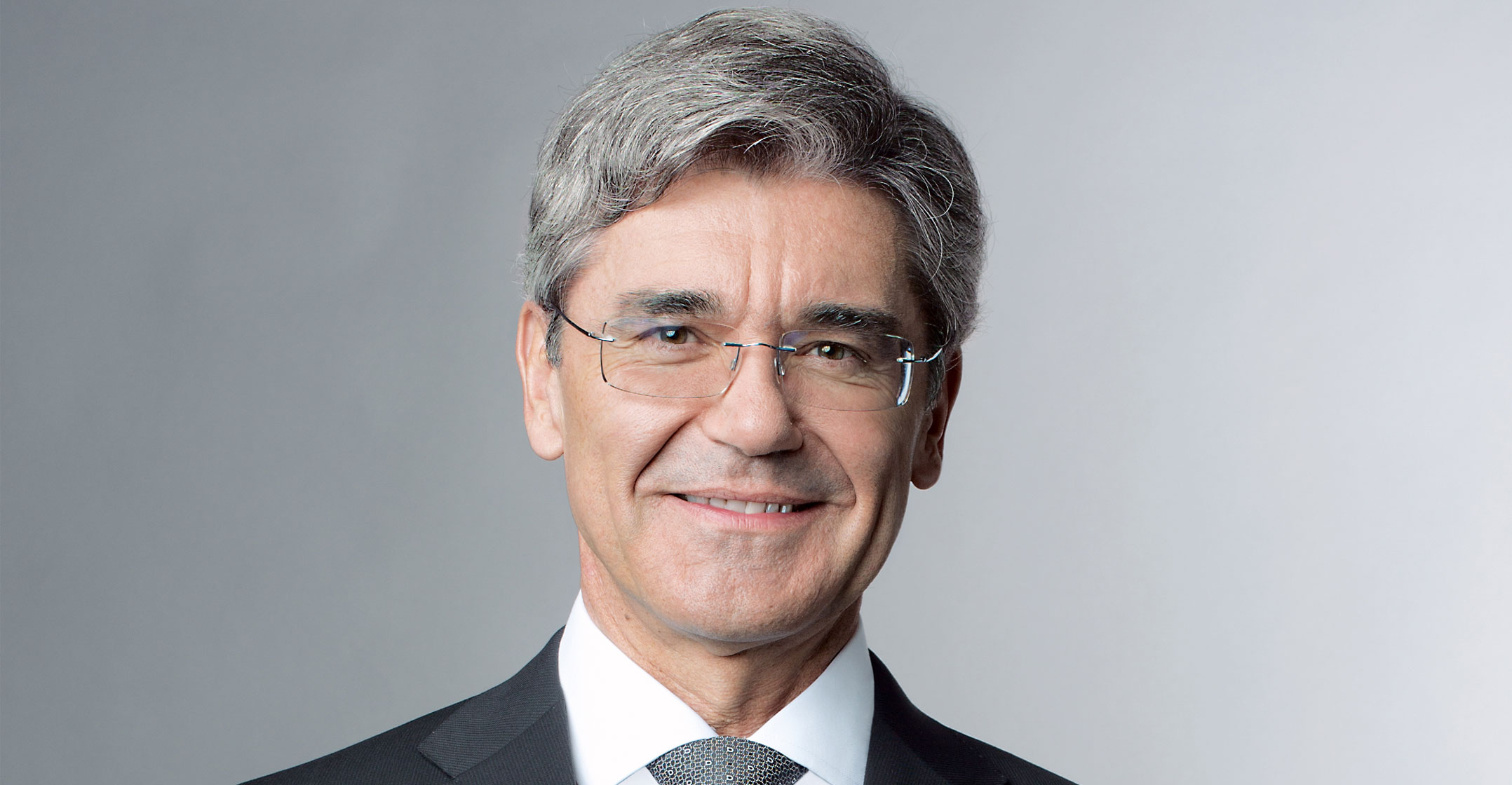
    Joe Kaeser

    As CEO of Siemens, Joe Kaeser serves as the unofficial captain of Germany Inc, the kind of job few would leave voluntarily. Yet when Kaeser was invited to extend his tenure last year, he hesitated. With Siemens’ stock at an all-time high and profits soaring, Kaeser thought he might be able to exit at the top.

    “Friends said ‘Look Joe, if it goes wrong, people will say you were just lucky,’” he recalls. “‘Do you really want to risk that?’ And I thought they had a point.”

    Kaeser fretted that while he’d steadied Siemens after a debilitating bribery scandal, the company wasn’t quite ready to tackle the disruption posed by digital technologies and the eroding value of Siemens’s traditional mastery of the physical world. He wavered right up to the morning of a board meeting last August before agreeing to extend his contract until 2021.

    The risks of innovations such as artificial intelligence and 3D printing wielded by nimble competitors from Silicon Valley or China are shaking up Germany’s engineering-led economy

    “We could see different parts of the company moving at different speeds. That’s very dangerous,” Kaeser says, jacket off, leaning back in his wood-panelled meeting room. “I knew I didn’t want to leave it to either a beginner in my own company, or to somebody who doesn’t care about the company coming in from outside.”

    The risks of innovations such as artificial intelligence and 3D printing wielded by nimble competitors from Silicon Valley or China are shaking up Germany’s engineering-led economy. Traditional corporate icons are tearing apart sprawling century-old structures. Daimler — with its three-pointed Mercedes-Benz star designed to represent bygone ambitions in land, sea and air — is considering a separation of its car and truck operations. Thyssenkrupp is under pressure from investors to further carve up units after bungling a deal to combine its steel business with India’s Tata Steel. And auto supplier Continental is splitting off its divisions that make components for combustion engines.

    Globally, conglomerates like Siemens are a dying breed as the pace of business picks up and capital markets punish the unfocused. General Electric is exiting oil and health care, and Philips in 2016 split into lighting company Signify and health-care specialist Philips.

    At Siemens, Kaeser has led the way with a slew of deals that will shrink the company from 18 divisions when he took charge in 2013 to just five by next January. Kaeser has raised more than €9-billion merging, selling or spinning off businesses, and Siemens today employs 376 000 employees, down from 410 000 the year before Kaeser took over. Under his tenure, the company’s shares have climbed 38%.

    Big shift

    That’s a big shift from most of Siemens’ 170-year history, when its typical answer to strategic challenges was to get bigger. The maker of telegraph equipment founded by Werner von Siemens in 1847 quickly mushroomed into a vast conglomerate that touched lives and homes across the globe with everything from trains and televisions to appliances and auto parts. From titanic (industrial gas turbines) to tiny (semiconductors), Siemens made it all under one corporate roof.

    Around the millennium, Siemens started falling behind in key industries and reconsidered its sprawling structure. Semiconductors were the first to go, followed by telecommunications equipment, computers and light bulbs.

    Kaeser’s job has been to unwind what’s left of that empire, selling off wireless networks, appliances, hearing aids and what was left of the lighting business — a disquieting task for a 38-year Siemens veteran who exudes the folkloristic vibe of a rank-and-file employee. While Kaeser has eased into the lifestyle of the CEO — security detail, monogrammed shirts, private jet — he still lives in a small town in deepest Bavaria, burnishing his man-of-the-people credentials as a member of the local volunteer fire brigade and raising funds for the village theatre group. At a meeting with US President Donald Trump in Davos in January, he demurely referred to himself as an employee of Siemens rather than its boss.
    Dismantling the old Siemens “isn’t very easy”, Kaeser says. “There is this emotional hold on history and reputation and responsibility.”

    Kaeser in 2014 laid out his strategy in a programme he dubbed Vision 2020, with a renewed focus on equipment for energy suppliers, manufacturing automation technologies, and newer digital initiatives such as software that can simulate the workflow in factories. In reality, it has meant cutting loose companies that don’t quite fit and rejigging other bits and pieces to be leaner — creating what Kaeser calls “a fleet of ships” rather than a lumbering aircraft carrier.

    “I was a bit sceptical of this ‘fleet’ strategy, but this is just the beginning,” says James Stettler, an analyst at Barclays in London. “You create the fleet, and then over time sell down as it becomes able to stand on its own.”

    The new approach worries many in Germany, where the company has grown into a vital part of the corporate organism, providing stable middle-class employment for hundreds of thousands. Berlin is home to the so-called Siemensstadt (Siemens Town) a city-within-a-city dominated by massive red-brick production halls and Bauhaus-inspired social housing. Across the country, more than a dozen schools are named after Werner von Siemens. In Duisburg, a Ruhr valley manufacturing city of 500 000, Siemens is the biggest employer, with 2 400 workers at a factory producing equipment for the oil industry.

    We don’t understand that. Siemens used to be a family. There was a certain sense of solidarity, and that’s disappearing

    In November, the company announced plans to cut 6 900 jobs, half of them in Germany — which the IG Metall union says is evidence of a shift away from the social compact that has long been a hallmark of Siemens’ management. Even as profits have soared, the company has continued with layoffs, says Klaus Abel, IG Metall’s leader in Berlin. “We don’t understand that,” Abel says. “Siemens used to be a family. There was a certain sense of solidarity, and that’s disappearing.”

    Kaeser’s approach is best exemplified by two deals: the 2017 merger of wind-power assets with Spanish rival Gamesa in 2017 and the listing in March of the medical equipment unit with the cringeworthy name Siemens Healthineers — Germany’s fifth biggest initial public offering ever, which has seen its shares jump 18% since going public.

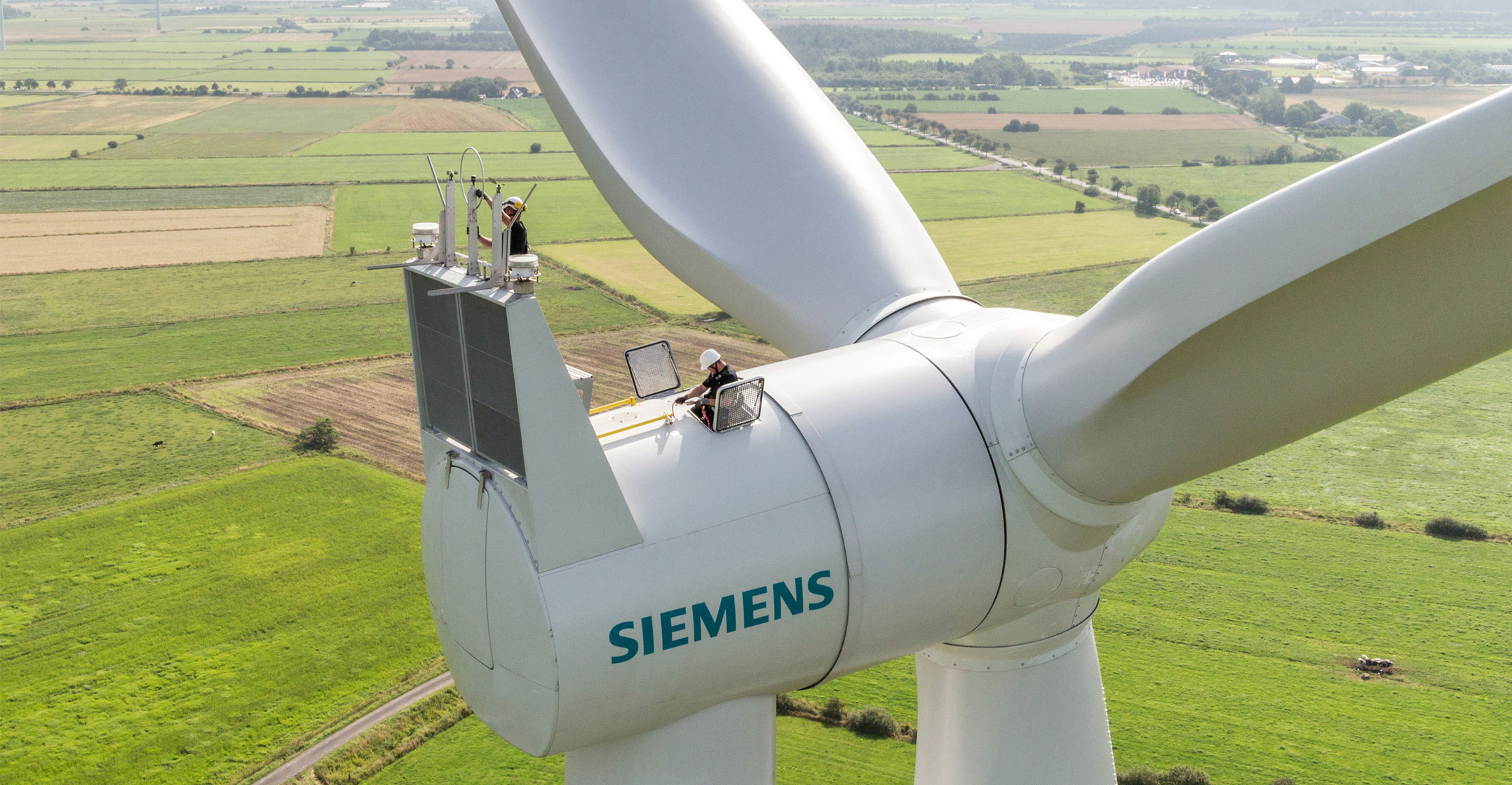
    With Gamesa, Siemens combined its range of gigantic offshore turbines that float on marine platforms with the Spanish company’s smaller land-based wind generators. The venture, Siemens Gamesa Renewable Energy, gives Siemens control — it owns 59% — of a bigger operation without sucking up capital.

    The new company got off to a rocky start as it announced plans to shed a quarter of its staff after profit dropped, but the deal was perceived as a strategic success for Siemens and served as a template for shoring up its train business. Facing aggressive competition from Asia, the rail unit will be merged with operations from France’s Alstom, with Siemens taking a controlling stake. That deal is expected to close in early 2019, pending antitrust approval.

    For Kaeser and his eventual successor, the challenge will be deciding whether to hold onto those ventures or to sell them and use the cash elsewhere. A looming question is what to do with the division that makes giant turbines. The unit is the core of the old Siemens, but faces an uncertain future in an era of renewable power.

    Kaeser is due to lay out his next steps in August, when he presents a plan called Vision 2020+. The company is said to be reviewing options such as a sale of the turbine business and a division that produces gears and motors for pipelines. One thing is clear: Siemens will be smaller, and its CEO may need to relinquish the title of Germany Inc captain.

    “We don’t believe conglomerates of old structures — big is beautiful — will be the future,” Kaeser says. “I have a responsibility to get this company ready for the future, for the next generation.”  — Reported by Oliver Sachgau and Chris Reiter, (c) 2018 Bloomberg LP


    Joe Kaeser Siemens top
    WhatsApp YouTube Follow on Google News Add as preferred source on Google
    Share. Facebook Twitter LinkedIn WhatsApp Telegram Email Copy Link
    Previous ArticleHow WeChat risks squandering its lead
    Next Article Don’t get hacked: 5 steps to protect yourself online

    Related Posts

    Siemens is battling Big Tech for AI supremacy in factories

    Siemens is battling Big Tech for AI supremacy in factories

    24 June 2025

    AI boom fuels earnings growth for Europe’s industrial giants

    21 August 2024

    V2G: two-way charging may be the next big thing in EVs

    22 April 2024
    Company News
    Customers have new expectations. Is your CX ready? 1Stream

    Customers have new expectations. Is your CX ready?

    19 February 2026
    South Africa's cybersecurity challenge is not a tool problem - Nicholas Applewhite, Trinexia South Africa

    South Africa’s cybersecurity challenge is not a tool problem

    19 February 2026
    The quiet infrastructure powering AI: why long-life IOT networks matter more than ever - Sigfox South Africa

    The quiet infrastructure powering AI: why long-life IoT networks matter more than ever

    18 February 2026
    Opinion
    A million reasons monopolies don't work - Duncan McLeod

    A million reasons monopolies don’t work

    10 February 2026
    The author, Business Leadership South Africa CEO Busi Mavuso

    Eskom unbundling U-turn threatens to undo hard-won electricity gains

    9 February 2026
    South Africa's skills advantage is being overlooked at home - Richard Firth

    South Africa’s skills advantage is being overlooked at home

    29 January 2026

    Subscribe to Updates

    Get the best South African technology news and analysis delivered to your e-mail inbox every morning.

    Latest Posts
    Blu Label takes R5.2-billion Cell C hit, touts clean slate ahead

    Blu Label takes R5.2-billion Cell C hit, touts clean slate ahead

    19 February 2026
    MeerKAT detects most powerful natural radio laser ever observed

    MeerKAT detects most powerful natural radio laser ever observed

    19 February 2026
    Customers have new expectations. Is your CX ready? 1Stream

    Customers have new expectations. Is your CX ready?

    19 February 2026
    South Africa's cybersecurity challenge is not a tool problem - Nicholas Applewhite, Trinexia South Africa

    South Africa’s cybersecurity challenge is not a tool problem

    19 February 2026
    © 2009 - 2026 NewsCentral Media
    • Cookie policy (ZA)
    • TechCentral – privacy and Popia

    Type above and press Enter to search. Press Esc to cancel.

    Manage consent

    TechCentral uses cookies to enhance its offerings. Consenting to these technologies allows us to serve you better. Not consenting or withdrawing consent may adversely affect certain features and functions of the website.

    Functional Always active
    The technical storage or access is strictly necessary for the legitimate purpose of enabling the use of a specific service explicitly requested by the subscriber or user, or for the sole purpose of carrying out the transmission of a communication over an electronic communications network.
    Preferences
    The technical storage or access is necessary for the legitimate purpose of storing preferences that are not requested by the subscriber or user.
    Statistics
    The technical storage or access that is used exclusively for statistical purposes. The technical storage or access that is used exclusively for anonymous statistical purposes. Without a subpoena, voluntary compliance on the part of your Internet Service Provider, or additional records from a third party, information stored or retrieved for this purpose alone cannot usually be used to identify you.
    Marketing
    The technical storage or access is required to create user profiles to send advertising, or to track the user on a website or across several websites for similar marketing purposes.
    • Manage options
    • Manage services
    • Manage {vendor_count} vendors
    • Read more about these purposes
    View preferences
    • {title}
    • {title}
    • {title}