Close Menu
TechCentralTechCentral

    Subscribe to the newsletter

    Get the best South African technology news and analysis delivered to your e-mail inbox every morning.

    Facebook X (Twitter) YouTube LinkedIn
    WhatsApp Facebook X (Twitter) LinkedIn YouTube
    TechCentralTechCentral
    • News
      Blu Label lands energy trading licence from Nersa - Mark Levy

      Blu Label lands electricity trading licence from Nersa

      17 February 2026
      iOCO goes desert storming with Saudi Arabia cloud expansion - Richard Vester

      iOCO goes desert storming with Saudi Arabia cloud expansion

      17 February 2026
      Starlink expands public advocacy campaign as it pushes for SA licence

      Starlink expands public advocacy campaign as it pushes for SA licence

      17 February 2026
      Telkom tops 25 million mobile subscribers as data growth surges - Serame Taukobong

      Telkom tops 25 million mobile subscribers as data growth surges

      16 February 2026
      Andrew Baker is new CIO of Capitec

      Andrew Baker is new CIO of Capitec

      16 February 2026
    • World
      Russia bans WhatsApp

      Russia bans WhatsApp

      12 February 2026
      EU regulators take aim at WhatsApp

      EU regulators take aim at WhatsApp

      9 February 2026
      Musk hits brakes on Mars mission

      Musk hits brakes on Mars mission

      9 February 2026
      Crypto firm accidentally sends R700-billion in bitcoin to its users

      Crypto firm accidentally sends R700-billion in bitcoin to its users

      8 February 2026
      AI won't replace software, says Nvidia CEO amid market rout - Jensen Huang

      AI won’t replace software, says Nvidia CEO amid market rout

      4 February 2026
    • In-depth
      How liberalisation is rewiring South Africa's power sector

      How liberalisation is rewiring South Africa’s power sector

      21 January 2026
      The top-performing South African tech shares of 2025

      The top-performing South African tech shares of 2025

      12 January 2026
      Digital authoritarianism grows as African states normalise internet blackouts

      Digital authoritarianism grows as African states normalise internet blackouts

      19 December 2025
      TechCentral's South African Newsmakers of 2025

      TechCentral’s South African Newsmakers of 2025

      18 December 2025
      Black Friday goes digital in South Africa as online spending surges to record high

      Black Friday goes digital in South Africa as online spending surges to record high

      4 December 2025
    • TCS
      Watts & Wheels S1E4: 'We drive an electric Uber'

      Watts & Wheels S1E4: ‘We drive an electric Uber’

      10 February 2026
      TCS+ | How Cloud On Demand is helping SA businesses succeed in the cloud - Xhenia Rhode, Dion Kalicharan

      TCS+ | Cloud On Demand and Consnet: inside a real-world AWS partner success story

      30 January 2026
      Watts & Wheels S1E4: 'We drive an electric Uber'

      Watts & Wheels S1E3: ‘BYD’s Corolla Cross challenger’

      30 January 2026
      Watts & Wheels S1E4: 'We drive an electric Uber'

      Watts & Wheels S1E2: ‘China attacks, BMW digs in, Toyota’s sublime supercar’

      23 January 2026

      TCS+ | Why cybersecurity is becoming a competitive advantage for SA businesses

      20 January 2026
    • Opinion
      A million reasons monopolies don't work - Duncan McLeod

      A million reasons monopolies don’t work

      10 February 2026
      The author, Business Leadership South Africa CEO Busi Mavuso

      Eskom unbundling U-turn threatens to undo hard-won electricity gains

      9 February 2026
      South Africa's skills advantage is being overlooked at home - Richard Firth

      South Africa’s skills advantage is being overlooked at home

      29 January 2026
      Why Elon Musk's Starlink is a 'hard no' for me - Songezo Zibi

      Why Elon Musk’s Starlink is a ‘hard no’ for me

      26 January 2026
      A million reasons monopolies don't work - Duncan McLeod

      South Africa’s new fibre broadband battle

      20 January 2026
    • Company Hubs
      • Africa Data Centres
      • AfriGIS
      • Altron Digital Business
      • Altron Document Solutions
      • Altron Group
      • Arctic Wolf
      • AvertITD
      • Braintree
      • CallMiner
      • CambriLearn
      • CYBER1 Solutions
      • Digicloud Africa
      • Digimune
      • Domains.co.za
      • ESET
      • Euphoria Telecom
      • Incredible Business
      • iONLINE
      • IQbusiness
      • Iris Network Systems
      • LSD Open
      • Mitel
      • NEC XON
      • Netstar
      • Network Platforms
      • Next DLP
      • Ovations
      • Paracon
      • Paratus
      • Q-KON
      • SevenC
      • SkyWire
      • Solid8 Technologies
      • Telit Cinterion
      • Tenable
      • Vertiv
      • Videri Digital
      • Vodacom Business
      • Wipro
      • Workday
      • XLink
    • Sections
      • AI and machine learning
      • Banking
      • Broadcasting and Media
      • Cloud services
      • Contact centres and CX
      • Cryptocurrencies
      • Education and skills
      • Electronics and hardware
      • Energy and sustainability
      • Enterprise software
      • Financial services
      • Information security
      • Internet and connectivity
      • Internet of Things
      • Investment
      • IT services
      • Lifestyle
      • Motoring
      • Public sector
      • Retail and e-commerce
      • Satellite communications
      • Science
      • SMEs and start-ups
      • Social media
      • Talent and leadership
      • Telecoms
    • Events
    • Advertise
    TechCentralTechCentral
    Home » Reviews & Weekend » Galaxy S9 vs iPhone X: how they compare

    Galaxy S9 vs iPhone X: how they compare

    By Agency Staff26 February 2018
    Twitter LinkedIn Facebook WhatsApp Email Telegram Copy Link
    News Alerts
    WhatsApp
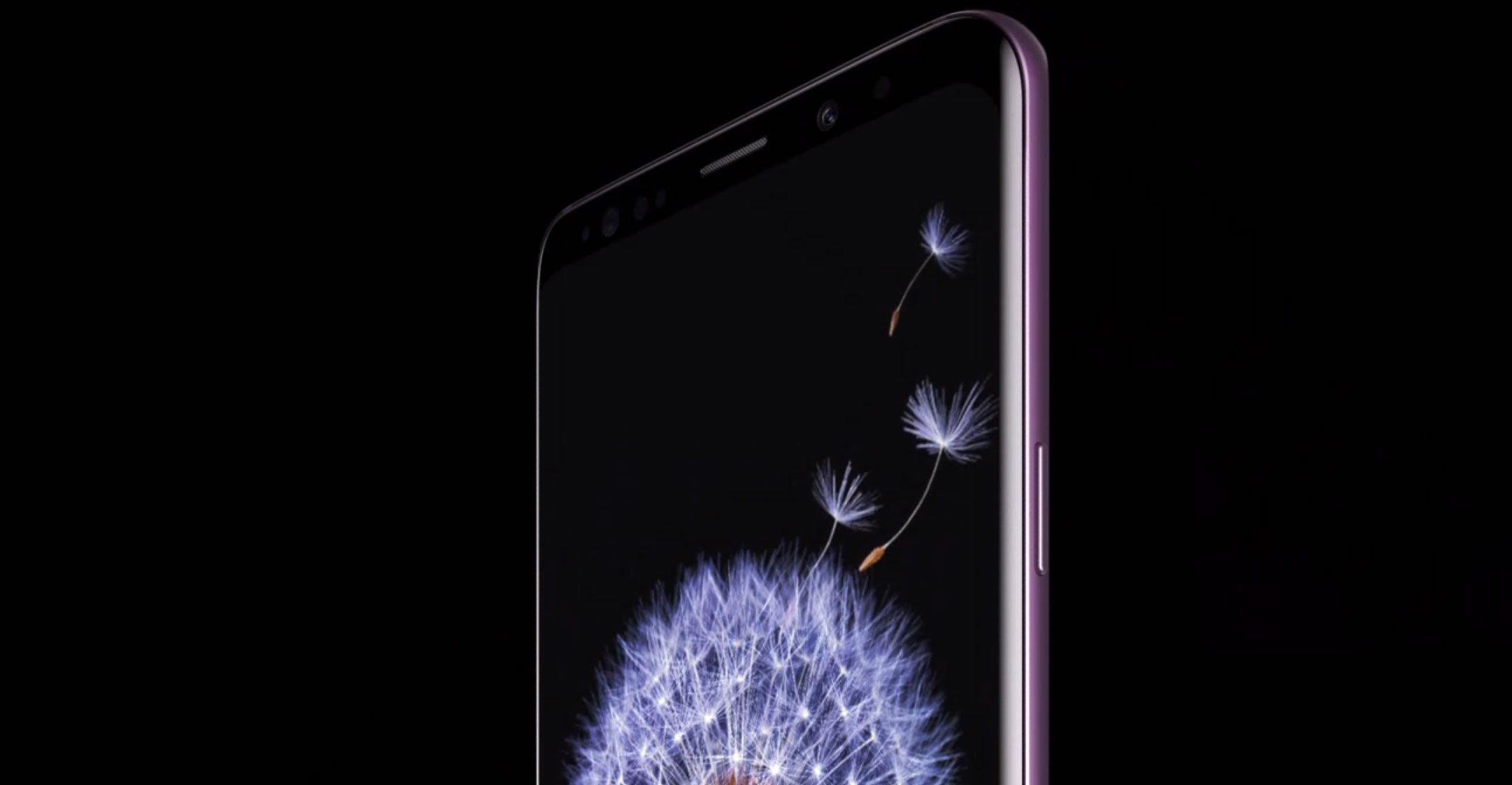
    Samsung’s Galaxy S9

    When Microsoft revealed a replacement to Windows 8, it skipped the number 9 and went straight to Windows 10. Apple’s iPhone 8 was followed by the iPhone X (pronounced “ten”). But Samsung refused to follow: the successor to its Galaxy S8 is the Galaxy S9 (and a larger S9+), and it’s coming out in March.

    The phone is critical for the company. Samsung needs to show it has the hardware and software chops to maintain its leadership in the Android market, while proving Apple isn’t king of smartphone design. Then there’s fending off rising Chinese competition from Huawei and reassuring investors that vice chairman Jay Y Lee has the company’s future under control since his legal woes commanded global headlines.

    But above all, Samsung needs to be better than the iPhone X in the eyes of consumers. Here’s how they compare.

    Photography and video

    Great pictures are essential for any top-end phone. Samsung has equipped the S9+ with two cameras: a wide-angle and a telephoto (like the iPhone X) and both capture at a resolution of 12 megapixels (also like the iPhone X). Samsung even mounts the two lenses of the S9+ vertically — something Apple also does with its flagship.

    But the big difference may come with low-light performance. When you take a picture with the S9, you actually capture 12 images simultaneously. The phone then compares all exposures to create a single shot that includes all the detail you want, but with as little grain and noise as possible. It’s similar to how the iPhone X processes high-dynamic range photos, taking three images at different levels of light exposure to combine them to produce a richer, more balanced image.

    Samsung’s decision to expand this technology in the S9 complements the physical camera lens, which has a wider aperture to let in more light — an f1.5 aperture compared to Apple’s f1.8. In the camera world, that small change can make a big difference.
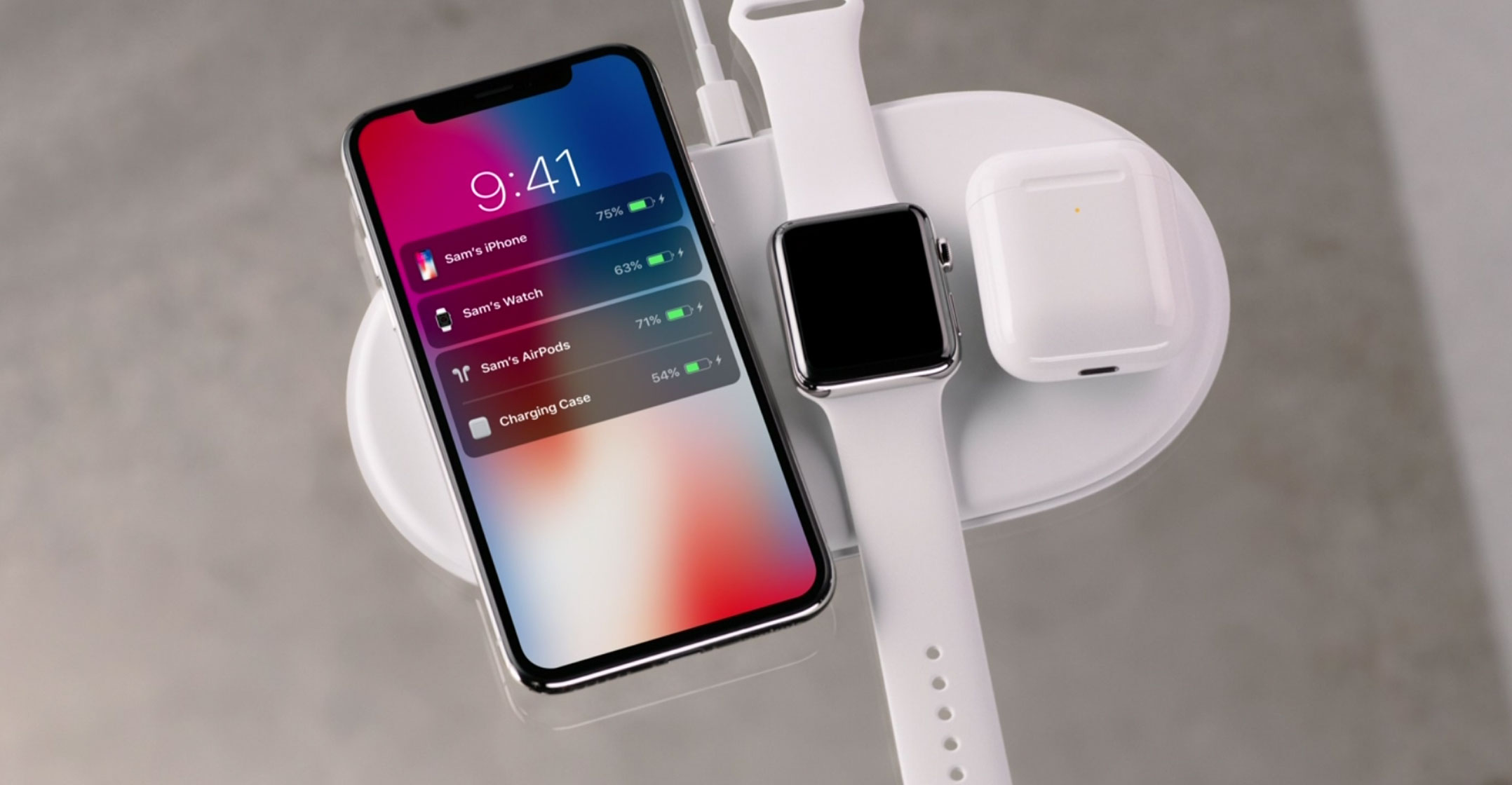
    The iPhone X

    Screen and design

    Most features are the same across S9 and S9+ models, aside from the camera system. But the latter version is larger: it uses a 6.2-inch display compared to the regular S9’s 5.8-inch offering. The large and small variants weigh 189g and 163g respectively.

    The iPhone X weighs 174g — right in the middle of Samsung’s two models. But the screen is one big difference. Apple’s famous “notch” atop the iPhone X’s display is not something Samsung adopted. Instead, the S9 screen is an uninterrupted rectangle. The bezels at the top and bottom of the display are thin, but Apple’s are thinner. Consumers will have a choice: slimmer bezels but with a notch, or no notch but slightly larger bezels.

    Horsepower and performance

    In the US, Samsung will equip the Galaxy S9 with Qualcomm’s latest and greatest system-on-a-chip, the Snapdragon 845. On paper, it includes a CPU that runs at speeds up to 2.8GHz and has eight processing cores. In other regions, such as Europe, Samsung will use its own Exynos processor, not Qualcomm’s.

    Until the phone gets released for review it’s impossible to say how well the Galaxy S9 will perform compared to its own international variant, let alone to the iPhone X. Apple’s phone uses its own A11 Bionic chip, which runs at up to about 2.4GHz, using six processing cores. But historically Apple’s custom-designed silicon, its integration with the iOS software it powers, together with the rest of the hardware in the phone, has given it the edge over competitors whose numbers, on paper, appear greater. What’s safe to say is that both phones should handle anything realistically thrown at them.

    Features and security

    Apple has never let customers expand internal storage of the iPhone with removable SD memory. But Samsung does with the S9. It’ll have 64GB built in, but it supports micro SD cards with up to 400GB of additional capacity. Apple will sell you up to 256GB of internal storage when you choose an iPhone X, but after that you’ll need to rely on cloud-based file-hosting, such as iCloud or Dropbox.

    But Apple users will most likely still feel their iPhone X hardware is in the lead, as Samsung is continuing to use fingerprint sensors and iris scanning for unlocking the latest Galaxy. That isn’t thought to be as sophisticated as Apple’s system, which maps the contours of a human face to identify an individual and was deemed secure enough to no longer require fingerprints at all. Samsung, instead, also includes a fingerprint reader on the rear of the phone.

    Samsung has also taken the idea of Apple’s animated emojis, which use the front-facing camera to let users animate facial features of a unicorn and more by moving their own face. Samsung is introducing a similar feature with the S9, but rather than using existing emojis it will let you create an avatar of yourself and animate that instead. These can be shared as videos of animated gifs via email or text message.

    Price and verdict

    Apple and Samsung both know people are keeping the phones for longer, so manufacturers need to have those that do upgrade to pay more. Apple’s iPhone X starts at US$999 — $200 more than the iPhone 8. Samsung is also increasing the price of its flagship, bumping the S9 up $100, to $950 in the case of the Plus model.

    These phones are the most expensive flagships either has made within their categories, and on paper they share remarkable similarities. Aesthetically, there’s a bigger difference between an iPhone 8 and an iPhone X, particularly in terms of raw industrial design, screen size and display quality. Samsung’s S9 offers less of a noticeable upgrade physically compared to the S8, but improved photographic features and raw horsepower will be key selling points to potential upgraders.

    As for the customer on the fence over whether to defect from one manufacturer to another, it’ll be a trade-off between screen format and bezels, expandable storage, low-light photography and physical look and feel. Elsewhere, we’re still in the realm of very attractive slabs of glass and metal, despite record highs in cost.  — Reported by Nate Lanxon and Timothy Coulter, (c) 2018 Bloomberg LP



    Apple Galaxy S9 Galaxy S9 vs iPhone X iPhone X Samsung Samsung Galaxy S9 top
    WhatsApp YouTube Follow on Google News Add as preferred source on Google
    Share. Facebook Twitter LinkedIn WhatsApp Telegram Email Copy Link
    Previous ArticleNokia 8 Sirocco: HMD Global’s new flagship unveiled
    Next Article ‘Like 1994 again’: CEOs hail Ramaphosa victory

    Related Posts

    AI chatbots are coming to Apple CarPlay

    AI chatbots are coming to Apple CarPlay

    8 February 2026
    Google goes from laggard to leader in AI

    Google goes from laggard to leader in AI

    5 February 2026
    China's Haier takes aim at Samsung, LG and Hisense in South Africa

    China’s Haier takes aim at Samsung, LG and Hisense in South Africa

    3 February 2026
    Company News
    Scaling modern, data-driven farming across Africa - Chris Duvenage

    Scaling modern, data-driven farming across Africa

    17 February 2026
    Why getting your small business online costs less than you think

    Why getting your small business online costs less than you think

    17 February 2026
    Oni-Tel set to reinvigorate dark fibre in South Africa

    Oni-Tel set to reinvigorate dark fibre in South Africa

    17 February 2026
    Opinion
    A million reasons monopolies don't work - Duncan McLeod

    A million reasons monopolies don’t work

    10 February 2026
    The author, Business Leadership South Africa CEO Busi Mavuso

    Eskom unbundling U-turn threatens to undo hard-won electricity gains

    9 February 2026
    South Africa's skills advantage is being overlooked at home - Richard Firth

    South Africa’s skills advantage is being overlooked at home

    29 January 2026

    Subscribe to Updates

    Get the best South African technology news and analysis delivered to your e-mail inbox every morning.

    Latest Posts
    Scaling modern, data-driven farming across Africa - Chris Duvenage

    Scaling modern, data-driven farming across Africa

    17 February 2026
    Blu Label lands energy trading licence from Nersa - Mark Levy

    Blu Label lands electricity trading licence from Nersa

    17 February 2026
    Why getting your small business online costs less than you think

    Why getting your small business online costs less than you think

    17 February 2026
    iOCO goes desert storming with Saudi Arabia cloud expansion - Richard Vester

    iOCO goes desert storming with Saudi Arabia cloud expansion

    17 February 2026
    © 2009 - 2026 NewsCentral Media
    • Cookie policy (ZA)
    • TechCentral – privacy and Popia

    Type above and press Enter to search. Press Esc to cancel.

    Manage consent

    TechCentral uses cookies to enhance its offerings. Consenting to these technologies allows us to serve you better. Not consenting or withdrawing consent may adversely affect certain features and functions of the website.

    Functional Always active
    The technical storage or access is strictly necessary for the legitimate purpose of enabling the use of a specific service explicitly requested by the subscriber or user, or for the sole purpose of carrying out the transmission of a communication over an electronic communications network.
    Preferences
    The technical storage or access is necessary for the legitimate purpose of storing preferences that are not requested by the subscriber or user.
    Statistics
    The technical storage or access that is used exclusively for statistical purposes. The technical storage or access that is used exclusively for anonymous statistical purposes. Without a subpoena, voluntary compliance on the part of your Internet Service Provider, or additional records from a third party, information stored or retrieved for this purpose alone cannot usually be used to identify you.
    Marketing
    The technical storage or access is required to create user profiles to send advertising, or to track the user on a website or across several websites for similar marketing purposes.
    • Manage options
    • Manage services
    • Manage {vendor_count} vendors
    • Read more about these purposes
    View preferences
    • {title}
    • {title}
    • {title}