Close Menu
TechCentralTechCentral

    Subscribe to the newsletter

    Get the best South African technology news and analysis delivered to your e-mail inbox every morning.

    Facebook X (Twitter) YouTube LinkedIn
    WhatsApp Facebook X (Twitter) LinkedIn YouTube
    TechCentralTechCentral
    • News
      Icasa's infrastructure database plan raises national security alarm

      Icasa’s infrastructure database plan raises national security alarm

      15 April 2026
      BYD shuns price war in South Africa

      BYD shuns price war in South Africa

      15 April 2026
      TCS | Werner Lindemann on how AI is rewriting the infosec rulebook

      TCS | Werner Lindemann on how AI is rewriting the infosec rulebook

      15 April 2026
      Draft AI policy: South Africa 'too dependent' on US, China

      Draft AI policy: South Africa ‘too dependent’ on US, China

      15 April 2026
      R85-million for SA start-up reinventing the stethoscope with AI

      R85-million for SA start-up reinventing the stethoscope with AI

      15 April 2026
    • World
      Google poised to lose ad crown to Meta

      Google poised to lose ad crown to Meta

      14 April 2026
      Grand Theft Data - hackers hit Rockstar Games - Grand Theft Auto

      Grand Theft Data – hackers hit Rockstar Games

      14 April 2026
      UK PM Keir Starmer declares war on doomscrolling

      UK PM Keir Starmer declares war on doomscrolling

      13 April 2026
      Big Tech is going nuclear

      Big Tech is going nuclear

      10 April 2026
      Software rout deepens as AI fears grip investors

      Software rout deepens as AI fears grip investors

      10 April 2026
    • In-depth
      Africa switches on as Europe dims the lights

      Africa switches on as Europe dims the lights

      9 April 2026
      The biggest untapped EV market on Earth is hiding in plain sight

      The biggest untapped EV market on Earth is hiding in plain sight

      1 April 2026
      The R18-billion tech giant hiding in plain sight - Jens Montanana

      The R16-billion tech giant hiding in plain sight

      26 March 2026
      The last generation of coders

      The last generation of coders

      18 February 2026
      Sentech is in dire straits

      Sentech is in dire straits

      10 February 2026
    • TCS
      TCS | Donovan Marsh on AI and the future of filmmaking

      TCS | Donovan Marsh on AI and the future of filmmaking

      7 April 2026
      TCS+ | Vodacom Business moves to crack the SME tech gap - Andrew Fulton, Sannesh Beharie

      TCS+ | Vodacom Business moves to crack the SME tech gap

      7 April 2026
      TCS | MTN's Divysh Joshi on the strategy behind Pi - Divyesh Joshi

      TCS | MTN’s Divyesh Joshi on the strategy behind Pi

      1 April 2026
      Anoosh Rooplal

      TCS | Anoosh Rooplal on the Post Office’s last stand

      27 March 2026
      Meet the CIO | HealthBridge CTO Anton Fatti on the future of digital health

      Meet the CIO | Healthbridge CTO Anton Fatti on the future of digital health

      23 March 2026
    • Opinion
      The conflict of interest at the heart of PayShap's slow adoption - Cheslyn Jacobs

      The conflict of interest at the heart of PayShap’s slow adoption

      26 March 2026
      South Africa's energy future hinges on getting wheeling right - Aishah Gire

      South Africa’s energy future hinges on getting wheeling right

      10 March 2026
      Hold the doom: the case for a South African comeback - Duncan McLeod

      Apple just dropped a bomb on the Windows world

      5 March 2026
      R230-million in the bag for Endeavor's third Harvest Fund - Alison Collier

      VC’s centre of gravity is shifting – and South Africa is in the frame

      3 March 2026
      Hold the doom: the case for a South African comeback - Duncan McLeod

      Hold the doom: the case for a South African comeback

      26 February 2026
    • Company Hubs
      • 1Stream
      • Africa Data Centres
      • AfriGIS
      • Altron Digital Business
      • Altron Document Solutions
      • Altron Group
      • Arctic Wolf
      • Ascent Technology
      • AvertITD
      • BBD
      • Braintree
      • CallMiner
      • CambriLearn
      • CYBER1 Solutions
      • Digicloud Africa
      • Digimune
      • Domains.co.za
      • ESET
      • Euphoria Telecom
      • HOSTAFRICA
      • Incredible Business
      • iONLINE
      • IQbusiness
      • Iris Network Systems
      • Kaspersky
      • LSD Open
      • Mitel
      • NEC XON
      • Netstar
      • Network Platforms
      • Next DLP
      • Ovations
      • Paracon
      • Paratus
      • Q-KON
      • SevenC
      • SkyWire
      • Solid8 Technologies
      • Telit Cinterion
      • Telviva
      • Tenable
      • Vertiv
      • Videri Digital
      • Vodacom Business
      • Wipro
      • Workday
      • XLink
    • Sections
      • AI and machine learning
      • Banking
      • Broadcasting and Media
      • Cloud services
      • Contact centres and CX
      • Cryptocurrencies
      • Education and skills
      • Electronics and hardware
      • Energy and sustainability
      • Enterprise software
      • Financial services
      • HealthTech
      • Information security
      • Internet and connectivity
      • Internet of Things
      • Investment
      • IT services
      • Lifestyle
      • Motoring
      • Policy and regulation
      • Public sector
      • Retail and e-commerce
      • Satellite communications
      • Science
      • SMEs and start-ups
      • Social media
      • Talent and leadership
      • Telecoms
    • Events
    • Advertise
    TechCentralTechCentral
    Home » In-depth » Goodbye Kepler, hello Tess, in search for distant planets

    Goodbye Kepler, hello Tess, in search for distant planets

    By The Conversation10 April 2018
    Twitter LinkedIn Facebook WhatsApp Email Telegram Copy Link
    News Alerts
    WhatsApp

    For centuries, humans have wondered about the possibility of other Earths orbiting distant stars. Perhaps some of these alien worlds would harbour strange forms of life or have unique and telling histories or futures. But it was only in 1995 that astronomers spotted the first planets orbiting sun-like stars outside of our solar system.

    In the past decade, in particular, the number of planets known to orbit distant stars grew from under 100 to well over 2 000, with another 2 000 likely planets awaiting confirmation. Most of these new discoveries are due to a single endeavour — Nasa’s Kepler mission.

    Kepler is a spacecraft housing a 1m telescope that illuminates a 95-megapixel digital camera the size of a cookie sheet. The instrument detected tiny variations in the brightness of 150 000 distant stars, looking for the tell-tale sign of a planet blocking a portion of the starlight as it transits across the telescope’s line of sight. It’s so sensitive that it could detect a fly buzzing around a single streetlight in Chicago from an orbit above the Earth. It can see stars shake and vibrate; it can see star spots and flares; and, in favourable situations, it can see planets as small as the moon.

    Number of confirmed exoplanets continues to grow. Nasa/Ames Research Center/Wendy Stenzel and The University of Texas at Austin/Andrew Vanderburg, CC BY

    Kepler’s thousands of discoveries revolutionised our understanding of planets and planetary systems. Now, however, the spacecraft is nearly out of its hydrazine fuel and will end its fantastic life sometime in the next few months. Luckily for planet hunters, Nasa’s upcoming Tess mission is waiting in the wings and will take over the exoplanet search.

    Kepler’s history

    The Kepler mission was conceived in the early 1980s by Nasa scientist Bill Borucki, with later help from David Koch. At the time, there were no known planets outside of the solar system. Kepler was eventually assembled in the 2000s and launched in March 2009. I joined the Kepler Science Team in 2008 (as a wide-eyed rookie), eventually co-chairing the group studying the motions of the planets with Jack Lissauer.

    Originally, the mission was planned to last for three-and-a-half years with possible extensions for as long as the fuel, or the camera, or the spacecraft lasted. As time passed, portions of the camera began to fail but the mission has persisted. However, in 2013 when two of its four stabilising gyros (technically “reaction wheels”) stopped, the original Kepler mission effectively ended.

    Squeezing what knowledge we can from that data will continue for years to come, but what we’ve seen thus far has amazed scientists

    Even then, with some ingenuity, Nasa was able to use reflected light from the sun to help steer the spacecraft. The mission was rechristened as K2 and continued finding planets for another half a decade. Now, with the fuel gauge near empty, the business of planet hunting is winding down and the spacecraft will be left adrift in the solar system. The final catalogue of planet candidates from the original mission was completed late last year and the last observations of K2 are wrapping up.

    Squeezing what knowledge we can from that data will continue for years to come, but what we’ve seen thus far has amazed scientists.

    We have seen some planets that orbit their host stars in only a few hours and are so hot that the surface rock vaporises and trails behind the planet like a comet tail. Other systems have planets so close together that if you were to stand on the surface of one, the second planet would appear larger than 10 full moons. One system is so packed with planets that eight of them are closer to their star than the Earth is to the sun. Many have planets, and sometimes multiple planets, orbiting within the habitable zone of their host star, where liquid water may exist on their surfaces.

    As with any mission, the Kepler package came with trade-offs. It needed to stare at a single part of the sky, blinking every 30 minutes, for four straight years. To study enough stars to make its measurements, the stars had to be quite distant — just as when you stand in the middle of a forest, there are more trees farther from you than right next to you. Distant stars are dim, and their planets are hard to study. Indeed, one challenge for astronomers who want to study the properties of Kepler planets is that Kepler itself is often the best instrument to use. High-quality data from ground-based telescopes requires long observations on the largest telescopes — precious resources that limit the number of planets that can be observed.

    Artist’s painting of the surface of a fictional alien planet

    We now know that there are at least as many planets in the galaxy as there are stars, and many of those planets are quite unlike what we have here in the solar system. Learning the characteristics and personalities of the wide variety of planets requires that astronomers investigate the ones orbiting brighter and closer stars where more instruments and more telescopes can be brought to bear.

    Enter Tess

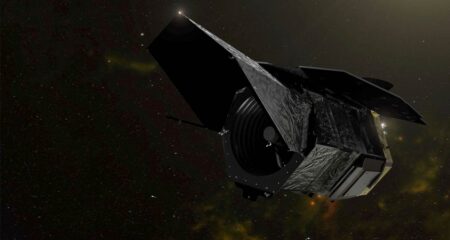
    Nasa’s Transiting Exoplanet Survey Satellite mission, led by MIT’s George Ricker, is slated to launch in the next few weeks and will search for planets using the same detection technique that Kepler used. Tess’s orbit, rather than being around the sun, will have a close relationship with the moon: Tess will orbit the Earth twice for each lunar orbit. Tess’s observing pattern, rather than staring at a single part of the sky, will scan nearly the entire sky with overlapping fields of view (much like the petals on a flower).

    Given what we learnt from Kepler, astronomers expect Tess to find thousands more planetary systems. By surveying the whole sky, we will find systems that orbit stars 10 times closer and 100 times brighter than those found by Kepler — opening up new possibilities for measuring planet masses and densities, studying their atmospheres, characterising their host stars, and establishing the full nature of the systems in which the planets reside. This information, in turn, will tell us more about our own planet’s history, how life may have started, what fates we avoided and what other paths we could have followed.

    The quest to find our place in the universe continues as Kepler finishes its leg of the journey and Tess takes the baton.The Conversation

    • Written by Jason Steffen, assistant professor of physics and astronomy, University of Nevada, Las Vegas
    • This article was originally published on The Conversation

    Follow TechCentral on Google News Add TechCentral as your preferred source on Google


    Bill Borucki David Koch George Ricker Jason Steffen Kepler MIT Nasa Tess top
    WhatsApp YouTube
    Share. Facebook Twitter LinkedIn WhatsApp Telegram Email Copy Link
    Previous ArticleTwo worrying signs in EOH’s results
    Next Article Bitcoin may never bounce back: Barclays

    Related Posts

    The cameras behind Artemis II’s stunning lunar images

    15 April 2026
    Epic, must-watch 4K footage of the Artemis II launch

    Epic, must-watch 4K footage of the Artemis II launch

    12 April 2026

    A moon mission the world needed

    8 April 2026
    Company News
    New man to accelerate wholesale connectivity in the DRC - Gaetan Soltesz, FAST Congo

    New man to accelerate wholesale connectivity in the DRC

    15 April 2026
    Avast Business and Avert IT Distribution rewrite the SMB cybersecurity playbook

    Avast Business and Avert IT Distribution rewrite the SMB cybersecurity playbook

    15 April 2026
    The hidden risk in South Africa's payment infrastructure - AfriGIS

    The hidden risk in South Africa’s payment infrastructure

    14 April 2026
    Opinion
    The conflict of interest at the heart of PayShap's slow adoption - Cheslyn Jacobs

    The conflict of interest at the heart of PayShap’s slow adoption

    26 March 2026
    South Africa's energy future hinges on getting wheeling right - Aishah Gire

    South Africa’s energy future hinges on getting wheeling right

    10 March 2026
    Hold the doom: the case for a South African comeback - Duncan McLeod

    Apple just dropped a bomb on the Windows world

    5 March 2026

    Subscribe to Updates

    Get the best South African technology news and analysis delivered to your e-mail inbox every morning.

    Latest Posts
    Icasa's infrastructure database plan raises national security alarm

    Icasa’s infrastructure database plan raises national security alarm

    15 April 2026
    BYD shuns price war in South Africa

    BYD shuns price war in South Africa

    15 April 2026
    TCS | Werner Lindemann on how AI is rewriting the infosec rulebook

    TCS | Werner Lindemann on how AI is rewriting the infosec rulebook

    15 April 2026
    Draft AI policy: South Africa 'too dependent' on US, China

    Draft AI policy: South Africa ‘too dependent’ on US, China

    15 April 2026
    © 2009 - 2026 NewsCentral Media
    • Cookie policy (ZA)
    • TechCentral – privacy and Popia

    Type above and press Enter to search. Press Esc to cancel.

    Manage consent

    TechCentral uses cookies to enhance its offerings. Consenting to these technologies allows us to serve you better. Not consenting or withdrawing consent may adversely affect certain features and functions of the website.

    Functional Always active
    The technical storage or access is strictly necessary for the legitimate purpose of enabling the use of a specific service explicitly requested by the subscriber or user, or for the sole purpose of carrying out the transmission of a communication over an electronic communications network.
    Preferences
    The technical storage or access is necessary for the legitimate purpose of storing preferences that are not requested by the subscriber or user.
    Statistics
    The technical storage or access that is used exclusively for statistical purposes. The technical storage or access that is used exclusively for anonymous statistical purposes. Without a subpoena, voluntary compliance on the part of your Internet Service Provider, or additional records from a third party, information stored or retrieved for this purpose alone cannot usually be used to identify you.
    Marketing
    The technical storage or access is required to create user profiles to send advertising, or to track the user on a website or across several websites for similar marketing purposes.
    • Manage options
    • Manage services
    • Manage {vendor_count} vendors
    • Read more about these purposes
    View preferences
    • {title}
    • {title}
    • {title}