Close Menu
TechCentralTechCentral

    Subscribe to the newsletter

    Get the best South African technology news and analysis delivered to your e-mail inbox every morning.

    Facebook X (Twitter) YouTube LinkedIn
    WhatsApp Facebook X (Twitter) LinkedIn YouTube
    TechCentralTechCentral
    • News
      'There are no adults in the room': the AI safety exodus

      ‘There are no adults in the room’: the AI safety exodus

      11 September 2026
      US in move to counter Huawei in Africa

      US in move to counter Huawei in Africa

      11 September 2026
      SAPS wants to deploy AI bodycams with facial recognition

      SAPS wants to deploy AI bodycams with facial recognition

      10 September 2026
      Lesaka's first profit comes as its merchant business goes backwards - Lincoln Mali

      Lesaka’s first profit comes as its merchant business goes backwards

      10 September 2026
      South Africa's electric car floodgates are opening

      South Africa’s electric car floodgates are opening

      10 September 2026
    • World
      'This is not circular': Jensen Huang defends $3.5-billion MediaTek deal

      ‘This is not circular’: Jensen Huang defends $3.5-billion MediaTek deal

      2 September 2026
      AI-generated music banned from Australian charts

      AI-generated music banned from Australian charts

      26 August 2026
      Traders brace for a R4.5-trillion swing in Nvidia's value

      Traders brace for a R4.5-trillion swing in Nvidia’s value

      25 August 2026
      Russia building its own Starlink - and faster than expected - Vadym Skibitskyi

      Russia building its own Starlink – and faster than expected

      11 August 2026
      Meta AI will now tell parents if their teen is in crisis

      Meta AI will now tell parents if their teen is in crisis

      17 July 2026
    • In-depth
      Google DeepMind CEO Demis Hassabis. Image: John Sears

      The plan to stop AI from breaking the world

      16 July 2026
      The internet has a Strait of Hormuz problem

      The internet has a Strait of Hormuz problem

      15 July 2026
      AI boom sparks rally, frenzy and fear

      AI boom sparks rally, frenzy and fear

      11 June 2026
      Every plug-in hybrid on sale in South Africa, ranked by price - Lamborghini Temerario

      Every plug-in hybrid on sale in South Africa, ranked by price

      7 June 2026
      What Wi-Fi 8 will mean for wireless networks

      What Wi-Fi 8 will mean for wireless networks

      1 June 2026
    • TCS
      Meet the CIO | Shoprite's Chris Shortt on what a supermarket becomes

      Meet the CIO | Shoprite’s Chris Shortt on what a supermarket becomes

      9 September 2026
      Rubicon's EV charging network is profitable - and growing fast - Watts & Wheels

      Rubicon’s EV charging network is profitable – and growing fast

      8 September 2026
      Winstone Jordaan on building a national EV charging network

      Winstone Jordaan on building a national EV charging network

      2 September 2026
      Watts & Wheels S1E8: 'Tesla lands in Africa, just not here'

      Watts & Wheels S1E8: ‘Tesla lands in Africa, just not here’

      24 August 2026
      TCS | Herotel CEO Van Zyl Botha on beating Starlink to South Africa

      TCS | Herotel CEO Van Zyl Botha on beating Starlink to South Africa

      14 August 2026
    • Opinion
      The fragile joint in the Capitec machine - Pambos Soteriades

      The R197-billion market the banks can’t reach

      25 August 2026
      South African tech's compounding debt problem - Jannie van Zyl

      Management consulting as we know it is over

      21 August 2026
      South African tech's compounding debt problem - Jannie van Zyl

      The most dangerous customer is the quiet one

      10 August 2026
      South African tech's compounding debt problem - Jannie van Zyl

      South African tech’s compounding debt problem

      29 July 2026
      The fragile joint in the Capitec machine - Pambos Soteriades

      Best network, worst vibes: the puzzle of SA telecoms

      20 July 2026
    • Company Hubs
      • 1Stream
      • Africa Data Centres
      • AfriGIS
      • Altron Digital Business
      • Altron Document Solutions
      • Altron Group
      • Arctic Wolf
      • Ascent Technology
      • AvertITD
      • BBD
      • Braintree
      • CallMiner
      • CambriLearn
      • CM.com
      • Contactable
      • CYBER1 Solutions
      • Digicloud Africa
      • Digimune
      • Domains.co.za
      • ESET
      • Euphoria Telecom
      • HOSTAFRICA
      • Incredible Business
      • iONLINE
      • IQbusiness
      • Iris Network Systems
      • Kaspersky
      • LSD Open
      • Mitel
      • NEC XON
      • Netstar
      • Network Platforms
      • Next DLP
      • Ovations
      • Paracon
      • Paratus
      • Q-KON
      • SevenC
      • SkyWire
      • Solid8 Technologies
      • Telit Cinterion
      • Telviva
      • Tenable
      • Vertiv
      • Videri Digital
      • Vodacom Business
      • Vox
      • Wipro
      • Workday
      • XLink
    • Sections
      • AI and machine learning
      • Banking
      • Broadcasting and Media
      • Cloud services
      • Contact centres and CX
      • Cryptocurrencies
      • Education and skills
      • Electronics and hardware
      • Energy and sustainability
      • Enterprise software
      • Financial services
      • HealthTech
      • Information security
      • Internet and connectivity
      • Internet of Things
      • Investment
      • IT services
      • Lifestyle
      • Policy and regulation
      • Public sector
      • Retail and e-commerce
      • Satellite communications
      • Science
      • SMEs and start-ups
      • Social media
      • Talent and leadership
      • Telecoms
      • Watts & Wheels
    • Events
    • Advertise
    TechCentralTechCentral
    Home » In-depth » Google just debuted an iPhone killer

    Google just debuted an iPhone killer

    By Agency Staff4 October 2016
    Twitter LinkedIn Facebook WhatsApp Email Telegram Copy Link
    Get breaking news on WhatsApp

    google-pixel-640

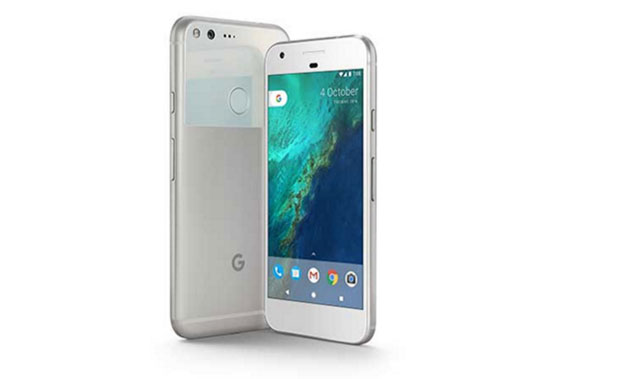
    Google is embarking on a wholesale revamp of its mobile phone strategy, debuting a pair of slick and powerful handsets that for the first time will go head-to-head with Apple’s iconic iPhone.

    The company on Tuesday unveiled the Pixel and larger Pixel XL, the first phones that were conceptualised, designed, engineered and tested in-house.

    The Pixel handsets feature a Siri-like virtual assistant, flashy camera features and are the first to boast Android’s new Nougat 7.1 operating system.

    Their debut signals Google’s push into the US$400bn smartphone hardware business and shows that the company is willing to risk alienating partners like Samsung Electronics and LG Electronics that sell Android-based phones.

    “Google is now the seller of record of this phone,” said Rick Osterloh, chief of the company’s new hardware division. He notes that the company is now managing inventory, building relationships with carriers, sourcing components, making supply chain deals and managing distribution. Google is even making accessories, including cases and cables.

    Until now, Google had satisfied itself with dipping a toe into the smartphone hardware business with the six-year-old Nexus programme, a co-branding effort that outsourced the vast majority of development to other smartphone makers.

    While well regarded, Nexus handsets were mostly a way for Google to experiment. But along the way, executives began to see the benefit of the Apple approach: a unified portfolio of consumer electronics products — phones, tablets, watches, computers — that lock users into its services.

    Getting into the smartphone hardware business is a big, risky financial and operational commitment. But Google needed its own handset to ensure distribution for its Web services, and more complex offerings like virtual and augmented reality.

    So, in the summer of 2015, CEO Sundar Pichai approved the Pixel project; development began last autumn (South African spring). “The difference with this device is that we started from the beginning,” says Dave Burke, who runs Android engineering. By contrast, Google’s contributions to Nexus phones typically didn’t happen until they were 90% done.

    Custom silicon

    When Osterloh, 44, came on board in mid-April, he brought Google’s hardware groups into one division, shutting projects he didn’t see contributing to Google’s future. Now the engineers and designers from Google Glass, Chromecast and Pixel all work together.

    Keeping them separate, he says, made it “hard to drive toward the goal of portfolio strategy and focus”. Reflecting long-held ambitions to build an Apple-style supply chain, the hardware division now has a supply management team, drawing on the expertise of the Nest smart home unit acquired by Google nearly three years ago.

    Google declined to say how much it’s spending on the effort. However, Jason Bremner, a former Qualcomm executive who works on Google’s hardware products, put it in context. “Part of being the seller of record means that inventory, that supply chain risk — you know, hundreds of millions of dollars on the line on any given day — that’s on Google now,” he said.

    Now that Google is designing phones itself, the company can at long last put together a product roadmap going out several years.

    For example, last month Burke was able to see a photo taken by a Google handset that won’t debut until next fall. That “would have never happened with Nexus”, he says.

    Going forward, more and more of the phones’ guts will be developed in-house. Burke says the company will eventually be able to ship its own custom “silicon”, a buzzword for customised processors that make devices work better.
    google-pixel-640

    It’s a very different setup from Osterloh’s previous Google gig, when he ran the Motorola division. “While we were part of Google, we were very arm’s-length,” he says.

    Now his team gets early access to the company’s advances in machine learning and innovations from the Assistant group.

    The Pixel phones will also be the first to run the next version of Android, Nougat 7.1, complete with Google tie-ins like pro camera effects, instant chat support, and a service that automatically frees up phone storage via the cloud.

    Still, Google has deliberately built a firewall between the hardware and Android divisions so other phone makers’ proprietary technology doesn’t leak.

    Hiroshi Lockheimer, who runs the Android unit and is a longtime Osterloh pal, says his group will treat the hardware team like any customer.

    “Samsung is a very important partner, as is LG, Huawei and so on,” he says. “Rick is an important partner. Samsung tells us confidential information about their product line, their plans. We won’t tell LG that, and vice versa. That continues. Everyone is treated the same, including Rick’s team.”

    Osterloh show

    When Osterloh demonstrated the Pixel phones at Google’s Mountain View, California, headquarters recently, it was immediately clear the craftsmanship is light years ahead of the flimsy US$1 500 Google Glass headsets and plastic Chromecast media players of yore.

    With their metal frames and precisely honed bezels and edges, the Pixels (which come in silver, black and limited-edition blue) have more in common with the elegant gear from Nest.

    The phones feature cameras that can snap photos quicker than the blink of an eye, app speeds once reserved for laptops and battery life that bests last year’s non-Google made Nexus phones.

    Osterloh proudly showed how one can twist the phone mid-air to activate the selfie camera. “That’s pretty cool,” he says.

    Also notable is a fingerprint scanner that doubles as a trackpad (other Android phone makers will get to enable this, too) and software-enhanced gyroscopes that reduce shakiness in recorded video, stabilisation that Osterloh calls “out of this world good”.

    The new phones are made up of off-the-shelf components from several suppliers, including a Snapdragon processor, and are assembled in Taiwan by HTC.

    But there is still custom work inside this first version, including wireless modem technology that has evolved from earlier experiments with Nexus.

    The Pixel also has chipsets optimised by Google that makes photo-taking and touchscreen response times much faster than any Android device yet built, Burke says.

    The Google Assistant was developed separately from Android and offers suggestions based on previous queries. For example, it can list San Francisco landmarks after being asked earlier about the local weather.

    While Google has contracted HTC to assemble the Pixel phones, Osterloh says the approach is no different than Apple’s partnership with iPhone builder Foxconn.

    Flip the Pixel over and you’ll see “Made by Google”, another tip of the hat to Apple, which has long made much of the fact that its phones are “designed by Apple in California”. Osterloh says Google will never say the Pixel is co-engineered with anyone else. He proudly proclaims, “It’s ours.”  — (c) 2016 Bloomberg LP

    Add TechCentral as a preferred source on GoogleFollow TechCentral on Google NewsGet breaking news on WhatsApp


    Apple Google Google Pixel Google Pixel XL LG LG Electronics Pixel Pixel XL Qualcomm Samsung Sundar Pichai
    WhatsApp YouTube
    Share. Facebook Twitter LinkedIn WhatsApp Telegram Email Copy Link
    Previous ArticleMeet Google’s new Pixel smartphones
    Next Article Gov’t playing Russian Roulette with ICT sector

    Related Posts

    From foldgate to the iPhone Duo: the strange history of folding phones

    From foldgate to the iPhone Duo: the strange history of folding phones

    10 September 2026
    How much Apple's iPhone Duo will cost in South Africa

    How much Apple’s iPhone Duo will cost in South Africa

    9 September 2026
    Shoprite's CTO is thinking of a future where new recruits arrive with their own AI agents - Chris Shortt

    Shoprite’s CTO is thinking of a future where new recruits arrive with their own AI agents

    8 September 2026
    Company News
    Nitda, NDPC and Galaxy Backbone back CyFrica 2026

    Nitda, NDPC and Galaxy Backbone back CyFrica 2026

    11 September 2026
    Can an online school produce a scientist? CambriLearn has an independent answer

    Can an online school produce a scientist? CambriLearn has an independent answer

    9 September 2026
    The ASUS ExpertCenter Pro ET900N from Altron Arrow

    A petaflop on a desk – rethinking AI infrastructure for South Africa

    9 September 2026
    Opinion
    The fragile joint in the Capitec machine - Pambos Soteriades

    The R197-billion market the banks can’t reach

    25 August 2026
    South African tech's compounding debt problem - Jannie van Zyl

    Management consulting as we know it is over

    21 August 2026
    South African tech's compounding debt problem - Jannie van Zyl

    The most dangerous customer is the quiet one

    10 August 2026

    Subscribe to Updates

    Get the best South African technology news and analysis delivered to your e-mail inbox every morning.

    Latest Posts
    Nitda, NDPC and Galaxy Backbone back CyFrica 2026

    Nitda, NDPC and Galaxy Backbone back CyFrica 2026

    11 September 2026
    'There are no adults in the room': the AI safety exodus

    ‘There are no adults in the room’: the AI safety exodus

    11 September 2026
    US in move to counter Huawei in Africa

    US in move to counter Huawei in Africa

    11 September 2026
    SAPS wants to deploy AI bodycams with facial recognition

    SAPS wants to deploy AI bodycams with facial recognition

    10 September 2026
    © 2009 - 2026 NewsCentral Media
    Built and maintained by Chronon
    • Cookie policy (ZA)
    • TechCentral – privacy and Popia

    Type above and press Enter to search. Press Esc to cancel.

    Manage consent

    TechCentral uses cookies to enhance its offerings. Consenting to these technologies allows us to serve you better. Not consenting or withdrawing consent may adversely affect certain features and functions of the website.

    Functional Always active
    The technical storage or access is strictly necessary for the legitimate purpose of enabling the use of a specific service explicitly requested by the subscriber or user, or for the sole purpose of carrying out the transmission of a communication over an electronic communications network.
    Preferences
    The technical storage or access is necessary for the legitimate purpose of storing preferences that are not requested by the subscriber or user.
    Statistics
    The technical storage or access that is used exclusively for statistical purposes. The technical storage or access that is used exclusively for anonymous statistical purposes. Without a subpoena, voluntary compliance on the part of your Internet Service Provider, or additional records from a third party, information stored or retrieved for this purpose alone cannot usually be used to identify you.
    Marketing
    The technical storage or access is required to create user profiles to send advertising, or to track the user on a website or across several websites for similar marketing purposes.
    • Manage options
    • Manage services
    • Manage {vendor_count} vendors
    • Read more about these purposes
    View preferences
    • {title}
    • {title}
    • {title}