Close Menu
TechCentralTechCentral

    Subscribe to the newsletter

    Get the best South African technology news and analysis delivered to your e-mail inbox every morning.

    Facebook X (Twitter) YouTube LinkedIn
    WhatsApp Facebook X (Twitter) LinkedIn YouTube
    TechCentralTechCentral
    • News
      Big Microsoft 365 price increases coming next year

      Big Microsoft price increases coming next year

      5 December 2025
      Vodacom to take control of Safaricom in R36-billion deal - Shameel Joosub

      Vodacom to take control of Safaricom in R36-billion deal

      4 December 2025
      Black Friday goes digital in South Africa as online spending surges to record high

      Black Friday goes digital in South Africa as online spending surges to record high

      4 December 2025
      BYD takes direct aim at Toyota with launch of sub-R500 000 Sealion 5 PHEV

      BYD takes direct aim at Toyota with launch of sub-R500 000 Sealion 5 PHEV

      4 December 2025
      'Get it now': Takealot in new instant deliveries pilot

      ‘Get it now’: Takealot in new instant deliveries pilot

      4 December 2025
    • World
      Amazon and Google launch multi-cloud service for faster connectivity

      Amazon and Google launch multi-cloud service for faster connectivity

      1 December 2025
      Google makes final court plea to stop US breakup

      Google makes final court plea to stop US breakup

      21 November 2025
      Bezos unveils monster rocket: New Glenn 9x4 set to dwarf Saturn V

      Bezos unveils monster rocket: New Glenn 9×4 set to dwarf Saturn V

      21 November 2025
      Tech shares turbocharged by Nvidia's stellar earnings

      Tech shares turbocharged by stellar Nvidia earnings

      20 November 2025
      Config file blamed for Cloudflare meltdown that disrupted the web

      Config file blamed for Cloudflare meltdown that disrupted the web

      19 November 2025
    • In-depth
      Jensen Huang Nvidia

      So, will China really win the AI race?

      14 November 2025
      Valve's Linux console takes aim at Microsoft's gaming empire

      Valve’s Linux console takes aim at Microsoft’s gaming empire

      13 November 2025
      iOCO's extraordinary comeback plan - Rhys Summerton

      iOCO’s extraordinary comeback plan

      28 October 2025
      Why smart glasses keep failing - no, it's not the tech - Mark Zuckerberg

      Why smart glasses keep failing – it’s not the tech

      19 October 2025
      BYD to blanket South Africa with megawatt-scale EV charging network - Stella Li

      BYD to blanket South Africa with megawatt-scale EV charging network

      16 October 2025
    • TCS
      TCS+ | How Cloud on Demand helps partners thrive in the AWS ecosystem - Odwa Ndyaluvane and Xenia Rhode

      TCS+ | How Cloud On Demand helps partners thrive in the AWS ecosystem

      4 December 2025
      TCS | MTN Group CEO Ralph Mupita on competition, AI and the future of mobile

      TCS | Ralph Mupita on competition, AI and the future of mobile

      28 November 2025
      TCS | Dominic Cull on fixing South Africa's ICT policy bottlenecks

      TCS | Dominic Cull on fixing South Africa’s ICT policy bottlenecks

      21 November 2025
      TCS | BMW CEO Peter van Binsbergen on the future of South Africa's automotive industry

      TCS | BMW CEO Peter van Binsbergen on the future of South Africa’s automotive industry

      6 November 2025
      TCS | Why Altron is building an AI factory - Bongani Andy Mabaso

      TCS | Why Altron is building an AI factory in Johannesburg

      28 October 2025
    • Opinion
      Your data, your hardware: the DIY AI revolution is coming - Duncan McLeod

      Your data, your hardware: the DIY AI revolution is coming

      20 November 2025
      Zero Carbon Charge founder Joubert Roux

      The energy revolution South Africa can’t afford to miss

      20 November 2025
      It's time for a new approach to government IT spend in South Africa - Richard Firth

      It’s time for a new approach to government IT spend in South Africa

      19 November 2025
      How South Africa's broken Rica system fuels murder and mayhem - Farhad Khan

      How South Africa’s broken Rica system fuels murder and mayhem

      10 November 2025
      South Africa's AI data centre boom risks overloading a fragile grid - Paul Colmer

      South Africa’s AI data centre boom risks overloading a fragile grid

      30 October 2025
    • Company Hubs
      • Africa Data Centres
      • AfriGIS
      • Altron Digital Business
      • Altron Document Solutions
      • Altron Group
      • Arctic Wolf
      • AvertITD
      • Braintree
      • CallMiner
      • CambriLearn
      • CYBER1 Solutions
      • Digicloud Africa
      • Digimune
      • Domains.co.za
      • ESET
      • Euphoria Telecom
      • Incredible Business
      • iONLINE
      • IQbusiness
      • Iris Network Systems
      • LSD Open
      • NEC XON
      • Netstar
      • Network Platforms
      • Next DLP
      • Ovations
      • Paracon
      • Paratus
      • Q-KON
      • SevenC
      • SkyWire
      • Solid8 Technologies
      • Telit Cinterion
      • Tenable
      • Vertiv
      • Videri Digital
      • Vodacom Business
      • Wipro
      • Workday
      • XLink
    • Sections
      • AI and machine learning
      • Banking
      • Broadcasting and Media
      • Cloud services
      • Contact centres and CX
      • Cryptocurrencies
      • Education and skills
      • Electronics and hardware
      • Energy and sustainability
      • Enterprise software
      • Financial services
      • Information security
      • Internet and connectivity
      • Internet of Things
      • Investment
      • IT services
      • Lifestyle
      • Motoring
      • Public sector
      • Retail and e-commerce
      • Satellite communications
      • Science
      • SMEs and start-ups
      • Social media
      • Talent and leadership
      • Telecoms
    • Events
    • Advertise
    TechCentralTechCentral
    Home » World » Here’s what would happen in a cyberwar

    Here’s what would happen in a cyberwar

    By The Conversation7 August 2016
    Twitter LinkedIn Facebook WhatsApp Email Telegram Copy Link
    News Alerts
    WhatsApp

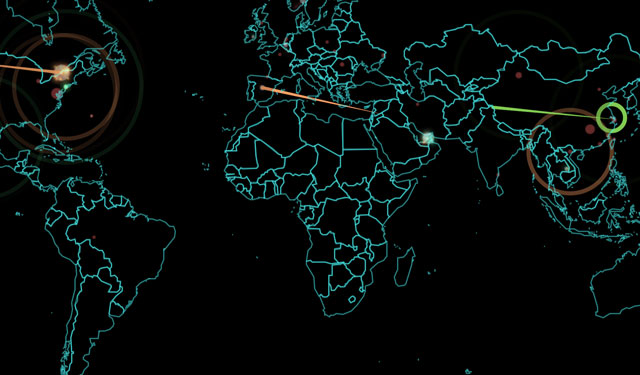
    cyberwar-640

    Imagine you woke up to discover a massive cyberattack on your country. All government data has been destroyed, taking out healthcare records, birth certificates, social care records and so much more. The transport system isn’t working, traffic lights are blank, immigration is in chaos and all tax records have disappeared. The Internet has been reduced to an error message and daily life as you know it has halted.

    This might sound fanciful, but don’t be so sure. When countries declare war on one another in future, this sort of disaster might be the opportunity the enemy is looking for.

    The Internet has brought us many great things, but it has also made us more vulnerable. Protecting against such futuristic violence is one of the key challenges of the 21st century.

    Strategists know that the most fragile part of Internet infrastructure is the energy supply. The starting point in serious cyberwarfare may well be to trip the power stations which power the data centres involved with the core routing elements of the network.

    Backup generators and uninterruptible power supplies might offer protection, but they don’t always work and can potentially be hacked. In any case, backup power is usually designed to shut off after a few hours. That is enough time to correct a normal fault, but cyberattacks might require backup for days or even weeks.

    William Cohen, the former US secretary of defence, recently predicted such a major outage would cause large-scale economic damage and civil unrest. In a war situation, this could be enough to bring about defeat. Janet Napolitano, a former secretary at the US department of homeland security, believes the American system is not well enough protected to avoid this.

    Denial of service

    An attack on the national grid could involve what is called a distributed denial of service (DDoS) attack. These use multiple computers to flood a system with information from many sources at the same time. This could make it easier for hackers to neutralise the backup power and tripping the system.

    DDoS attacks are also a major threat in their own right. They could overload the main network gateways of a country and cause major outages. Such attacks are commonplace against the private sector, particularly finance companies. Akamai Technologies, which controls 30% of Internet traffic, recently said these are the most worrying kind of attack and becoming ever more sophisticated.

    Akamai recently monitored a sustained attack against a media outlet of 363Gbit/s — a scale which few companies, let alone a nation, could cope with for long. Networks specialist Verisign reports a shocking 111% increase in DDoS attacks per year, almost half of them over 10Gbit/s in scale — much more powerful than previously. The top sources are Vietnam, Brazil and Columbia.

    Most DDoS attacks swamp an internal network with traffic via the DNS and NTP servers that provide most core services within the network. Without DNS, the Internet wouldn’t work, but it is weak from a security point of view. Specialists have been trying to come up with a solution, but building security into these servers to recognise DDoS attacks appears to mean re-engineering the entire Internet.

    How to react

    If a country’s grid were taken down by an attack for any length of time, the ensuing chaos would potentially be enough to win a war outright. If instead its online infrastructure were substantially compromised by a DDoS attack, the response would probably go like this:

    Phase one: Takeover of network: the country’s security operations centre would need to take control of Internet traffic to stop its citizens from crashing the internal infrastructure. We possibly saw this in the failed Turkish coup a few weeks ago, where YouTube and social media went completely offline inside the country.

    Phase two: Analysis of attack: security analysts would be trying to figure out how to cope with the attack without affecting the internal operation of the network.

    Phase three: Observation and large-scale control: the authorities would be faced with countless alerts about system crashes and problems. The challenge would be to ensure only key alerts reached the analysts trying to overcome the problems before the infrastructure collapsed. A key focus would be ensuring military, transport, energy, health and law enforcement systems were given the highest priority, along with financial systems.

    Phase four. Observation and fine control: by this stage there would be some stability and the attention could turn to lesser but important alerts regarding things like financial and commercial interests.

    Phase five. Coping and restoring: this would be about restoring normality and trying to recover damaged systems. The challenge would be to reach this phase as quickly as possible with the least sustained damage.

    State of play

    If even the security-heavy US is concerned about its grid, the same is likely to be true of most countries. I suspect many countries are not well drilled to cope with sustained DDoS, especially given the fundamental weaknesses in DNS servers. Small countries are particularly at risk because they often depend on infrastructure that reaches a central point in a larger country nearby.

    The UK, it should be said, is probably better placed than some countries to survive cyberwarfare. It enjoys an independent grid and GCHQ and the National Crime Agency have helped to encourage some of the best private sector security operations centres in the world. Many countries could probably learn a great deal from it. Estonia, whose infrastructure was disabled for several days in 2007 following a cyberattack, is now looking at moving copies of government data to the UK for protection.

    Given the current level of international tension and the potential damage from a major cyberattack, this is an area that all countries need to take very seriously. Better to do it now rather than waiting until one country pays the price. For better and worse, the world has never been so connected.The Conversation

    • Bill Buchanan is head, The Cyber Academy, Edinburgh Napier University
    • This article was originally published on The Conversation


    Subscribe to TechCentral Subscribe to TechCentral
    Share. Facebook Twitter LinkedIn WhatsApp Telegram Email Copy Link
    Previous ArticleNetflix’s Stranger Things: nostalgia done right
    Next Article Politics dominates SA news, social media

    Related Posts

    Big Microsoft 365 price increases coming next year

    Big Microsoft price increases coming next year

    5 December 2025
    AI is not a technology problem - iqbusiness

    AI is not a technology problem – iqbusiness

    5 December 2025
    Vodacom to take control of Safaricom in R36-billion deal - Shameel Joosub

    Vodacom to take control of Safaricom in R36-billion deal

    4 December 2025
    Company News
    AI is not a technology problem - iqbusiness

    AI is not a technology problem – iqbusiness

    5 December 2025
    Telcos are sitting on a data gold mine - but few know what do with it - Phillip du Plessis

    Telcos are sitting on a data gold mine – but few know what do with it

    4 December 2025
    Unlock smarter computing with your surface Copilot+ PC

    Unlock smarter computing with your Surface Copilot+ PC

    4 December 2025
    Opinion
    Your data, your hardware: the DIY AI revolution is coming - Duncan McLeod

    Your data, your hardware: the DIY AI revolution is coming

    20 November 2025
    Zero Carbon Charge founder Joubert Roux

    The energy revolution South Africa can’t afford to miss

    20 November 2025
    It's time for a new approach to government IT spend in South Africa - Richard Firth

    It’s time for a new approach to government IT spend in South Africa

    19 November 2025

    Subscribe to Updates

    Get the best South African technology news and analysis delivered to your e-mail inbox every morning.

    Latest Posts
    Big Microsoft 365 price increases coming next year

    Big Microsoft price increases coming next year

    5 December 2025
    AI is not a technology problem - iqbusiness

    AI is not a technology problem – iqbusiness

    5 December 2025
    Vodacom to take control of Safaricom in R36-billion deal - Shameel Joosub

    Vodacom to take control of Safaricom in R36-billion deal

    4 December 2025
    Black Friday goes digital in South Africa as online spending surges to record high

    Black Friday goes digital in South Africa as online spending surges to record high

    4 December 2025
    © 2009 - 2025 NewsCentral Media
    • Cookie policy (ZA)
    • TechCentral – privacy and Popia

    Type above and press Enter to search. Press Esc to cancel.

    Manage consent

    TechCentral uses cookies to enhance its offerings. Consenting to these technologies allows us to serve you better. Not consenting or withdrawing consent may adversely affect certain features and functions of the website.

    Functional Always active
    The technical storage or access is strictly necessary for the legitimate purpose of enabling the use of a specific service explicitly requested by the subscriber or user, or for the sole purpose of carrying out the transmission of a communication over an electronic communications network.
    Preferences
    The technical storage or access is necessary for the legitimate purpose of storing preferences that are not requested by the subscriber or user.
    Statistics
    The technical storage or access that is used exclusively for statistical purposes. The technical storage or access that is used exclusively for anonymous statistical purposes. Without a subpoena, voluntary compliance on the part of your Internet Service Provider, or additional records from a third party, information stored or retrieved for this purpose alone cannot usually be used to identify you.
    Marketing
    The technical storage or access is required to create user profiles to send advertising, or to track the user on a website or across several websites for similar marketing purposes.
    • Manage options
    • Manage services
    • Manage {vendor_count} vendors
    • Read more about these purposes
    View preferences
    • {title}
    • {title}
    • {title}