Close Menu
TechCentralTechCentral

    Subscribe to the newsletter

    Get the best South African technology news and analysis delivered to your e-mail inbox every morning.

    Facebook X (Twitter) YouTube LinkedIn
    WhatsApp Facebook X (Twitter) LinkedIn YouTube
    TechCentralTechCentral
    • News
      Vuyani Jarana: Mobile coverage masks a deeper broadband failure

      Vuyani Jarana: Mobile coverage masks a deeper broadband failure

      30 January 2026
      SABC Plus to flight Microsoft AI training videos

      SABC Plus to flight Microsoft AI training videos

      30 January 2026
      Fibre ducts

      Fibre industry consolidation in KZN

      30 January 2026
      Watts & Wheels S1E3: 'BYD's Corolla Cross challenger'

      Watts & Wheels S1E3: ‘BYD’s Corolla Cross challenger’

      30 January 2026
      What ordinary South Africans really think of AI

      What ordinary South Africans really think of AI

      30 January 2026
    • World
      Apple acquires audio AI start-up Q.ai

      Apple acquires audio AI start-up Q.ai

      30 January 2026
      SpaceX IPO may be largest in history

      SpaceX IPO may be largest in history

      28 January 2026
      Nvidia throws AI at the weather

      Nvidia throws AI at weather forecasting

      27 January 2026
      Debate erupts over value of in-flight Wi-Fi

      Debate erupts over value of in-flight Wi-Fi

      26 January 2026
      Intel takes another hit - Intel CEO Lip-Bu Tan. Laure Andrillon/Reuters

      Intel takes another hit

      23 January 2026
    • In-depth
      How liberalisation is rewiring South Africa's power sector

      How liberalisation is rewiring South Africa’s power sector

      21 January 2026
      The top-performing South African tech shares of 2025

      The top-performing South African tech shares of 2025

      12 January 2026
      Digital authoritarianism grows as African states normalise internet blackouts

      Digital authoritarianism grows as African states normalise internet blackouts

      19 December 2025
      TechCentral's South African Newsmakers of 2025

      TechCentral’s South African Newsmakers of 2025

      18 December 2025
      Black Friday goes digital in South Africa as online spending surges to record high

      Black Friday goes digital in South Africa as online spending surges to record high

      4 December 2025
    • TCS
      TCS+ | How Cloud On Demand is helping SA businesses succeed in the cloud - Xhenia Rhode, Dion Kalicharan

      TCS+ | Cloud On Demand and Consnet: inside a real-world AWS partner success story

      30 January 2026
      Watts & Wheels S1E3: 'BYD's Corolla Cross challenger'

      Watts & Wheels S1E2: ‘China attacks, BMW digs in, Toyota’s sublime supercar’

      23 January 2026

      TCS+ | Why cybersecurity is becoming a competitive advantage for SA businesses

      20 January 2026
      Watts & Wheels S1E3: 'BYD's Corolla Cross challenger'

      Watts & Wheels: S1E1 – ‘William, Prince of Wheels’

      8 January 2026
      TCS+ | Africa's digital transformation - unlocking AI through cloud and culture - Cliff de Wit Accelera Digital Group

      TCS+ | Cloud without culture won’t deliver AI: Accelera’s Cliff de Wit

      12 December 2025
    • Opinion
      South Africa's skills advantage is being overlooked at home - Richard Firth

      South Africa’s skills advantage is being overlooked at home

      29 January 2026
      Why Elon Musk's Starlink is a 'hard no' for me - Songezo Zibi

      Why Elon Musk’s Starlink is a ‘hard no’ for me

      26 January 2026
      South Africa's new fibre broadband battle - Duncan McLeod

      South Africa’s new fibre broadband battle

      20 January 2026
      AI moves from pilots to production in South African companies - Nazia Pillay SAP

      AI moves from pilots to production in South African companies

      20 January 2026
      South Africa's new fibre broadband battle - Duncan McLeod

      ANC’s attack on Solly Malatsi shows how BEE dogma trumps economic reality

      14 December 2025
    • Company Hubs
      • Africa Data Centres
      • AfriGIS
      • Altron Digital Business
      • Altron Document Solutions
      • Altron Group
      • Arctic Wolf
      • AvertITD
      • Braintree
      • CallMiner
      • CambriLearn
      • CYBER1 Solutions
      • Digicloud Africa
      • Digimune
      • Domains.co.za
      • ESET
      • Euphoria Telecom
      • Incredible Business
      • iONLINE
      • IQbusiness
      • Iris Network Systems
      • LSD Open
      • NEC XON
      • Netstar
      • Network Platforms
      • Next DLP
      • Ovations
      • Paracon
      • Paratus
      • Q-KON
      • SevenC
      • SkyWire
      • Solid8 Technologies
      • Telit Cinterion
      • Tenable
      • Vertiv
      • Videri Digital
      • Vodacom Business
      • Wipro
      • Workday
      • XLink
    • Sections
      • AI and machine learning
      • Banking
      • Broadcasting and Media
      • Cloud services
      • Contact centres and CX
      • Cryptocurrencies
      • Education and skills
      • Electronics and hardware
      • Energy and sustainability
      • Enterprise software
      • Financial services
      • Information security
      • Internet and connectivity
      • Internet of Things
      • Investment
      • IT services
      • Lifestyle
      • Motoring
      • Public sector
      • Retail and e-commerce
      • Satellite communications
      • Science
      • SMEs and start-ups
      • Social media
      • Talent and leadership
      • Telecoms
    • Events
    • Advertise
    TechCentralTechCentral
    Home » In-depth » How miniaturisation will transform computing

    How miniaturisation will transform computing

    By The Conversation29 June 2015
    Twitter LinkedIn Facebook WhatsApp Email Telegram Copy Link
    News Alerts
    WhatsApp

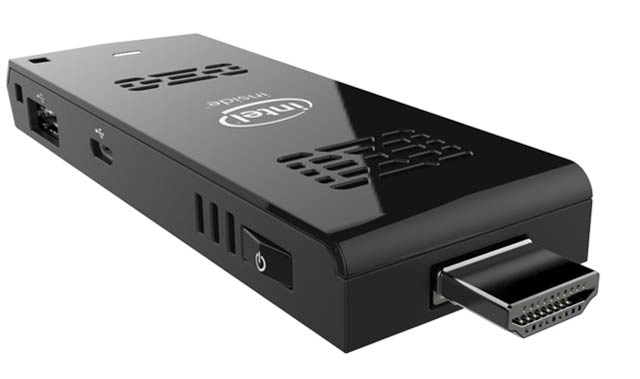
    intel-compute-stick-640-1

    Lenovo, the Chinese firm that has bought IBM’s cast-off PC business, has announced a miniaturised computer not much larger than a smartphone, which can be connected to any screen via an HDMI connection.

    Advances in electronic components manufacturing processes and integration have resulted in large-scale miniaturisation of computer systems. This has enabled the latest system-in-package and system-on-a-chip approaches, where the processor and other necessary functionality usually provided by many microchips can be incorporated into a single silicon chip package.

    Lenovo’s Ideacenter Stick 300 runs Windows 8 or Linux, is powered by a micro USB connector and comes fitted with a new Intel Bay Trail CPU, 2GB RAM, 32GB flash storage, an SD card reader, Wi-Fi — even speakers.

    Lenovo isn’t the first to shrink the PC down to pocket size. Intel’s Compute Stick is another dongle-sized computer with similar specs released this year.

    The Raspberry Pi, now upgraded to its second major release, was probably the first to provide the functionality of a desktop or laptop computer in a credit card-sized electronic board. Over 5m Raspberry Pi computers have been sold since launch in 2012.

    Google has used its stripped-down Chrome OS, based on its Chrome browser, to reduce a Chromebook (Chrome OS-powered laptop) down to the Chromebit. While the Chromebit is no larger than a USB flash drive, it’s markedly less powerful than Intel’s offering, as it is powered by the Rockchip RK3288, an ARM processor, which makes it comparable in power to a smartphone.

    There are other stick-sized, computers running low-power ARM processors capable of running Android, such as Cotton Candy or Google Chromecast. These plug into a digital television to play video directly to the TV or from Internet streaming services such as Netflix — but not much else.

    Computers this small are attractive for many organisations, such as schools and universities who need to equip functional computer laboratories at minimum cost while taking up as little space as possible. Low-power devices also consume less power, which keeps costs down.

    A typical desktop computer uses about 65-250W (plus 20-40W for an LCD monitor) — considerably higher than a typical PC-on-a-stick at about 10W. There are obvious business uses, such as digital signage and advertising when connected to screens or projectors.

    The Google Chromebit
    The Google Chromebit

    This new round of computer miniaturisation marks a third wave of computerisation. First there were room-sized computers, shared between many users — the mainframe era. These time-sharing systems gradually disappeared as computers were miniaturised, replaced by the one computer per user of the PC era.

    Today, one person could have many computers, whether recognisable as desktop and laptop PCs or smartphones or compute sticks, but which are accessible everywhere and anywhere. Known as ubiquitous or pervasive computing, this is the third wave in computing.

    As all computing devices grow smaller, the aim is that they are more connected and more integrated into our environment. The computing technology fades into our surroundings until only the user interface remains perceptible to users. It is an emerging discipline that brings computing to our living environments, makes those environments sensitive to us and have them adapt to the user’s needs. By enriching an environment with appropriate interconnected computing devices, the environment would be able to sense changes and support decisions that benefit its users.

    There is a growing interest in these smart spaces using miniaturised computing technologies to support our daily lives more effectively. For example, smart offices, classrooms and homes that allow computers to monitor and control what is happening in the environment.

    Apple’s HomeKit and Google’s Nest are a start in this direction, providing the hardware and software to allow home automation. A smart home that monitors temperature and movement could allow elderly to remain self-sufficient and independent in their own home, for example, and voice activated devices could help everyday tasks such as ordering the shopping. A smart office could remind staff of information such as meeting reminders. It could turn the lights on and off, or control heating and cooling efficiently. A smart hospital ward will monitor patients and warn doctors and nurses of any potential problem or human errors.

    The Smart Anything Everywhere vision of the European Commission drives research and development in this area. The evolution and disruptive innovation across the field of computing, from the Internet of things, smart cities and smart spaces down to nanoelectronics — the applications and benefits of greater miniaturisation of computers are endless.The Conversation

    • Ahmad Lotfi is reader in computational intelligence at Nottingham Trent University
    • This article was originally published on The Conversation


    Ahmad Lotfi Intel Lenovo Raspberry Pi
    WhatsApp YouTube Follow on Google News Add as preferred source on Google
    Share. Facebook Twitter LinkedIn WhatsApp Telegram Email Copy Link
    Previous ArticleCisco sees jump in SA Internet traffic
    Next Article Seven megatrends shaping SA telecoms

    Related Posts

    Intel takes another hit - Intel CEO Lip-Bu Tan. Laure Andrillon/Reuters

    Intel takes another hit

    23 January 2026
    AI is eating the world's memory - and we're all going to pay the price

    AI is eating the world’s memory – and we’re all going to pay the price

    22 January 2026
    AI hardware booms at CES, but consumer adoption is uncertain

    AI hardware booms at CES, but consumer adoption is uncertain

    9 January 2026
    Company News
    Huawei turns 25 in South Africa, celebrates with major device discounts

    Huawei turns 25 in South Africa, celebrates with major device discounts

    30 January 2026
    Phishing has not disappeared, but it has grown up - KnowBe4

    Phishing has not disappeared, but it has grown up

    30 January 2026
    Smartphone affordability: South Africa's new economic divide - PayJoy

    Smartphone affordability: South Africa’s new economic divide

    29 January 2026
    Opinion
    South Africa's skills advantage is being overlooked at home - Richard Firth

    South Africa’s skills advantage is being overlooked at home

    29 January 2026
    Why Elon Musk's Starlink is a 'hard no' for me - Songezo Zibi

    Why Elon Musk’s Starlink is a ‘hard no’ for me

    26 January 2026
    South Africa's new fibre broadband battle - Duncan McLeod

    South Africa’s new fibre broadband battle

    20 January 2026

    Subscribe to Updates

    Get the best South African technology news and analysis delivered to your e-mail inbox every morning.

    Latest Posts
    Vuyani Jarana: Mobile coverage masks a deeper broadband failure

    Vuyani Jarana: Mobile coverage masks a deeper broadband failure

    30 January 2026
    TCS+ | How Cloud On Demand is helping SA businesses succeed in the cloud - Xhenia Rhode, Dion Kalicharan

    TCS+ | Cloud On Demand and Consnet: inside a real-world AWS partner success story

    30 January 2026
    Huawei turns 25 in South Africa, celebrates with major device discounts

    Huawei turns 25 in South Africa, celebrates with major device discounts

    30 January 2026
    SABC Plus to flight Microsoft AI training videos

    SABC Plus to flight Microsoft AI training videos

    30 January 2026
    © 2009 - 2026 NewsCentral Media
    • Cookie policy (ZA)
    • TechCentral – privacy and Popia

    Type above and press Enter to search. Press Esc to cancel.

    Manage consent

    TechCentral uses cookies to enhance its offerings. Consenting to these technologies allows us to serve you better. Not consenting or withdrawing consent may adversely affect certain features and functions of the website.

    Functional Always active
    The technical storage or access is strictly necessary for the legitimate purpose of enabling the use of a specific service explicitly requested by the subscriber or user, or for the sole purpose of carrying out the transmission of a communication over an electronic communications network.
    Preferences
    The technical storage or access is necessary for the legitimate purpose of storing preferences that are not requested by the subscriber or user.
    Statistics
    The technical storage or access that is used exclusively for statistical purposes. The technical storage or access that is used exclusively for anonymous statistical purposes. Without a subpoena, voluntary compliance on the part of your Internet Service Provider, or additional records from a third party, information stored or retrieved for this purpose alone cannot usually be used to identify you.
    Marketing
    The technical storage or access is required to create user profiles to send advertising, or to track the user on a website or across several websites for similar marketing purposes.
    • Manage options
    • Manage services
    • Manage {vendor_count} vendors
    • Read more about these purposes
    View preferences
    • {title}
    • {title}
    • {title}