
Close Menu
TechCentralTechCentral

    Subscribe to the newsletter

    Get the best South African technology news and analysis delivered to your e-mail inbox every morning.

    Facebook X (Twitter) YouTube LinkedIn
    WhatsApp Facebook X (Twitter) LinkedIn YouTube
    TechCentralTechCentral
    • News
      Nedbank hires MTN's former tech chief as group CIO - Nikos Angelopoulos

      Nedbank hires MTN’s former tech chief as group CIO

      31 July 2026
      Eskom's diesel bill falls 86% as breakdowns hit eight-year low

      Eskom’s diesel bill falls 86% as breakdowns hit eight-year low

      31 July 2026
      Ramaphosa signs off on taking the grid away from Eskom

      Ramaphosa signs off on taking the grid away from Eskom

      31 July 2026
      Microsoft just had the biggest day in stock market history

      Microsoft just had the biggest day in stock market history

      31 July 2026
      MTN Nigeria's growth engine stalled in second quarter - Karl Toriola

      MTN Nigeria’s growth engine stalled in second quarter

      31 July 2026
    • World
      Meta AI will now tell parents if their teen is in crisis

      Meta AI will now tell parents if their teen is in crisis

      17 July 2026
      IBM shares crash 25% as AI upends software spending - Arvind Krishna

      IBM shares crash 25% as AI upends software spending

      15 July 2026
      Jony Ive's first OpenAI device: an AI smart speaker - Jony Ive and Sam Altman

      Jony Ive’s first OpenAI device: an AI smart speaker

      15 July 2026
      Stripe, Advent in talks to buy PayPal for $53-billion

      Stripe, Advent in talks to buy PayPal for $53-billion

      15 July 2026
      Memory crisis sends smartphone market into steep decline

      Memory crisis sends smartphone market into steep decline

      13 July 2026
    • In-depth
      The plan to stop AI from breaking the world - Google DeepMind CEO Demis Hassabis. Image: John Sears

      The plan to stop AI from breaking the world

      16 July 2026
      The internet has a Strait of Hormuz problem

      The internet has a Strait of Hormuz problem

      15 July 2026
      AI boom sparks rally, frenzy and fear

      AI boom sparks rally, frenzy and fear

      11 June 2026
      Every plug-in hybrid on sale in South Africa, ranked by price - Lamborghini Temerario

      Every plug-in hybrid on sale in South Africa, ranked by price

      7 June 2026
      What Wi-Fi 8 will mean for wireless networks

      What Wi-Fi 8 will mean for wireless networks

      1 June 2026
    • TCS
      TCS+ | Why South African workers must become supervisors of digital labour - Accelera Digital Group Cliff de Wit

      TCS+ | Why South African workers must become supervisors of digital labour

      31 July 2026
      TCS | Rapid deployment rules can't work without municipalities: ACT - Nomvuyiso Batyi

      TCS | Icasa’s rules skip the real bottleneck: ACT

      30 July 2026
      TCS+ | iStore Business on why Apple makes sense for SMEs - Sudesh Pillay and Tamia Nontsikelelo

      TCS+ | iStore Business on why Apple makes sense for SMEs

      30 July 2026
      TCS+ | A smarter approach to cloud for South African businesses - Joel Chacko and Jonathan Oaker

      TCS+ | A smarter approach to cloud for South African businesses

      28 July 2026
      TCS | How Optasia lends billions to people banks can't see - Salvador Anglada

      TCS | How Optasia lends billions to people banks can’t see

      23 July 2026
    • Opinion
      The author, Jannie van Zyl

      Selling vapour is corporate suicide in slow motion

      16 July 2026
      Brazil's online gambling crackdown is a lesson for South Africa

      How Amazon outmanoeuvred Starlink in South Africa

      15 July 2026
      The Popia problem with agentic AI - Herman Haasbroek

      The Popia problem with agentic AI

      14 July 2026
      The author, Fanie van Rooyen

      South Africa can still catch the AI wave – here’s how

      7 July 2026
      The author, Fanie van Rooyen

      The AI utopia South Africa can’t afford

      1 July 2026
    • Company Hubs
      • 1Stream
      • Africa Data Centres
      • AfriGIS
      • Altron Digital Business
      • Altron Document Solutions
      • Altron Group
      • Arctic Wolf
      • Ascent Technology
      • AvertITD
      • BBD
      • Braintree
      • CallMiner
      • CambriLearn
      • CM Telecom
      • Contactable
      • CYBER1 Solutions
      • Digicloud Africa
      • Digimune
      • Domains.co.za
      • ESET
      • Euphoria Telecom
      • HOSTAFRICA
      • Incredible Business
      • iONLINE
      • IQbusiness
      • Iris Network Systems
      • Kaspersky
      • LSD Open
      • Mitel
      • NEC XON
      • Netstar
      • Network Platforms
      • Next DLP
      • Ovations
      • Paracon
      • Paratus
      • Q-KON
      • SevenC
      • SkyWire
      • Solid8 Technologies
      • Telit Cinterion
      • Telviva
      • Tenable
      • Vertiv
      • Videri Digital
      • Vodacom Business
      • Vox
      • Wipro
      • Workday
      • XLink
    • Sections
      • AI and machine learning
      • Banking
      • Broadcasting and Media
      • Cloud services
      • Contact centres and CX
      • Cryptocurrencies
      • Education and skills
      • Electronics and hardware
      • Energy and sustainability
      • Enterprise software
      • Financial services
      • HealthTech
      • Information security
      • Internet and connectivity
      • Internet of Things
      • Investment
      • IT services
      • Lifestyle
      • Policy and regulation
      • Public sector
      • Retail and e-commerce
      • Satellite communications
      • Science
      • SMEs and start-ups
      • Social media
      • Talent and leadership
      • Telecoms
      • Watts & Wheels
    • Events
    • Advertise
    TechCentralTechCentral
    Home » Opinion » Tim Parle » Icasa’s new service obligations half-baked

    Icasa’s new service obligations half-baked

    By Tim Parle9 June 2014
    Twitter LinkedIn Facebook WhatsApp Email Telegram Copy Link
    News Alerts
    WhatsApp

    Tim-Parle-180In The Tipping Point, Malcolm Gladwell demonstrated how fines that are set too low create the wrong behaviour. Only if they are set right does the required modification occur. I suspect we have a case of this here in South Africa, with the recent universal service obligations imposed on our leading national telecommunications carriers.

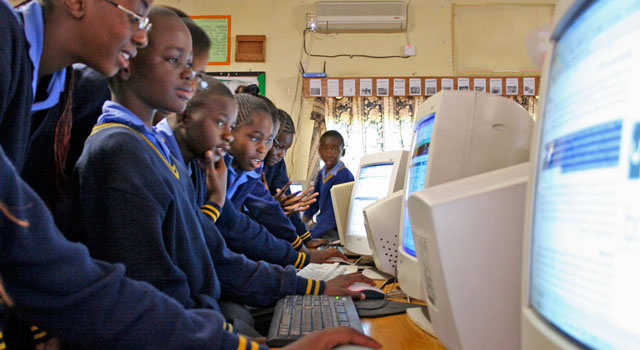
    On 4 June, communications regulator Icasa published four general notices amending the universal service obligations of Vodacom, MTN, Cell C and Neotel. Any similar notice for Telkom, or any other service provider, was notable by its absence. The notices recognise that some of the previous obligations have been discharged while others remain in force. Some new obligations have been added, centred on the provision of Internet access to public schools. The notices are effective from 1 April 2014, so are retrospective.

    The notices require Vodacom, MTN and Cell C to each implement “full Internet access” to 1 500 public schools and 140 institutions of people with disabilities. The note is vague on whether these 140 institutions are part of the 1 500 public schools – for simplicity’s sake we will assume so. Neotel is compelled to address 750 schools only. To reiterate, so far there are no such obligations on Telkom or Telkom Mobile.

    An appendix to the schedule details the standards and specification of what is required at each school. This list is quite extensive and includes:

    • Servers for use for proxy service, mail services, Web caching and software distribution. This is to be procured per the Sita 153 contract. For simplicity, we will assume that a single server can do all this using virtualisation. Ideally a backup server would be required.
    • A desktop or laptop PC for administration and other functions. This must include a multifunction printer and a lock. The laptop is to be secured per the Sita 285/1 contract.
    • A total of 26 laptops, notebooks or tablet computers for learning and teaching. The Sita 284/1 standard applies.
    • A further multifunction laser printer.
    • An interactive whiteboard (detailed as being optional). These are “big ticket” items.
    • A data projector (presumably mandatory). Again, a Sita specification applies.
    • A local-area network with Wi-Fi connectivity.
    • Software for the above, including an open-source or proprietary operating system, plus antivirus and Web browser.
    • Office suite specified as “Word, Excel, Outlook, PowerPoint and Access”, so presumably that means it can’t be open source. Any equivalence is implied but not stated.
    • To house the above, a storage and security trolley is needed allowing “ultra-safe recharging for multiple laptops”. This trolley is to be pimped with built-in speakers.
    • Oh yes … and remembering that telco service providers are the ones coughing up for this, the Internet connection needs to be a minimum of 1Mbit/s. No data cap or requirement is specified.

    So, this all sounds like a good, well-rounded specification, but what is this going to cost? Using some data based on an e-education project BMI-T conducted for a provincial government in 2013, we see the capital cost per school at around R328 500. This is based on prevailing, commercial prices with a reasonable discount assumed. This means that we haven’t cross-checked against the Sita specifications or used the prices in the teacher laptop programme. The latter includes prices at over R12 000 for the “Teacher 101” laptop, albeit complete with software, support and 150MB of mobile data per month.

    As for the operating cost, let’s budget for around R1 000 per month per school, with the only prerequisite being the specified minimum 1Mbit/s. For this, based on market prices, you’d get a 20GB Cell C or Vodacom HSPA+ service, or a 200GB 2Mbit/s Web Africa ADSL service (including line rental). Yes, you’ll get some after-hours data for free, so it is plausible to double the gigabytes to get a more realistic view. As they say on the television, other quality services are also available.

    The notices don’t appear to have any defined period and probably expect support in perpetuity, but to be pragmatic let’s assume a five-year period for these obligations. The value of the bandwidth alone then would be R60 000/school over the lifetime, so less than 20% of the hardware and software. Remember that the operators are also obliged by the e-rate regulations to provide this at half price, but we will stick with the advertised price as the e-rate is really problematic.

    Did anyone mention support or training? I didn’t see this. Do we assume that it’s all part of the deal? For the sake of simplicity, we’ll leave it out of the equation for now but really hope that someone remembers to pick it up. Support, or lack thereof, has proven to be the Achilles heel of the Khanya project in the Western Cape.

    But back to the overall calculations. We have 1 500 schools with capital expenditure of R328 500 each plus operational expenditure of R60 000 each, giving a five-year total of a cool R583m. That figure applies to Vodacom, MTN and Cell C, and half that to Neotel. This results in a grand total of a smidgen over R2bn. And this excludes procurement, project management, deployment and any support costs which we can reasonably expect to add another few hundred million to the overall price tag. Spread over three years, this is around 2,5% of the total annual capex bill of these operators. The effect will be much more significant on Cell C and Neotel than on Vodacom and MTN.
    School-computers-640
    Icasa’s new universal service obligations have not been properly thought through

    Now, if we look back to the notices, we see that Icasa has specified a penalty of R1m (note: to be said in a Dr Evil voice complete with pinkie in the side of the mouth) and another R1m/month until such time as the licensee complies (script: Dr Evil throws back head and laughs wildly). So, if we go back to the five-year plan, that is one “bar” upfront and one a month thereafter, a total of R61m. Throw in some legal fees — another few bar or so — and we’re all-in for, say, R65m. That’s around 11% of doing the project. If we consider the teacher laptop programme rates and support, that figure is even less, perhaps as little as 8%.

    Sadly, this move is well intentioned but has this been thought through? Just last week the World Economic Forum, in its Global Information Technology Report 2014, ranked us in 146th place, behind the likes of Haiti, Lesotho, Chad, Zimbabwe, Nigeria, and Kenya. Something needs to be done, and there is a demonstrable correlation between e-education and education outcomes, but is this the right way to go about it? I cannot see our litigation-ready telcos taking this lying down. Icasa, the department of communications and/or the department of telecoms & postal services really need to think this one through. Are there perhaps some other gravy train benefits expected from such a deal? Come to think of this, do the PC suppliers and tablet distributors have universal service obligations enforced on them?

    So, back to Gladwell’s The Tipping Point. Are the fines set too low to create the right behaviour? I suspect we have a case of this here, where the telcos will fight, resist or otherwise delay the enforcement of the service obligations, or simply choose to pay the fines rather than take the new obligations lying down. The losers, again, will be the learners and youth of South Africa.

    • Tim Parle is senior telecoms consultant at BMI-TechKnowledge

    Follow TechCentral on Google News Add TechCentral as your preferred source on Google


    BMI-T BMI-TechKnowledge Cell C Icasa MTN Neotel Telkom Telkom Mobile Vodacom
    WhatsApp YouTube
    Share. Facebook Twitter LinkedIn WhatsApp Telegram Email Copy Link
    Previous ArticleNo ‘killer app’ will drive smart watch sales
    Next Article You say tomato, they say tom-auto

    Related Posts

    MTN Nigeria's growth engine stalled in second quarter - Karl Toriola

    MTN Nigeria’s growth engine stalled in second quarter

    31 July 2026
    The retailer that is about to become your bank

    The retailer that is about to become your bank

    30 July 2026
    TCS | Rapid deployment rules can't work without municipalities: ACT - Nomvuyiso Batyi

    TCS | Icasa’s rules skip the real bottleneck: ACT

    30 July 2026
    Company News
    Domains.co.za launches self-hosted n8n VPS hosting

    Domains.co.za launches self-hosted n8n VPS hosting

    31 July 2026
    Smarter.tech '26 shows why smarter technology begins with context - Obsidian Systems

    Context is the missing piece in enterprise AI: Obsidian

    31 July 2026
    Huawei launches 12 intelligent transport solutions in South Africa - Sam Tang

    Huawei launches 12 intelligent transport solutions in South Africa

    30 July 2026
    Opinion
    The author, Jannie van Zyl

    Selling vapour is corporate suicide in slow motion

    16 July 2026
    Brazil's online gambling crackdown is a lesson for South Africa

    How Amazon outmanoeuvred Starlink in South Africa

    15 July 2026
    The Popia problem with agentic AI - Herman Haasbroek

    The Popia problem with agentic AI

    14 July 2026

    Subscribe to Updates

    Get the best South African technology news and analysis delivered to your e-mail inbox every morning.

    Latest Posts
    Nedbank hires MTN's former tech chief as group CIO - Nikos Angelopoulos

    Nedbank hires MTN’s former tech chief as group CIO

    31 July 2026
    Eskom's diesel bill falls 86% as breakdowns hit eight-year low

    Eskom’s diesel bill falls 86% as breakdowns hit eight-year low

    31 July 2026
    Ramaphosa signs off on taking the grid away from Eskom

    Ramaphosa signs off on taking the grid away from Eskom

    31 July 2026
    TCS+ | Why South African workers must become supervisors of digital labour - Accelera Digital Group Cliff de Wit

    TCS+ | Why South African workers must become supervisors of digital labour

    31 July 2026
    © 2009 - 2026 NewsCentral Media
    Built and maintained by Chronon
    • Cookie policy (ZA)
    • TechCentral – privacy and Popia

    Type above and press Enter to search. Press Esc to cancel.

    Manage consent

    TechCentral uses cookies to enhance its offerings. Consenting to these technologies allows us to serve you better. Not consenting or withdrawing consent may adversely affect certain features and functions of the website.

    Functional Always active
    The technical storage or access is strictly necessary for the legitimate purpose of enabling the use of a specific service explicitly requested by the subscriber or user, or for the sole purpose of carrying out the transmission of a communication over an electronic communications network.
    Preferences
    The technical storage or access is necessary for the legitimate purpose of storing preferences that are not requested by the subscriber or user.
    Statistics
    The technical storage or access that is used exclusively for statistical purposes. The technical storage or access that is used exclusively for anonymous statistical purposes. Without a subpoena, voluntary compliance on the part of your Internet Service Provider, or additional records from a third party, information stored or retrieved for this purpose alone cannot usually be used to identify you.
    Marketing
    The technical storage or access is required to create user profiles to send advertising, or to track the user on a website or across several websites for similar marketing purposes.
    • Manage options
    • Manage services
    • Manage {vendor_count} vendors
    • Read more about these purposes
    View preferences
    • {title}
    • {title}
    • {title}