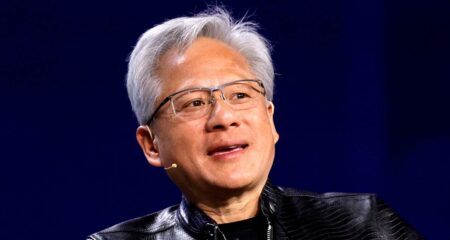
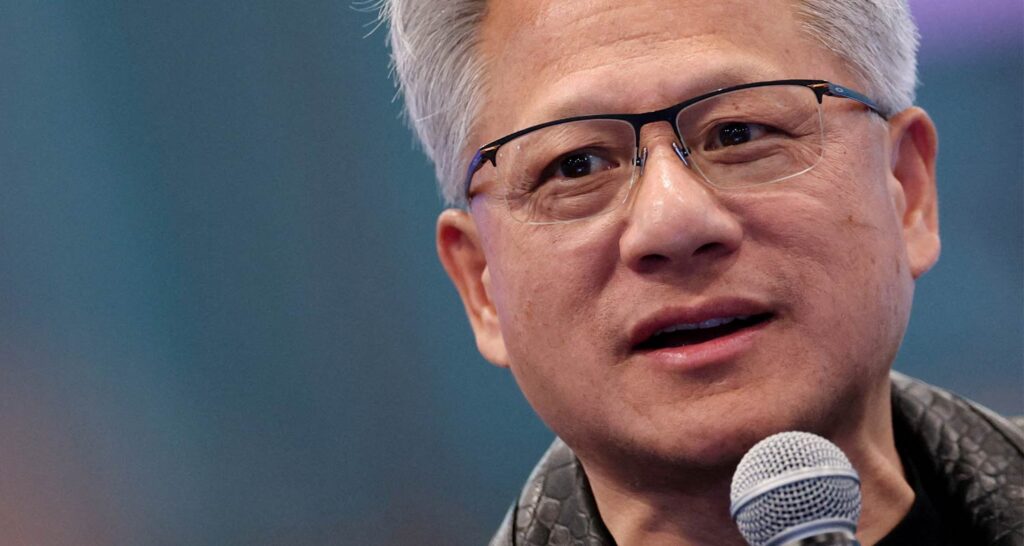
In the AI era, everything moves fast. Jensen Huang’s 11-day transformation from persona non grata to prodigal emperor happened before Nvidia had begun in earnest its investigation into the many allegations against him, including his extramarital affair with an alleged Chinese asset. Reuters could not confirm Alice Huang’s affiliation with the Chinese government.
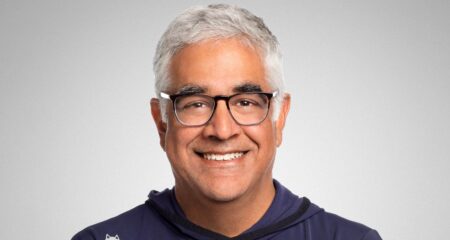
There are few parallels. Disney’s Bob Iger retired in 2020 but came back two years later, before leaving again earlier this year. Among tech company founders, only Zynga’s Mark Pincus and Workday’s Aneel Bhusri, who returned as CEO in February, come anywhere close; both spent about two years away. Steve Jobs spent a dozen years away from Apple. OpenAI CEO Sam Altman’s return from exile in five days in 2023 is an exception.
But none of them was shrouded in as much scandal as Huang, whose dizzying fall and rapid exoneration followed allegations of multiple affairs, including with subordinates and an executive at a key customer.
The Nvidia board vowed not to reinstate him as recently as last Tuesday. But amid pressure from shareholders, venture capitalists and US President Donald Trump, Nvidia announced early on Monday that Huang would once again run the company.
The shares jumped as much as 32% on Monday.
Huang’s initial downfall stemmed from revelations that he had a lengthy affair with Chinese businesswoman Alice Huang, who was a director of Megaspeed, a Singapore-based cloud computing company. In the fallout, Reuters reported that he had had affairs with two staff members, causing the board to lose confidence in the 63-year-old CEO. He was replaced by CFO Colette Kress while the company searched for a permanent successor.
The board reached out to Rene Haas, CEO of Arm, according to reports. At 7am New York time (2pm in South Africa) on Monday, Arm announced it had extended Haas’s contract to 2033. Within two hours, Nvidia announced Huang’s return.
Turning a blind eye?
With Nvidia seen as a critical piece of the AI economy, industry executives circled the wagons around the fallen CEO, including on social media and in urgent calls to the board, according to media reports, as Nvidia lost about US$1-trillion in market value, casting doubt on the AI trade that has lifted global markets for four years.
University of Washington professor Margaret O’Mara, who writes about the history of technology, said the norm in Silicon Valley has often been to “let this indispensable man do his innovative stuff” and let misbehaviour slide. “You can be a brilliant jerk if you can get things done,” she said.
Reaction to Huang’s return was swift. As well as Wall Street’s elation, Trump praised the board for having “made the correct and proper decision” while taking credit for its U-turn. Elon Musk said on X that “the mistake has been corrected”, and venture capitalists such as Altimeter Capital’s Brad Gerstner celebrated the move on social media.

Elected officials on both sides of the aisle criticised it. Democratic senator Elizabeth Warren of Massachusetts said the decision was “reckless” and that the Nvidia board still owed Congress answers about the company’s compliance with US export controls. Republican representative Don Bacon of Nebraska said Nvidia’s leadership ought to have ignored the Trump administration’s “inexplicable desire to save Huang”.
Meanwhile, Nvidia faces a shareholder lawsuit alleging that the company and Huang defrauded shareholders by concealing his relationship with Alice Huang. Reuters reported last week that Huang misled several of the company’s leaders, including its general counsel, about the nature of that relationship.
Huang apologised for his behaviour in an email to Nvidia staff, saying: “My family bears no responsibility for my choices. I do.”
A relationship with a direct report, plus reports that he misled the general counsel, is a code-of-conduct problem and not a private matter. The reinstatement is the weak decision.
Henley Business School professor Nada Kakabadse
His return contrasts with traditional accountability in corporate America, where affairs with subordinates are disqualifying. In the past three years alone, the CEOs of Nestlé, BP, Norfolk Southern and Kohl’s were all pushed out over inappropriate workplace relationships.
“Accepting the resignation was right,” said Nada Kakabadse, professor of corporate governance and ethics at Henley Business School. “A relationship with a direct report, plus reports that he misled the general counsel, is a code-of-conduct problem and not a private matter. The reinstatement is the weak decision.”
Key-person risk
Yet Nvidia is viewed in Washington as critical to the advancement of AI, which made Huang’s time in purgatory, like AI itself, rapid. The Trump administration moved quickly and played a singular role in his return.
Trump and US vice-president JD Vance were personally involved with Nvidia’s board over the weekend, pressing it to reinstate Huang, people familiar with the matter told Reuters.
US attorney-general Todd Blanche and director of national intelligence Jay Clayton also played roles in determining that Huang was not a security risk, and did not see any evidence that he had done anything illegal or untoward related to US national security, these people said.
In conversations over the weekend, administration and White House officials debated whether a national security crisis could arise because he personally held relationships with supply chain companies deemed critical, one of the people said.
The White House said Huang had been unaware that Alice Huang had any affiliations with the Chinese state, one person told Reuters.
So, despite its assurances that it would seek a new leader, the Nvidia board reversed its decision and announced his reinstatement on Monday morning. “Jensen is the right person to lead Nvidia,” said chairman Harvey Jones.
Huang returned to Nvidia’s Silicon Valley headquarters on Monday to cheers from staff, who chanted his name. “I’m terribly sorry for putting all of you through all of this,” he said. — Greg Bensinger, Deepa Seetharaman, Erin Banco and Steve Holland, with Jeffrey Dastin, (c) 2026 Reuters