Close Menu
TechCentralTechCentral

    Subscribe to the newsletter

    Get the best South African technology news and analysis delivered to your e-mail inbox every morning.

    Facebook X (Twitter) YouTube LinkedIn
    WhatsApp Facebook X (Twitter) LinkedIn YouTube
    TechCentralTechCentral
    • News
      AI chatbots are coming to Apple CarPlay

      AI chatbots are coming to Apple CarPlay

      8 February 2026
      South Africa's stablecoin silence is becoming a policy failure

      South Africa’s stablecoin silence is becoming a policy failure

      6 February 2026
      Every electric car you can buy in South Africa in early 2026, ranked by price

      Every electric car you can buy in South Africa in early 2026, ranked by price

      6 February 2026
      From stocks to crypto, markets reel as AI doubts grow

      From stocks to crypto, markets reel as AI doubts grow

      6 February 2026
      South Africa deepens China ties as US trade tensions escalate

      South Africa deepens China ties as US trade tensions escalate

      6 February 2026
    • World
      AI won't replace software, says Nvidia CEO amid market rout - Jensen Huang

      AI won’t replace software, says Nvidia CEO amid market rout

      4 February 2026
      Apple acquires audio AI start-up Q.ai

      Apple acquires audio AI start-up Q.ai

      30 January 2026
      SpaceX IPO may be largest in history

      SpaceX IPO may be largest in history

      28 January 2026
      Nvidia throws AI at the weather

      Nvidia throws AI at weather forecasting

      27 January 2026
      Debate erupts over value of in-flight Wi-Fi

      Debate erupts over value of in-flight Wi-Fi

      26 January 2026
    • In-depth
      How liberalisation is rewiring South Africa's power sector

      How liberalisation is rewiring South Africa’s power sector

      21 January 2026
      The top-performing South African tech shares of 2025

      The top-performing South African tech shares of 2025

      12 January 2026
      Digital authoritarianism grows as African states normalise internet blackouts

      Digital authoritarianism grows as African states normalise internet blackouts

      19 December 2025
      TechCentral's South African Newsmakers of 2025

      TechCentral’s South African Newsmakers of 2025

      18 December 2025
      Black Friday goes digital in South Africa as online spending surges to record high

      Black Friday goes digital in South Africa as online spending surges to record high

      4 December 2025
    • TCS
      TCS+ | How Cloud On Demand is helping SA businesses succeed in the cloud - Xhenia Rhode, Dion Kalicharan

      TCS+ | Cloud On Demand and Consnet: inside a real-world AWS partner success story

      30 January 2026
      Watts & Wheels S1E3: 'BYD's Corolla Cross challenger'

      Watts & Wheels S1E3: ‘BYD’s Corolla Cross challenger’

      30 January 2026
      Watts & Wheels S1E3: 'BYD's Corolla Cross challenger'

      Watts & Wheels S1E2: ‘China attacks, BMW digs in, Toyota’s sublime supercar’

      23 January 2026

      TCS+ | Why cybersecurity is becoming a competitive advantage for SA businesses

      20 January 2026
      Watts & Wheels S1E3: 'BYD's Corolla Cross challenger'

      Watts & Wheels: S1E1 – ‘William, Prince of Wheels’

      8 January 2026
    • Opinion
      South Africa's skills advantage is being overlooked at home - Richard Firth

      South Africa’s skills advantage is being overlooked at home

      29 January 2026
      Why Elon Musk's Starlink is a 'hard no' for me - Songezo Zibi

      Why Elon Musk’s Starlink is a ‘hard no’ for me

      26 January 2026
      South Africa's new fibre broadband battle - Duncan McLeod

      South Africa’s new fibre broadband battle

      20 January 2026
      AI moves from pilots to production in South African companies - Nazia Pillay SAP

      AI moves from pilots to production in South African companies

      20 January 2026
      South Africa's new fibre broadband battle - Duncan McLeod

      ANC’s attack on Solly Malatsi shows how BEE dogma trumps economic reality

      14 December 2025
    • Company Hubs
      • Africa Data Centres
      • AfriGIS
      • Altron Digital Business
      • Altron Document Solutions
      • Altron Group
      • Arctic Wolf
      • AvertITD
      • Braintree
      • CallMiner
      • CambriLearn
      • CYBER1 Solutions
      • Digicloud Africa
      • Digimune
      • Domains.co.za
      • ESET
      • Euphoria Telecom
      • Incredible Business
      • iONLINE
      • IQbusiness
      • Iris Network Systems
      • LSD Open
      • NEC XON
      • Netstar
      • Network Platforms
      • Next DLP
      • Ovations
      • Paracon
      • Paratus
      • Q-KON
      • SevenC
      • SkyWire
      • Solid8 Technologies
      • Telit Cinterion
      • Tenable
      • Vertiv
      • Videri Digital
      • Vodacom Business
      • Wipro
      • Workday
      • XLink
    • Sections
      • AI and machine learning
      • Banking
      • Broadcasting and Media
      • Cloud services
      • Contact centres and CX
      • Cryptocurrencies
      • Education and skills
      • Electronics and hardware
      • Energy and sustainability
      • Enterprise software
      • Financial services
      • Information security
      • Internet and connectivity
      • Internet of Things
      • Investment
      • IT services
      • Lifestyle
      • Motoring
      • Public sector
      • Retail and e-commerce
      • Satellite communications
      • Science
      • SMEs and start-ups
      • Social media
      • Talent and leadership
      • Telecoms
    • Events
    • Advertise
    TechCentralTechCentral
    Home » In-depth » LED lighting: everything you need to know

    LED lighting: everything you need to know

    By Editor7 February 2012
    Twitter LinkedIn Facebook WhatsApp Email Telegram Copy Link
    News Alerts
    WhatsApp

    As electricity prices continue to spike higher each year and as Eskom continues pleading with residential and business users to cut their consumption to prevent another wave of nationwide rolling blackouts, there is growing interest from South Africans in highly power-efficient light-emitting diode (LED) lighting technology.

    But the subject matter is complex, with few experts to hand to explain to consumers interested in moving from halogen lamps, fluorescent tubes and incandescent bulbs to LEDs how the technology works and what they need to know. With the sale of incandescent bulbs to be banned in SA from 2016, there is growing interest among consumers about LED solutions.

    In an effort to get to grips with LED lighting and what consumers need to know, TechCentral editor Duncan McLeod sat down with an expert in the field, John Westermeyer, the regional marketing manager for lighting at Philips SA, to explore the fast-growing LED industry.

    LEDs were invented by General Electric scientist Nick Holonyak in 1962. His first LED was a small, very low-powered indicator light that could be used in calculators or signalling devices.

    But the technology didn’t take off until 1993, when Shuji Nakamura of Japan’s Nichia Corp invented the first high-brightness blue LED suitable for mass production. This was the key to producing modern, bright, white LED lighting. After the technology began to take off in the early 2000s, and as television makers ramped up production of LED components for modern, flat-panel TVs, prices began to plummet, making them a relatively affordable general-purpose alternative to conventional lighting products.

    Westermeyer says prices are now halving every 18-24 months, with the lifespan of the products improving constantly. This means the technology has reached the point where consumers should consider switching.

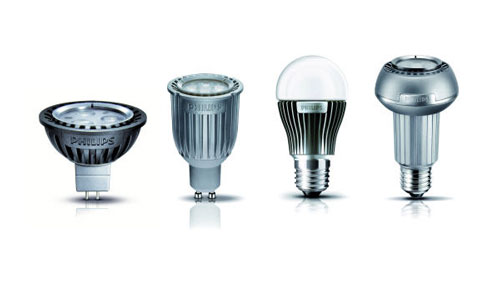
    He says moving to LED technology can slash consumers’ electricity bills because, for example, an LED downlighter that produces the same amount of light as a halogen lamp consumes one-fifth of the power. So, 50W halogen downlighters can be replaced with 10W LED lamps. In a home with, say, 40 downlighters, that can translate into a huge saving in energy costs.
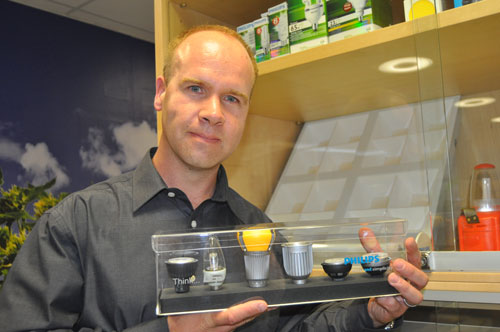
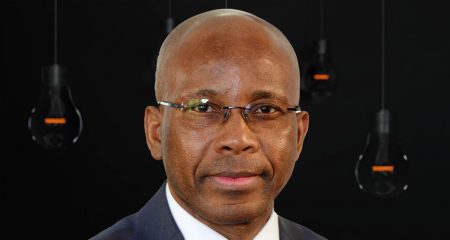
    John Westermeyer

    However, the upfront costs are high. Whereas a halogen downlighter typically costs less than R50, a good quality LED downlighter can fetch as much as R200 (cheaper and nastier variants are available for less than R100, but Westermeyer cautions consumers against buying these for a variety of reasons).

    The market, he says, is being flooded by low-cost and poor-quality LED lighting solutions from China. These typically contain a large number of little diodes all clustered together. Often, their circuitry is not well built and they fail much sooner than more expensive solutions. They also produce a wide range of colours, from warm to cool, even though they often claim to be within a certain range.

    “No one LED is exactly the same as the next one in terms of the colour temperature,” Westermeyer explains. “When they come out of the factory, they have to be ‘binned’ to ensure they’re grouped together in the same classification. A quality manufacturer will do a lot of sub-binning where they put the LEDs in one colour range in their own bin. The cheaper guys will choose a much wider range and put them together in the same packaging.”

    The problem with this is consumers buy the cheaper brands and are then disappointed with the result, with colour differences in their rooms. They then label LED technology as poor and often go back to more power-hungry solutions. Westermeyer says local retailers tend to stock cheap products because they can move more of them, but ultimately consumers are not getting great solutions and the image of LED lighting is harmed.

    Poorly designed LEDs also have bad thermal management, meaning they dissipate heat badly, which can damage the circuitry in the lamps and even pop the LEDs. A quality LED product will dissipate most excess heat — which is already much less than what’s generated (and wasted) by incandescent globes — through the back of the lamp.
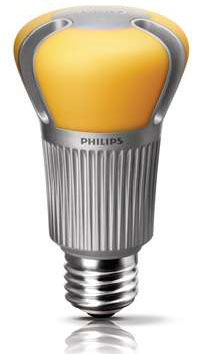
    Another area of contention in the LED lighting industry is the claimed lifetime of the products. LEDs last far longer than conventional lighting — 10 to 100 times as long and improving all the time – but there isn’t a “complete set of agreed-upon standards” for measuring their expected lifespan.

    Westermeyer says LED lamp manufacturers use something known as the L70 method to calculate the lifespan of their products. L70 refers to the number of hours the lamp will burn before it reaches 70% of its initial light output, after which it’s deemed as having reached the end of its life.

    Companies that make them typically test them for 6 000 hours and then extrapolate to calculate the lifespan of the lamp. However, they all use slightly different methods to calculate this, with some manufacturers making overstated claims about lamp life without using test reports than can be verified by independent bodies.

    For a high-quality LED downlighter, Westermeyer says consumers should expect to pay as much as R200. But he believes the long-term cost-savings and the convenience of not having to replace the lamps because of their exceptional lifespan means consumers shouldn’t wait to begin switching.

    He says those worried about the high up-front costs can replace lamps room by room in their homes rather than incurring the costs of a full replacement immediately. They can even replace lamps individually, if necessary, though it’s important to match the colour temperature of the other lights in the room. For example, a 50W, 2 700K halogen lamp should be replaced with a 10W, 2 700K LED.

    Consumers also need to consider what sort of light spread they’re looking for — do they want a 40-degree angle of light or a narrower beam? — and what type of colour temperature they’re after.

    In kitchens, bathrooms, offices and schools, cooler temperatures make more sense (a range of 4 000K to 5 000K is good, he says) whereas warmer light (2 700K to 3 000K) is more suited to bedrooms and living areas.

    Another important thing to consider is if a home or office uses a low-voltage (12V) system, it’s best to buy a lamp that matches that otherwise an adapter or converter will be necessary, adding cost to the investment. Westermeyer says it’s not necessary to convert the power source to 240V to move to LED lighting.

    Installations with dimmers add another piece of complexity to the puzzle. Consumers must be careful to ensure the lamps they buy work with their dimmer systems. “Find out from your lamp supplier which dimmers are compatible with their lamps.”

    Another challenge is finding good quality lamps. Retailers are reluctant to stock them because the rate of sale is low. Cheaper options mean higher revenues and quicker stock turnover. But Westermeyer expects leading retailers will begin stocking better-quality LED options this year as prices continue to fall across the board.  — Duncan McLeod, TechCentral

    • Subscribe to our free daily newsletter
    • Follow us on Twitter or on Google+ or on Facebook
    • Visit our sister website, SportsCentral (still in beta)

    Eskom John Westermeyer Philips
    WhatsApp YouTube Follow on Google News Add as preferred source on Google
    Share. Facebook Twitter LinkedIn WhatsApp Telegram Email Copy Link
    Previous ArticleAt $100bn, odds are Facebook’s a bad bet
    Next Article Chrome finally comes to Android

    Related Posts

    Outa warns homeowners against rushing to register rooftop solar

    Outa warns homeowners against rushing to register rooftop solar

    27 January 2026
    How liberalisation is rewiring South Africa's power sector

    How liberalisation is rewiring South Africa’s power sector

    21 January 2026
    No risk of load shedding after Koeberg output scaled back

    No risk of load shedding after Koeberg output scaled back

    21 January 2026
    Company News
    The skills gap is a thinking gap: why South African employers can't find problem solvers

    The skills gap is a thinking gap: why SA employers can’t find problem solvers

    6 February 2026
    Vox Kiwi Wireless: fibre-like broadband for South African homes

    Vox Kiwi Wireless: fibre-like broadband for South African homes

    5 February 2026
    NEC XON achieves an African first with full Fortinet accreditation - Ian Kruger

    NEC XON achieves an African first with full Fortinet accreditation

    5 February 2026
    Opinion
    South Africa's skills advantage is being overlooked at home - Richard Firth

    South Africa’s skills advantage is being overlooked at home

    29 January 2026
    Why Elon Musk's Starlink is a 'hard no' for me - Songezo Zibi

    Why Elon Musk’s Starlink is a ‘hard no’ for me

    26 January 2026
    South Africa's new fibre broadband battle - Duncan McLeod

    South Africa’s new fibre broadband battle

    20 January 2026

    Subscribe to Updates

    Get the best South African technology news and analysis delivered to your e-mail inbox every morning.

    Latest Posts
    AI chatbots are coming to Apple CarPlay

    AI chatbots are coming to Apple CarPlay

    8 February 2026
    South Africa's stablecoin silence is becoming a policy failure

    South Africa’s stablecoin silence is becoming a policy failure

    6 February 2026
    Every electric car you can buy in South Africa in early 2026, ranked by price

    Every electric car you can buy in South Africa in early 2026, ranked by price

    6 February 2026
    From stocks to crypto, markets reel as AI doubts grow

    From stocks to crypto, markets reel as AI doubts grow

    6 February 2026
    © 2009 - 2026 NewsCentral Media
    • Cookie policy (ZA)
    • TechCentral – privacy and Popia

    Type above and press Enter to search. Press Esc to cancel.

    Manage consent

    TechCentral uses cookies to enhance its offerings. Consenting to these technologies allows us to serve you better. Not consenting or withdrawing consent may adversely affect certain features and functions of the website.

    Functional Always active
    The technical storage or access is strictly necessary for the legitimate purpose of enabling the use of a specific service explicitly requested by the subscriber or user, or for the sole purpose of carrying out the transmission of a communication over an electronic communications network.
    Preferences
    The technical storage or access is necessary for the legitimate purpose of storing preferences that are not requested by the subscriber or user.
    Statistics
    The technical storage or access that is used exclusively for statistical purposes. The technical storage or access that is used exclusively for anonymous statistical purposes. Without a subpoena, voluntary compliance on the part of your Internet Service Provider, or additional records from a third party, information stored or retrieved for this purpose alone cannot usually be used to identify you.
    Marketing
    The technical storage or access is required to create user profiles to send advertising, or to track the user on a website or across several websites for similar marketing purposes.
    • Manage options
    • Manage services
    • Manage {vendor_count} vendors
    • Read more about these purposes
    View preferences
    • {title}
    • {title}
    • {title}