
Close Menu
TechCentralTechCentral

    Subscribe to the newsletter

    Get the best South African technology news and analysis delivered to your e-mail inbox every morning.

    Facebook X (Twitter) YouTube LinkedIn
    WhatsApp Facebook X (Twitter) LinkedIn YouTube
    TechCentralTechCentral
    • News
      Big Microsoft 365 price increases coming next year

      Big Microsoft price increases coming next year

      5 December 2025
      Vodacom to take control of Safaricom in R36-billion deal - Shameel Joosub

      Vodacom to take control of Safaricom in R36-billion deal

      4 December 2025
      Black Friday goes digital in South Africa as online spending surges to record high

      Black Friday goes digital in South Africa as online spending surges to record high

      4 December 2025
      BYD takes direct aim at Toyota with launch of sub-R500 000 Sealion 5 PHEV

      BYD takes direct aim at Toyota with launch of sub-R500 000 Sealion 5 PHEV

      4 December 2025
      'Get it now': Takealot in new instant deliveries pilot

      ‘Get it now’: Takealot in new instant deliveries pilot

      4 December 2025
    • World
      Amazon and Google launch multi-cloud service for faster connectivity

      Amazon and Google launch multi-cloud service for faster connectivity

      1 December 2025
      Google makes final court plea to stop US breakup

      Google makes final court plea to stop US breakup

      21 November 2025
      Bezos unveils monster rocket: New Glenn 9x4 set to dwarf Saturn V

      Bezos unveils monster rocket: New Glenn 9×4 set to dwarf Saturn V

      21 November 2025
      Tech shares turbocharged by Nvidia's stellar earnings

      Tech shares turbocharged by stellar Nvidia earnings

      20 November 2025
      Config file blamed for Cloudflare meltdown that disrupted the web

      Config file blamed for Cloudflare meltdown that disrupted the web

      19 November 2025
    • In-depth
      Jensen Huang Nvidia

      So, will China really win the AI race?

      14 November 2025
      Valve's Linux console takes aim at Microsoft's gaming empire

      Valve’s Linux console takes aim at Microsoft’s gaming empire

      13 November 2025
      iOCO's extraordinary comeback plan - Rhys Summerton

      iOCO’s extraordinary comeback plan

      28 October 2025
      Why smart glasses keep failing - no, it's not the tech - Mark Zuckerberg

      Why smart glasses keep failing – it’s not the tech

      19 October 2025
      BYD to blanket South Africa with megawatt-scale EV charging network - Stella Li

      BYD to blanket South Africa with megawatt-scale EV charging network

      16 October 2025
    • TCS
      TCS+ | How Cloud on Demand helps partners thrive in the AWS ecosystem - Odwa Ndyaluvane and Xenia Rhode

      TCS+ | How Cloud On Demand helps partners thrive in the AWS ecosystem

      4 December 2025
      TCS | MTN Group CEO Ralph Mupita on competition, AI and the future of mobile

      TCS | Ralph Mupita on competition, AI and the future of mobile

      28 November 2025
      TCS | Dominic Cull on fixing South Africa's ICT policy bottlenecks

      TCS | Dominic Cull on fixing South Africa’s ICT policy bottlenecks

      21 November 2025
      TCS | BMW CEO Peter van Binsbergen on the future of South Africa's automotive industry

      TCS | BMW CEO Peter van Binsbergen on the future of South Africa’s automotive industry

      6 November 2025
      TCS | Why Altron is building an AI factory - Bongani Andy Mabaso

      TCS | Why Altron is building an AI factory in Johannesburg

      28 October 2025
    • Opinion
      Your data, your hardware: the DIY AI revolution is coming - Duncan McLeod

      Your data, your hardware: the DIY AI revolution is coming

      20 November 2025
      Zero Carbon Charge founder Joubert Roux

      The energy revolution South Africa can’t afford to miss

      20 November 2025
      It's time for a new approach to government IT spend in South Africa - Richard Firth

      It’s time for a new approach to government IT spend in South Africa

      19 November 2025
      How South Africa's broken Rica system fuels murder and mayhem - Farhad Khan

      How South Africa’s broken Rica system fuels murder and mayhem

      10 November 2025
      South Africa's AI data centre boom risks overloading a fragile grid - Paul Colmer

      South Africa’s AI data centre boom risks overloading a fragile grid

      30 October 2025
    • Company Hubs
      • Africa Data Centres
      • AfriGIS
      • Altron Digital Business
      • Altron Document Solutions
      • Altron Group
      • Arctic Wolf
      • AvertITD
      • Braintree
      • CallMiner
      • CambriLearn
      • CYBER1 Solutions
      • Digicloud Africa
      • Digimune
      • Domains.co.za
      • ESET
      • Euphoria Telecom
      • Incredible Business
      • iONLINE
      • IQbusiness
      • Iris Network Systems
      • LSD Open
      • NEC XON
      • Netstar
      • Network Platforms
      • Next DLP
      • Ovations
      • Paracon
      • Paratus
      • Q-KON
      • SevenC
      • SkyWire
      • Solid8 Technologies
      • Telit Cinterion
      • Tenable
      • Vertiv
      • Videri Digital
      • Vodacom Business
      • Wipro
      • Workday
      • XLink
    • Sections
      • AI and machine learning
      • Banking
      • Broadcasting and Media
      • Cloud services
      • Contact centres and CX
      • Cryptocurrencies
      • Education and skills
      • Electronics and hardware
      • Energy and sustainability
      • Enterprise software
      • Financial services
      • Information security
      • Internet and connectivity
      • Internet of Things
      • Investment
      • IT services
      • Lifestyle
      • Motoring
      • Public sector
      • Retail and e-commerce
      • Satellite communications
      • Science
      • SMEs and start-ups
      • Social media
      • Talent and leadership
      • Telecoms
    • Events
    • Advertise
    TechCentralTechCentral
    Home » Opinion » Steve Song » Lessons for African broadband – from 19th century Britain’s postal service

    Lessons for African broadband – from 19th century Britain’s postal service

    By Steve Song1 April 2021
    Twitter LinkedIn Facebook WhatsApp Email Telegram Copy Link
    News Alerts
    WhatsApp
    The author, Steve Song, argues that if fibre network operators were to introduce a uniform, affordable price at any point of presence, there might be an exponential growth in traffic on national fibre networks

    The challenge of unlocking affordable access to backhaul networks for small operators, especially in rural areas, is a problem that has been bothering me for years.

    As demand for high-speed access expands and last-mile access technologies grow increasingly affordable, the cost of connecting a network to the global Internet is rapidly becoming the single biggest challenge to the sustainability of small Internet service providers.

    In sub-Saharan Africa, there are now more than a million kilometres of terrestrial fibre, most of which is terribly underutilised due to high access costs. How can we unlock affordable access to these fibre networks?

    I have explored the idea of allowing small operators to buy shares in state-owned networks. I have contemplated the feudal nature of fibre network ownership. Finally, I think I have found the answer and it has its origins with Rowland Hill, whose vision and tireless advocacy led to the modern postal system.

    Rowland Hill

    Rowland Hill was a remarkable man. A former schoolmaster, in the 1830s he set out to reform the postal system in the UK. He knew nothing about the postal service except that he was a very unhappy user of it.

    In the early 1800s, the UK postal system was expensive and frustrating to use. The cost of sending a letter was determined by distance and by the number of sheets of paper. As a result, it was often too expensive for the average person, especially those who wanted to send a letter any distance. It was also a receiver-pays system, which depended on the recipient paying the postage fee.

    The sender-pays versus receiver-pays system has interesting parallels with modern telecommunications. Creative users of the old receiver-pays postal system back then invented codes which they embedded on the address of the envelope allowing the recipient to refuse to pay for the letter but still receive a brief communication, much like beeping or missed calls with mobile phones.

    Hill went to great lengths to document those disenfranchised by the cost of the post. A fellow campaigner, Richard Cobden, testified before parliament:

    We have 50 000 in Manchester who are Irish, or the immediate descendants of Irish; and all the large towns in the neighbourhood contain a great many Irish, or the descendants of Irish, who are almost as much precluded, as though they lived in New South Wales, from all correspondence or communication with their relatives in Ireland. — The Life of Sir Rowland Hill and The History of the Penny Postage (page 307)

    Also, like modern telecommunications, the postal system was a key source of revenue for the exchequer and the temptation for the government to extract more and more value from it by raising postal fees seemed almost irresistible.

    Rowland Hill became convinced that the introduction of a single price in the form of a 1p stamp, which would guarantee the delivery of a letter anywhere in the UK, would transform the postal system, democratising access to communication for citizens but also increasing revenues for the government as a result of the increased usage by people everywhere.

    The story of his campaign is a fascinating one. His proposal was initially met with scepticism and even outright derision. Hill documented the response to his proposal by Colonel William Maberly, secretary of the Post Office:

    (Maberly) considers the whole scheme of Mr Hill as utterly fallacious… The plan appears to him a most preposterous one, utterly unsupported by facts, and resting entirely on assumption. Every experiment in the way of reduction which has been made by the Post Office has shown its fallacy… If the rates were to be reduced to a penny, revenue would not recover itself for 40 or 50 years. — The Life of Sir Rowland Hill and The History of the Penny Postage (page 326)

    Hill was successful, however, and in 1839 the first 1p stamps were issued. In the year prior to the launch of the Penny Post, 76 million letters were posted in the UK. Within a year of the introduction of standardised low-cost postage, the volume of post more than doubled to 168 million and doubled again by 1850 to 347 million letters.

    You can see where I am going here. If fibre network operators were to introduce (or regulators were to enforce) a uniform, affordable price at any point of presence in the country, we might see a similar exponential growth in traffic on national fibre networks. This would more than compensate network operators for any losses as a result of establishing a uniform low price.

    More importantly, this would open up competition for rural access provision. In most African countries, ISPs tend to be clustered near the capital. That is, in part, because it is the most crowded and lucrative market but also because ISPs can’t afford to locate themselves far away from an Internet exchange point (IXP).

    IXPs are the watering holes of the Internet where operators can exchange traffic with each other either for free or for a fee

    IXPs are the watering holes of the Internet where operators can exchange traffic with each other either for free (peering) or for a fee (transit). It is also where you are likely to find the lowest cost of connecting your network to the global Internet. If you are thinking of becoming an ISP, one of the more important things to establish is how close you are to an IXP and what it will cost to get your ISP connected to one.

    For example, of the 30 licensed ISPs in Kenya, no less than 26 are located in and around Nairobi. An ISP located in, say, Marsabit or Lodwar would have the same overheads as an operator in Nairobi but must also pay the cost of carrying traffic from their city to Nairobi. The cost per megabit-per-second for access to Internet via fibre-optic network can be as much as 20 to 30 times higher in rural areas compared to direct access at an IXP.

    Incentive they need

    If governments were to introduce a single price for access to state-owned fibre-optic national backbone networks anywhere on the network, ISPs would have exactly the incentive they need to offer services across the country.
    Since that capacity on the fibre network now lies fallow as a result of the high current cost of access, governments have nothing to lose in standardising on a single price for network capacity anywhere on the network. Unless of course they share the opinion of Colonel Maberly on the impact of standardised lower costs.

    If you are not convinced by this lesson from history, perhaps one from today will help. Chorus New Zealand is the wholesale network operator that was created when the former state-owned incumbent telecommunications operator, New Zealand Telecom, was separated into wholesale (Chorus) and retail (Spark) entities. In November 2020, Chorus introduced a new product called EdgeConnect. This service allows ISPs to peer at the Auckland Internet Exchange at a flat rate from any local telephone exchange in the country.

    In effect, Chorus have created the digital equivalent of the Penny Post for operators in New Zealand. A standardised, fixed price for national network access is a strategy that should be pursued by any government interested in extending affordable access into rural areas and democratising access to the Internet in their country. Truth be told, it is not a completely flat pricing structure, but it is not far off.
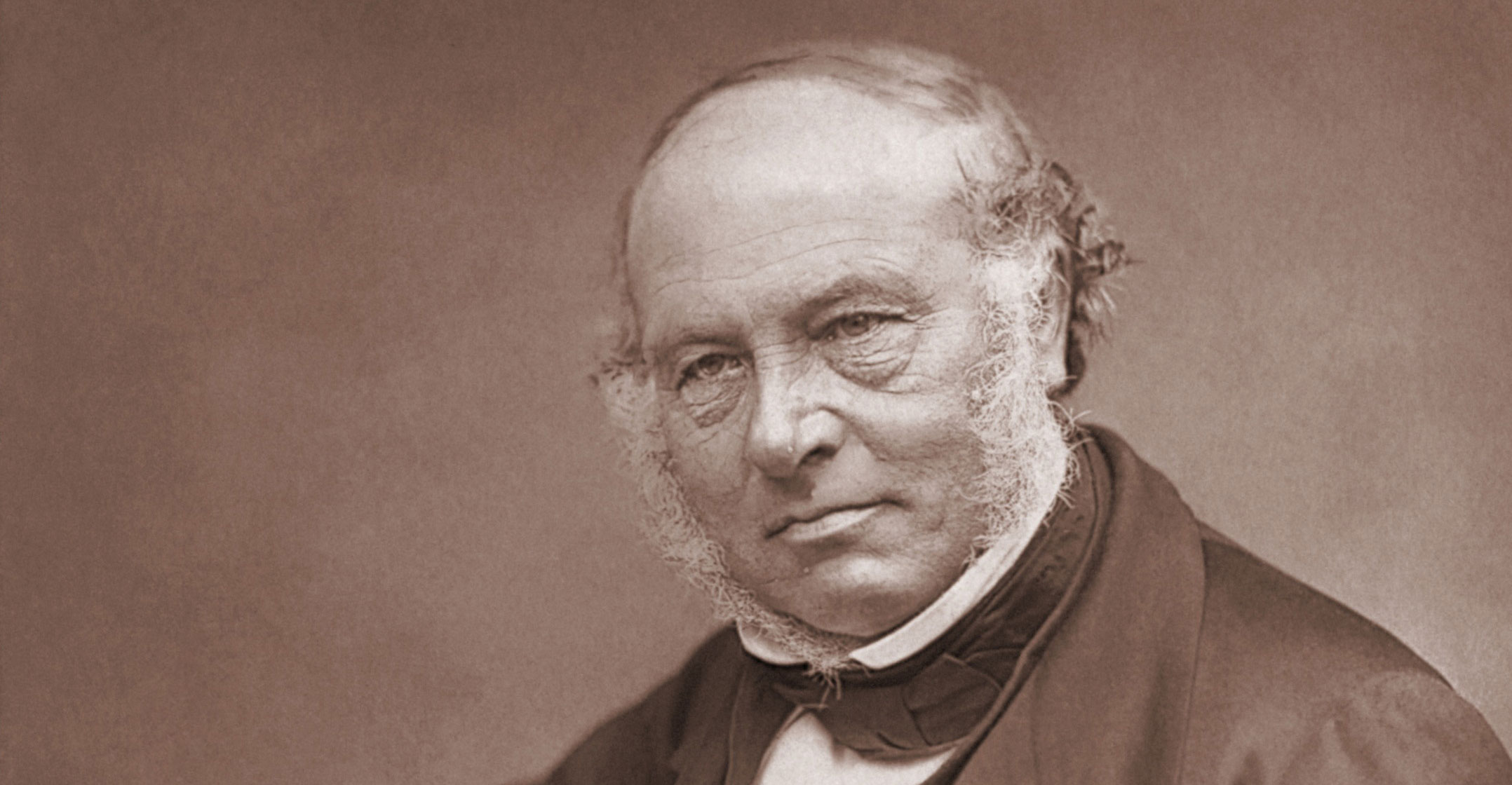
    An undated photograph of Rowland Hill

    What might a reasonable proposition be to transform rural access to the Internet? Perhaps the Dollar Backbone as opposed to the Penny Post, where wholesale capacity may be purchased at $1 per megabit-per-second. Perhaps in sounds incredible that such a strategy might generate more revenue for the network than current pricing model, but then so did the 1p stamp.

    And, of course, it is not just revenue that is likely to increase, but also innovation. Researchers Daron Acemoğlu and James Robinson, authors of Why Nations Fail, have conducted research into the growth of the postal system in the US and found a strong correlation with growth in the number of patents issued; suggesting that the post was a key enabler of innovation. How much more of an enabler of innovation might the Internet be if it were affordable and accessible everywhere?

    • The author is indebted to Jon Brewer and Jim Forster, “who are always insightful to talk to and who deserve the credit for the ideas that inspired this article”
    • Further reading: The Life of Sir Rowland Hill and The History of the Penny Post
    • This work would not have been possible without the support of the Mozilla Foundation and the Association for Progressive Communications
    • Steve Song is founder of Village Telco. This piece was originally published on Song’s blog, Many Possibilities


    Chorus Rowland Hill Spark Steve Song top
    Subscribe to TechCentral Subscribe to TechCentral
    Share. Facebook Twitter LinkedIn WhatsApp Telegram Email Copy Link
    Previous ArticleDimension Data acquires Amazon cloud specialist Acacia
    Next Article Vodacom cuts headline 1GB data price to R85

    Related Posts

    South Africa is rapidly becoming a hyperconnected country

    South Africa is rapidly becoming a hyperconnected country

    2 October 2025
    Bandwidth bonanza: the undersea cables that connect SA to the world

    Bandwidth bonanza: the undersea cables that connect South Africa to the world

    12 July 2024

    18GW in unplanned breakdowns cripple Eskom

    2 November 2021
    Company News
    AI is not a technology problem - iqbusiness

    AI is not a technology problem – iqbusiness

    5 December 2025
    Telcos are sitting on a data gold mine - but few know what do with it - Phillip du Plessis

    Telcos are sitting on a data gold mine – but few know what do with it

    4 December 2025
    Unlock smarter computing with your surface Copilot+ PC

    Unlock smarter computing with your Surface Copilot+ PC

    4 December 2025
    Opinion
    Your data, your hardware: the DIY AI revolution is coming - Duncan McLeod

    Your data, your hardware: the DIY AI revolution is coming

    20 November 2025
    Zero Carbon Charge founder Joubert Roux

    The energy revolution South Africa can’t afford to miss

    20 November 2025
    It's time for a new approach to government IT spend in South Africa - Richard Firth

    It’s time for a new approach to government IT spend in South Africa

    19 November 2025

    Subscribe to Updates

    Get the best South African technology news and analysis delivered to your e-mail inbox every morning.

    Latest Posts
    Big Microsoft 365 price increases coming next year

    Big Microsoft price increases coming next year

    5 December 2025
    AI is not a technology problem - iqbusiness

    AI is not a technology problem – iqbusiness

    5 December 2025
    Vodacom to take control of Safaricom in R36-billion deal - Shameel Joosub

    Vodacom to take control of Safaricom in R36-billion deal

    4 December 2025
    Black Friday goes digital in South Africa as online spending surges to record high

    Black Friday goes digital in South Africa as online spending surges to record high

    4 December 2025
    © 2009 - 2025 NewsCentral Media
    • Cookie policy (ZA)
    • TechCentral – privacy and Popia

    Type above and press Enter to search. Press Esc to cancel.

    Manage consent

    TechCentral uses cookies to enhance its offerings. Consenting to these technologies allows us to serve you better. Not consenting or withdrawing consent may adversely affect certain features and functions of the website.

    Functional Always active
    The technical storage or access is strictly necessary for the legitimate purpose of enabling the use of a specific service explicitly requested by the subscriber or user, or for the sole purpose of carrying out the transmission of a communication over an electronic communications network.
    Preferences
    The technical storage or access is necessary for the legitimate purpose of storing preferences that are not requested by the subscriber or user.
    Statistics
    The technical storage or access that is used exclusively for statistical purposes. The technical storage or access that is used exclusively for anonymous statistical purposes. Without a subpoena, voluntary compliance on the part of your Internet Service Provider, or additional records from a third party, information stored or retrieved for this purpose alone cannot usually be used to identify you.
    Marketing
    The technical storage or access is required to create user profiles to send advertising, or to track the user on a website or across several websites for similar marketing purposes.
    • Manage options
    • Manage services
    • Manage {vendor_count} vendors
    • Read more about these purposes
    View preferences
    • {title}
    • {title}
    • {title}