Close Menu
TechCentralTechCentral

    Subscribe to the newsletter

    Get the best South African technology news and analysis delivered to your e-mail inbox every morning.

    Facebook X (Twitter) YouTube LinkedIn
    WhatsApp Facebook X (Twitter) LinkedIn YouTube
    TechCentralTechCentral
    • News
      Cell C cleans up its balance sheet but faces tough trading reality

      Cell C cleans up its balance sheet but faces tough trading reality

      13 February 2026
      MVNO business shines in Cell C's first post-listing results - Jorges Mendes

      MVNO business shines in Cell C’s first post-listing results

      13 February 2026
      Ramaphosa presses ahead with Eskom break-up - Cyril Ramaphosa

      Ramaphosa presses ahead with Eskom break-up

      13 February 2026
      The key technology takeaways from Ramaphosa's 2026 Sona - Cyril Ramaphosa

      The key technology takeaways from Ramaphosa’s 2026 Sona

      13 February 2026
      Toyota SA CEO: NEV inaction will cost South Africa its motoring industry - Andrew Kirby

      Toyota SA CEO: NEV inaction will cost South Africa its motoring industry

      12 February 2026
    • World
      Russia bans WhatsApp

      Russia bans WhatsApp

      12 February 2026
      EU regulators take aim at WhatsApp

      EU regulators take aim at WhatsApp

      9 February 2026
      Musk hits brakes on Mars mission

      Musk hits brakes on Mars mission

      9 February 2026
      Crypto firm accidentally sends R700-billion in bitcoin to its users

      Crypto firm accidentally sends R700-billion in bitcoin to its users

      8 February 2026
      AI won't replace software, says Nvidia CEO amid market rout - Jensen Huang

      AI won’t replace software, says Nvidia CEO amid market rout

      4 February 2026
    • In-depth
      How liberalisation is rewiring South Africa's power sector

      How liberalisation is rewiring South Africa’s power sector

      21 January 2026
      The top-performing South African tech shares of 2025

      The top-performing South African tech shares of 2025

      12 January 2026
      Digital authoritarianism grows as African states normalise internet blackouts

      Digital authoritarianism grows as African states normalise internet blackouts

      19 December 2025
      TechCentral's South African Newsmakers of 2025

      TechCentral’s South African Newsmakers of 2025

      18 December 2025
      Black Friday goes digital in South Africa as online spending surges to record high

      Black Friday goes digital in South Africa as online spending surges to record high

      4 December 2025
    • TCS
      Watts & Wheels S1E4: 'We drive an electric Uber'

      Watts & Wheels S1E4: ‘We drive an electric Uber’

      10 February 2026
      TCS+ | How Cloud On Demand is helping SA businesses succeed in the cloud - Xhenia Rhode, Dion Kalicharan

      TCS+ | Cloud On Demand and Consnet: inside a real-world AWS partner success story

      30 January 2026
      Watts & Wheels S1E4: 'We drive an electric Uber'

      Watts & Wheels S1E3: ‘BYD’s Corolla Cross challenger’

      30 January 2026
      Watts & Wheels S1E4: 'We drive an electric Uber'

      Watts & Wheels S1E2: ‘China attacks, BMW digs in, Toyota’s sublime supercar’

      23 January 2026

      TCS+ | Why cybersecurity is becoming a competitive advantage for SA businesses

      20 January 2026
    • Opinion
      A million reasons monopolies don't work - Duncan McLeod

      A million reasons monopolies don’t work

      10 February 2026
      Eskom unbundling U-turn threatens to undo hard-won electricity gains - Busi Mavuso

      Eskom unbundling U-turn threatens to undo hard-won electricity gains

      9 February 2026
      South Africa's skills advantage is being overlooked at home - Richard Firth

      South Africa’s skills advantage is being overlooked at home

      29 January 2026
      Why Elon Musk's Starlink is a 'hard no' for me - Songezo Zibi

      Why Elon Musk’s Starlink is a ‘hard no’ for me

      26 January 2026
      A million reasons monopolies don't work - Duncan McLeod

      South Africa’s new fibre broadband battle

      20 January 2026
    • Company Hubs
      • Africa Data Centres
      • AfriGIS
      • Altron Digital Business
      • Altron Document Solutions
      • Altron Group
      • Arctic Wolf
      • AvertITD
      • Braintree
      • CallMiner
      • CambriLearn
      • CYBER1 Solutions
      • Digicloud Africa
      • Digimune
      • Domains.co.za
      • ESET
      • Euphoria Telecom
      • Incredible Business
      • iONLINE
      • IQbusiness
      • Iris Network Systems
      • LSD Open
      • Mitel
      • NEC XON
      • Netstar
      • Network Platforms
      • Next DLP
      • Ovations
      • Paracon
      • Paratus
      • Q-KON
      • SevenC
      • SkyWire
      • Solid8 Technologies
      • Telit Cinterion
      • Tenable
      • Vertiv
      • Videri Digital
      • Vodacom Business
      • Wipro
      • Workday
      • XLink
    • Sections
      • AI and machine learning
      • Banking
      • Broadcasting and Media
      • Cloud services
      • Contact centres and CX
      • Cryptocurrencies
      • Education and skills
      • Electronics and hardware
      • Energy and sustainability
      • Enterprise software
      • Financial services
      • Information security
      • Internet and connectivity
      • Internet of Things
      • Investment
      • IT services
      • Lifestyle
      • Motoring
      • Public sector
      • Retail and e-commerce
      • Satellite communications
      • Science
      • SMEs and start-ups
      • Social media
      • Talent and leadership
      • Telecoms
    • Events
    • Advertise
    TechCentralTechCentral
    Home » News » Mark Zuckerberg takes a leaf out of Elon Musk’s book

    Mark Zuckerberg takes a leaf out of Elon Musk’s book

    By Parmy Olson3 November 2021
    Twitter LinkedIn Facebook WhatsApp Email Telegram Copy Link
    News Alerts
    WhatsApp
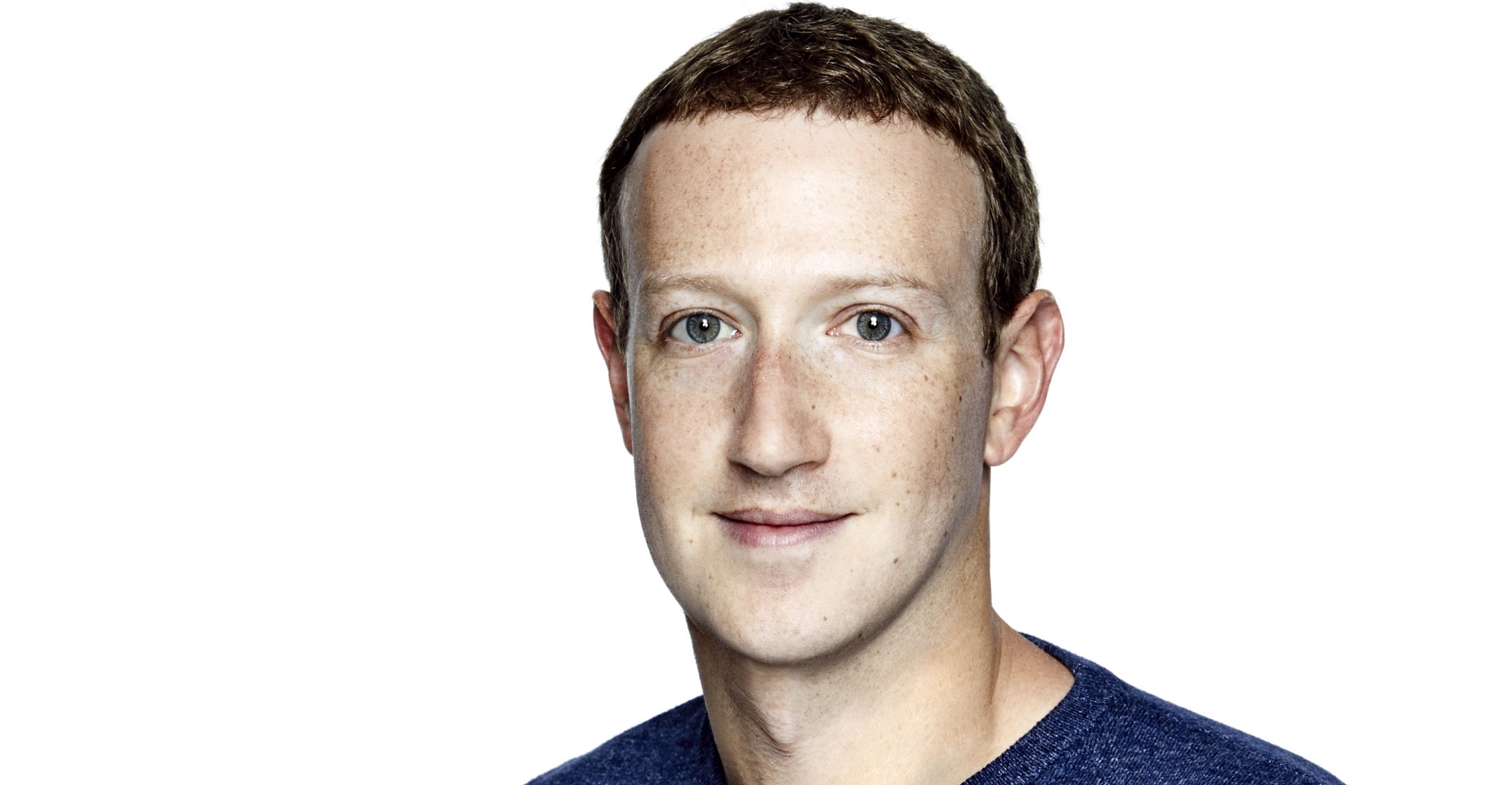
    Meta Platforms CEO Mark Zuckerberg

    It seems to be a rite of passage that as technology billionaires get older, they spend more time chasing dreams they might have fantasised about as kids. There’s Elon Musk and Jeff Bezos with their rockets, and now Mark Zuckerberg, aged 37, with his plans to build an alternate digital reality known as the metaverse.

    Last week, Zuckerberg announced that Facebook was changing its name to Meta Platforms to reflect its focus on a new virtual- and augmented-reality platform “for connecting people”. It looked at first like the CEO was distancing himself from the company’s problems, but that is only part of the story. He also seems to be following in Musk’s footsteps, attempting, in his own way, to become a tech futurist with grandiose plans to change humanity. That may ultimately make Zuckerberg the clearest winner from Facebook’s pivot.

    I am sceptical about the metaverse, and not just because of Facebook’s negligence of user safety.

    History is littered with tech companies that couldn’t pivot to new platforms

    History is littered with tech companies that, despite their roots in innovation, couldn’t pivot to new platforms. Take Nokia. Back in 2007 it had the lion’s share of global revenue from mobile phones. Then it tried building a new platform for apps and failed to compete with Apple’s iPhones and Google’s Android operating system. Within six years it went from a market valuation of US$150-billion to being bought by Microsoft, in 2013, for $7.2-billion.

    ARM Holdings is another example. Its mobile chip designs indirectly power nearly all of the world’s smartphones, giving it a lucrative passive income in licence fees. Several years ago, ARM steered into the more futuristic world of the Internet of things, building software to connect cars, doorbells, washing machines and more. Believing that goal would pay off, SoftBank Group bought ARM for $32-billion in 2016. But the IoT business stagnated, and in 2020 ARM said it would spin the unit off and refocus on chip licensing.

    Faltered

    Even Google’s restructuring as Alphabet has faltered in new territory, with some of the conglomerate’s “bets” mostly draining money, even in promising areas like pharmaceuticals. A project with Novartis International to track diabetes through contact lenses was shut down in 2018, while a similar partnership with Sanofi fizzled in 2019. Six years on from seeking new directions, Alphabet still makes more than 80% of its revenue from advertising.

    Meta Platforms will also struggle to make money from anything other than selling ads on Facebook and Instagram. So successful and entrenched is that core business that Facebook has yet to make money from another platform it has already owned for seven years: WhatsApp. The chat app, which Zuckerberg bought for $19-billion in 2014, has approximately two billion monthly users but generates nominal revenues, even after years-long efforts to lay the groundwork for ads and business messaging.

    Facebook is meanwhile playing catch-up on virtual reality with Roblox and Valve Corporation’s SteamVR, while VR products coming from Apple, Google and Microsoft will be tough competitors.

    And the company has struggled to turn innovative ideas into products in the past. Among the misfires: the much-hyped mobile platform Home, which closed in 2013, and Snapchat competitors Poke and Slingshot (2014 and 2015). Facebook also couldn’t build a voice assistant for its video-calling device Portal (awkwardly using Amazon’s Alexa instead), because its engineers grappled with confusing priorities, some of them told me in 2018.

    So where does that leave the metaverse? With billions of dollars, Zuckerberg will certainly build something, but its financial success is dubious. The clearer winner is Zuckerberg himself. He can walk away from being the suit-and-tie-wearing executive answering questions about harmful content on Facebook, and onto the public stage unveiling all the new ways that Meta is making science fiction real.

    In that sense, Zuckerberg has taken a step towards becoming more like Tesla’s Musk, making a visionary bet just as Musk did with his predictions about the shift to electric cars. Despite noted tensions between the two founders, the former has quietly tried to emulate the latter. A person who worked directly with Zuckerberg tells me that several years ago the Facebook co-founder started posting more frequently to his own profile because he wanted to build a larger fanbase like Musk’s. He increased his following by hiring professional photographers to document his work and home life, among other strategies.

    But neither history nor his followers will remember Zuckerberg as the grandfather of virtual reality if he continues to neglect the toxic clean-up needed on Facebook. The financial and regulatory pressure coming towards Meta is real. Over time, that dream of being an icon will start to unravel.  — (c) 2021 Bloomberg LP



    ARM Holdings Elon Musk Facebook Mark Zuckerberg Meta Meta Platforms Nokia Tesla
    WhatsApp YouTube Follow on Google News Add as preferred source on Google
    Share. Facebook Twitter LinkedIn WhatsApp Telegram Email Copy Link
    Previous ArticleJob shedding: The grim toll of load shedding
    Next Article Majority of South African IT talent prefers to work from home

    Related Posts

    Russia bans WhatsApp

    Russia bans WhatsApp

    12 February 2026
    Dr Google, meet Dr Chatbot - neither is ready to see you now

    Dr Google, meet Dr Chatbot – neither is ready to see you now

    10 February 2026
    EU regulators take aim at WhatsApp

    EU regulators take aim at WhatsApp

    9 February 2026
    Company News
    Cell C delivers maiden results with growth momentum, financial flexibility - Jorges Mendes

    Cell C delivers maiden results with growth momentum, financial flexibility

    13 February 2026
    Start-up king joins Paratus Rwanda - Innocent Mutimura

    Start-up king joins Paratus Rwanda

    13 February 2026
    How NEC XON tackled identity risk for a major telco - Michael de Neuilly Rice

    How NEC XON tackled identity risk for a major telco

    11 February 2026
    Opinion
    A million reasons monopolies don't work - Duncan McLeod

    A million reasons monopolies don’t work

    10 February 2026
    Eskom unbundling U-turn threatens to undo hard-won electricity gains - Busi Mavuso

    Eskom unbundling U-turn threatens to undo hard-won electricity gains

    9 February 2026
    South Africa's skills advantage is being overlooked at home - Richard Firth

    South Africa’s skills advantage is being overlooked at home

    29 January 2026

    Subscribe to Updates

    Get the best South African technology news and analysis delivered to your e-mail inbox every morning.

    Latest Posts
    Cell C cleans up its balance sheet but faces tough trading reality

    Cell C cleans up its balance sheet but faces tough trading reality

    13 February 2026
    MVNO business shines in Cell C's first post-listing results - Jorges Mendes

    MVNO business shines in Cell C’s first post-listing results

    13 February 2026
    Ramaphosa presses ahead with Eskom break-up - Cyril Ramaphosa

    Ramaphosa presses ahead with Eskom break-up

    13 February 2026
    The key technology takeaways from Ramaphosa's 2026 Sona - Cyril Ramaphosa

    The key technology takeaways from Ramaphosa’s 2026 Sona

    13 February 2026
    © 2009 - 2026 NewsCentral Media
    • Cookie policy (ZA)
    • TechCentral – privacy and Popia

    Type above and press Enter to search. Press Esc to cancel.

    Manage consent

    TechCentral uses cookies to enhance its offerings. Consenting to these technologies allows us to serve you better. Not consenting or withdrawing consent may adversely affect certain features and functions of the website.

    Functional Always active
    The technical storage or access is strictly necessary for the legitimate purpose of enabling the use of a specific service explicitly requested by the subscriber or user, or for the sole purpose of carrying out the transmission of a communication over an electronic communications network.
    Preferences
    The technical storage or access is necessary for the legitimate purpose of storing preferences that are not requested by the subscriber or user.
    Statistics
    The technical storage or access that is used exclusively for statistical purposes. The technical storage or access that is used exclusively for anonymous statistical purposes. Without a subpoena, voluntary compliance on the part of your Internet Service Provider, or additional records from a third party, information stored or retrieved for this purpose alone cannot usually be used to identify you.
    Marketing
    The technical storage or access is required to create user profiles to send advertising, or to track the user on a website or across several websites for similar marketing purposes.
    • Manage options
    • Manage services
    • Manage {vendor_count} vendors
    • Read more about these purposes
    View preferences
    • {title}
    • {title}
    • {title}