Close Menu
TechCentralTechCentral

    Subscribe to the newsletter

    Get the best South African technology news and analysis delivered to your e-mail inbox every morning.

    Facebook X (Twitter) YouTube LinkedIn
    WhatsApp Facebook X (Twitter) LinkedIn YouTube
    TechCentralTechCentral
    • News
      The world map is messing with your head

      The world map is messing with your head

      8 September 2026
      Huawei Mate XT2 tri-fold smartphone shown open at the Huawei launch event

      Huawei, Xiaomi crash Apple’s party with new foldable flagships

      8 September 2026
      DStv's biggest shake-up in 15 years lands on 17 September

      DStv’s biggest shake-up in 15 years lands on 17 September

      7 September 2026
      The man now carrying South Africa's auto industry fight - Mncane Mthunzi

      The man now carrying South Africa’s auto industry fight

      7 September 2026
      UN warns AI could disrupt democracy itself - Mohamed Azakir

      UN warns AI could disrupt democracy itself

      7 September 2026
    • World
      'This is not circular': Jensen Huang defends $3.5-billion MediaTek deal

      ‘This is not circular’: Jensen Huang defends $3.5-billion MediaTek deal

      2 September 2026
      AI-generated music banned from Australian charts

      AI-generated music banned from Australian charts

      26 August 2026
      Traders brace for a R4.5-trillion swing in Nvidia's value

      Traders brace for a R4.5-trillion swing in Nvidia’s value

      25 August 2026
      Russia building its own Starlink - and faster than expected - Vadym Skibitskyi

      Russia building its own Starlink – and faster than expected

      11 August 2026
      Meta AI will now tell parents if their teen is in crisis

      Meta AI will now tell parents if their teen is in crisis

      17 July 2026
    • In-depth
      Google DeepMind CEO Demis Hassabis. Image: John Sears

      The plan to stop AI from breaking the world

      16 July 2026
      The internet has a Strait of Hormuz problem

      The internet has a Strait of Hormuz problem

      15 July 2026
      AI boom sparks rally, frenzy and fear

      AI boom sparks rally, frenzy and fear

      11 June 2026
      Every plug-in hybrid on sale in South Africa, ranked by price - Lamborghini Temerario

      Every plug-in hybrid on sale in South Africa, ranked by price

      7 June 2026
      What Wi-Fi 8 will mean for wireless networks

      What Wi-Fi 8 will mean for wireless networks

      1 June 2026
    • TCS
      Winstone Jordaan on building a national EV charging network

      Winstone Jordaan on building a national EV charging network

      2 September 2026
      Watts & Wheels S1E8: 'Tesla lands in Africa, just not here'

      Watts & Wheels S1E8: ‘Tesla lands in Africa, just not here’

      24 August 2026
      TCS | Herotel CEO Van Zyl Botha on beating Starlink to South Africa

      TCS | Herotel CEO Van Zyl Botha on beating Starlink to South Africa

      14 August 2026
      Meet the CIO | Discovery's Derek Wilcocks on AI, guardrails and growth

      Meet the CIO | Derek Wilcocks on how AI personalised Vitality

      13 August 2026
      TCS | Money just became native to the internet - Steven Boykey Sidley

      TCS | Money just became native to the internet – Steven Boykey Sidley

      12 August 2026
    • Opinion
      The fragile joint in the Capitec machine - Pambos Soteriades

      The R197-billion market the banks can’t reach

      25 August 2026
      South African tech's compounding debt problem - Jannie van Zyl

      Management consulting as we know it is over

      21 August 2026
      South African tech's compounding debt problem - Jannie van Zyl

      The most dangerous customer is the quiet one

      10 August 2026
      South African tech's compounding debt problem - Jannie van Zyl

      South African tech’s compounding debt problem

      29 July 2026
      The fragile joint in the Capitec machine - Pambos Soteriades

      Best network, worst vibes: the puzzle of SA telecoms

      20 July 2026
    • Company Hubs
      • 1Stream
      • Africa Data Centres
      • AfriGIS
      • Altron Digital Business
      • Altron Document Solutions
      • Altron Group
      • Arctic Wolf
      • Ascent Technology
      • AvertITD
      • BBD
      • Braintree
      • CallMiner
      • CambriLearn
      • CM.com
      • Contactable
      • CYBER1 Solutions
      • Digicloud Africa
      • Digimune
      • Domains.co.za
      • ESET
      • Euphoria Telecom
      • HOSTAFRICA
      • Incredible Business
      • iONLINE
      • IQbusiness
      • Iris Network Systems
      • Kaspersky
      • LSD Open
      • Mitel
      • NEC XON
      • Netstar
      • Network Platforms
      • Next DLP
      • Ovations
      • Paracon
      • Paratus
      • Q-KON
      • SevenC
      • SkyWire
      • Solid8 Technologies
      • Telit Cinterion
      • Telviva
      • Tenable
      • Vertiv
      • Videri Digital
      • Vodacom Business
      • Vox
      • Wipro
      • Workday
      • XLink
    • Sections
      • AI and machine learning
      • Banking
      • Broadcasting and Media
      • Cloud services
      • Contact centres and CX
      • Cryptocurrencies
      • Education and skills
      • Electronics and hardware
      • Energy and sustainability
      • Enterprise software
      • Financial services
      • HealthTech
      • Information security
      • Internet and connectivity
      • Internet of Things
      • Investment
      • IT services
      • Lifestyle
      • Policy and regulation
      • Public sector
      • Retail and e-commerce
      • Satellite communications
      • Science
      • SMEs and start-ups
      • Social media
      • Talent and leadership
      • Telecoms
      • Watts & Wheels
    • Events
    • Advertise
    TechCentralTechCentral
    Home » News » The world map is messing with your head

    The world map is messing with your head

    Engineers, surveyors and satellite operators abandoned global Mercator long ago, even if classrooms did not.
    By Fanie van Rooyen8 September 2026
    Twitter LinkedIn Facebook WhatsApp Email Telegram Copy Link
    News Alerts
    WhatsApp
    The world map is messing with your head
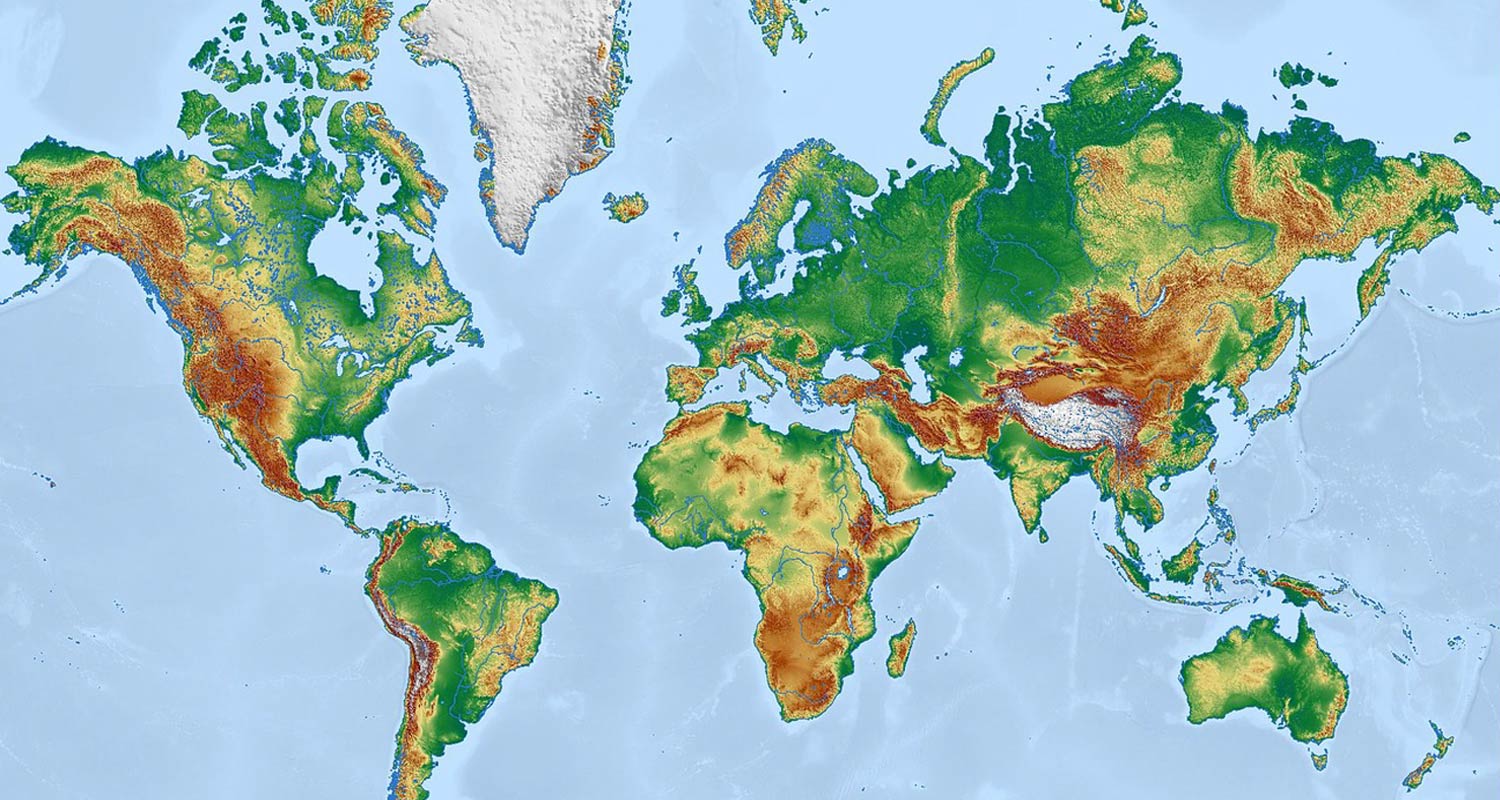
    The world map based on Gerardus Mercator’s 1569 projection

    On 4 September, the UN General Assembly voted 164 to one to encourage the world to stop drawing itself on Gerardus Mercator’s 1569 projection – the world map everyone learnt at school.

    The non-binding resolution, tabled by Togo for the African Group and the African Union under the banner Correct the Map, recommends the Equal Earth projection instead.

    Six countries abstained, among them Ukraine, which objects to the way Equal Earth maps render Russian-occupied Ukrainian territory. The US cast the only vote against, its deputy representative to Ecosoc, Yaryna Ferencevych, dismissing the resolution as a “radical ideological project”.

    Almost nobody who builds real infrastructure uses it. Nor, strictly speaking, does your phone

    “A fair map does not change the geography of the world; it changes how we see the world,” Togo’s foreign minister Robert Dussey told the assembly.

    South Africa covers 1 221 037km², making it the 24th-largest country on Earth and the ninth largest in Africa. That is twice the size of France and five times the UK.

    Mercator maps do not shrink South Africa. In fact, they do the opposite. The projection’s area distortion grows with the square of the secant of latitude, so at our area-weighted mid-latitude of roughly 29°S we are drawn about 31% larger than we really are.

    The trouble is that many other countries get an even bigger bonus, depending on where they land on the curve. The contiguous US, centred near 39°N, is padded out by about two-thirds. China, near 35°N, is inflated by about half. Alaska, at 64°N, is drawn at more than five times its true area. Of the giants, only India – centred near 22°N 0 – gets less flattery than we do, at roughly 16%.

    Larger than they are

    The distortion is not that South Africa looks small. It is that the countries we benchmark against look far larger than they are, while the equatorial states we share a continent with – and lay railroads and cables to – are drawn honestly and therefore look negligible. The Congo basin, for example, gets no inflation at all.

    Africa itself covers 30.3 million km², about a fifth of the world’s land, across 54 countries. That is roughly 14 times the size of Greenland, which Mercator renders as a near equal.

    The problem is the debate still isn’t settled, and may never be. The week before the vote, Google Maps began showing Lake Ontario as “Lake America” to users inside the US, following an executive order signed on 27 August and its adoption by the US Geographic Names Information System. Canadian users still see Lake Ontario.

    Ontario premier Doug Ford answered with a billboard-sized sign on the Canadian shore at Winona: “Lake Ontario. Now and forever.”

    On Google Maps, South Africans – and presumably people from other nations, except the US – still see Lake Ontario. But the Gulf of Mexico is rendered as “Gulf of Mexico (Gulf of America)” to non-US Maps users. That is the actual state of world cartography: not one authoritative picture, but a geolocated one, served by IP address, which rather undercuts the notion that a UN assembly vote can conjure a single map into being.
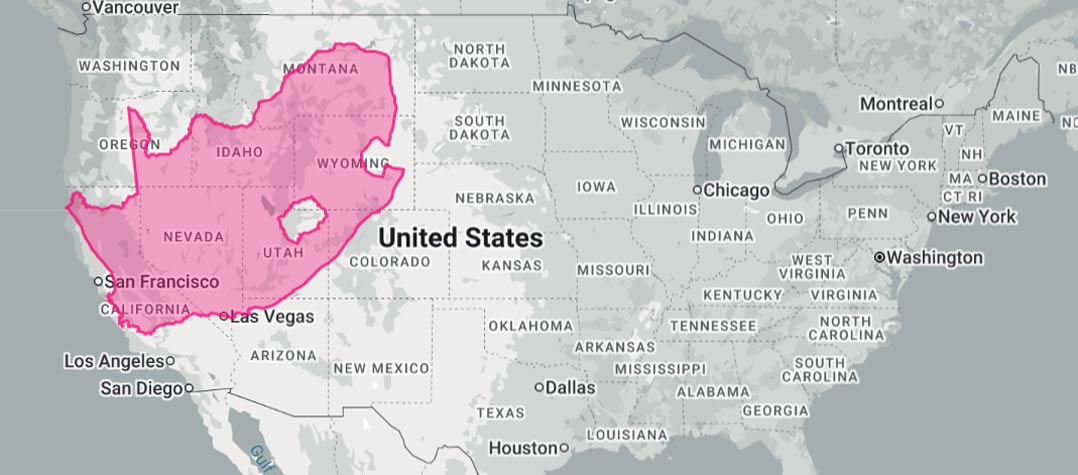
    South Africa overlaid on the US
    South Africa overlaid on the US. Credit: thetruesize.com

    Mercator is still the default on the platforms we use every day. Almost every digital map – Google Maps, Apple Maps, OpenStreetMap and the delivery apps built on them – draws the world in a version of it called Web Mercator. It survives for good reasons: it keeps shapes and angles true close up, north is always at the top and it slices neatly into square tiles. It makes an excellent street map and a bad picture of the world.

    Almost nobody who builds real infrastructure uses it, though. Nor, strictly speaking, does your phone.

    Satellite positioning does not use a flat map at all. It works in latitude and longitude on a model of the Earth’s curved shape, and the flat picture on your screen is drawn afterwards. South Africa has its own reference system for the real thing: Hartebeesthoek94, in use since 1 January 1999, anchored at the radio astronomy observatory outside Pretoria that gives it its name. Surveyors work off a grid built on it: a Mercator of sorts, but a local one, accurate because it never tries to draw the whole world at once.
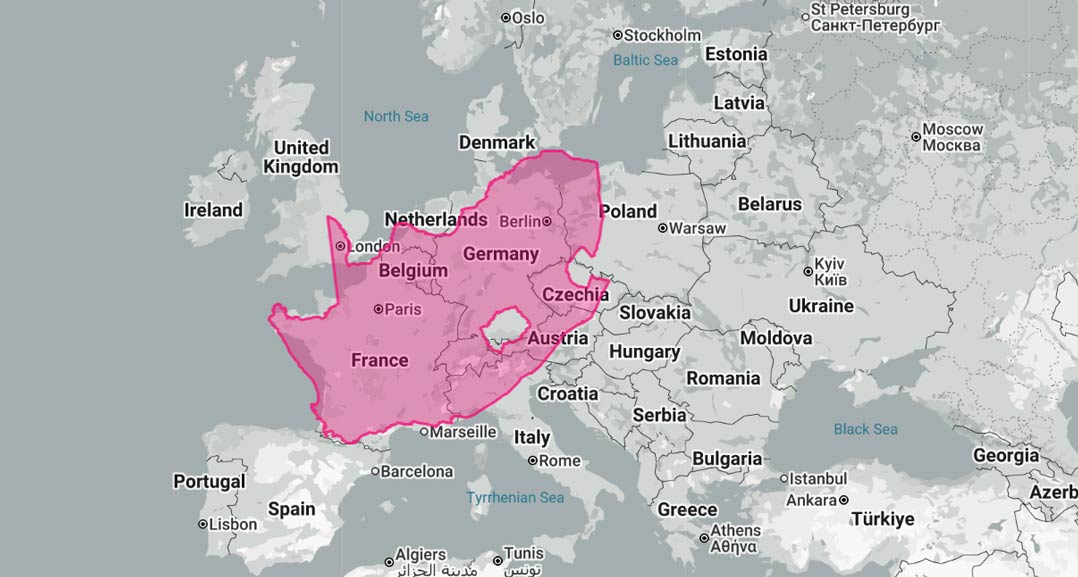
    South Africa overlaid on Europe
    South Africa overlaid on Europe. Credit: thetruesize.com

    Subsea cable planning is the same. The cable maps that circulate online are diagrams, not routes. Real paths are the shortest lines across a curved Earth, and real distance is what gets paid for.

    In orbit, where Amazon Leo is heading for a 2027 launch here on Herotel’s licences, what a satellite can serve depends on how much ground it passes over. Mercator flatters the far north and south – physics doesn’t. Satellite coverage, fibre networks, cable paths and railroads never ran on Mercator.

    To be fair, Mercator was never really a lie. It was built for one job – letting a sailor draw a constant compass bearing as a straight line – and the stretched sizes were the price of that trick. The mistake was hanging it on the classroom wall.  — © 2026 NewsCentral Media

    • Subscribe to TechCentral’s daily newsletter
    • Get breaking news alerts on WhatsApp

    Follow TechCentral on Google News Add TechCentral as your preferred source on Google


    2Africa Correct the Map Donald Trump Doug Ford Gerardus Mercator Google Google Maps HeroTel Jean-Noël Barrot Robert Dussey Thomas Saarinen Umoja Yaryna Ferencevych
    WhatsApp YouTube
    Share. Facebook Twitter LinkedIn WhatsApp Telegram Email Copy Link
    Previous ArticleHuawei, Xiaomi crash Apple’s party with new foldable flagships

    Related Posts

    UN warns AI could disrupt democracy itself - Mohamed Azakir

    UN warns AI could disrupt democracy itself

    7 September 2026
    Ageing Safe cable prompts new R1.7-billion Indian Ocean link

    Ageing Safe cable prompts new R1.7-billion Indian Ocean link

    7 September 2026
    The grid unbundling finally has a deadline

    The grid unbundling finally has a deadline

    7 September 2026
    Company News
    Most enterprises don't have an identity strategy - they have a patchwork - Contactable

    Most enterprises don’t have an identity strategy – they have a patchwork

    7 September 2026
    Ozgur Danisman, Cloudflare’s director of solutions engineering

    AI guardrails: the fastest way to move fast

    7 September 2026
    How to build a security operations centre that actually works - Kaspersky

    How to build a security operations centre that actually works

    3 September 2026
    Opinion
    The fragile joint in the Capitec machine - Pambos Soteriades

    The R197-billion market the banks can’t reach

    25 August 2026
    South African tech's compounding debt problem - Jannie van Zyl

    Management consulting as we know it is over

    21 August 2026
    South African tech's compounding debt problem - Jannie van Zyl

    The most dangerous customer is the quiet one

    10 August 2026

    Subscribe to Updates

    Get the best South African technology news and analysis delivered to your e-mail inbox every morning.

    Latest Posts
    The world map is messing with your head

    The world map is messing with your head

    8 September 2026
    Huawei Mate XT2 tri-fold smartphone shown open at the Huawei launch event

    Huawei, Xiaomi crash Apple’s party with new foldable flagships

    8 September 2026
    DStv's biggest shake-up in 15 years lands on 17 September

    DStv’s biggest shake-up in 15 years lands on 17 September

    7 September 2026
    The man now carrying South Africa's auto industry fight - Mncane Mthunzi

    The man now carrying South Africa’s auto industry fight

    7 September 2026
    © 2009 - 2026 NewsCentral Media
    Built and maintained by Chronon
    • Cookie policy (ZA)
    • TechCentral – privacy and Popia

    Type above and press Enter to search. Press Esc to cancel.

    Manage consent

    TechCentral uses cookies to enhance its offerings. Consenting to these technologies allows us to serve you better. Not consenting or withdrawing consent may adversely affect certain features and functions of the website.

    Functional Always active
    The technical storage or access is strictly necessary for the legitimate purpose of enabling the use of a specific service explicitly requested by the subscriber or user, or for the sole purpose of carrying out the transmission of a communication over an electronic communications network.
    Preferences
    The technical storage or access is necessary for the legitimate purpose of storing preferences that are not requested by the subscriber or user.
    Statistics
    The technical storage or access that is used exclusively for statistical purposes. The technical storage or access that is used exclusively for anonymous statistical purposes. Without a subpoena, voluntary compliance on the part of your Internet Service Provider, or additional records from a third party, information stored or retrieved for this purpose alone cannot usually be used to identify you.
    Marketing
    The technical storage or access is required to create user profiles to send advertising, or to track the user on a website or across several websites for similar marketing purposes.
    • Manage options
    • Manage services
    • Manage {vendor_count} vendors
    • Read more about these purposes
    View preferences
    • {title}
    • {title}
    • {title}