Close Menu
TechCentralTechCentral

    Subscribe to the newsletter

    Get the best South African technology news and analysis delivered to your e-mail inbox every morning.

    Facebook X (Twitter) YouTube LinkedIn
    WhatsApp Facebook X (Twitter) LinkedIn YouTube
    TechCentralTechCentral
    • News
      Digital IDs will launch before year-end, government says - Maropene Ramokgopa

      Digital IDs will launch before year-end, government says

      23 January 2026
      Watts & Wheels S1E2: 'China attacks, BMW digs in, Toyota's sublime supercar'

      Watts & Wheels S1E2: ‘China attacks, BMW digs in, Toyota’s sublime supercar’

      23 January 2026
      EU decision doesn't end 'Fair Share' debate, says ACT CEO Batyi - Nomvuyiso Batyi

      EU decision doesn’t end ‘Fair Share’ debate, says ACT CEO Batyi

      23 January 2026
      Chery to take over Nissan's historic Rosslyn plant

      Chery to take over Nissan’s historic Rosslyn plant

      23 January 2026
      Intel takes another hit - Intel CEO Lip-Bu Tan. Laure Andrillon/Reuters

      Intel takes another hit

      23 January 2026
    • World
      ByteDance clinches US TikTok deal

      ByteDance clinches US TikTok deal

      23 January 2026
      Taiwan, US strike strategic AI and chip supply-chain pact - TSMC

      Taiwan, US strike strategic AI and chip supply-chain pact

      20 January 2026
      Wikipedia moves to monetise AI giants' reliance on its content

      Wikipedia moves to monetise AI giants’ reliance on its content

      15 January 2026
      Visa moves to plug stablecoins into the global payments system

      Visa moves to plug stablecoins into the global payments system

      15 January 2026
      Oracle sued as bondholders allege AI debt plans were hidden - Larry Ellison

      Oracle sued as bondholders allege AI debt plans were hidden

      15 January 2026
    • In-depth
      The top-performing South African tech shares of 2025

      The top-performing South African tech shares of 2025

      12 January 2026
      Digital authoritarianism grows as African states normalise internet blackouts

      Digital authoritarianism grows as African states normalise internet blackouts

      19 December 2025
      TechCentral's South African Newsmakers of 2025

      TechCentral’s South African Newsmakers of 2025

      18 December 2025
      Black Friday goes digital in South Africa as online spending surges to record high

      Black Friday goes digital in South Africa as online spending surges to record high

      4 December 2025
      DStv dodges channel blackout in last-minute deal with Warner Bros

      Canal+ plays hardball – and DStv viewers feel the pain

      3 December 2025
    • TCS

      TCS+ | Why cybersecurity is becoming a competitive advantage for SA businesses

      20 January 2026
      Watts & Wheels S1E2: 'China attacks, BMW digs in, Toyota's sublime supercar'

      Watts & Wheels: S1E1 – ‘William, Prince of Wheels’

      8 January 2026
      TCS+ | Africa's digital transformation - unlocking AI through cloud and culture - Cliff de Wit Accelera Digital Group

      TCS+ | Cloud without culture won’t deliver AI: Accelera’s Cliff de Wit

      12 December 2025
      TCS+ | How Cloud on Demand helps partners thrive in the AWS ecosystem - Odwa Ndyaluvane and Xenia Rhode

      TCS+ | How Cloud On Demand helps partners thrive in the AWS ecosystem

      4 December 2025
      TCS | MTN Group CEO Ralph Mupita on competition, AI and the future of mobile

      TCS | Ralph Mupita on competition, AI and the future of mobile

      28 November 2025
    • Opinion
      AI moves from pilots to production in South African companies - Nazia Pillay SAP

      AI moves from pilots to production in South African companies

      20 January 2026
      ANC's attack on Solly Malatsi shows how BEE dogma trumps economic reality - Duncan McLeod

      ANC’s attack on Solly Malatsi shows how BEE dogma trumps economic reality

      14 December 2025
      Netflix, Warner Bros deal raises fresh headaches for MultiChoice - Duncan McLeod

      Netflix, Warner Bros deal raises fresh headaches for MultiChoice

      5 December 2025
      BIN scans, DDoS and the next cybercrime wave hitting South Africa's banks - Entersekt Gerhard Oosthuizen

      BIN scans, DDoS and the next cybercrime wave hitting South Africa’s banks

      3 December 2025
      ANC's attack on Solly Malatsi shows how BEE dogma trumps economic reality - Duncan McLeod

      Your data, your hardware: the DIY AI revolution is coming

      20 November 2025
    • Company Hubs
      • Africa Data Centres
      • AfriGIS
      • Altron Digital Business
      • Altron Document Solutions
      • Altron Group
      • Arctic Wolf
      • AvertITD
      • Braintree
      • CallMiner
      • CambriLearn
      • CYBER1 Solutions
      • Digicloud Africa
      • Digimune
      • Domains.co.za
      • ESET
      • Euphoria Telecom
      • Incredible Business
      • iONLINE
      • IQbusiness
      • Iris Network Systems
      • LSD Open
      • NEC XON
      • Netstar
      • Network Platforms
      • Next DLP
      • Ovations
      • Paracon
      • Paratus
      • Q-KON
      • SevenC
      • SkyWire
      • Solid8 Technologies
      • Telit Cinterion
      • Tenable
      • Vertiv
      • Videri Digital
      • Vodacom Business
      • Wipro
      • Workday
      • XLink
    • Sections
      • AI and machine learning
      • Banking
      • Broadcasting and Media
      • Cloud services
      • Contact centres and CX
      • Cryptocurrencies
      • Education and skills
      • Electronics and hardware
      • Energy and sustainability
      • Enterprise software
      • Financial services
      • Information security
      • Internet and connectivity
      • Internet of Things
      • Investment
      • IT services
      • Lifestyle
      • Motoring
      • Public sector
      • Retail and e-commerce
      • Satellite communications
      • Science
      • SMEs and start-ups
      • Social media
      • Talent and leadership
      • Telecoms
    • Events
    • Advertise
    TechCentralTechCentral
    Home » In-depth » Microsoft tries to bring back the cool

    Microsoft tries to bring back the cool

    By Editor7 March 2011
    Twitter LinkedIn Facebook WhatsApp Email Telegram Copy Link
    News Alerts
    WhatsApp

    Can Microsoft undergo a dramatic transformation to make itself cool again in the eyes of consumers, or are old dogs just incapable of learning new tricks, asks Brett Haggard.

    With Windows dominating the desktop operating system market by a substantial margin and Office considered to be one of the most essential pieces of application software the world has ever seen, nobody can dispute the weight Microsoft’s brand carries in the world today.

    Unfortunately, where that brand used to denote cool, cutting-edge and market-leading capabilities 10 or 15 years ago, today’s consumers consider Microsoft to be a balding, middle-aged guy who still thinks he’s “down with the youth” because he has a couple of Led Zeppelin albums and still plays computer games.

    As you can imagine, it’s not a nice place to be — especially if you’re one of the most successful software companies in the world. But should Microsoft care that the market thinks it’s uncool? Well, the answer is a resounding “yes”.

    Image is becoming increasingly important and since today’s youth are tomorrow’s decision makers, it’s important that your brand resonates well with the new market. Microsoft wants to be perceived as the company that makes “cool technology” as opposed to “the office suite my parents use”. And for that reason, the next couple of years are critical.

    The tale of how Microsoft ended up in this place isn’t particularly eventful. Instead of continuing to invent new and interesting technologies Microsoft, more than a decade ago, chose to centralise its efforts on refining what it already had on offer to the market. What Microsoft forgot is that the technology industry isn’t supposed to be that predictable and logical. The technology industry favours entrepreneurs with crazy ideas and mad passion. Just ask Facebook, Twitter or Amazon.com.

    By approaching its growth and development in a logical, predictable way, Microsoft was unknowingly setting itself up to lose “mindshare”. The technology market likes a little bit of crazy to be mixed in with whatever it’s eating. That should not for a second suggest that Microsoft should have run around the market unpredictably, making risky, crazy decisions.

    But by being the poster child for restraint and good business practice, Microsoft became boring. The loss in “mindshare” hasn’t had too much of a financial impact though. In creating solid software like Windows, Office and its various enterprise software solutions, Microsoft has managed to make itself indispensible — and in doing so, managed to ensure its survival.

    But it feels as if the world’s reliance on Microsoft products will not be enough to get it through the next decade and a half with the same aplomb. And it’s like Microsoft feels it too. While a number of market commentators believe there’s no way the company will be able to transform itself back into a cool company again, others think that transformation is already afoot.

    In fact, the company’s two most recent product releases — Kinect and Windows Phone 7 — prove that Microsoft does have some “cool” left in it. And chatting to Microsoft Research (or MSR as it’s more affectionately known) a couple of weeks ago while on a visit to the company’s Redmond, Seattle head office, it became clear that these two new products are just the start.

    Phone 7 and Kinect are independently cool for vastly different reasons. Kinect is an add-on for Microsoft’s Xbox 360 console that uses a combination of cameras, microphones and other sensors to appraise the console of the player’s movements and, in doing so, allows for doing away with other controller hardware such as joysticks and gamepads. It’s pretty futuristic stuff. And more than anything, it shows that Microsoft can still invent and innovate with the best.
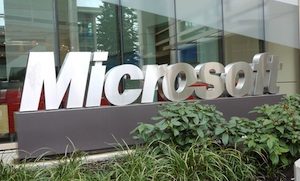
    At Microsoft's Seattle campus

    Phone 7, on the other hand, features a slick, easy-to-use touch interface and leverages a number of key Microsoft properties (Xbox Live, Windows Live, Office Live and its Zune music store). Most importantly however, it supports cloud-based offerings from a number of third parties, like Google and Yahoo out of the box.

    This may seem like a small change, but it’s a pretty big deal. It sends a message to the market that Microsoft no longer feels threatened by its competitors. It also shows that it has realised the industry is far bigger than its own ecosystem and supporting the largest number of third-party solutions makes its phone platform more appealing.

    These two events speak volumes about Microsoft’s growing coolness and the fact that it can get things back together again. In order for Microsoft to prove that Kinect and Phone 7 aren’t isolated successes, the pressure is on MSR to break new ground, so that Microsoft can turn what’s on the cutting edge of the technology arena into products before anyone else does.

    Kevin Schofield, corporate GM for strategy at Microsoft Research, says that’s the primary reason the company isn’t prescriptive about what its researchers focus on — just that it’s relevant and is capable of moving things forward.

    “We’re fine with whatever our researchers want to study providing it both advances the state of the art and advances Microsoft products,” he says.

    Schofield says the story behind how Kinect happened (essentially the pooling of numerous disparate research projects within Microsoft) is evidence of both of these goals being achieved in practice. Where that goes in the future is anyone’s guess. But Schofield says that the whole natural user interface (NUI) space into which Kinect fits is a big deal for the company.

    He says that too many people think of natural user interface solutions as replacements for the mouse and keyboard. While they are about that to some degree, Microsoft’s research is presenting users with more natural ways of interacting with computers and not just replacing current, legacy interfaces.

    If humans want to interact with their computers in a more natural, human way, computers and technology will have to become a ton smarter. If we ultimately want to issue a voice command or ask a question in a natural way, computers will have to be equipped with basic language understanding as well as the ability to read facial expressions and changes in voice tone.

    They will also have to take into account the context of the person and the situation in which that interaction occurs and then enrich that with a ton of other information, like calendaring, contact and social connection-type information.

    It’s early days to say the least. But, when this goal is realised, Schofield says we’ll be looking at a reality where we can simply tell our computer that we’d like to take our partner to dinner and have it arrange all the details, taking into account the same information a human personal assistant would today.

    Schofield says that a great deal of what his division is working on at the moment branches out to practical assistance it provides to Microsoft’s product groups. For example, he says MSR is assisting, Microsoft’s search engine, Bing, to become better at delivering the search results users want — not refining its algorithm, widening its reach or improving response time but instead understanding the context of the person’s search.

    Another project with practical outcomes includes a technology built by researchers looking into operating systems and networking that takes into account a player’s locale, network latency and skill level in matching them up with other players through Xbox Live.

    Yet another Xbox-centric technology, Avatar Kinect (the ability to have your Xbox Live avatar react to changes in your facial expression, posture and the like), which was built for gaming, could end up changing the videoconferencing and telepresence worlds forever.

    If Microsoft can use something like Avatar Kinect to create the same kind of experience, but with photo-realistic images of each conference participant, it will be able to deliver a very realistic experience without the bandwidth requirements of today’s telepresence solutions.

    MSR is working on plenty of other interesting stuff — and, provided the company is able to take its lead from some of the geniuses in this division, it should be able to bring back the cool.

    Microsoft can get all of these things right but it will call for a rather dramatic set of changes. It’s clear that the company wants to change — whether it will or not remains to be seen.  — Brett Haggard, Mail & Guardian

    • Brett Haggard is the publisher of Connect Magazine and travelled to Seattle as a guest of Mustek
    • This article was first published by the Mail & Guardian — visit the Mail & Guardian Online, the smart news source
    • Images: TechFlash Todd (top) and bfishadow
    • Subscribe to our free daily newsletter
    • Follow us on Twitter or on Facebook


    Brett Haggard Kevin Schofield Microsoft
    WhatsApp YouTube Follow on Google News Add as preferred source on Google
    Share. Facebook Twitter LinkedIn WhatsApp Telegram Email Copy Link
    Previous ArticleHome affairs may save R2bn in Gijima settlement
    Next Article Core Group slashes iPad prices

    Related Posts

    Elon Musk demands billions from OpenAI in explosive lawsuit

    Elon Musk demands billions from OpenAI in explosive lawsuit

    18 January 2026
    Wikipedia moves to monetise AI giants' reliance on its content

    Wikipedia moves to monetise AI giants’ reliance on its content

    15 January 2026
    Alphabet tops $4-trillion valuation

    Alphabet tops $4-trillion valuation

    13 January 2026
    Company News
    Jabra - a smarter way to sound, work and connect in the workplace

    Jabra – a smarter way to sound, work and connect in the workplace

    23 January 2026
    Domains.co.za launches South Africa's first homegrown Link in Bio tool

    Domains.co.za launches South Africa’s first homegrown Link in Bio tool

    22 January 2026
    Trends that are shaping the use of AI to improve CX - Telviva

    Trends shaping the use of AI to improve CX

    22 January 2026
    Opinion
    AI moves from pilots to production in South African companies - Nazia Pillay SAP

    AI moves from pilots to production in South African companies

    20 January 2026
    ANC's attack on Solly Malatsi shows how BEE dogma trumps economic reality - Duncan McLeod

    ANC’s attack on Solly Malatsi shows how BEE dogma trumps economic reality

    14 December 2025
    Netflix, Warner Bros deal raises fresh headaches for MultiChoice - Duncan McLeod

    Netflix, Warner Bros deal raises fresh headaches for MultiChoice

    5 December 2025

    Subscribe to Updates

    Get the best South African technology news and analysis delivered to your e-mail inbox every morning.

    Latest Posts
    Digital IDs will launch before year-end, government says - Maropene Ramokgopa

    Digital IDs will launch before year-end, government says

    23 January 2026
    Watts & Wheels S1E2: 'China attacks, BMW digs in, Toyota's sublime supercar'

    Watts & Wheels S1E2: ‘China attacks, BMW digs in, Toyota’s sublime supercar’

    23 January 2026
    EU decision doesn't end 'Fair Share' debate, says ACT CEO Batyi - Nomvuyiso Batyi

    EU decision doesn’t end ‘Fair Share’ debate, says ACT CEO Batyi

    23 January 2026
    Chery to take over Nissan's historic Rosslyn plant

    Chery to take over Nissan’s historic Rosslyn plant

    23 January 2026
    © 2009 - 2026 NewsCentral Media
    • Cookie policy (ZA)
    • TechCentral – privacy and Popia

    Type above and press Enter to search. Press Esc to cancel.

    Manage consent

    TechCentral uses cookies to enhance its offerings. Consenting to these technologies allows us to serve you better. Not consenting or withdrawing consent may adversely affect certain features and functions of the website.

    Functional Always active
    The technical storage or access is strictly necessary for the legitimate purpose of enabling the use of a specific service explicitly requested by the subscriber or user, or for the sole purpose of carrying out the transmission of a communication over an electronic communications network.
    Preferences
    The technical storage or access is necessary for the legitimate purpose of storing preferences that are not requested by the subscriber or user.
    Statistics
    The technical storage or access that is used exclusively for statistical purposes. The technical storage or access that is used exclusively for anonymous statistical purposes. Without a subpoena, voluntary compliance on the part of your Internet Service Provider, or additional records from a third party, information stored or retrieved for this purpose alone cannot usually be used to identify you.
    Marketing
    The technical storage or access is required to create user profiles to send advertising, or to track the user on a website or across several websites for similar marketing purposes.
    • Manage options
    • Manage services
    • Manage {vendor_count} vendors
    • Read more about these purposes
    View preferences
    • {title}
    • {title}
    • {title}