Close Menu
TechCentralTechCentral

    Subscribe to the newsletter

    Get the best South African technology news and analysis delivered to your e-mail inbox every morning.

    Facebook X (Twitter) YouTube LinkedIn
    WhatsApp Facebook X (Twitter) LinkedIn YouTube
    TechCentralTechCentral
    • News
      South Africa's dynamic spectrum breakthrough - Paul Colmer

      South Africa’s dynamic spectrum breakthrough

      20 February 2026
      SABC Plus tops two million registered users

      SABC Plus tops two million registered users

      20 February 2026
      Blu Label takes R5.2-billion Cell C hit, touts clean slate ahead

      Blu Label takes R5.2-billion Cell C hit, touts clean slate ahead

      19 February 2026
      MeerKAT detects most powerful natural radio laser ever observed

      MeerKAT detects most powerful natural radio laser ever observed

      19 February 2026
      How AI is rewriting the rules of consulting - Mark Allderman

      How AI is rewriting the rules of consulting

      19 February 2026
    • World
      Prominent Southern African journalist targeted with Predator spyware

      Prominent Southern African journalist targeted with Predator spyware

      18 February 2026
      More drama in Warner Bros tug of war

      More drama in Warner Bros tug of war

      17 February 2026
      Russia bans WhatsApp

      Russia bans WhatsApp

      12 February 2026
      EU regulators take aim at WhatsApp

      EU regulators take aim at WhatsApp

      9 February 2026
      Musk hits brakes on Mars mission

      Musk hits brakes on Mars mission

      9 February 2026
    • In-depth
      How liberalisation is rewiring South Africa's power sector

      How liberalisation is rewiring South Africa’s power sector

      21 January 2026
      The top-performing South African tech shares of 2025

      The top-performing South African tech shares of 2025

      12 January 2026
      Digital authoritarianism grows as African states normalise internet blackouts

      Digital authoritarianism grows as African states normalise internet blackouts

      19 December 2025
      TechCentral's South African Newsmakers of 2025

      TechCentral’s South African Newsmakers of 2025

      18 December 2025
      Black Friday goes digital in South Africa as online spending surges to record high

      Black Friday goes digital in South Africa as online spending surges to record high

      4 December 2025
    • TCS
      Watts & Wheels S1E4: 'We drive an electric Uber'

      Watts & Wheels S1E4: ‘We drive an electric Uber’

      10 February 2026
      TCS+ | How Cloud On Demand is helping SA businesses succeed in the cloud - Xhenia Rhode, Dion Kalicharan

      TCS+ | Cloud On Demand and Consnet: inside a real-world AWS partner success story

      30 January 2026
      Watts & Wheels S1E4: 'We drive an electric Uber'

      Watts & Wheels S1E3: ‘BYD’s Corolla Cross challenger’

      30 January 2026
      Watts & Wheels S1E4: 'We drive an electric Uber'

      Watts & Wheels S1E2: ‘China attacks, BMW digs in, Toyota’s sublime supercar’

      23 January 2026

      TCS+ | Why cybersecurity is becoming a competitive advantage for SA businesses

      20 January 2026
    • Opinion
      A million reasons monopolies don't work - Duncan McLeod

      A million reasons monopolies don’t work

      10 February 2026
      The author, Business Leadership South Africa CEO Busi Mavuso

      Eskom unbundling U-turn threatens to undo hard-won electricity gains

      9 February 2026
      South Africa's skills advantage is being overlooked at home - Richard Firth

      South Africa’s skills advantage is being overlooked at home

      29 January 2026
      Why Elon Musk's Starlink is a 'hard no' for me - Songezo Zibi

      Why Elon Musk’s Starlink is a ‘hard no’ for me

      26 January 2026
      A million reasons monopolies don't work - Duncan McLeod

      South Africa’s new fibre broadband battle

      20 January 2026
    • Company Hubs
      • Africa Data Centres
      • AfriGIS
      • Altron Digital Business
      • Altron Document Solutions
      • Altron Group
      • Arctic Wolf
      • AvertITD
      • Braintree
      • CallMiner
      • CambriLearn
      • CYBER1 Solutions
      • Digicloud Africa
      • Digimune
      • Domains.co.za
      • ESET
      • Euphoria Telecom
      • Incredible Business
      • iONLINE
      • IQbusiness
      • Iris Network Systems
      • LSD Open
      • Mitel
      • NEC XON
      • Netstar
      • Network Platforms
      • Next DLP
      • Ovations
      • Paracon
      • Paratus
      • Q-KON
      • SevenC
      • SkyWire
      • Solid8 Technologies
      • Telit Cinterion
      • Tenable
      • Vertiv
      • Videri Digital
      • Vodacom Business
      • Wipro
      • Workday
      • XLink
    • Sections
      • AI and machine learning
      • Banking
      • Broadcasting and Media
      • Cloud services
      • Contact centres and CX
      • Cryptocurrencies
      • Education and skills
      • Electronics and hardware
      • Energy and sustainability
      • Enterprise software
      • Financial services
      • Information security
      • Internet and connectivity
      • Internet of Things
      • Investment
      • IT services
      • Lifestyle
      • Motoring
      • Public sector
      • Retail and e-commerce
      • Satellite communications
      • Science
      • SMEs and start-ups
      • Social media
      • Talent and leadership
      • Telecoms
    • Events
    • Advertise
    TechCentralTechCentral
    Home » In-depth » Musk wants Mars, and that should inspire us all

    Musk wants Mars, and that should inspire us all

    By Agency Staff2 October 2017
    Twitter LinkedIn Facebook WhatsApp Email Telegram Copy Link
    News Alerts
    WhatsApp

    “He awoke — and wanted Mars.”

    That’s the first line of Philip K Dick’s classic novella, We Can Remember It for You Wholesale, the inspiration for the Total Recall films. I first came across the story in a sci-fi anthology back in high school, and I can remember the force of the yearning the words roused in me: I wanted Mars, too. After all, men had just walked on the moon and everybody knew Mars would be next.

    Well, the moon landing will be celebrating its 50th anniversary in two years, and human beings haven’t even tried to walk anywhere else. So when Elon Musk announced on Friday that he hopes to send a manned mission to the red planet by 2022 — just five years from now — I felt my heart leap.

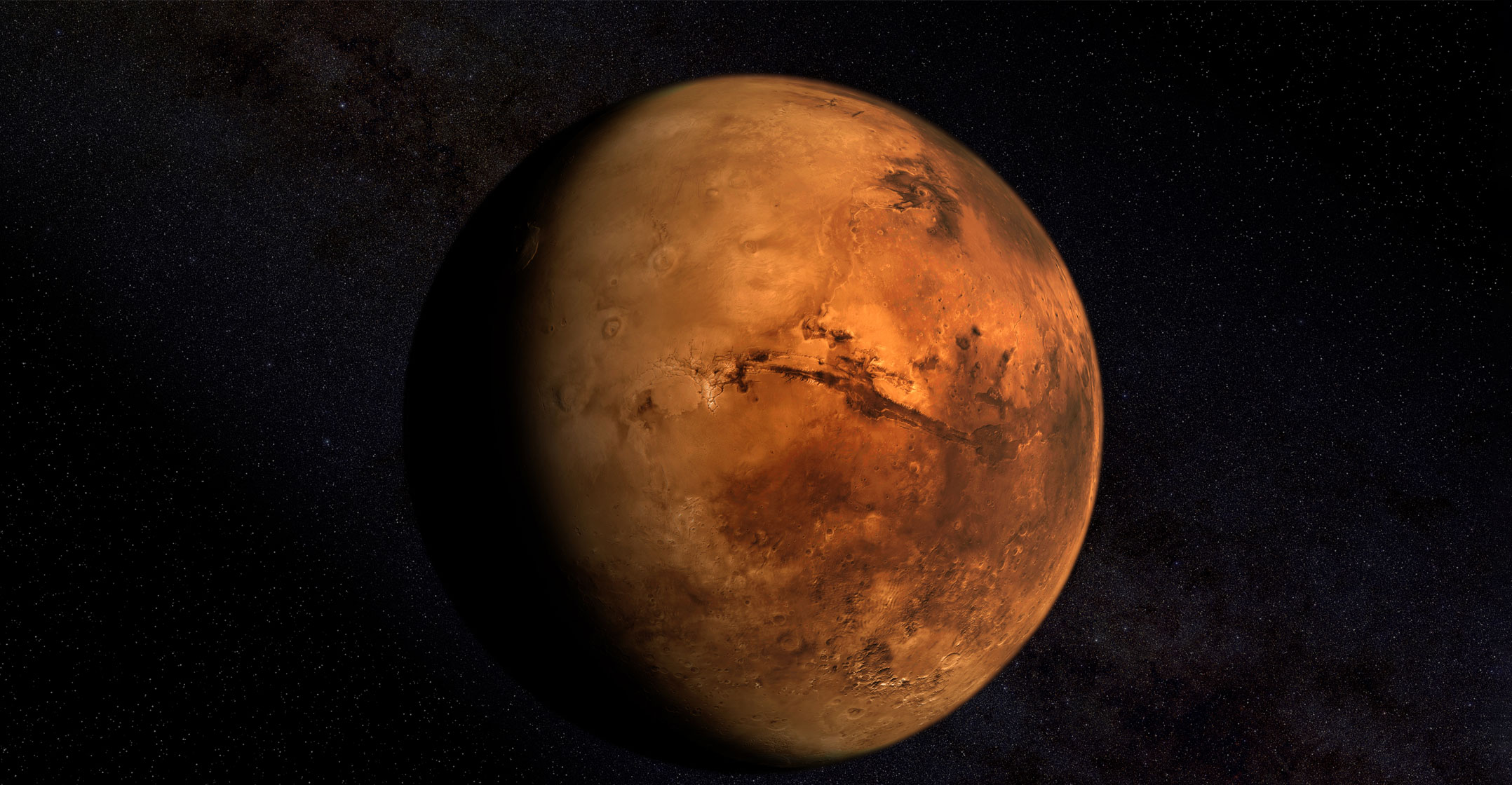
    Mars has long fascinated us. The ancients associated it with various gods. Venus shines brighter in the sky, but somehow we have always known that our destiny lies with Mars

    The 1969 moon landing capped an era of enormous optimism about what humanity could achieve. Norman Borlaug was saving hundreds of millions from starvation. Integrated circuits heralded a digital revolution. The campy innocence of the original Star Trek dates from those years. So do the Jetsons. People actually believed that science was the endless frontier.

    Since then our species has turned its vision inward; our image of human possibility has grown cramped and pessimistic. We dream less of reaching the stars than of winning the next election; less of maturing as a species than of shunning those who are different; less of the blessings of an advanced technological tomorrow than of an apocalyptic future marked by a desperate struggle to survive. Maybe a focus on the possibility of reaching our nearest planetary neighbor will help change all that.

    Mars has long fascinated us. The ancients associated it with various gods. Venus shines brighter in the sky, but somehow we have always known that our destiny lies with Mars. Filmmakers have been taking us there for decades. The planet has intrigued novelists for well over 100 years. Ray Bradbury’s The Martian Chronicles may be dated in its science, but as social commentary on the 1940s, it stands unrivalled in the sci-fi canon. In 1893, the astronomer Camille Flammarion penned Omega: the Last Days of the World, a novel by turns hilarious and sobering. Martian astronomers contact humanity out of the blue to warn of a comet soon to strike Earth. The message divides Earth’s scientists, political leaders, journalists and theologians, who argue over whether the message is a hoax, and what to do if it’s authentic. Then the comet strikes, disaster follows — and we cut to what the world is like centuries later. (For one thing, the survivors develop new senses; for another, the lower classes overthrow the elites. Hollywood, take notice.)

    Musk first?

    That’s all fiction. But maybe we’ll get there in reality. Nasa has been pushing the idea for years. The agency’s current timeline would put humans on the planet in the 2030s. China intends to get there first. Musk claims he can beat them both.

    Every time someone proposes a mission to Mars, critics worry that the whole thing will be too expensive, that the money could be better spent elsewhere. Although I get their point, they’re only half right: the same complaint could easily be directed at every dollar we spend on rent or education or food. Besides, in Musk’s scheme the investment would come (mostly) from private sources. The point is to make the project self-sustaining.

    For those of us who dream of the stars, reaching Mars has always been a preliminary step. Musk agrees. His bolder plan is for humanity to advance along the path of becoming “a space-bearing civilisation and a multi-planetary species” — an ambition he laid out earlier this year in a thoughtful paper. Musk argues that what he calls the “Apollo-style approach” would make the cost of colonising Mars prohibitive, something on the order of US$10bn a person in current dollars. But people would move in droves, he insists, if the cost can be brought down to somewhere near the median price of a US home, around $200 000. Most of Musk’s paper is devoted to laying out a theory on how, over time, we might bring down the cost. For instance, he proposes establishing propellant depots throughout the solar system, potentially as far away as Pluto. The most important factor, however, is the development of multiple-use vehicles — the advance that made commercial air travel cost-effective.

    Can we do it? I have no idea. But Musk’s confidence rekindles in me the old excitement. Perhaps we need not be earthbound forever

    With frequent flights, you can take an aircraft that costs $90m and buy a ticket on Southwest right now from Los Angeles to Vegas for $43, including taxes. If it were single use, it would cost $500 000 per flight.

    The booster rocket that he describes in the paper is enormous. Musk has since decided that his original vision was impractical. He now wants to build a much smaller version that will carry perhaps 100 people at a time. He posted a series of images on Instagram to show both the vehicle he envisions and the Mars colony he imagines it would help populate.

    It’s a lovely and elegant idea. Can we do it? I have no idea. But Musk’s confidence rekindles in me the old excitement. Perhaps we need not be earthbound forever. Perhaps we as a species can once more look skyward with a shared sense of anticipation and excitement, confident that if we cannot reach the stars, our children will. So I hope we’ll try. I may not see Mars in my lifetime, but I’m thrilled that you might see it in yours.  — Written by Stephen L Carter, (c) 2017 Bloomberg LP

    • Stephen L Carter is professor of law at Yale University and was a clerk to US supreme court justice Thurgood Marshall. His novels include The Emperor of Ocean Park and Back Channel, and his nonfiction includes Civility and Integrity


    Elon Musk SpaceX Stephen L Carter top
    WhatsApp YouTube Follow on Google News Add as preferred source on Google
    Share. Facebook Twitter LinkedIn WhatsApp Telegram Email Copy Link
    Previous ArticleGoogle appeases publishers with subscriptions
    Next Article Chatbots: whole lotta hype

    Related Posts

    Starlink expands public advocacy campaign as it pushes for SA licence

    Starlink expands public advocacy campaign as it pushes for SA licence

    17 February 2026
    Musk hits brakes on Mars mission

    Musk hits brakes on Mars mission

    9 February 2026
    Starlink considers building its own phone - Elon Musk

    Starlink considers building its own phone

    5 February 2026
    Company News
    Customers have new expectations. Is your CX ready? 1Stream

    Customers have new expectations. Is your CX ready?

    19 February 2026
    South Africa's cybersecurity challenge is not a tool problem - Nicholas Applewhite, Trinexia South Africa

    South Africa’s cybersecurity challenge is not a tool problem

    19 February 2026
    The quiet infrastructure powering AI: why long-life IOT networks matter more than ever - Sigfox South Africa

    The quiet infrastructure powering AI: why long-life IoT networks matter more than ever

    18 February 2026
    Opinion
    A million reasons monopolies don't work - Duncan McLeod

    A million reasons monopolies don’t work

    10 February 2026
    The author, Business Leadership South Africa CEO Busi Mavuso

    Eskom unbundling U-turn threatens to undo hard-won electricity gains

    9 February 2026
    South Africa's skills advantage is being overlooked at home - Richard Firth

    South Africa’s skills advantage is being overlooked at home

    29 January 2026

    Subscribe to Updates

    Get the best South African technology news and analysis delivered to your e-mail inbox every morning.

    Latest Posts
    South Africa's dynamic spectrum breakthrough - Paul Colmer

    South Africa’s dynamic spectrum breakthrough

    20 February 2026
    SABC Plus tops two million registered users

    SABC Plus tops two million registered users

    20 February 2026
    Blu Label takes R5.2-billion Cell C hit, touts clean slate ahead

    Blu Label takes R5.2-billion Cell C hit, touts clean slate ahead

    19 February 2026
    MeerKAT detects most powerful natural radio laser ever observed

    MeerKAT detects most powerful natural radio laser ever observed

    19 February 2026
    © 2009 - 2026 NewsCentral Media
    • Cookie policy (ZA)
    • TechCentral – privacy and Popia

    Type above and press Enter to search. Press Esc to cancel.

    Manage consent

    TechCentral uses cookies to enhance its offerings. Consenting to these technologies allows us to serve you better. Not consenting or withdrawing consent may adversely affect certain features and functions of the website.

    Functional Always active
    The technical storage or access is strictly necessary for the legitimate purpose of enabling the use of a specific service explicitly requested by the subscriber or user, or for the sole purpose of carrying out the transmission of a communication over an electronic communications network.
    Preferences
    The technical storage or access is necessary for the legitimate purpose of storing preferences that are not requested by the subscriber or user.
    Statistics
    The technical storage or access that is used exclusively for statistical purposes. The technical storage or access that is used exclusively for anonymous statistical purposes. Without a subpoena, voluntary compliance on the part of your Internet Service Provider, or additional records from a third party, information stored or retrieved for this purpose alone cannot usually be used to identify you.
    Marketing
    The technical storage or access is required to create user profiles to send advertising, or to track the user on a website or across several websites for similar marketing purposes.
    • Manage options
    • Manage services
    • Manage {vendor_count} vendors
    • Read more about these purposes
    View preferences
    • {title}
    • {title}
    • {title}