Sony has fired an important salvo in the motion controller wars with the September launch of the PlayStation Move controller for the PlayStation 3.
The new controller is Sony’s bid to capture some of the casual gaming market that Nintendo currently dominates and that Microsoft will also target with its Kinect motion-sensing camera.
TechCentral spent some time playing with the technology, and was impressed by the quantum leap it offers in accuracy and functionality over earlier motion control schemes. However, we were disappointed with the quality of its software and have some doubts about whether it will ever turn into a mainstream control option for most games.
What’s in the box
If you’re already a PlayStation 3 owner, the quickest and cheapest way to get moving is to buy the PlayStation Move Starter Pack. It costs R600-R700 and contains a disc of game demos, a Move motion controller and a PlayStation Eye camera.
If you already own a PlayStation Eye, you can buy a standalone Move motion controller for R400-R450 and download the demos from the PlayStation network. Even if you do buy the Starter Pack, you’ll need at least one more standalone Move controller to make the most of certain games and to play multiplayer titles.
The third component of the Move controller is the Move Navigator, which will only be available in SA in October at a cost of R300-R350. The Navigator provides an analogue stick and directional pad, to be used for functions such as moving a character in a first-person shooter.
The Navigator isn’t an essential purchase. Few of the launch games use it and you can get by just by using the standard DualShock controller’s pad and stick instead.
If you’re interested in Move and don’t yet own a PlayStation 3, it might be worth waiting for the PlayStation 3 and Move Starter Pack bundle to arrive in November. Online retailers have it listed at about R4300.
Set-up & calibration
Initial set-up and calibration of each PlayStation Move controller is quick and painless. It’s a simple matter of following the on-screen prompts when you pair the controller with the console. But the need to calibrate the controller not just for every game you play, but every time you start up a game you have played before quickly becomes tiresome.
Unfortunately, there seems to be no universal setting for the controller’s sensitivity. Unless you have surgeon-steady hands that means you may find the controller a little twitchy in some games. I found that it took a while to get used to the controller’s sensitivity even when I was just navigating the console’s interface.
The technology
Despite its superficial similarities with the Wii motion controller scheme, the PlayStation Move differs from Nintendo’s technology in a number of key ways. The Nintendo Wii makes use of infrared and accelerometer technology to detect the way that a user is moving the Wii Remote and the nunchuck attachment. The Wii MotionPlus attachment adds a gyroscope to the Wiimote to improve its accuracy.
By contrast, Move uses the combination of inertial motion sensors in the controller and a motion sensing camera to detect movement in three dimensions. The camera tracks a glowing sphere on the controller to detect the user’s movements as he or she emulates movements such as swinging a sword, hitting a ball with a racquet or manipulating a block.
Using the PlayStation Eye, the Move can also detect basic voice controls through a built in microphone system and can capture the user’s image and other real-life objects for on-screen use. Sony hasn’t been aggressively marketing these ‘augmented reality’ features of the PlayStation Eye, and they are not being used in many Move games as yet.
There is a little doubt that this combination of technologies adds up to a more advanced solution than the Wii’s motion controls, as it should four years after the Wii was released. In the best software, there’s a sense of one-to-one translation of the user’s real world motions into actions in the game world that the Wii lacks.

The games
Sony launches the Move with about 15 games, including a number of new games that have been built from the ground up for the technology. The new games are a predictable mixed bag of party games, sports games and on-rails shooting games, varying in quality from average to dismal.
With Sports Champions, the flagship game of the Move launch, Sony has built a better Wii Sports Resort. Despite its anodyne presentation, the game is a stunning advertisement for PlayStation Move’s technology.
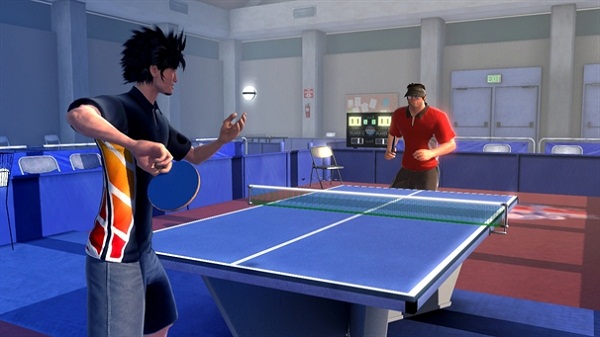
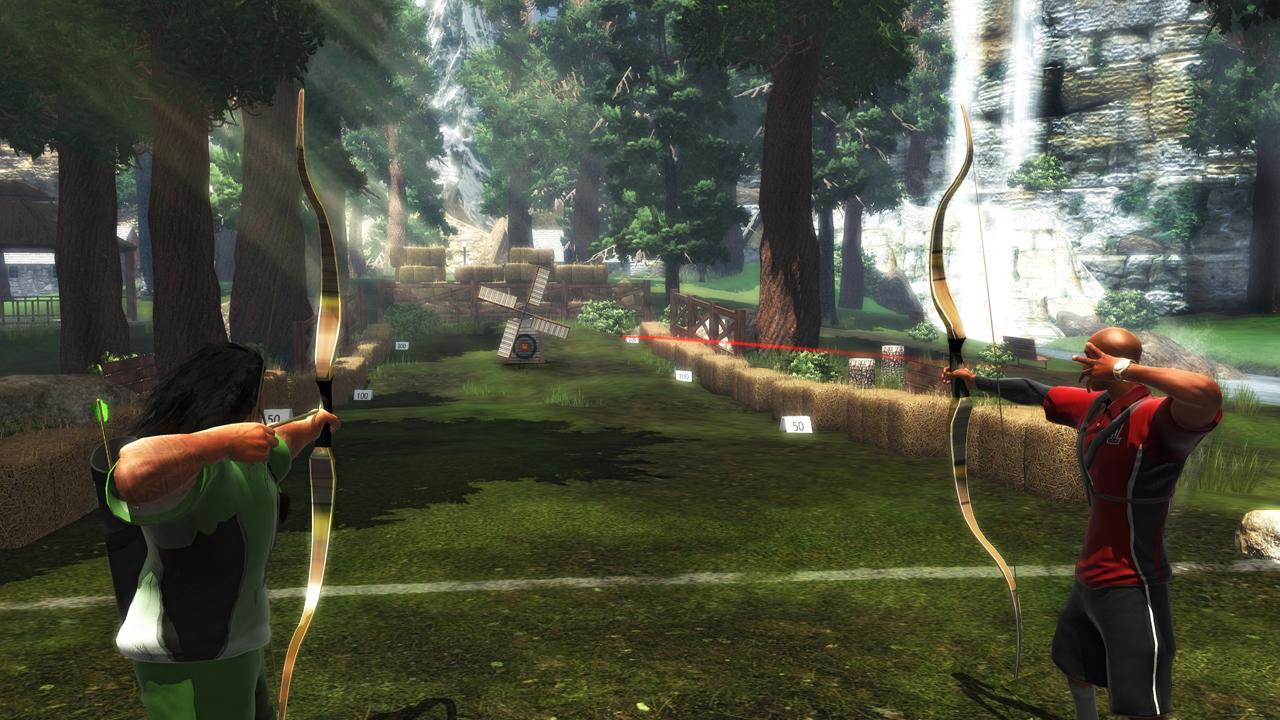
Many of its mini-games – including bocce, table tennis and beach volleyball – offer a convincing illusion that they’re translating your real-world motions into in-game actions. Table tennis and volleyball feel especially close to the real thing. Best of all is the archery, which can use two Move controllers to simulate nocking an arrow, aiming a bow and pulling back the bowstring.
Sadly, the game is a little light on content and the games it offers are not particularly deep. Once the novelty has worn off, Sports Champions is destined to gather dust. Admittedly, that was also true of the Wii and Wii Sports in many households.
Some of the most impressive uses of the technology are to be found in bite-sized games that you can download from the PlayStation Network. One of the neatest of these is a high-definition (HD) port of the popular iPhone game, Flight Control.
Flight Control HD, which is as more-ish as cocktail peanuts, uses Move as a pointer to trace flight paths for aircraft to guide them safely to landing strips.
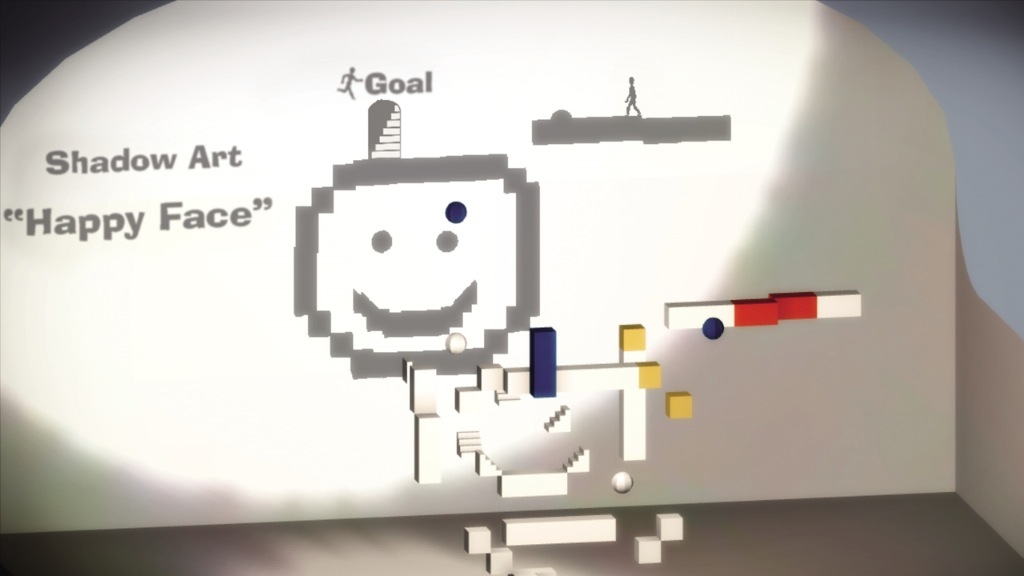
Echochrome 2, a sequel to Sony’s artsy puzzle game, uses the controller as a torch to cast shadows behind on-screen shapes and manipulate them on screen so that a mannequin can find a path to the exit. The controller scheme works extremely well for this game, which is a worthy sequel to an underrated title.
YouTube video: PlayStation Move game trailer reel
Tumble, another puzzle game, is another breathtaking showcase for the technology. Its exact simulation of moving blocks around in three dimensions – with some convincing physics – shows just how precise Move can be when a developer implements in it a game in a thoughtful manner.
Sony isn’t just targeting the living room casual gaming market with Move. It also hopes that its customers will use the device to play hardcore shooters, racers and strategy games.
Older games like Resident Evil 5 and Heavy Rain are being retrofitted with motion controls. My brief time with the Heavy Rain Move demo left me unconvinced that the game really benefits from a fresh controller scheme.
Ruse from Ubisoft is one of the first new traditional hardcore games to incorporate support for the Move. It’s a real-time strategy (RTS) game that uses the motion control to zoom in and out of the map, pan around the screen, and to select units and move them around.
Most serious RTS players will still find the PC mouse and keyboard controller scheme to be more flexible and exact. However, Move is certainly a better option than trying to play a RTS with a traditional console controller if Ruse is any indication of how developers will apply the technology in RTS games.
There will be a big push to Move-enable big upcoming shooters such as Socom 4 and KillZone 3 over the next year. It remains to be seen whether the Move is accurate enough as a pointing device to allow one to pull head shots off with as much aplomb as you can on a PC with a mouse and keyboard.
Our verdict
With the PlayStation Move, Sony has created a truly stunning piece of technology that makes the Wii’s motion controls feel as outdated as its standard-definition visuals. But Sony has done a poorer job lining up good launch software and thinking through its marketing than it has on the hardware.
It’s not entirely clear who the product is for, now that it’s here. Move falls short as a controller scheme for hardcore and casual gamers alike, although the picture may improve as more games are launched.
The Move may well prove the point that success in the consumer technology world is more about having a better fit with the needs of the market than it is about having the better technology. The Nintendo Wii is cheap, simple and does the job that most living room gamers want it to do.
For those users, the precision of the Move may be more of a drawback than a draw card. It introduces complexity and steep learning curves to many games that you simply won’t find in most Wii casual titles.
Anyone can pick up a Wiimote and starting playing Wii Tennis with no instruction. But to play a successful game of table tennis in Sports Champions, your granddad or little niece will probably need to go through the tutorial first.
It’s questionable whether a bump in visual quality and better motion controls will prompt Wii-owning households to drop R5000 on a new machine. Another drawback of the Move is that many games support only two players at a time while most Wii party games allow for four.
How the Move will be received in the hardcore market remains to be seen. Curiously, there are no first-person shooters in the launch line-up. Costing about the same as a PlayStation 3 game, it’s certain to be an impulse purchase for many curious gamers. Whether they will use it to play their favourite shooters once the novelty wears off is uncertain.
Certainly, developers working on the Wii have never cracked the code for hardcore games that use motion controls. That may largely be because the Wiimote isn’t accurate enough for games that demand precise controls, but I have doubts whether any motion control scheme will be as elegant as a traditional controller.
Move is also likely to a nightmare for developers trying to balance gameplay in competitive multiplayer games such as Killzone 3, where there will be a mix of users with DualShock and Move controllers.
Will Microsoft outmanoeuvre Sony when it launches its Kinect motion-sensing camera in November? Microsoft will probably out-market Sony, but its technology seems to be far less precise and versatile than the Move from the brief time I have spent with it.
If the Move is too complex in its applications, Kinect may prove to be too simple. Kinect will dominate the dancing and fitness games markets because it is completely controller-free. For general use, the Move appears to be the better technology. TechCentral will revisit the comparison when Kinect lands in SA.
As it stands, the PlayStation Move is an impressive piece of technology still looking for a killer application. That may change as more Move-enabled games such as Sorcery, Heroes on the Move, Killzone 3 and LittleBigPlanet 2 hit the market. – Lance Harris, TechCentral