Close Menu
TechCentralTechCentral

    Subscribe to the newsletter

    Get the best South African technology news and analysis delivered to your e-mail inbox every morning.

    Facebook X (Twitter) YouTube LinkedIn
    WhatsApp Facebook X (Twitter) LinkedIn YouTube
    TechCentralTechCentral
    • News
      Vuyani Jarana: Mobile coverage masks a deeper broadband failure

      Vuyani Jarana: Mobile coverage masks a deeper broadband failure

      30 January 2026
      SABC Plus to flight Microsoft AI training videos

      SABC Plus to flight Microsoft AI training videos

      30 January 2026
      Fibre ducts

      Fibre industry consolidation in KZN

      30 January 2026
      Watts & Wheels S1E3: 'BYD's Corolla Cross challenger'

      Watts & Wheels S1E3: ‘BYD’s Corolla Cross challenger’

      30 January 2026
      What ordinary South Africans really think of AI

      What ordinary South Africans really think of AI

      30 January 2026
    • World
      Apple acquires audio AI start-up Q.ai

      Apple acquires audio AI start-up Q.ai

      30 January 2026
      SpaceX IPO may be largest in history

      SpaceX IPO may be largest in history

      28 January 2026
      Nvidia throws AI at the weather

      Nvidia throws AI at weather forecasting

      27 January 2026
      Debate erupts over value of in-flight Wi-Fi

      Debate erupts over value of in-flight Wi-Fi

      26 January 2026
      Intel takes another hit - Intel CEO Lip-Bu Tan. Laure Andrillon/Reuters

      Intel takes another hit

      23 January 2026
    • In-depth
      How liberalisation is rewiring South Africa's power sector

      How liberalisation is rewiring South Africa’s power sector

      21 January 2026
      The top-performing South African tech shares of 2025

      The top-performing South African tech shares of 2025

      12 January 2026
      Digital authoritarianism grows as African states normalise internet blackouts

      Digital authoritarianism grows as African states normalise internet blackouts

      19 December 2025
      TechCentral's South African Newsmakers of 2025

      TechCentral’s South African Newsmakers of 2025

      18 December 2025
      Black Friday goes digital in South Africa as online spending surges to record high

      Black Friday goes digital in South Africa as online spending surges to record high

      4 December 2025
    • TCS
      TCS+ | How Cloud On Demand is helping SA businesses succeed in the cloud - Xhenia Rhode, Dion Kalicharan

      TCS+ | Cloud On Demand and Consnet: inside a real-world AWS partner success story

      30 January 2026
      Watts & Wheels S1E3: 'BYD's Corolla Cross challenger'

      Watts & Wheels S1E2: ‘China attacks, BMW digs in, Toyota’s sublime supercar’

      23 January 2026

      TCS+ | Why cybersecurity is becoming a competitive advantage for SA businesses

      20 January 2026
      Watts & Wheels S1E3: 'BYD's Corolla Cross challenger'

      Watts & Wheels: S1E1 – ‘William, Prince of Wheels’

      8 January 2026
      TCS+ | Africa's digital transformation - unlocking AI through cloud and culture - Cliff de Wit Accelera Digital Group

      TCS+ | Cloud without culture won’t deliver AI: Accelera’s Cliff de Wit

      12 December 2025
    • Opinion
      South Africa's skills advantage is being overlooked at home - Richard Firth

      South Africa’s skills advantage is being overlooked at home

      29 January 2026
      Why Elon Musk's Starlink is a 'hard no' for me - Songezo Zibi

      Why Elon Musk’s Starlink is a ‘hard no’ for me

      26 January 2026
      South Africa's new fibre broadband battle - Duncan McLeod

      South Africa’s new fibre broadband battle

      20 January 2026
      AI moves from pilots to production in South African companies - Nazia Pillay SAP

      AI moves from pilots to production in South African companies

      20 January 2026
      South Africa's new fibre broadband battle - Duncan McLeod

      ANC’s attack on Solly Malatsi shows how BEE dogma trumps economic reality

      14 December 2025
    • Company Hubs
      • Africa Data Centres
      • AfriGIS
      • Altron Digital Business
      • Altron Document Solutions
      • Altron Group
      • Arctic Wolf
      • AvertITD
      • Braintree
      • CallMiner
      • CambriLearn
      • CYBER1 Solutions
      • Digicloud Africa
      • Digimune
      • Domains.co.za
      • ESET
      • Euphoria Telecom
      • Incredible Business
      • iONLINE
      • IQbusiness
      • Iris Network Systems
      • LSD Open
      • NEC XON
      • Netstar
      • Network Platforms
      • Next DLP
      • Ovations
      • Paracon
      • Paratus
      • Q-KON
      • SevenC
      • SkyWire
      • Solid8 Technologies
      • Telit Cinterion
      • Tenable
      • Vertiv
      • Videri Digital
      • Vodacom Business
      • Wipro
      • Workday
      • XLink
    • Sections
      • AI and machine learning
      • Banking
      • Broadcasting and Media
      • Cloud services
      • Contact centres and CX
      • Cryptocurrencies
      • Education and skills
      • Electronics and hardware
      • Energy and sustainability
      • Enterprise software
      • Financial services
      • Information security
      • Internet and connectivity
      • Internet of Things
      • Investment
      • IT services
      • Lifestyle
      • Motoring
      • Public sector
      • Retail and e-commerce
      • Satellite communications
      • Science
      • SMEs and start-ups
      • Social media
      • Talent and leadership
      • Telecoms
    • Events
    • Advertise
    TechCentralTechCentral
    Home » World » And now for autonomous cargo ships

    And now for autonomous cargo ships

    By The Conversation8 September 2017
    Twitter LinkedIn Facebook WhatsApp Email Telegram Copy Link
    News Alerts
    WhatsApp
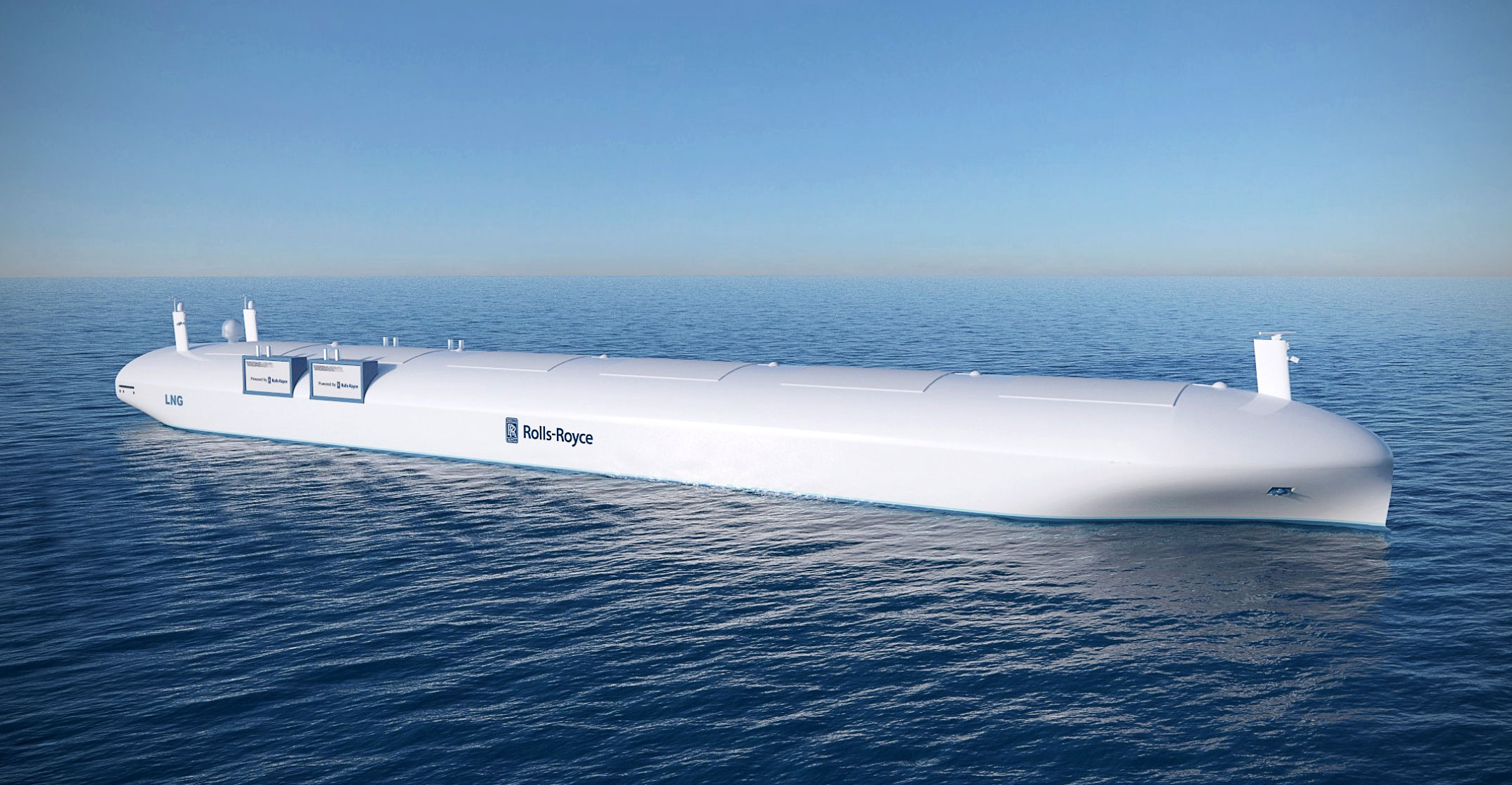
    Rolls-Royce remote-controlled ship concept

    The Yara Birkeland isn’t an ordinary cargo ship. If all goes well then the vessel, currently being built for a Norwegian agricultural fertiliser company, will become the world’s first fully autonomous cargo ship when it launches in 2020.

    Current international shipping law states that ocean-going vessels must be properly crewed, so fully autonomous, unmanned ships aren’t allowed in international waters. As such, the Yara Birkeland will have to operate close to the Norwegian coast, carrying out regular short journeys between three ports in the south of the country.

    But change is afoot in the maritime sector, and earlier this year the UN’s International Maritime Organisation (IMO) began discussions that could allow unmanned ships to operate across oceans. This raises the prospect of crewless “ghost” ships crisscrossing the ocean, with the potential for cheaper shipping with fewer accidents.

    Earlier this year the UN’s International Maritime Organisation began discussions that could allow unmanned ships to operate across oceans

    Several Japanese shipping firms, for example, are reportedly investing hundreds of millions of dollars in the technology. And British firm Rolls-Royce demonstrated the world’s first remote-controlled unmanned commercial ship earlier this year.

    However, removing experienced crew from ships means that any accidents that do occur could be far more severe. On top of this, many practical, regulatory and technological barriers remain in turning the world’s cargo ships into a fully autonomous fleet, and that could mean it’s a long time before it’s profitable to invest in the technology.

    The IMO’s Maritime Safety Committee sat for the 98th time in June 2017, starting discussions that may well lead to a change in the rules set by the International Convention for the Safety of Life at Sea. But indications are that it is likely to be a long and complex process. The issues relating to the safety and economics of unmanned ships have barely started to be considered. A lot of work will need to be done before solutions are found, or agreements are reached.

    Safety

    One of the biggest issues is the safety of solely relying on computers to operate ships over vast ocean distances. Some think that autonomous ships would have fewer accidents because most maritime accidents involve collisions or groundings, caused by humans. In its 2016 annual overview, the European Maritime Safety Agency found that 62% of the 880 accidents occurring globally (2011-2015) were caused by “human erroneous action”.

    If we accept that autonomous vessels might be navigated without making the same mistakes as a human crew then the statistics do seem to stack up. But things are much more complex than that.

    Land-based control centre. Image: Rolls-Royce

    A study from March 2017 analysed 100 accidents that occurred from 1999 to 2015. The researchers attempted to assess whether the accidents would have been more or less likely to happen if the vessel had been unmanned. They found that the likelihood of groundings or collisions might have been decreased significantly if those vessels had been unmanned.

    But they also identified that where accidents do happen, the consequences may become more severe without a crew to intervene. In particular, accidents involving fires may be more serious if there is no crew to act as firefighters. This means it’s far from clear that the overall risk from accidents would decrease significantly if ships were unmanned, although there is certainly a case to be made that there will be fewer.

    The operators of cargo ships will also only adopt unmanned ships if they offer economic benefits. If profit margins can be increased, then the return on investment of buying and operating a ship may be attractive. The full picture is, again, complex. A recent study reviewing the potential economic benefits of unmanned ships found that there are indeed savings to be made, mainly related to crew pay, accommodation and utilities.

    As the Yara Birkeland starts her journey towards the status of the first fully autonomous ship, there will be lots of interest in how she fares

    But some new costs will also be introduced, with a new workforce needed to do more family-friendly shore-based jobs in operations centres. The cost of the new sensors and control systems required will also offset any potential savings. The study found that if potentially improved fuel efficiency is factored in then an unmanned bulk cargo carrier may be able to reduce the cost of carrying freight by around just 3.4%.

    There is also a practical problem. Most ships operate on heavy fuel oil that is so thick and dirty that it must be heated and purified on board before use. The study found that it would be impractical to automate this process. If that is the case, then unmanned ships would need to operate using a more refined fuel such as marine-grade diesel oil. This would reverse the economic argument substantially, increasing the cost of transporting freight by as much as 14.8%.

    As the Yara Birkeland starts her journey towards the status of the first fully autonomous ship, there will be lots of interest in how she fares. It feels inevitable that unmanned ships will come of age. But there are still plenty of problems that need to be solved before they become a mainstream choice for carriers.The Conversation

    • Christian Matthews is head of maritime technology, Liverpool John Moores University
    • This article was originally published on The Conversation


    Christian Matthews top Yara Birkeland
    WhatsApp YouTube Follow on Google News Add as preferred source on Google
    Share. Facebook Twitter LinkedIn WhatsApp Telegram Email Copy Link
    Previous ArticleNew tech listing heading to the JSE
    Next Article Bell Pottinger rescue plan collapses: reports

    Related Posts

    18GW in unplanned breakdowns cripple Eskom

    2 November 2021

    Nersa kicks the Karpowership can down the road

    13 September 2021

    If you think South African load shedding is bad, try Zimbabwe’s

    13 September 2021
    Company News
    Huawei turns 25 in South Africa, celebrates with major device discounts

    Huawei turns 25 in South Africa, celebrates with major device discounts

    30 January 2026
    Phishing has not disappeared, but it has grown up - KnowBe4

    Phishing has not disappeared, but it has grown up

    30 January 2026
    Smartphone affordability: South Africa's new economic divide - PayJoy

    Smartphone affordability: South Africa’s new economic divide

    29 January 2026
    Opinion
    South Africa's skills advantage is being overlooked at home - Richard Firth

    South Africa’s skills advantage is being overlooked at home

    29 January 2026
    Why Elon Musk's Starlink is a 'hard no' for me - Songezo Zibi

    Why Elon Musk’s Starlink is a ‘hard no’ for me

    26 January 2026
    South Africa's new fibre broadband battle - Duncan McLeod

    South Africa’s new fibre broadband battle

    20 January 2026

    Subscribe to Updates

    Get the best South African technology news and analysis delivered to your e-mail inbox every morning.

    Latest Posts
    Vuyani Jarana: Mobile coverage masks a deeper broadband failure

    Vuyani Jarana: Mobile coverage masks a deeper broadband failure

    30 January 2026
    TCS+ | How Cloud On Demand is helping SA businesses succeed in the cloud - Xhenia Rhode, Dion Kalicharan

    TCS+ | Cloud On Demand and Consnet: inside a real-world AWS partner success story

    30 January 2026
    Huawei turns 25 in South Africa, celebrates with major device discounts

    Huawei turns 25 in South Africa, celebrates with major device discounts

    30 January 2026
    SABC Plus to flight Microsoft AI training videos

    SABC Plus to flight Microsoft AI training videos

    30 January 2026
    © 2009 - 2026 NewsCentral Media
    • Cookie policy (ZA)
    • TechCentral – privacy and Popia

    Type above and press Enter to search. Press Esc to cancel.

    Manage consent

    TechCentral uses cookies to enhance its offerings. Consenting to these technologies allows us to serve you better. Not consenting or withdrawing consent may adversely affect certain features and functions of the website.

    Functional Always active
    The technical storage or access is strictly necessary for the legitimate purpose of enabling the use of a specific service explicitly requested by the subscriber or user, or for the sole purpose of carrying out the transmission of a communication over an electronic communications network.
    Preferences
    The technical storage or access is necessary for the legitimate purpose of storing preferences that are not requested by the subscriber or user.
    Statistics
    The technical storage or access that is used exclusively for statistical purposes. The technical storage or access that is used exclusively for anonymous statistical purposes. Without a subpoena, voluntary compliance on the part of your Internet Service Provider, or additional records from a third party, information stored or retrieved for this purpose alone cannot usually be used to identify you.
    Marketing
    The technical storage or access is required to create user profiles to send advertising, or to track the user on a website or across several websites for similar marketing purposes.
    • Manage options
    • Manage services
    • Manage {vendor_count} vendors
    • Read more about these purposes
    View preferences
    • {title}
    • {title}
    • {title}