
Close Menu
TechCentralTechCentral

    Subscribe to the newsletter

    Get the best South African technology news and analysis delivered to your e-mail inbox every morning.

    Facebook X (Twitter) YouTube LinkedIn
    WhatsApp Facebook X (Twitter) LinkedIn YouTube
    TechCentralTechCentral
    • News
      Skills authority to probe MICT Seta leadership crisis - Buti Manamela

      Skills authority to probe MICT Seta leadership crisis

      21 July 2026
      Home affairs opens visa fast lane - with tech talent a top priority

      Home affairs opens visa fast lane – with tech talent a top priority

      21 July 2026
      Mastercard bets billions on the tech that could eat its lunch - Prakriti Singh

      Mastercard bets billions on the tech that could eat its lunch

      21 July 2026
      From care homes to production lines, the robots are coming

      From care homes to production lines, the robots are coming

      21 July 2026
      Remote work in South Africa hits record high

      Remote work in South Africa hits record high

      21 July 2026
    • World
      Meta AI will now tell parents if their teen is in crisis

      Meta AI will now tell parents if their teen is in crisis

      17 July 2026
      IBM shares crash 25% as AI upends software spending - Arvind Krishna

      IBM shares crash 25% as AI upends software spending

      15 July 2026
      Jony Ive's first OpenAI device: an AI smart speaker - Jony Ive and Sam Altman

      Jony Ive’s first OpenAI device: an AI smart speaker

      15 July 2026
      Stripe, Advent in talks to buy PayPal for $53-billion

      Stripe, Advent in talks to buy PayPal for $53-billion

      15 July 2026
      Memory crisis sends smartphone market into steep decline

      Memory crisis sends smartphone market into steep decline

      13 July 2026
    • In-depth
      The plan to stop AI from breaking the world - Google DeepMind CEO Demis Hassabis. Image: John Sears

      The plan to stop AI from breaking the world

      16 July 2026
      The internet has a Strait of Hormuz problem

      The internet has a Strait of Hormuz problem

      15 July 2026
      AI boom sparks rally, frenzy and fear

      AI boom sparks rally, frenzy and fear

      11 June 2026
      Every plug-in hybrid on sale in South Africa, ranked by price - Lamborghini Temerario

      Every plug-in hybrid on sale in South Africa, ranked by price

      7 June 2026
      What Wi-Fi 8 will mean for wireless networks

      What Wi-Fi 8 will mean for wireless networks

      1 June 2026
    • TCS
      Watts & Wheels S1E7: 'Ferrari's EV breaks the internet'

      Watts & Wheels S1E7: ‘Ferrari’s EV breaks the internet’

      8 July 2026
      TCS+ | How Tracker is turning vehicle data into business strategy - Silvia Schollenberger

      TCS+ | How Tracker is turning vehicle data into business strategy

      1 July 2026
      TCS+ | IBM Bob: an AI-powered 'development partner' for the enterprise - David Spurway

      TCS+ | IBM Bob: an AI-powered development partner for the enterprise

      30 June 2026
      Watts & Wheels S1E6: 'A flawless Alfa and a bakkie that divides'

      Watts & Wheels S1E6: ‘A flawless Alfa and a bakkie that divides’

      17 June 2026
      Watts & Wheels S1E6: 'A flawless Alfa and a bakkie that divides'

      Watts & Wheels S1E5: ‘A Bentley of the bush and a car that swims’

      8 June 2026
    • Opinion
      Selling vapour is corporate suicide in slow motion - Jannie van Zyl

      Selling vapour is corporate suicide in slow motion

      16 July 2026
      Brazil's online gambling crackdown is a lesson for South Africa

      How Amazon outmanoeuvred Starlink in South Africa

      15 July 2026
      The Popia problem with agentic AI - Herman Haasbroek

      The Popia problem with agentic AI

      14 July 2026
      The author, Fanie van Rooyen

      South Africa can still catch the AI wave – here’s how

      7 July 2026
      The author, Fanie van Rooyen

      The AI utopia South Africa can’t afford

      1 July 2026
    • Company Hubs
      • 1Stream
      • Africa Data Centres
      • AfriGIS
      • Altron Digital Business
      • Altron Document Solutions
      • Altron Group
      • Arctic Wolf
      • Ascent Technology
      • AvertITD
      • BBD
      • Braintree
      • CallMiner
      • CambriLearn
      • CM Telecom
      • Contactable
      • CYBER1 Solutions
      • Digicloud Africa
      • Digimune
      • Domains.co.za
      • ESET
      • Euphoria Telecom
      • HOSTAFRICA
      • Incredible Business
      • iONLINE
      • IQbusiness
      • Iris Network Systems
      • Kaspersky
      • LSD Open
      • Mitel
      • NEC XON
      • Netstar
      • Network Platforms
      • Next DLP
      • Ovations
      • Paracon
      • Paratus
      • Q-KON
      • SevenC
      • SkyWire
      • Solid8 Technologies
      • Telit Cinterion
      • Telviva
      • Tenable
      • Vertiv
      • Videri Digital
      • Vodacom Business
      • Wipro
      • Workday
      • XLink
    • Sections
      • AI and machine learning
      • Banking
      • Broadcasting and Media
      • Cloud services
      • Contact centres and CX
      • Cryptocurrencies
      • Education and skills
      • Electronics and hardware
      • Energy and sustainability
      • Enterprise software
      • Financial services
      • HealthTech
      • Information security
      • Internet and connectivity
      • Internet of Things
      • Investment
      • IT services
      • Lifestyle
      • Policy and regulation
      • Public sector
      • Retail and e-commerce
      • Satellite communications
      • Science
      • SMEs and start-ups
      • Social media
      • Talent and leadership
      • Telecoms
      • Watts & Wheels
    • Events
    • Advertise
    TechCentralTechCentral
    Home » Sections » AI and machine learning » OpenAI chip rethink signals turning point in AI hardware market

    OpenAI chip rethink signals turning point in AI hardware market

    OpenAI is unsatisfied with some of Nvidia’s latest AI chips and has sought alternatives, sources have said.
    By Agency Staff3 February 2026
    Twitter LinkedIn Facebook WhatsApp Email Telegram Copy Link
    News Alerts
    WhatsApp
    OpenAI chip rethink signals turning point in AI hardware market - Sam Altman. Shelby Tauber/Reuters
    OpenAI CEO Sam Altman. Shelby Tauber/Reuters

    OpenAI is unsatisfied with some of Nvidia’s latest AI chips, and it has sought alternatives since last year, eight sources familiar with the matter said.

    The news potentially complicates the relationship between the two highest-profile players in the AI boom.

    The ChatGPT maker’s shift in strategy, the details of which are first reported here, is over an increasing emphasis on chips used to perform specific elements of AI inference, the process when an AI model such as the one that powers the ChatGPT app responds to customer queries and requests. Nvidia remains dominant in chips for training large AI models, while inference has become a new front in the competition.

    The deal had been expected to close within weeks. Instead, negotiations have dragged on for months

    This decision by OpenAI and others to seek out alternatives in the inference chip market marks a significant test of Nvidia’s AI dominance and comes as the two companies are in investment talks.

    In September, Nvidia said it intended to pour as much as US$100-billion into OpenAI as part of a deal that gave the chip maker a stake in the start-up and gave OpenAI the cash it needed to buy the advanced chips.

    The deal had been expected to close within weeks. Instead, negotiations have dragged on for months. During that time, OpenAI has struck deals with AMD and others for GPUs built to rival Nvidia’s. But its shifting product road map also has changed the kind of computational resources it requires and bogged down talks with Nvidia, a person familiar with the matter said.

    ‘Nonsense’

    On Saturday, Nvidia CEO Jensen Huang brushed off a report of tension with OpenAI, saying the idea was “nonsense” and that Nvidia planned a huge investment in OpenAI.

    “Customers continue to choose Nvidia for inference because we deliver the best performance and total cost of ownership at scale,” Nvidia said in a statement. A spokesman for OpenAI in a separate statement said the company relies on Nvidia to power the vast majority of its inference fleet and that Nvidia delivers the best performance per dollar for inference.

    Seven sources said that OpenAI is not satisfied with the speed at which Nvidia’s hardware can spit out answers to ChatGPT users for specific types of problems such as software development and AI communicating with other software. It needs new hardware that would eventually provide about 10% of OpenAI’s inference computing needs in the future, one of the sources said.

    Read: Bill Gates, OpenAI team up for AI health push in Africa

    The ChatGPT maker has discussed working with start-ups including Cerebras and Groq to provide chips for faster inference, two sources said. But Nvidia struck a $20-billion licensing deal with Groq that shut down OpenAI’s talks, one of the sources said.

    Nvidia’s decision to snap up key talent at Groq looked like an effort to shore up a portfolio of technology to better compete in a rapidly changing AI industry, chip industry executives said. Nvidia, in a statement, said that Groq’s intellectual property was highly complementary to Nvidia’s product road map.
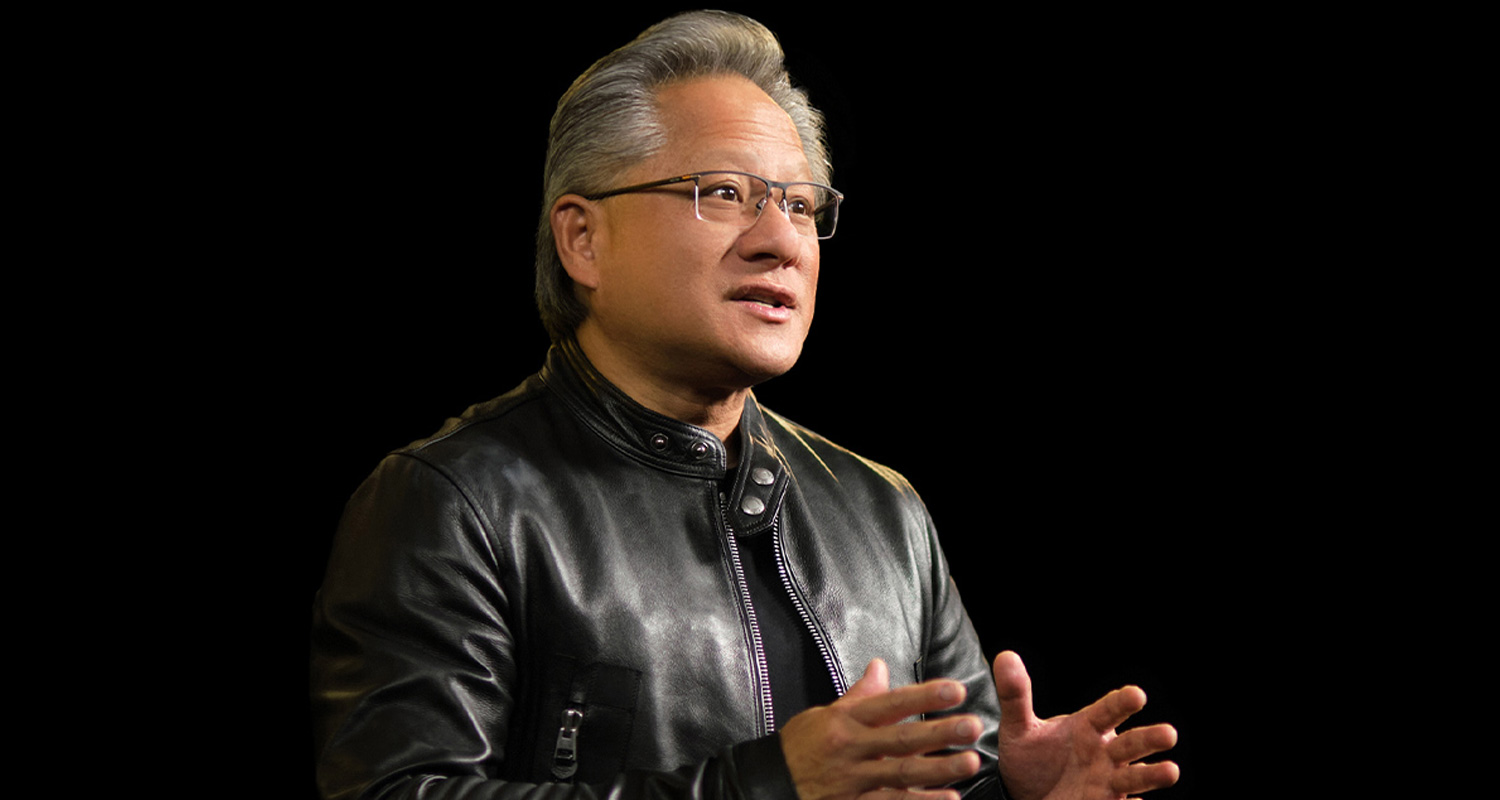
    Nvidia CEO Jensen Juang
    Nvidia CEO Jensen Juang

    Nvidia’s graphics processing chips are well suited for massive data crunching necessary to train large AI models like ChatGPT that have underpinned the explosive growth of AI globally to date. But AI advancements increasingly focus on using trained models for inference and reasoning, which could be a new, bigger stage of AI, inspiring OpenAI’s efforts.

    The ChatGPT maker’s search for GPU alternatives since last year focused on companies building chips with large amounts of memory embedded in the same piece of silicon as the rest of the chip, called SRAM. Squishing as much costly SRAM as possible onto each chip can offer speed advantages for chatbots and other AI systems as they crunch requests from millions of users.

    Inference requires more memory than training because the chip needs to spend relatively more time fetching data from memory than performing mathematical operations. Nvidia and AMD GPU technology relies on external memory, which adds processing time and slows how quickly users can interact with a chatbot.

    Inside OpenAI, the issue became particularly visible in Codex, its product for creating computer code

    Inside OpenAI, the issue became particularly visible in Codex, its product for creating computer code, which the company has been aggressively marketing, one of the sources added. OpenAI staff attributed some of Codex’s weakness to Nvidia’s GPU-based hardware, one source said.

    In a 30 January call with reporters, Altman said that customers using OpenAI’s coding models will “put a big premium on speed for coding work”.

    One way OpenAI will meet that demand is through its recent deal with Cerebras, Altman said, adding that speed is less of an imperative for casual ChatGPT users.

    Competing products such as Anthropic’s Claude and Google’s Gemini benefit from deployments that rely more heavily on the chips Google made in-house, called tensor processing units, or TPUs, which are designed for the sort of calculations required for inference and can offer performance advantages over general-purpose AI chips like the Nvidia-designed GPUs.

    Groq talks

    As OpenAI made clear its reservations about Nvidia technology, Nvidia approached companies working on SRAM-heavy chips, including Cerebras and Groq, about a potential acquisition, the people said. Cerebras declined and struck a commercial deal with OpenAI, announced last month. Cerebras declined to comment.

    Groq held talks with OpenAI for a deal to provide computing power and received investor interest to fund the company at a valuation of roughly $14-billion, according to people familiar with the discussions. Groq declined to comment.

    Read: Nvidia’s next AI chips are in full production

    But by December, Nvidia moved to license Groq’s tech in a non-exclusive all-cash deal, the sources said. Although the deal would allow other companies to license Groq’s technology, the company is now focusing on selling cloud-based software, as Nvidia hired away Groq’s chip designers.  — Max A Cherney, Krystal Hu and Deepa Seetharaman, (c) 2026 Reuters

    Get breaking news from TechCentral on WhatsApp. Sign up here.

    Follow TechCentral on Google News Add TechCentral as your preferred source on Google


    AMD ChatGPT Groq OpenAI Sam Altman
    WhatsApp YouTube
    Share. Facebook Twitter LinkedIn WhatsApp Telegram Email Copy Link
    Previous ArticleSpaceX acquires xAI in record-breaking deal
    Next Article Standard Bank branches are going cashless

    Related Posts

    Xi pitches China as the world's AI liberator - Chinese President Xi Jinping waves as he arrives at the opening ceremony of the World AI Conference in Shanghai. Ng Han Guan/Reuters

    Xi pitches China as the world’s AI liberator

    17 July 2026
    The plan to stop AI from breaking the world - Google DeepMind CEO Demis Hassabis. Image: John Sears

    The plan to stop AI from breaking the world

    16 July 2026
    Jony Ive's first OpenAI device: an AI smart speaker - Jony Ive and Sam Altman

    Jony Ive’s first OpenAI device: an AI smart speaker

    15 July 2026
    Company News
    Cloud adoption is done. Execution is the new frontier - Cloud on Demand

    Cloud adoption is done. Execution is the new frontier

    21 July 2026
    Data poisoning in AI models: what businesses need to know - Domains.co.za

    Data poisoning in AI models: what businesses need to know

    21 July 2026
    The AI-led industrial revolution has begun - CallMiner Bruce McMahon

    The AI-led industrial revolution has begun

    20 July 2026
    Opinion
    Selling vapour is corporate suicide in slow motion - Jannie van Zyl

    Selling vapour is corporate suicide in slow motion

    16 July 2026
    Brazil's online gambling crackdown is a lesson for South Africa

    How Amazon outmanoeuvred Starlink in South Africa

    15 July 2026
    The Popia problem with agentic AI - Herman Haasbroek

    The Popia problem with agentic AI

    14 July 2026

    Subscribe to Updates

    Get the best South African technology news and analysis delivered to your e-mail inbox every morning.

    Latest Posts
    Skills authority to probe MICT Seta leadership crisis - Buti Manamela

    Skills authority to probe MICT Seta leadership crisis

    21 July 2026
    Home affairs opens visa fast lane - with tech talent a top priority

    Home affairs opens visa fast lane – with tech talent a top priority

    21 July 2026
    Mastercard bets billions on the tech that could eat its lunch - Prakriti Singh

    Mastercard bets billions on the tech that could eat its lunch

    21 July 2026
    From care homes to production lines, the robots are coming

    From care homes to production lines, the robots are coming

    21 July 2026
    © 2009 - 2026 NewsCentral Media
    Built and maintained by Chronon
    • Cookie policy (ZA)
    • TechCentral – privacy and Popia

    Type above and press Enter to search. Press Esc to cancel.

    Manage consent

    TechCentral uses cookies to enhance its offerings. Consenting to these technologies allows us to serve you better. Not consenting or withdrawing consent may adversely affect certain features and functions of the website.

    Functional Always active
    The technical storage or access is strictly necessary for the legitimate purpose of enabling the use of a specific service explicitly requested by the subscriber or user, or for the sole purpose of carrying out the transmission of a communication over an electronic communications network.
    Preferences
    The technical storage or access is necessary for the legitimate purpose of storing preferences that are not requested by the subscriber or user.
    Statistics
    The technical storage or access that is used exclusively for statistical purposes. The technical storage or access that is used exclusively for anonymous statistical purposes. Without a subpoena, voluntary compliance on the part of your Internet Service Provider, or additional records from a third party, information stored or retrieved for this purpose alone cannot usually be used to identify you.
    Marketing
    The technical storage or access is required to create user profiles to send advertising, or to track the user on a website or across several websites for similar marketing purposes.
    • Manage options
    • Manage services
    • Manage {vendor_count} vendors
    • Read more about these purposes
    View preferences
    • {title}
    • {title}
    • {title}