Close Menu
TechCentralTechCentral

    Subscribe to the newsletter

    Get the best South African technology news and analysis delivered to your e-mail inbox every morning.

    Facebook X (Twitter) YouTube LinkedIn
    WhatsApp Facebook X (Twitter) LinkedIn YouTube
    TechCentralTechCentral
    • News
      MTN to buy back its own towers in R35-billion deal - Ralph Mupita

      MTN to buy back its own cellular towers in R35-billion deal

      17 February 2026
      Icasa gears up for South Africa's next big spectrum auction - Tshiamo Maluleka-Disemelo

      Icasa gears up for South Africa’s next big spectrum auction

      17 February 2026
      Not enough: Eskom unions spurn above-inflation wage offer

      Not enough: Eskom unions spurn above-inflation wage offer

      17 February 2026
      SA firms turn to automated dispatch as crime perception soars

      SA firms turn to automated dispatch as crime perception soars

      17 February 2026
      Blu Label lands energy trading licence from Nersa - Mark Levy

      Blu Label lands electricity trading licence from Nersa

      17 February 2026
    • World
      More drama in Warner Bros tug of war

      More drama in Warner Bros tug of war

      17 February 2026
      Russia bans WhatsApp

      Russia bans WhatsApp

      12 February 2026
      EU regulators take aim at WhatsApp

      EU regulators take aim at WhatsApp

      9 February 2026
      Musk hits brakes on Mars mission

      Musk hits brakes on Mars mission

      9 February 2026
      Crypto firm accidentally sends R700-billion in bitcoin to its users

      Crypto firm accidentally sends R700-billion in bitcoin to its users

      8 February 2026
    • In-depth
      How liberalisation is rewiring South Africa's power sector

      How liberalisation is rewiring South Africa’s power sector

      21 January 2026
      The top-performing South African tech shares of 2025

      The top-performing South African tech shares of 2025

      12 January 2026
      Digital authoritarianism grows as African states normalise internet blackouts

      Digital authoritarianism grows as African states normalise internet blackouts

      19 December 2025
      TechCentral's South African Newsmakers of 2025

      TechCentral’s South African Newsmakers of 2025

      18 December 2025
      Black Friday goes digital in South Africa as online spending surges to record high

      Black Friday goes digital in South Africa as online spending surges to record high

      4 December 2025
    • TCS
      Watts & Wheels S1E4: 'We drive an electric Uber'

      Watts & Wheels S1E4: ‘We drive an electric Uber’

      10 February 2026
      TCS+ | How Cloud On Demand is helping SA businesses succeed in the cloud - Xhenia Rhode, Dion Kalicharan

      TCS+ | Cloud On Demand and Consnet: inside a real-world AWS partner success story

      30 January 2026
      Watts & Wheels S1E4: 'We drive an electric Uber'

      Watts & Wheels S1E3: ‘BYD’s Corolla Cross challenger’

      30 January 2026
      Watts & Wheels S1E4: 'We drive an electric Uber'

      Watts & Wheels S1E2: ‘China attacks, BMW digs in, Toyota’s sublime supercar’

      23 January 2026

      TCS+ | Why cybersecurity is becoming a competitive advantage for SA businesses

      20 January 2026
    • Opinion
      A million reasons monopolies don't work - Duncan McLeod

      A million reasons monopolies don’t work

      10 February 2026
      The author, Business Leadership South Africa CEO Busi Mavuso

      Eskom unbundling U-turn threatens to undo hard-won electricity gains

      9 February 2026
      South Africa's skills advantage is being overlooked at home - Richard Firth

      South Africa’s skills advantage is being overlooked at home

      29 January 2026
      Why Elon Musk's Starlink is a 'hard no' for me - Songezo Zibi

      Why Elon Musk’s Starlink is a ‘hard no’ for me

      26 January 2026
      A million reasons monopolies don't work - Duncan McLeod

      South Africa’s new fibre broadband battle

      20 January 2026
    • Company Hubs
      • Africa Data Centres
      • AfriGIS
      • Altron Digital Business
      • Altron Document Solutions
      • Altron Group
      • Arctic Wolf
      • AvertITD
      • Braintree
      • CallMiner
      • CambriLearn
      • CYBER1 Solutions
      • Digicloud Africa
      • Digimune
      • Domains.co.za
      • ESET
      • Euphoria Telecom
      • Incredible Business
      • iONLINE
      • IQbusiness
      • Iris Network Systems
      • LSD Open
      • Mitel
      • NEC XON
      • Netstar
      • Network Platforms
      • Next DLP
      • Ovations
      • Paracon
      • Paratus
      • Q-KON
      • SevenC
      • SkyWire
      • Solid8 Technologies
      • Telit Cinterion
      • Tenable
      • Vertiv
      • Videri Digital
      • Vodacom Business
      • Wipro
      • Workday
      • XLink
    • Sections
      • AI and machine learning
      • Banking
      • Broadcasting and Media
      • Cloud services
      • Contact centres and CX
      • Cryptocurrencies
      • Education and skills
      • Electronics and hardware
      • Energy and sustainability
      • Enterprise software
      • Financial services
      • Information security
      • Internet and connectivity
      • Internet of Things
      • Investment
      • IT services
      • Lifestyle
      • Motoring
      • Public sector
      • Retail and e-commerce
      • Satellite communications
      • Science
      • SMEs and start-ups
      • Social media
      • Talent and leadership
      • Telecoms
    • Events
    • Advertise
    TechCentralTechCentral
    Home » Current affairs » PE may be the ANC’s mini Waterloo

    PE may be the ANC’s mini Waterloo

    By The Conversation20 April 2016
    Twitter LinkedIn Facebook WhatsApp Email Telegram Copy Link
    News Alerts
    WhatsApp

    port-elizabeth-640

    One-party dominant systems, global experiences have shown, eventually fall into a crisis of legitimacy. This often stems from a perception of ineffective governance and lack of delivery on promises made to the electorate.

    Dominant parties, like the ANC, rely on two factors to maintain dominance. First, they need a protected core of voters that opposition parties find difficult to penetrate and win over.

    Second, they must maintain a perception of effectiveness within this protected core of voters. If not, support declines and this may even result in a change of government. Examples include the experience of the PRI in Mexico.

    Losing legitimacy is usually a slow process. It normally starts at a local level and then progresses to national level.

    On top of this, dominant parties eventually succumb to the pressures of factionalism, patronage and corruption that open the political space for opposition parties to maximise their gains and potentially take power.

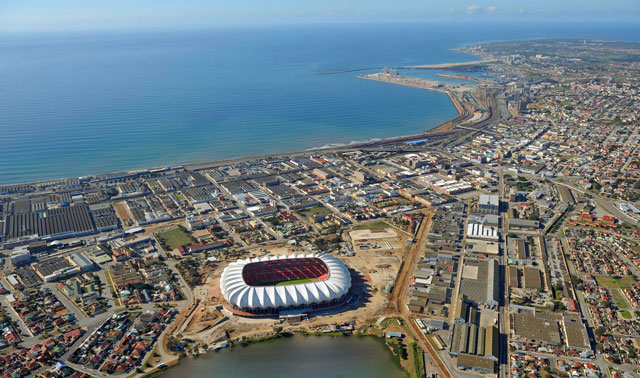
    These dynamics are, to a large degree, playing out in Nelson Mandela Bay (Port Elizabeth) in the Eastern Cape. For a number of years, governance in the city could best be described as weak. Factional battles, patronage and allegations of corruption with little or no action taken have culminated in the delivery of basic services coming to a standstill. And a dramatic decline in voter support.

    Why Nelson Mandela Bay is significant

    Increasingly, questions are being raised about whether the ANC is showing signs of losing its legitimacy. The governing party’s recent launch of its manifesto in Nelson Mandela Bay ahead of local elections in August has raised the tempo. This is because it has increased speculation that the ANC will lose power in the city, making it only the second major metropolitan district — Cape Town being the other — outside the governing party’s control.

    The party has seen its electoral support decline in the area. In the 2014 general elections, the ANC got only 49% of the local vote. Nationally it won 62%.

    This represents the second lowest electoral support for the ANC after Cape Town, which is governed by the opposition Democratic Alliance.

    Nelson Mandela Bay also carries a great deal of symbolism. It has a rich history of liberation heroes and legends who were born in the Eastern Cape and worked in the city. Also, one has to appreciate the use of Nelson Mandela’s legacy in naming the city.

    Losing a large municipality with the name of one of the ANC’s iconic leaders would be a symbolic blow. This in turn could cement perceptions at a national level that if the ANC cannot maintain support in its heartland, it may indeed be falling.

    Factors driving disaffection

    The ANC’s key messages have focused on liberation, of bringing freedom and democracy, of creating a better life for all. But communities at local level seem to have more immediate concerns. Many have increasingly begun responding to the ANC’s failure to deliver basic services through destructive protests, many of which have turned violent.

    It is at the local level that the ANC seems to be slipping. Local municipalities are characterised by a lack of accountability, under-spending, maladministration, patronage and anorexic delivery of water, housing and electricity. This may create the opening for the opposition to become a challenger to the party’s once-comfortable electoral majority.

    The low attendance at the ANC’s manifesto launch demonstrates that the party no longer holds much weight with the electorate in Nelson Mandela Bay. It would seem that support for the ANC is no longer that of unconditional trust. Rather, it is based on whether the dream of 1994 has materialised.

    The promises of water, electricity, housing and other basic services remain a luxury for the marginalised in the municipality’s townships. For the poor, this has meant a lack of delivery in housing and sanitation, including the continued use of what is known as the bucket system. In the absence of toilets, people have to use buckets.

    Ordinary people no longer feel they are a priority for the ANC. They have taken to the streets, dramatically bringing the city to a standstill during bitter factional battles. By 2012, the level of protests, particularly in Nelson Mandela Bay, had escalated to such a degree that the Eastern Cape was dubbed the “protest-ridden province”.

    There are other particular political dynamics at play in Nelson Mandela Bay. The motor industry is big, and includes Volkswagen and General Motors. Most unionised workers belong to the National Union of Metalworkers of South Africa (Numsa), a union caught in contentious politics with the umbrella trade union body, Cosatu. Cosatu is part of the ruling tripartite alliance with the ANC and South African Communist Party. Numsa split from Cosatu last year and is highly critical of the ANC. The union may rally behind one of the other parties, or workers may vote with their feet and stay away from the polls.

    What is clear is that the ANC can no longer rely on the sentimental vote.

    Opposition parties step into the breach

    Within this context, a space for opposition parties opens. The main contender in Nelson Mandela Bay is the country’s second biggest party, the DA.

    But former ANC voters may not necessarily trust the DA. This much was evident in the landmark victory of the United Democratic Movement, a small party with a stronghold in the Eastern Cape, which managed to secure victory over the ANC in a hotly contested by-election in 2015. Other smaller parties may also become more important role players.

    It is impossible to predict the outcome of the election. But the signs are clear that the ANC is going to have to work hard to win back the trust of voters. This would mean the party dealing with difficult issues, most notably President Jacob Zuma’s loss of legitimacy as a leader. The disconnect between the political narrative and the political sentiment of people may well see the ANC bleed in the coming election.The Conversation

    • Joleen Steyn Kotze is associate professor of political science, Nelson Mandela Metropolitan University
    • This article was originally published on The Conversation


    WhatsApp YouTube Follow on Google News Add as preferred source on Google
    Share. Facebook Twitter LinkedIn WhatsApp Telegram Email Copy Link
    Previous ArticleANC wants Springbok logo removed
    Next Article Inflation falls sharply

    Related Posts

    MTN to buy back its own towers in R35-billion deal - Ralph Mupita

    MTN to buy back its own cellular towers in R35-billion deal

    17 February 2026
    Icasa gears up for South Africa's next big spectrum auction - Tshiamo Maluleka-Disemelo

    Icasa gears up for South Africa’s next big spectrum auction

    17 February 2026
    Not enough: Eskom unions spurn above-inflation wage offer

    Not enough: Eskom unions spurn above-inflation wage offer

    17 February 2026
    Company News
    Scaling modern, data-driven farming across Africa - Chris Duvenage

    Scaling modern, data-driven farming across Africa

    17 February 2026
    Why getting your small business online costs less than you think

    Why getting your small business online costs less than you think

    17 February 2026
    Oni-Tel set to reinvigorate dark fibre in South Africa

    Oni-Tel set to reinvigorate dark fibre in South Africa

    17 February 2026
    Opinion
    A million reasons monopolies don't work - Duncan McLeod

    A million reasons monopolies don’t work

    10 February 2026
    The author, Business Leadership South Africa CEO Busi Mavuso

    Eskom unbundling U-turn threatens to undo hard-won electricity gains

    9 February 2026
    South Africa's skills advantage is being overlooked at home - Richard Firth

    South Africa’s skills advantage is being overlooked at home

    29 January 2026

    Subscribe to Updates

    Get the best South African technology news and analysis delivered to your e-mail inbox every morning.

    Latest Posts
    MTN to buy back its own towers in R35-billion deal - Ralph Mupita

    MTN to buy back its own cellular towers in R35-billion deal

    17 February 2026
    Icasa gears up for South Africa's next big spectrum auction - Tshiamo Maluleka-Disemelo

    Icasa gears up for South Africa’s next big spectrum auction

    17 February 2026
    Not enough: Eskom unions spurn above-inflation wage offer

    Not enough: Eskom unions spurn above-inflation wage offer

    17 February 2026
    More drama in Warner Bros tug of war

    More drama in Warner Bros tug of war

    17 February 2026
    © 2009 - 2026 NewsCentral Media
    • Cookie policy (ZA)
    • TechCentral – privacy and Popia

    Type above and press Enter to search. Press Esc to cancel.

    Manage consent

    TechCentral uses cookies to enhance its offerings. Consenting to these technologies allows us to serve you better. Not consenting or withdrawing consent may adversely affect certain features and functions of the website.

    Functional Always active
    The technical storage or access is strictly necessary for the legitimate purpose of enabling the use of a specific service explicitly requested by the subscriber or user, or for the sole purpose of carrying out the transmission of a communication over an electronic communications network.
    Preferences
    The technical storage or access is necessary for the legitimate purpose of storing preferences that are not requested by the subscriber or user.
    Statistics
    The technical storage or access that is used exclusively for statistical purposes. The technical storage or access that is used exclusively for anonymous statistical purposes. Without a subpoena, voluntary compliance on the part of your Internet Service Provider, or additional records from a third party, information stored or retrieved for this purpose alone cannot usually be used to identify you.
    Marketing
    The technical storage or access is required to create user profiles to send advertising, or to track the user on a website or across several websites for similar marketing purposes.
    • Manage options
    • Manage services
    • Manage {vendor_count} vendors
    • Read more about these purposes
    View preferences
    • {title}
    • {title}
    • {title}