Close Menu
TechCentralTechCentral

    Subscribe to the newsletter

    Get the best South African technology news and analysis delivered to your e-mail inbox every morning.

    Facebook X (Twitter) YouTube LinkedIn
    WhatsApp Facebook X (Twitter) LinkedIn YouTube
    TechCentralTechCentral
    • News
      Blu Label takes R5.2-billion Cell C hit, touts clean slate ahead

      Blu Label takes R5.2-billion Cell C hit, touts clean slate ahead

      19 February 2026
      MeerKAT detects most powerful natural radio laser ever observed

      MeerKAT detects most powerful natural radio laser ever observed

      19 February 2026
      How AI is rewriting the rules of consulting - Mark Allderman

      How AI is rewriting the rules of consulting

      19 February 2026
      Crackdown on students gambling away Nsfas money online

      Crackdown on students gambling away Nsfas money online

      19 February 2026
      Meta may launch AI-powered smartwatch in 2026

      Meta may launch AI-powered smartwatch in 2026

      19 February 2026
    • World
      Prominent Southern African journalist targeted with Predator spyware

      Prominent Southern African journalist targeted with Predator spyware

      18 February 2026
      More drama in Warner Bros tug of war

      More drama in Warner Bros tug of war

      17 February 2026
      Russia bans WhatsApp

      Russia bans WhatsApp

      12 February 2026
      EU regulators take aim at WhatsApp

      EU regulators take aim at WhatsApp

      9 February 2026
      Musk hits brakes on Mars mission

      Musk hits brakes on Mars mission

      9 February 2026
    • In-depth
      How liberalisation is rewiring South Africa's power sector

      How liberalisation is rewiring South Africa’s power sector

      21 January 2026
      The top-performing South African tech shares of 2025

      The top-performing South African tech shares of 2025

      12 January 2026
      Digital authoritarianism grows as African states normalise internet blackouts

      Digital authoritarianism grows as African states normalise internet blackouts

      19 December 2025
      TechCentral's South African Newsmakers of 2025

      TechCentral’s South African Newsmakers of 2025

      18 December 2025
      Black Friday goes digital in South Africa as online spending surges to record high

      Black Friday goes digital in South Africa as online spending surges to record high

      4 December 2025
    • TCS
      Watts & Wheels S1E4: 'We drive an electric Uber'

      Watts & Wheels S1E4: ‘We drive an electric Uber’

      10 February 2026
      TCS+ | How Cloud On Demand is helping SA businesses succeed in the cloud - Xhenia Rhode, Dion Kalicharan

      TCS+ | Cloud On Demand and Consnet: inside a real-world AWS partner success story

      30 January 2026
      Watts & Wheels S1E4: 'We drive an electric Uber'

      Watts & Wheels S1E3: ‘BYD’s Corolla Cross challenger’

      30 January 2026
      Watts & Wheels S1E4: 'We drive an electric Uber'

      Watts & Wheels S1E2: ‘China attacks, BMW digs in, Toyota’s sublime supercar’

      23 January 2026

      TCS+ | Why cybersecurity is becoming a competitive advantage for SA businesses

      20 January 2026
    • Opinion
      A million reasons monopolies don't work - Duncan McLeod

      A million reasons monopolies don’t work

      10 February 2026
      The author, Business Leadership South Africa CEO Busi Mavuso

      Eskom unbundling U-turn threatens to undo hard-won electricity gains

      9 February 2026
      South Africa's skills advantage is being overlooked at home - Richard Firth

      South Africa’s skills advantage is being overlooked at home

      29 January 2026
      Why Elon Musk's Starlink is a 'hard no' for me - Songezo Zibi

      Why Elon Musk’s Starlink is a ‘hard no’ for me

      26 January 2026
      A million reasons monopolies don't work - Duncan McLeod

      South Africa’s new fibre broadband battle

      20 January 2026
    • Company Hubs
      • Africa Data Centres
      • AfriGIS
      • Altron Digital Business
      • Altron Document Solutions
      • Altron Group
      • Arctic Wolf
      • AvertITD
      • Braintree
      • CallMiner
      • CambriLearn
      • CYBER1 Solutions
      • Digicloud Africa
      • Digimune
      • Domains.co.za
      • ESET
      • Euphoria Telecom
      • Incredible Business
      • iONLINE
      • IQbusiness
      • Iris Network Systems
      • LSD Open
      • Mitel
      • NEC XON
      • Netstar
      • Network Platforms
      • Next DLP
      • Ovations
      • Paracon
      • Paratus
      • Q-KON
      • SevenC
      • SkyWire
      • Solid8 Technologies
      • Telit Cinterion
      • Tenable
      • Vertiv
      • Videri Digital
      • Vodacom Business
      • Wipro
      • Workday
      • XLink
    • Sections
      • AI and machine learning
      • Banking
      • Broadcasting and Media
      • Cloud services
      • Contact centres and CX
      • Cryptocurrencies
      • Education and skills
      • Electronics and hardware
      • Energy and sustainability
      • Enterprise software
      • Financial services
      • Information security
      • Internet and connectivity
      • Internet of Things
      • Investment
      • IT services
      • Lifestyle
      • Motoring
      • Public sector
      • Retail and e-commerce
      • Satellite communications
      • Science
      • SMEs and start-ups
      • Social media
      • Talent and leadership
      • Telecoms
    • Events
    • Advertise
    TechCentralTechCentral
    Home » Top » Preparing for a digital World War

    Preparing for a digital World War

    By Editor21 August 2014
    Twitter LinkedIn Facebook WhatsApp Email Telegram Copy Link
    News Alerts
    WhatsApp

    war-640

    President George W Bush is reported to have said: “When I take action, I’m not going to fire a US$2m missile at a US$10 empty tent and hit a camel in the butt. It’s going to be decisive.” As the quote suggests, when it comes to national defence, enemies are unlikely to be deterred by an army of three, a leaky canoe and a fleet of second-hand microlights. In times of war we usually expect a powerful, graphic display of military might.

    Nations may feel reassured that the sheer scale and sophistication of their armed forces will be enough to deter any potential threat, with would-be attackers put off by the mere prospect of retaliation. But what if decisive action can be conducted without armed forces, without firing a single bullet, but by simply pressing “enter”?

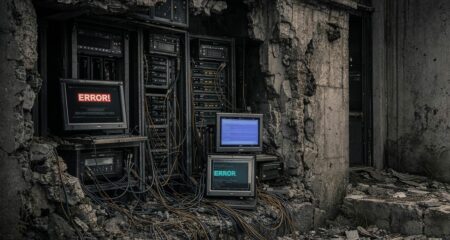
    This is the promise of cyber warfare, where the hostile use of software against a state’s critical infrastructure such as energy and transport networks, financial markets and hospitals can have immediate and devastating effects. The tools of cyber warfare could be acquired with relative ease by newly belligerent nations who were hitherto considered unthreatening by virtue of their lack of conventional forces. Belligerents may not even be nations, but unaffiliated hackers driven by a common political, religious or economic ideology, who can quickly form, strike and disperse using the anonymity of the Internet to hide their tracks.

    Nations have had to take the threat of cyber warfare seriously. Several significant military powers have now publicly declared policies on cyber warfare, and the topic has dominated diplomatic exchanges at the highest level. Perhaps the most poignant acknowledgement of cyber warfare as a serious issue comes from its inclusion as a topic of importance in the 2011 Report of the International Red Cross on International Humanitarian Law and the challenges of contemporary armed conflicts.

    The growing recognition of cyber warfare as a topic of legal concern in particular is of great importance, particularly for international law, which, among other things, it sets out a framework for the legally permissible use of force. International Humanitarian Law (also known as the Law of Armed Conflict) is the part of international law that tries to ensure that if there is armed conflict, it is conducted in as humane and restrained a manner as possible.

    Determining how legal rules apply to cyber warfare is obviously important. States will want to know whether cyber offensives will come under the rules of international law, what limits may be applied and what action can be taken in response within the law. If a cyber war is unavoidable, then states will also want to know what rules apply to the actual conduct of such war, for example in determining what targets are permissible, how rules on neutrality apply, and what kinds of cyber weapons are permissible.

    However, there is a lack of clarity on how international law applies to cyber warfare. International law has evolved over time and is heavily influenced by traditional concepts of conventional armed warfare between clearly defined nation states. Cyber warfare is so new it is not specifically addressed in any treaties. It is difficult enough to reach an agreement on international matters at the best of times, especially in dealing with conflicts. This difficulty will undoubtedly apply to cyber warfare, too.

    In light of this considerable uncertainty, a recent report for Security Lancaster outlines an agenda for future legal research on cyber warfare. This calls for a reconsideration of whether international law is a useful framework. For example, international law focuses heavily on states, but are future cyber attacks likely to come from states themselves? How should cyber hostilities initiated by federated or balkanised hacker groups with no clear state affiliation be legally categorised? Would we be better off starting to construct a legal framework from scratch as opposed to one built around outdated concepts that no longer reflect the current military realities?

    It should be acknowledged that not all share the view that cyber warfare is a significant or worrying prospect. Its detractors point out that it has been responsible for no human casualties to date, and no hostile cyber incident has as yet been treated as an act of war or openly admitted to by a state. But this ought not to deter us from taking the issue seriously, and to start thinking about an acceptable — and perhaps more importantly, workable — legal framework to cover the resort to and conduct of cyber warfare.

    We would do well to recall that another world leader, Winston Churchill, was widely derided at the time for forecasting the onset of World War 2, and remember that if the lessons of history are not learned they are destined to be repeated. The ConversationIf World War 3 promises to be digital, we must be as prepared as we can be.

    • Bela Bonita Chatterjee is a lecturer in law at Lancaster University. She is also a member of the Royal British Legion, the UK’s leading armed forces charity
    • This article was originally published on The Conversation
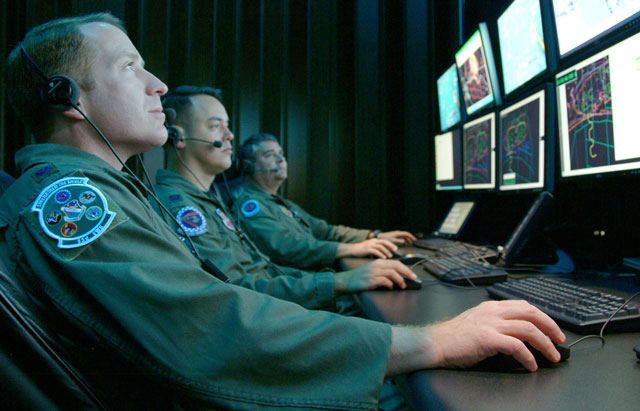
    • Top image: US Air Force/Captn Carrie Kessler


    WhatsApp YouTube Follow on Google News Add as preferred source on Google
    Share. Facebook Twitter LinkedIn WhatsApp Telegram Email Copy Link
    Previous ArticleTakealot snaps up e-retailer Superbalist
    Next Article Telkom takes axe to broadband prices

    Related Posts

    Blu Label takes R5.2-billion Cell C hit, touts clean slate ahead

    Blu Label takes R5.2-billion Cell C hit, touts clean slate ahead

    19 February 2026
    MeerKAT detects most powerful natural radio laser ever observed

    MeerKAT detects most powerful natural radio laser ever observed

    19 February 2026
    How AI is rewriting the rules of consulting - Mark Allderman

    How AI is rewriting the rules of consulting

    19 February 2026
    Company News
    Customers have new expectations. Is your CX ready? 1Stream

    Customers have new expectations. Is your CX ready?

    19 February 2026
    South Africa's cybersecurity challenge is not a tool problem - Nicholas Applewhite, Trinexia South Africa

    South Africa’s cybersecurity challenge is not a tool problem

    19 February 2026
    The quiet infrastructure powering AI: why long-life IOT networks matter more than ever - Sigfox South Africa

    The quiet infrastructure powering AI: why long-life IoT networks matter more than ever

    18 February 2026
    Opinion
    A million reasons monopolies don't work - Duncan McLeod

    A million reasons monopolies don’t work

    10 February 2026
    The author, Business Leadership South Africa CEO Busi Mavuso

    Eskom unbundling U-turn threatens to undo hard-won electricity gains

    9 February 2026
    South Africa's skills advantage is being overlooked at home - Richard Firth

    South Africa’s skills advantage is being overlooked at home

    29 January 2026

    Subscribe to Updates

    Get the best South African technology news and analysis delivered to your e-mail inbox every morning.

    Latest Posts
    Blu Label takes R5.2-billion Cell C hit, touts clean slate ahead

    Blu Label takes R5.2-billion Cell C hit, touts clean slate ahead

    19 February 2026
    MeerKAT detects most powerful natural radio laser ever observed

    MeerKAT detects most powerful natural radio laser ever observed

    19 February 2026
    How AI is rewriting the rules of consulting - Mark Allderman

    How AI is rewriting the rules of consulting

    19 February 2026
    Crackdown on students gambling away Nsfas money online

    Crackdown on students gambling away Nsfas money online

    19 February 2026
    © 2009 - 2026 NewsCentral Media
    • Cookie policy (ZA)
    • TechCentral – privacy and Popia

    Type above and press Enter to search. Press Esc to cancel.

    Manage consent

    TechCentral uses cookies to enhance its offerings. Consenting to these technologies allows us to serve you better. Not consenting or withdrawing consent may adversely affect certain features and functions of the website.

    Functional Always active
    The technical storage or access is strictly necessary for the legitimate purpose of enabling the use of a specific service explicitly requested by the subscriber or user, or for the sole purpose of carrying out the transmission of a communication over an electronic communications network.
    Preferences
    The technical storage or access is necessary for the legitimate purpose of storing preferences that are not requested by the subscriber or user.
    Statistics
    The technical storage or access that is used exclusively for statistical purposes. The technical storage or access that is used exclusively for anonymous statistical purposes. Without a subpoena, voluntary compliance on the part of your Internet Service Provider, or additional records from a third party, information stored or retrieved for this purpose alone cannot usually be used to identify you.
    Marketing
    The technical storage or access is required to create user profiles to send advertising, or to track the user on a website or across several websites for similar marketing purposes.
    • Manage options
    • Manage services
    • Manage {vendor_count} vendors
    • Read more about these purposes
    View preferences
    • {title}
    • {title}
    • {title}