 On a recent sunny afternoon, Joshua Radebe patted down asphalt into a neatly filled pothole on a busy Johannesburg street as a motorist tooted and waved to him. Radebe works not for the government but for insurance company Discovery’s “Pothole Patrol”.
Like Discovery, which also pays for some of the fire engines in Johannesburg, precious metals producer Sibanye-Stillwater ensures that water near its mines is safe to drink and roads are maintained and well lit; it upgrades schools and clinics. Food producer Tiger Brands secures water supply for the town that’s home to its fruit-processing business, and Investec powers a traffic light near its offices during blackouts in Johannesburg. Glencore, Anglo American spinoff Thungela Resources and other owners of an export terminal spend about R18-million/month to protect trains transporting their coal from cable thieves.
“It’s not altruism,” said Lungisa Fuzile, CEO of Standard Bank South Africa. “You can’t run a successful private business in a sea of chaos.”
Government incompetence, corruption and policy paralysis have left critical infrastructure in tatters, forcing companies to step into areas that are within the purview of the state in most countries.
Power cuts of as many as 12 hours a day have driven schools, hospitals and businesses to generators. Water in some communities is unsafe to drink. A dilapidated sanitation system triggered a recent cholera outbreak near Pretoria. Outside of some national highways, paved streets have more potholes than road. Poorly maintained state schools are keeping a whole generation from access to a decent education. Theft of everything from copper cables to solar panels is common, and crime has soared to such an extent that the private security industry now employs more people than the police force and military put together.
“We are indeed, as many have said, running the risk of becoming a failed state because we’re already on borrowed time,” Daniel Mminele, chairman of Nedbank and a former deputy central bank governor, said in April.
‘Rainbow nation’
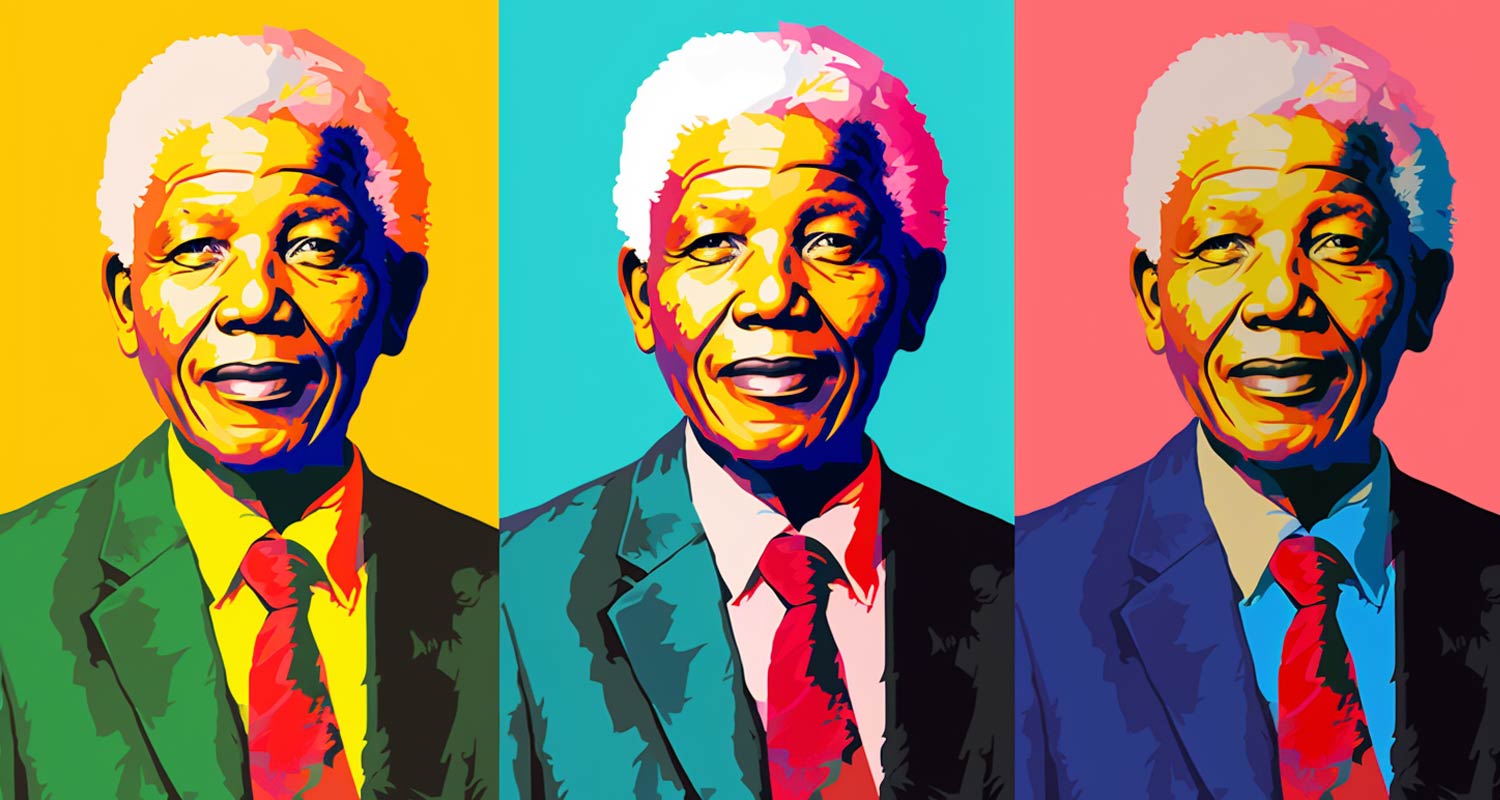
This isn’t how it was supposed to be. When the ANC came to power in South Africa in 1994, Nelson Mandela’s “rainbow nation” held out the promise of an efficient state-led economy that would uplift the downtrodden black majority. And for a while, it did.
But three decades on — while many ANC leaders still cling to that vision, referring to each other as “comrades” and trotting out the trope of “white monopoly capital” when they talk about business — the government’s role as a provider of basic services is virtually non-existent in large swaths of the country.
With an election next year and polls indicating that the ANC may lose its national majority for the first time, the party is leaning even more on the private sector to do the government’s job in a bid to stay in power. Business participation is being sought in electricity, rail and water against the wishes of some of the government’s biggest allies — labour unions.
Vincent Magwenya, a spokesman for President Cyril Ramaphosa, declined to comment except to say that the president is facilitating partnerships with the private sector to meet the needs of the economy. Mahlengi Bhengu, an ANC spokeswoman, didn’t respond to calls or messages seeking comment.
“The government has failed South Africans in terms of what it’s supposed to do, which is provide services for citizens,” said Thabi Leoka, an independent economist and member of Ramaphosa’s Economic Advisory Council. Businesses are unlikely to provide for those not directly linked to their operations, leaving many behind, she said.
The divide between rich and poor is widening in what is already the world’s most unequal nation, according to the Thomas Piketty-backed World Inequality Lab, turning South Africa into a tinderbox. There were 122 major protests cross the country in the first six months of this year over the failure of the government to deliver services like electricity and water, on course to beat the 2018 record of 237, according to data collated by Municipal IQ, which monitors the performance of the country’s municipalities.
“Protests have become increasingly violent and lawless,” said Kevin Allan, MD of Municipal IQ. “The root cause is the exclusion of the protesters and their communities from services, political representation and economic opportunity.”
The inability of state-owned — struggling with cable theft, corruption and old, poorly maintained coal-fired plants — to meet demand has prompted private companies to step in. They plan to build more than 10GW of capacity for their own electricity needs, freeing up power for others.
Inefficiencies at the country’s freight rail network and ports have forced the government to open them up to private participation. This week, state logistics company Transnet said it sold a stake in Durban Container Terminal Pier 2, part of Africa’s biggest harbour, to the Philippines’ International Container Terminal Services.
The South African Post Office and South African Airways have collapsed. And although the flag carrier has restarted some flights, private couriers and airlines have largely stepped into the breach.
We believe that the success of these municipalities will mean better living conditions for employees
Miners often provide all public services in areas where they operate, turning them into mini states. Take Marikana, a town in North West, for example. Platinum miner Sibanye-Stillwater runs the show here.
Alphina Komane, a nurse at Sonop Clinic, says the miner expanded and partially equipped the government medical facility. Nurses now have their own consulting rooms, rather than cubicles divided by sheets, and there’s a waiting room so that sick patients no longer queue in the parking lot. Sibanye-Stillwater’s assistance has helped Dora Thlapane, 73, grow cabbages and carrots in neatly tended and fertilised trenches, selling them at affordable prices to her neighbours.
“We are taking a stance to solving the problems we see around us because we believe that the success of these municipalities will mean better living conditions for employees,” said Thabisile Phumo, the company’s executive vice president for stakeholder relations in Southern Africa, speaking while flanked by people working on Sibanye-Stillwater-sponsored projects like egg and vegetable production. “We’re telling government that you have to get involved in learning how to solve problems so you aren’t stuck when the mines eventually close.”
South Africa’s main platinum mining belt, about 100km north-west of Johannesburg, has attracted migrants seeking work from poorer provinces like the Eastern Cape and impoverished neighbouring states such as Lesotho. There’s only work for a fraction of them, and the area is now a sprawling slum of hundreds of thousands of people living in shacks and modest houses clustered around mines and on the edge of the few remaining farms. Roads are deeply potholed and there’s little evidence of government activity.
“Our workers are community members,” Phumo said. “If there are no roads, no schools it has a direct impact on them.”
Only so much
But there’s just so much the private sector can do. With a global annual turnover of more than R10.6-trillion — about double South Africa’s GDP — the private sector already employs some three-quarters of the country’s workers and accounts for over two-thirds of investment, research and development expenditure, according to the latest government figures.
The public sector meanwhile is languishing, hurting the poorest. About half of South Africa’s population of about 60 million lives in poverty and receives at least one monthly welfare payout. About a third of the country’s workforce is unemployed, a situation likely to worsen with persistent blackouts hurting the economy, which will barely grow this year. About 70% of South Africa’s municipalities are in financial distress, mostly because they lack credible financial management, budget data shows.
“At the core of it is skills,” said Phumo. “People are politically appointed” to managerial positions in municipalities that they aren’t qualified for, she said.
While the evils of apartheid are well documented, the international isolation it brought created a robust homegrown private sector in South Africa. Limited foreign competition and imports drove local companies to develop a wide range of industries. In some cases, they became behemoths like Anglo American that operated everything from mines to banks and paper mills.
The ANC’s first 13 years in power further bolstered their balance sheets as the party set about supplying electricity and clean water to the houses of black South Africans, building millions of new dwellings and creating a black middle class with money to spend.

Under Mandela and then Thabo Mbeki, the economy grew for 40 consecutive quarters starting at the end of 1998. Yields on the country’s generic, rand-denominated 10-year debt, which date back to December 1999, almost halved by end the of 2005.
“For 10 or 15 years, the ANC governed South Africa much better than it was ever given credit for,” said Frans Cronje, chairman of the Social Research Foundation, a think-tank that conducts opinion polls. “And life got better.”
Then Jacob Zuma came to power in 2009 and a near-decade of corruption scandals and economic stagnation followed. Skilled workers left the civil service and state-owned companies like Eskom, ports and rail company Transnet accumulated debts, neglected infrastructure and were riven by graft. Ramaphosa, who succeeded Zuma in 2018, promised to crack down on corruption and restore the public sector, but has disappointed.
“The Ramaphosa regime has failed to rebuild that state capability resulting in a dire need for the private sector to come in to ensure that those sectors are revived,” said Ongama Mtimka, a political analyst and lecturer at Nelson Mandela University in Gqeberha.
Ramaphosa initially had strong support from business leaders, who were quick to help during the pandemic. Now, he’s demanding more from companies, said Martin Kingston, the chairman of the local unit of Rothschild & Co, who led Business for South Africa’s coronavirus steering committee.
Some executives are heartened by the government’s acknowledgement that it doesn’t have the skills needed to manage key infrastructure and is willing to draw on the expertise of companies.
“If this is a genuine shift in attitude towards the private sector and a move away from the heavy hand of the state, then there is reason to believe that some of the most urgent challenges in energy, logistics, and safety and security can be more rapidly turned around,” Gareth Ackerman, chairman of Pick n Pay Stores, said in a statement this week.
‘Feet to the fire’
That said, business is no longer willing to quietly work in the background and let the government take credit for the improvements it brings. Company executives are also openly attacking the government for its failures.
“We don’t want the public to be left with the impression that business isn’t coming to the party, so now we will talk about it and we will hold government’s feet to the fire,” said Cas Coovadia, CEO of Business Unity South Africa.
Trust in the government has plummeted. In the wake of deadly flooding last year, more than 60 companies pledged aid to the prominent charity Gift of the Givers, rather than the government.
“It is a great source of shame that when this disaster struck, the most burning public debate was around fears that the resources allocated to respond to this disaster would be misappropriated or wasted,” Ramaphosa told MPs at the time.
With the state failing in its fiduciary duty to provide basic services, companies will probably continue to play a bigger role in tackling problems, said Busi Mavuso, the CEO of Business Leadership South Africa, a corporate lobby group.
“The government is currently a leaking bucket,” she said. — Prinesha Naidoo and Antony Sguazzin, (c) 2023 Bloomberg LP