Close Menu
TechCentralTechCentral

    Subscribe to the newsletter

    Get the best South African technology news and analysis delivered to your e-mail inbox every morning.

    Facebook X (Twitter) YouTube LinkedIn
    WhatsApp Facebook X (Twitter) LinkedIn YouTube
    TechCentralTechCentral
    • News
      Vuyani Jarana: Mobile coverage masks a deeper broadband failure

      Vuyani Jarana: Mobile coverage masks a deeper broadband failure

      30 January 2026
      SABC Plus to flight Microsoft AI training videos

      SABC Plus to flight Microsoft AI training videos

      30 January 2026
      Fibre ducts

      Fibre industry consolidation in KZN

      30 January 2026
      Watts & Wheels S1E3: 'BYD's Corolla Cross challenger'

      Watts & Wheels S1E3: ‘BYD’s Corolla Cross challenger’

      30 January 2026
      What ordinary South Africans really think of AI

      What ordinary South Africans really think of AI

      30 January 2026
    • World
      Apple acquires audio AI start-up Q.ai

      Apple acquires audio AI start-up Q.ai

      30 January 2026
      SpaceX IPO may be largest in history

      SpaceX IPO may be largest in history

      28 January 2026
      Nvidia throws AI at the weather

      Nvidia throws AI at weather forecasting

      27 January 2026
      Debate erupts over value of in-flight Wi-Fi

      Debate erupts over value of in-flight Wi-Fi

      26 January 2026
      Intel takes another hit - Intel CEO Lip-Bu Tan. Laure Andrillon/Reuters

      Intel takes another hit

      23 January 2026
    • In-depth
      How liberalisation is rewiring South Africa's power sector

      How liberalisation is rewiring South Africa’s power sector

      21 January 2026
      The top-performing South African tech shares of 2025

      The top-performing South African tech shares of 2025

      12 January 2026
      Digital authoritarianism grows as African states normalise internet blackouts

      Digital authoritarianism grows as African states normalise internet blackouts

      19 December 2025
      TechCentral's South African Newsmakers of 2025

      TechCentral’s South African Newsmakers of 2025

      18 December 2025
      Black Friday goes digital in South Africa as online spending surges to record high

      Black Friday goes digital in South Africa as online spending surges to record high

      4 December 2025
    • TCS
      TCS+ | How Cloud On Demand is helping SA businesses succeed in the cloud - Xhenia Rhode, Dion Kalicharan

      TCS+ | Cloud On Demand and Consnet: inside a real-world AWS partner success story

      30 January 2026
      Watts & Wheels S1E3: 'BYD's Corolla Cross challenger'

      Watts & Wheels S1E2: ‘China attacks, BMW digs in, Toyota’s sublime supercar’

      23 January 2026

      TCS+ | Why cybersecurity is becoming a competitive advantage for SA businesses

      20 January 2026
      Watts & Wheels S1E3: 'BYD's Corolla Cross challenger'

      Watts & Wheels: S1E1 – ‘William, Prince of Wheels’

      8 January 2026
      TCS+ | Africa's digital transformation - unlocking AI through cloud and culture - Cliff de Wit Accelera Digital Group

      TCS+ | Cloud without culture won’t deliver AI: Accelera’s Cliff de Wit

      12 December 2025
    • Opinion
      South Africa's skills advantage is being overlooked at home - Richard Firth

      South Africa’s skills advantage is being overlooked at home

      29 January 2026
      Why Elon Musk's Starlink is a 'hard no' for me - Songezo Zibi

      Why Elon Musk’s Starlink is a ‘hard no’ for me

      26 January 2026
      South Africa's new fibre broadband battle - Duncan McLeod

      South Africa’s new fibre broadband battle

      20 January 2026
      AI moves from pilots to production in South African companies - Nazia Pillay SAP

      AI moves from pilots to production in South African companies

      20 January 2026
      South Africa's new fibre broadband battle - Duncan McLeod

      ANC’s attack on Solly Malatsi shows how BEE dogma trumps economic reality

      14 December 2025
    • Company Hubs
      • Africa Data Centres
      • AfriGIS
      • Altron Digital Business
      • Altron Document Solutions
      • Altron Group
      • Arctic Wolf
      • AvertITD
      • Braintree
      • CallMiner
      • CambriLearn
      • CYBER1 Solutions
      • Digicloud Africa
      • Digimune
      • Domains.co.za
      • ESET
      • Euphoria Telecom
      • Incredible Business
      • iONLINE
      • IQbusiness
      • Iris Network Systems
      • LSD Open
      • NEC XON
      • Netstar
      • Network Platforms
      • Next DLP
      • Ovations
      • Paracon
      • Paratus
      • Q-KON
      • SevenC
      • SkyWire
      • Solid8 Technologies
      • Telit Cinterion
      • Tenable
      • Vertiv
      • Videri Digital
      • Vodacom Business
      • Wipro
      • Workday
      • XLink
    • Sections
      • AI and machine learning
      • Banking
      • Broadcasting and Media
      • Cloud services
      • Contact centres and CX
      • Cryptocurrencies
      • Education and skills
      • Electronics and hardware
      • Energy and sustainability
      • Enterprise software
      • Financial services
      • Information security
      • Internet and connectivity
      • Internet of Things
      • Investment
      • IT services
      • Lifestyle
      • Motoring
      • Public sector
      • Retail and e-commerce
      • Satellite communications
      • Science
      • SMEs and start-ups
      • Social media
      • Talent and leadership
      • Telecoms
    • Events
    • Advertise
    TechCentralTechCentral
    Home » Current affairs » SA should copy Brazil and impeach Zuma

    SA should copy Brazil and impeach Zuma

    By The Conversation5 April 2017
    Twitter LinkedIn Facebook WhatsApp Email Telegram Copy Link
    News Alerts
    WhatsApp
    Jacob Zuma

    The news that South Africa’s sovereign rating has been downgraded caught many by surprise. But it was long coming. The main reason for the rating agency’s decision is clearly concerns about political leadership in the country. Moody’s, which is expected to follow suit, has said as much, stating its decision to put the country on a negative outlook down to “the abrupt change in leadership of key government institutions”.

    The downgrade by S&P comes on the back of a highly charged political environment in the ruling ANC. This culminated in the sacking of the finance minister Pravin Gordhan and his replacement with Malusi Gigaba. While the cabinet reshuffle is the proximate cause of the downgrade, South Africa’s political and institutional malaise goes deeper.
    So, how does the country surf through these turbulent waters?

    One hopes that the credit downgrade could help to focus the mind of the country’s political leadership to the task at hand, and that this will inject much-needed urgency for political change and economic reforms. The S&P assessment casts a ray of hope: “We could revise the outlook to stable if we see political risk reduced and economic growth or fiscal outcomes strengthen compared to our baseline projections.”

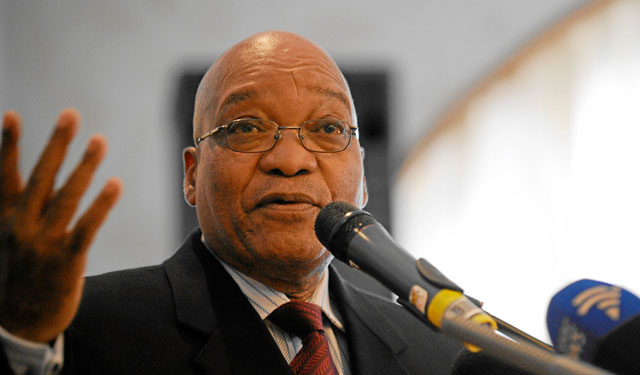
    Piecemeal efforts towards change will not be enough. Bold leadership is required. But it’s inconceivable that the kind of action required can happen under President Jacob Zuma’s leadership.

    The real chance to turn the country around is to do precisely what the Brazilians did last year — to impeach the president while building momentum in civil society to achieve political renewal as the basis for sustained economic recovery.

    For nearly a decade now, international financial institutions and other international organisations have warned South Africa about a number of dangers. These include policy uncertainty, the consequences of low growth for social stability, and the need to attend urgently to industrial relations, especially in the mining sector.

    Dire warnings are contained in a number of reports. These include the International Monetary Fund’s latest annual assessment of South Africa’s macroeconomic conditions, the Organisation of Economic Cooperation and Development (OECD) periodic survey and the World Bank Economic Update.

    South Africa experienced downgrades in 2012, 2013 and 2015. These should have been read as a harbinger of worse things to come. Government had ample time to draw appropriate lessons from these warnings, but chose to stick its head in the sand in the hope that problems would varnish. Meanwhile, the ruling party elevated factional battles above interest of the country.

    South Africa could have also drawn lessons from Brazil which was downgraded by S&P and Moody’s to sub-investment grade status in 2015 . This was in the wake of political unrest over a massive corruption scandal at the oil giant Petrobas, declining business confidence, growing policy uncertainty and President Dilma Rousseff’s weak leadership.

    The downgrade further worsened Brazil’s growth outlook, with capital fleeing the country. Less than a year after the downgrade, the senate had thrown Rousseff out of office.

    What next

    In a sense, credit downgrades shouldn’t come as a surprise. They are like a medical report showing defects in the vital organs in the body while the patient is still alive and can do something about them, albeit requiring uncomfortable surgical procedure and a strong dose of medication.

    In evaluating South Africa, S&P took into account the effectiveness of policymaking and stability of political institutions to respond effectively to socio-economic challenges, and found these wanting. The S&P statement specifically singled out the risk of cabinet reshuffle on fiscal and growth outcomes, the possibility of increase in the contingent liabilities of the state — in particular the likelihood of state-owned enterprises such as Eskom, the power utility, to draw down on government guarantees — and increased political risks in general in the current year.

    Impeach Brazilian President Dilma Rousseff

    The consequences of this downgrade are not difficult to discern: they will trigger a disposal by pension funds and other institutional investors of South African debt, since these funds are not allowed to hold sub-investment grade (or speculative) bonds. Sub-investment grade status will increase South Africa’s borrowing costs from global markets.

    Interest rates are likely to go up, with debt-laden consumers bearing the brunt. Capital will flee in search of safer havens for healthy returns.

    There are political implications, too. Government spending will be constrained, including for welfare programmes and delivery of various public services, raising prospects of waves of political unrest in the run up to 2019 elections. And there’s likely to be more pressure on the government to increase public servants’ salaries.

    Further accentuating the strain on the economy is the fact that growth is likely to remain in the doldrums; with the employment outlook remaining bleak for the foreseeable future. Export growth is projected to remain flat during 2017 and 2020. As S&P notes, economic growth is unlikely to come from business investment, since business will be withholding capital in the face of heightened political risk.

    Solutions

    Bold political and economic reforms are urgently needed. Tough times such as the ones South Africa is headed towards can also be crucibles for transformative leaders who are willing to break rank from the small-mindedness of their parties, and chart a different course that delivers real change.

    Zuma has already squandered his credibility and shown himself as out of kilter with the realities of the economy. The major task of pushing for structural reforms in the economy and to restore stability lies with the minister of finance, who ideally should have relative autonomy from the president and able to corral his cabinet colleagues to behave responsibly. Disappointingly, Malusi Gigaba, the new minister, started on a bad footing, peddling rhetoric and taking ambiguous and contradictory positions in his early days in office.

    So, what would a package of reforms look like? Government needs to send a clear and strong message about the direction of economic policy. This must be followed by a bold set of actions that could immediately restore confidence and gain the support of the private sector. There’s also a need to restructure state-owned enterprises, improve efficiencies and restore good corporate governance. The Conversation

    • Mzukisi Qobo is deputy chairman and South African research chairman on African Diplomacy and Foreign Policy, University of Johannesburg
    • This article was originally published on The Conversation


    Dilma Rousseff Jacob Zuma Malusi Gigaba Mzukisi Qobo Pravin Gordhan
    WhatsApp YouTube Follow on Google News Add as preferred source on Google
    Share. Facebook Twitter LinkedIn WhatsApp Telegram Email Copy Link
    Previous ArticleWhatsApp makes first foray into payments
    Next Article New contract plans: Vodacom ‘lags rivals’

    Related Posts

    Television at 50 | How the SABC lost its way - and what it must become

    Television at 50 | How the SABC lost its way – and what it must become

    5 January 2026
    ICT BEE fight deepens as MK, EFF target Malatsi - Colleen Makhubele

    ICT BEE fight deepens as MK, EFF target Malatsi

    15 December 2025
    Bain shuts scandal-tainted South African consulting business - Jacob Zuma

    Bain shuts scandal-tainted South African consulting business

    30 July 2025
    Company News
    Huawei turns 25 in South Africa, celebrates with major device discounts

    Huawei turns 25 in South Africa, celebrates with major device discounts

    30 January 2026
    Phishing has not disappeared, but it has grown up - KnowBe4

    Phishing has not disappeared, but it has grown up

    30 January 2026
    Smartphone affordability: South Africa's new economic divide - PayJoy

    Smartphone affordability: South Africa’s new economic divide

    29 January 2026
    Opinion
    South Africa's skills advantage is being overlooked at home - Richard Firth

    South Africa’s skills advantage is being overlooked at home

    29 January 2026
    Why Elon Musk's Starlink is a 'hard no' for me - Songezo Zibi

    Why Elon Musk’s Starlink is a ‘hard no’ for me

    26 January 2026
    South Africa's new fibre broadband battle - Duncan McLeod

    South Africa’s new fibre broadband battle

    20 January 2026

    Subscribe to Updates

    Get the best South African technology news and analysis delivered to your e-mail inbox every morning.

    Latest Posts
    Vuyani Jarana: Mobile coverage masks a deeper broadband failure

    Vuyani Jarana: Mobile coverage masks a deeper broadband failure

    30 January 2026
    TCS+ | How Cloud On Demand is helping SA businesses succeed in the cloud - Xhenia Rhode, Dion Kalicharan

    TCS+ | Cloud On Demand and Consnet: inside a real-world AWS partner success story

    30 January 2026
    Huawei turns 25 in South Africa, celebrates with major device discounts

    Huawei turns 25 in South Africa, celebrates with major device discounts

    30 January 2026
    SABC Plus to flight Microsoft AI training videos

    SABC Plus to flight Microsoft AI training videos

    30 January 2026
    © 2009 - 2026 NewsCentral Media
    • Cookie policy (ZA)
    • TechCentral – privacy and Popia

    Type above and press Enter to search. Press Esc to cancel.

    Manage consent

    TechCentral uses cookies to enhance its offerings. Consenting to these technologies allows us to serve you better. Not consenting or withdrawing consent may adversely affect certain features and functions of the website.

    Functional Always active
    The technical storage or access is strictly necessary for the legitimate purpose of enabling the use of a specific service explicitly requested by the subscriber or user, or for the sole purpose of carrying out the transmission of a communication over an electronic communications network.
    Preferences
    The technical storage or access is necessary for the legitimate purpose of storing preferences that are not requested by the subscriber or user.
    Statistics
    The technical storage or access that is used exclusively for statistical purposes. The technical storage or access that is used exclusively for anonymous statistical purposes. Without a subpoena, voluntary compliance on the part of your Internet Service Provider, or additional records from a third party, information stored or retrieved for this purpose alone cannot usually be used to identify you.
    Marketing
    The technical storage or access is required to create user profiles to send advertising, or to track the user on a website or across several websites for similar marketing purposes.
    • Manage options
    • Manage services
    • Manage {vendor_count} vendors
    • Read more about these purposes
    View preferences
    • {title}
    • {title}
    • {title}