

Close Menu
TechCentralTechCentral

    Subscribe to the newsletter

    Get the best South African technology news and analysis delivered to your e-mail inbox every morning.

    Facebook X (Twitter) YouTube LinkedIn
    WhatsApp Facebook X (Twitter) LinkedIn YouTube
    TechCentralTechCentral
    • News
      Vuyani Jarana: Mobile coverage masks a deeper broadband failure

      Vuyani Jarana: Mobile coverage masks a deeper broadband failure

      30 January 2026
      SABC Plus to flight Microsoft AI training videos

      SABC Plus to flight Microsoft AI training videos

      30 January 2026
      Fibre ducts

      Fibre industry consolidation in KZN

      30 January 2026
      Watts & Wheels S1E3: 'BYD's Corolla Cross challenger'

      Watts & Wheels S1E3: ‘BYD’s Corolla Cross challenger’

      30 January 2026
      What ordinary South Africans really think of AI

      What ordinary South Africans really think of AI

      30 January 2026
    • World
      Apple acquires audio AI start-up Q.ai

      Apple acquires audio AI start-up Q.ai

      30 January 2026
      SpaceX IPO may be largest in history

      SpaceX IPO may be largest in history

      28 January 2026
      Nvidia throws AI at the weather

      Nvidia throws AI at weather forecasting

      27 January 2026
      Debate erupts over value of in-flight Wi-Fi

      Debate erupts over value of in-flight Wi-Fi

      26 January 2026
      Intel takes another hit - Intel CEO Lip-Bu Tan. Laure Andrillon/Reuters

      Intel takes another hit

      23 January 2026
    • In-depth
      How liberalisation is rewiring South Africa's power sector

      How liberalisation is rewiring South Africa’s power sector

      21 January 2026
      The top-performing South African tech shares of 2025

      The top-performing South African tech shares of 2025

      12 January 2026
      Digital authoritarianism grows as African states normalise internet blackouts

      Digital authoritarianism grows as African states normalise internet blackouts

      19 December 2025
      TechCentral's South African Newsmakers of 2025

      TechCentral’s South African Newsmakers of 2025

      18 December 2025
      Black Friday goes digital in South Africa as online spending surges to record high

      Black Friday goes digital in South Africa as online spending surges to record high

      4 December 2025
    • TCS
      TCS+ | How Cloud On Demand is helping SA businesses succeed in the cloud - Xhenia Rhode, Dion Kalicharan

      TCS+ | Cloud On Demand and Consnet: inside a real-world AWS partner success story

      30 January 2026
      Watts & Wheels S1E3: 'BYD's Corolla Cross challenger'

      Watts & Wheels S1E2: ‘China attacks, BMW digs in, Toyota’s sublime supercar’

      23 January 2026

      TCS+ | Why cybersecurity is becoming a competitive advantage for SA businesses

      20 January 2026
      Watts & Wheels S1E3: 'BYD's Corolla Cross challenger'

      Watts & Wheels: S1E1 – ‘William, Prince of Wheels’

      8 January 2026
      TCS+ | Africa's digital transformation - unlocking AI through cloud and culture - Cliff de Wit Accelera Digital Group

      TCS+ | Cloud without culture won’t deliver AI: Accelera’s Cliff de Wit

      12 December 2025
    • Opinion
      South Africa's skills advantage is being overlooked at home - Richard Firth

      South Africa’s skills advantage is being overlooked at home

      29 January 2026
      Why Elon Musk's Starlink is a 'hard no' for me - Songezo Zibi

      Why Elon Musk’s Starlink is a ‘hard no’ for me

      26 January 2026
      South Africa's new fibre broadband battle - Duncan McLeod

      South Africa’s new fibre broadband battle

      20 January 2026
      AI moves from pilots to production in South African companies - Nazia Pillay SAP

      AI moves from pilots to production in South African companies

      20 January 2026
      South Africa's new fibre broadband battle - Duncan McLeod

      ANC’s attack on Solly Malatsi shows how BEE dogma trumps economic reality

      14 December 2025
    • Company Hubs
      • Africa Data Centres
      • AfriGIS
      • Altron Digital Business
      • Altron Document Solutions
      • Altron Group
      • Arctic Wolf
      • AvertITD
      • Braintree
      • CallMiner
      • CambriLearn
      • CYBER1 Solutions
      • Digicloud Africa
      • Digimune
      • Domains.co.za
      • ESET
      • Euphoria Telecom
      • Incredible Business
      • iONLINE
      • IQbusiness
      • Iris Network Systems
      • LSD Open
      • NEC XON
      • Netstar
      • Network Platforms
      • Next DLP
      • Ovations
      • Paracon
      • Paratus
      • Q-KON
      • SevenC
      • SkyWire
      • Solid8 Technologies
      • Telit Cinterion
      • Tenable
      • Vertiv
      • Videri Digital
      • Vodacom Business
      • Wipro
      • Workday
      • XLink
    • Sections
      • AI and machine learning
      • Banking
      • Broadcasting and Media
      • Cloud services
      • Contact centres and CX
      • Cryptocurrencies
      • Education and skills
      • Electronics and hardware
      • Energy and sustainability
      • Enterprise software
      • Financial services
      • Information security
      • Internet and connectivity
      • Internet of Things
      • Investment
      • IT services
      • Lifestyle
      • Motoring
      • Public sector
      • Retail and e-commerce
      • Satellite communications
      • Science
      • SMEs and start-ups
      • Social media
      • Talent and leadership
      • Telecoms
    • Events
    • Advertise
    TechCentralTechCentral
    Home » Sections » Motoring » Safest seat on a plane? We asked an aviation expert

    Safest seat on a plane? We asked an aviation expert

    When booking a flight, do you ever think about which seat will protect you the most in an emergency? Probably not.
    By The Conversation6 February 2023
    Twitter LinkedIn Facebook WhatsApp Email Telegram Copy Link
    News Alerts
    WhatsApp

    When booking a flight, do you ever think about which seat will protect you the most in an emergency? Probably not.

    Most people book seats for comfort, such as leg room, or convenience, such as easy access to toilets. Frequent flyers might book their seat as close as possible to the front so they can disembark more quickly.

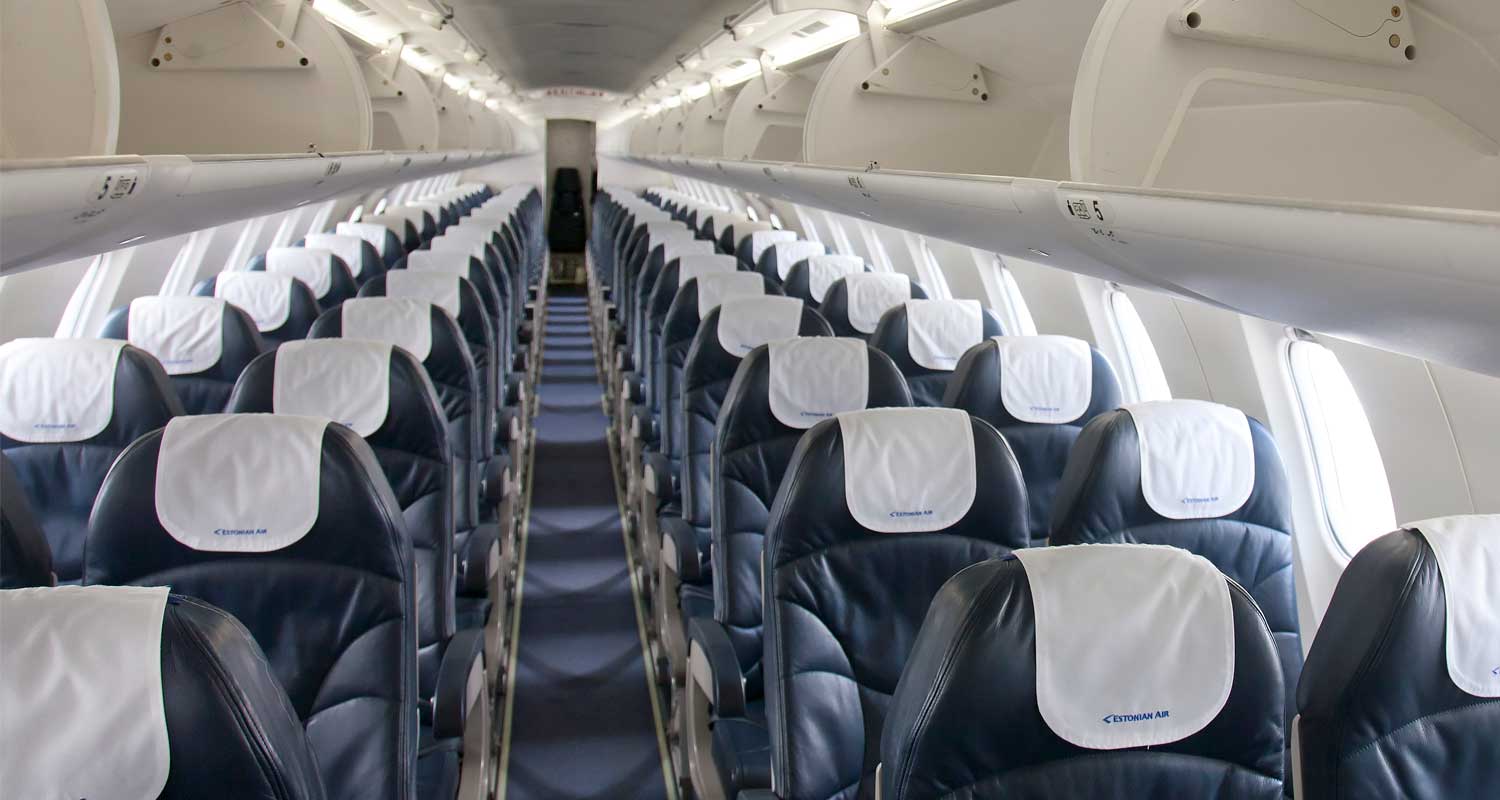
    We rarely book a flight with hopes of getting one of the middle seats in the last row. Well, guess what? These seats are statistically the safest ones on an aeroplane.

    Frankly speaking, there is no real need to worry about safety when you board a commercial flight

    Before we get into it, I should reiterate that air travel is the safest mode of transport. In 2019, there were just under 70 million flights globally, with only 287 fatalities.

    According to the US National Safety Council’s analysis of census data, the odds of dying in a plane are about one in 205 552, compared to one in 102 in a car. Even so, we pay little attention to fatal road accidents, but when we hear about an ATR72 crashing in Nepal it’s the lead story on every news page.

    Our interest in plane crashes might lie in wanting to understand why they happen, or what the odds are of them happening again. And perhaps it’s not a bad thing; our concern ensures these tragic incidents are thoroughly investigated, which helps keep air travel safe.

    Frankly speaking, there is no real need to worry about safety when you board a commercial flight. But if you’ve still got that nagging question in your head, driven by sheer curiosity, read on.

    In the middle, at the back

    It’s worth remembering accidents by their very nature do not conform to standards. In the 1989 United Flight 232 crash in Sioux City in Iowa in the US, 184 of the 269 people onboard survived the accident. Most of the survivors were sitting behind first class, towards the front of the plane.

    Nonetheless, a Time investigation that looked at 35 years of aircraft accident data found the middle rear seats of an aircraft had the lowest fatality rate: 28%, compared to 44% for the middle aisle seats.

    This logically makes sense, too. Sitting next to an exit row will always provide you with the fastest exit in the case of an emergency, granted there’s no fire on that side. But the wings of a plane store fuel, so this disqualifies the middle exit rows as the safest row option.

    At the same time, being closer to the front means you’ll be impacted before those in the back, which leaves us with the last exit row. As for why the middle seats are safer than the window or aisle seats, that is, as you might expect, because of the buffer provided by having people on either side.

    The type of emergency will also dictate survivability. Running into a mountain will decrease chances of survival exponentially, as was the case in a tragic 1979 disaster in New Zealand. Air New Zealand Flight TE901 crashed into the slopes of Mt Erebus in Antarctica, killing 257 passengers and crew.
    Landing in the ocean nose-first also decreases chances of survival, as witnessed with the 2009 Air France Flight 447, in which 228 passengers and crew perished.

    Pilots are trained to minimise potential risk in an emergency event as best as they can. They will try to avoid hitting mountains and look for a level place, such as an open field, to land as normally as possible. The technique for landing in water requires assessing the surface conditions and attempting to land between waves at a normal landing angle.

    Aircraft are designed to be very robust in emergency situations. In fact, the main reason the cabin crew remind us to keep our seat belts fastened is not because of crash risk, but because of “clear air turbulence” that can be experienced at any time at high altitudes. It is this weather phenomenon that can cause the most damage to passengers and aircraft.

    Manufacturers are designing new planes with more composite materials capable of handling in-flight stress. In these designs, the wings are not rigid and can flex to absorb extreme loading to prevent structural failure.

    Does the type of plane make a difference?

    Granted, there are certain variables, such as impact from airspeed, that can vary slightly between different airplane types. However, the physics of flight is more or less the same in all planes.

    Generally, larger planes will have more structural material and therefore more strength to withstand pressurisation at altitude. This means they may provide some additional protection in an emergency – but this, again, is highly dependent on the severity of the emergency.

    That’s not to say you should book your next flight on the largest plane you can find. As mentioned, air travel remains very safe. So I’d suggest thinking about what movie you’ll watch instead, and hoping they don’t run out of chicken and only have the shrimp left!The Conversation

    • The writer, Doug Drury, is professor and head of aviation at CQUniversity Australia
    • This article is republished from The Conversation under a Creative Commons licence

    Get TechCentral’s daily newsletter


    Doug Drury
    WhatsApp YouTube Follow on Google News Add as preferred source on Google
    Share. Facebook Twitter LinkedIn WhatsApp Telegram Email Copy Link
    Previous ArticleDon’t count on government to solve the power crisis – go solar
    Next Article Ghana withdraws huge tax claim against MTN
    Company News
    Huawei turns 25 in South Africa, celebrates with major device discounts

    Huawei turns 25 in South Africa, celebrates with major device discounts

    30 January 2026
    Phishing has not disappeared, but it has grown up - KnowBe4

    Phishing has not disappeared, but it has grown up

    30 January 2026
    Smartphone affordability: South Africa's new economic divide - PayJoy

    Smartphone affordability: South Africa’s new economic divide

    29 January 2026
    Opinion
    South Africa's skills advantage is being overlooked at home - Richard Firth

    South Africa’s skills advantage is being overlooked at home

    29 January 2026
    Why Elon Musk's Starlink is a 'hard no' for me - Songezo Zibi

    Why Elon Musk’s Starlink is a ‘hard no’ for me

    26 January 2026
    South Africa's new fibre broadband battle - Duncan McLeod

    South Africa’s new fibre broadband battle

    20 January 2026

    Subscribe to Updates

    Get the best South African technology news and analysis delivered to your e-mail inbox every morning.

    Latest Posts
    Vuyani Jarana: Mobile coverage masks a deeper broadband failure

    Vuyani Jarana: Mobile coverage masks a deeper broadband failure

    30 January 2026
    TCS+ | How Cloud On Demand is helping SA businesses succeed in the cloud - Xhenia Rhode, Dion Kalicharan

    TCS+ | Cloud On Demand and Consnet: inside a real-world AWS partner success story

    30 January 2026
    Huawei turns 25 in South Africa, celebrates with major device discounts

    Huawei turns 25 in South Africa, celebrates with major device discounts

    30 January 2026
    SABC Plus to flight Microsoft AI training videos

    SABC Plus to flight Microsoft AI training videos

    30 January 2026
    © 2009 - 2026 NewsCentral Media
    • Cookie policy (ZA)
    • TechCentral – privacy and Popia

    Type above and press Enter to search. Press Esc to cancel.

    Manage consent

    TechCentral uses cookies to enhance its offerings. Consenting to these technologies allows us to serve you better. Not consenting or withdrawing consent may adversely affect certain features and functions of the website.

    Functional Always active
    The technical storage or access is strictly necessary for the legitimate purpose of enabling the use of a specific service explicitly requested by the subscriber or user, or for the sole purpose of carrying out the transmission of a communication over an electronic communications network.
    Preferences
    The technical storage or access is necessary for the legitimate purpose of storing preferences that are not requested by the subscriber or user.
    Statistics
    The technical storage or access that is used exclusively for statistical purposes. The technical storage or access that is used exclusively for anonymous statistical purposes. Without a subpoena, voluntary compliance on the part of your Internet Service Provider, or additional records from a third party, information stored or retrieved for this purpose alone cannot usually be used to identify you.
    Marketing
    The technical storage or access is required to create user profiles to send advertising, or to track the user on a website or across several websites for similar marketing purposes.
    • Manage options
    • Manage services
    • Manage {vendor_count} vendors
    • Read more about these purposes
    View preferences
    • {title}
    • {title}
    • {title}