Close Menu
TechCentralTechCentral

    Subscribe to the newsletter

    Get the best South African technology news and analysis delivered to your e-mail inbox every morning.

    Facebook X (Twitter) YouTube LinkedIn
    WhatsApp Facebook X (Twitter) LinkedIn YouTube
    TechCentralTechCentral
    • News
      Vuyani Jarana: Mobile coverage masks a deeper broadband failure

      Vuyani Jarana: Mobile coverage masks a deeper broadband failure

      30 January 2026
      SABC Plus to flight Microsoft AI training videos

      SABC Plus to flight Microsoft AI training videos

      30 January 2026
      Fibre ducts

      Fibre industry consolidation in KZN

      30 January 2026
      Watts & Wheels S1E3: 'BYD's Corolla Cross challenger'

      Watts & Wheels S1E3: ‘BYD’s Corolla Cross challenger’

      30 January 2026
      What ordinary South Africans really think of AI

      What ordinary South Africans really think of AI

      30 January 2026
    • World
      Apple acquires audio AI start-up Q.ai

      Apple acquires audio AI start-up Q.ai

      30 January 2026
      SpaceX IPO may be largest in history

      SpaceX IPO may be largest in history

      28 January 2026
      Nvidia throws AI at the weather

      Nvidia throws AI at weather forecasting

      27 January 2026
      Debate erupts over value of in-flight Wi-Fi

      Debate erupts over value of in-flight Wi-Fi

      26 January 2026
      Intel takes another hit - Intel CEO Lip-Bu Tan. Laure Andrillon/Reuters

      Intel takes another hit

      23 January 2026
    • In-depth
      How liberalisation is rewiring South Africa's power sector

      How liberalisation is rewiring South Africa’s power sector

      21 January 2026
      The top-performing South African tech shares of 2025

      The top-performing South African tech shares of 2025

      12 January 2026
      Digital authoritarianism grows as African states normalise internet blackouts

      Digital authoritarianism grows as African states normalise internet blackouts

      19 December 2025
      TechCentral's South African Newsmakers of 2025

      TechCentral’s South African Newsmakers of 2025

      18 December 2025
      Black Friday goes digital in South Africa as online spending surges to record high

      Black Friday goes digital in South Africa as online spending surges to record high

      4 December 2025
    • TCS
      TCS+ | How Cloud On Demand is helping SA businesses succeed in the cloud - Xhenia Rhode, Dion Kalicharan

      TCS+ | Cloud On Demand and Consnet: inside a real-world AWS partner success story

      30 January 2026
      Watts & Wheels S1E3: 'BYD's Corolla Cross challenger'

      Watts & Wheels S1E2: ‘China attacks, BMW digs in, Toyota’s sublime supercar’

      23 January 2026

      TCS+ | Why cybersecurity is becoming a competitive advantage for SA businesses

      20 January 2026
      Watts & Wheels S1E3: 'BYD's Corolla Cross challenger'

      Watts & Wheels: S1E1 – ‘William, Prince of Wheels’

      8 January 2026
      TCS+ | Africa's digital transformation - unlocking AI through cloud and culture - Cliff de Wit Accelera Digital Group

      TCS+ | Cloud without culture won’t deliver AI: Accelera’s Cliff de Wit

      12 December 2025
    • Opinion
      South Africa's skills advantage is being overlooked at home - Richard Firth

      South Africa’s skills advantage is being overlooked at home

      29 January 2026
      Why Elon Musk's Starlink is a 'hard no' for me - Songezo Zibi

      Why Elon Musk’s Starlink is a ‘hard no’ for me

      26 January 2026
      South Africa's new fibre broadband battle - Duncan McLeod

      South Africa’s new fibre broadband battle

      20 January 2026
      AI moves from pilots to production in South African companies - Nazia Pillay SAP

      AI moves from pilots to production in South African companies

      20 January 2026
      South Africa's new fibre broadband battle - Duncan McLeod

      ANC’s attack on Solly Malatsi shows how BEE dogma trumps economic reality

      14 December 2025
    • Company Hubs
      • Africa Data Centres
      • AfriGIS
      • Altron Digital Business
      • Altron Document Solutions
      • Altron Group
      • Arctic Wolf
      • AvertITD
      • Braintree
      • CallMiner
      • CambriLearn
      • CYBER1 Solutions
      • Digicloud Africa
      • Digimune
      • Domains.co.za
      • ESET
      • Euphoria Telecom
      • Incredible Business
      • iONLINE
      • IQbusiness
      • Iris Network Systems
      • LSD Open
      • NEC XON
      • Netstar
      • Network Platforms
      • Next DLP
      • Ovations
      • Paracon
      • Paratus
      • Q-KON
      • SevenC
      • SkyWire
      • Solid8 Technologies
      • Telit Cinterion
      • Tenable
      • Vertiv
      • Videri Digital
      • Vodacom Business
      • Wipro
      • Workday
      • XLink
    • Sections
      • AI and machine learning
      • Banking
      • Broadcasting and Media
      • Cloud services
      • Contact centres and CX
      • Cryptocurrencies
      • Education and skills
      • Electronics and hardware
      • Energy and sustainability
      • Enterprise software
      • Financial services
      • Information security
      • Internet and connectivity
      • Internet of Things
      • Investment
      • IT services
      • Lifestyle
      • Motoring
      • Public sector
      • Retail and e-commerce
      • Satellite communications
      • Science
      • SMEs and start-ups
      • Social media
      • Talent and leadership
      • Telecoms
    • Events
    • Advertise
    TechCentralTechCentral
    Home » In-depth » Scientists are hoping to redefine the humble second – here’s why

    Scientists are hoping to redefine the humble second – here’s why

    By The Conversation29 March 2021
    Twitter LinkedIn Facebook WhatsApp Email Telegram Copy Link
    News Alerts
    WhatsApp

    Everyone needs to know the time. Ever since 17th century Dutch inventor Christiaan Huygens made the first pendulum clock, people have been thinking of good reasons to measure time more precisely.

    Getting the time right is important in so many ways, from running a railway to doing millisecond trades on the stock market. Now, for most of us, our clocks are checking themselves against a signal from atomic clocks, like those on GPS satellites.

    But a recent study by two teams of scientists in Boulder, Colorado might mean those signals will get much more accurate, by paving the way to effectively allow us to redefine the second more precisely. Atomic clocks could become so accurate, in fact, that we could begin to measure previously imperceptible gravity waves.

    Atomic clocks could become so accurate that we could begin to measure previously imperceptible gravity waves

    Modern clocks still use Huygens’ basic idea of an oscillator with a resonance – like a pendulum of a fixed length that will always move back and forth with the same frequency, or a bell that rings with a specific tone. This idea was greatly improved in the 18th century by John Harrison who realised that smaller, higher-frequency oscillators have more stable and pure resonances, making clocks more reliable.

    Nowadays, most everyday clocks use a tiny piece of quartz crystal in the shape of a miniature musical tuning fork, with very high frequency and stability. Not much has changed with this clock design in the past hundred years, although we’ve got better at making them cheaper more reproducible.

    ‘Discipline’

    The massive difference these days is the way that we check – or “discipline” – quartz clocks. Up until 1955, you needed to keep correcting your clock by checking it against a very regular astronomical phenomenon, like the sun or the moons of Jupiter. Now we discipline clocks against natural oscillations inside atoms.

    The atomic clock was first built by Louis Essen. It was used to redefine the second in 1967, a definition that has remained the same since.

    It works by counting the flipping frequency of a quantum property called spin in the electrons in caesium atoms. This natural atomic resonance is so sharp that you can tell if your quartz crystal clock signal wanders off in frequency by less than one part in 10¹⁵. That’s a millionth of a billionth. One second is officially defined as 9 192 631 770 caesium electron spin flips.
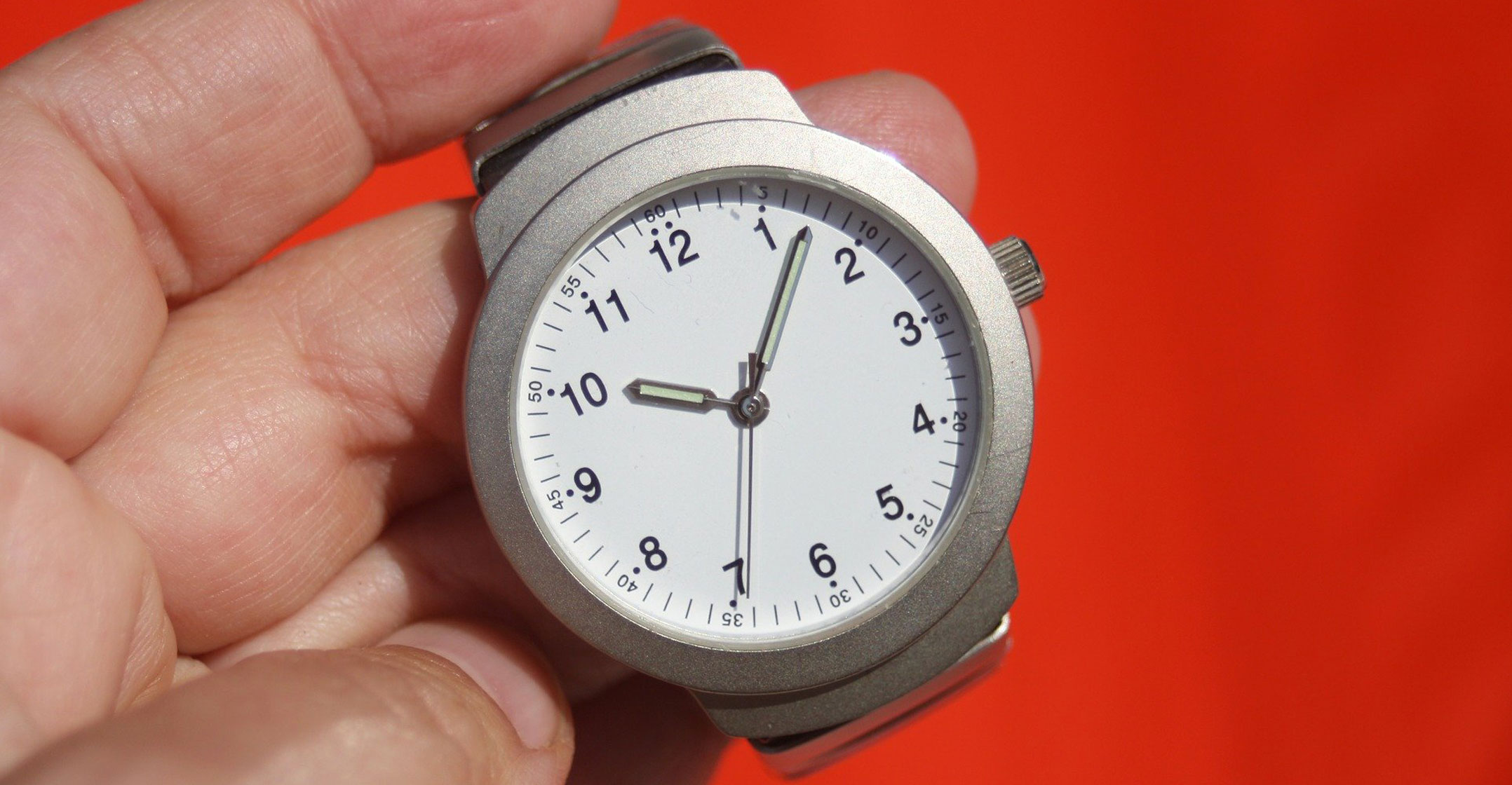
    The fact we can make such accurately disciplined oscillators makes frequency and time the most precisely measured of all physical quantities. We send out signals from atomic clocks all over the world, and up into space via GPS. Anyone with a GPS receiver in their mobile phone has access to an astonishingly accurate time measurement device.

    If you can measure time and frequency accurately, then there are all kinds of other things you can accurately measure, too. For example, measuring the spin flip frequency of certain atoms and molecules can tell you the strength of the magnetic field they experience, so if you can find the frequency precisely then you’ve also found the field strength precisely. The smallest possible magnetic field sensors work this way.

    But can we make better clocks that allow us to measure frequency or time even more precisely? The answer might still be just as John Harrison found, to go higher in frequency.

    Scientists are thinking about whether the international definition of the second could be redefined to make it more precise

    The caesium spin flip resonance has a frequency corresponding to microwaves, but some atoms have nice sharp resonances for optical light, a million times higher in frequency. Optical atomic clocks have shown extremely stable comparisons with one another, at least when a pair of them is placed only a few metres apart.

    Scientists are thinking about whether the international definition of the second could be redefined to make it more precise. But to achieve this, the different optical clocks that we would use to keep time precisely need to be trusted to read the same time even if they are in different labs thousands of miles apart. So far, such long-distance tests have been not much better than for microwave clocks.

    Ultra-fast lasers

    Now, using a new way of linking the clocks with ultra-fast lasers, researchers have shown that different kinds of optical atomic clocks can be placed a few kilometres apart and still agree within 1 part in 10¹⁸. This is just as good as previous measurements with pairs of identical clocks a few hundred metres apart, but about a hundred times more precise than achieved before with different clocks or large distances.

    The authors of the new study compared multiple clocks based on different types of atoms – ytterbium, aluminium and strontium in their case. The strontium clock was situated in the University of Colorado and the other two were in the US National Institute of Standards and Technology, down the road.

    The study connected the clocks with a laser beam through the air over 1.5km from building to building, and this link was shown to be just as good as an optical fibre under the road, in spite of air turbulence.
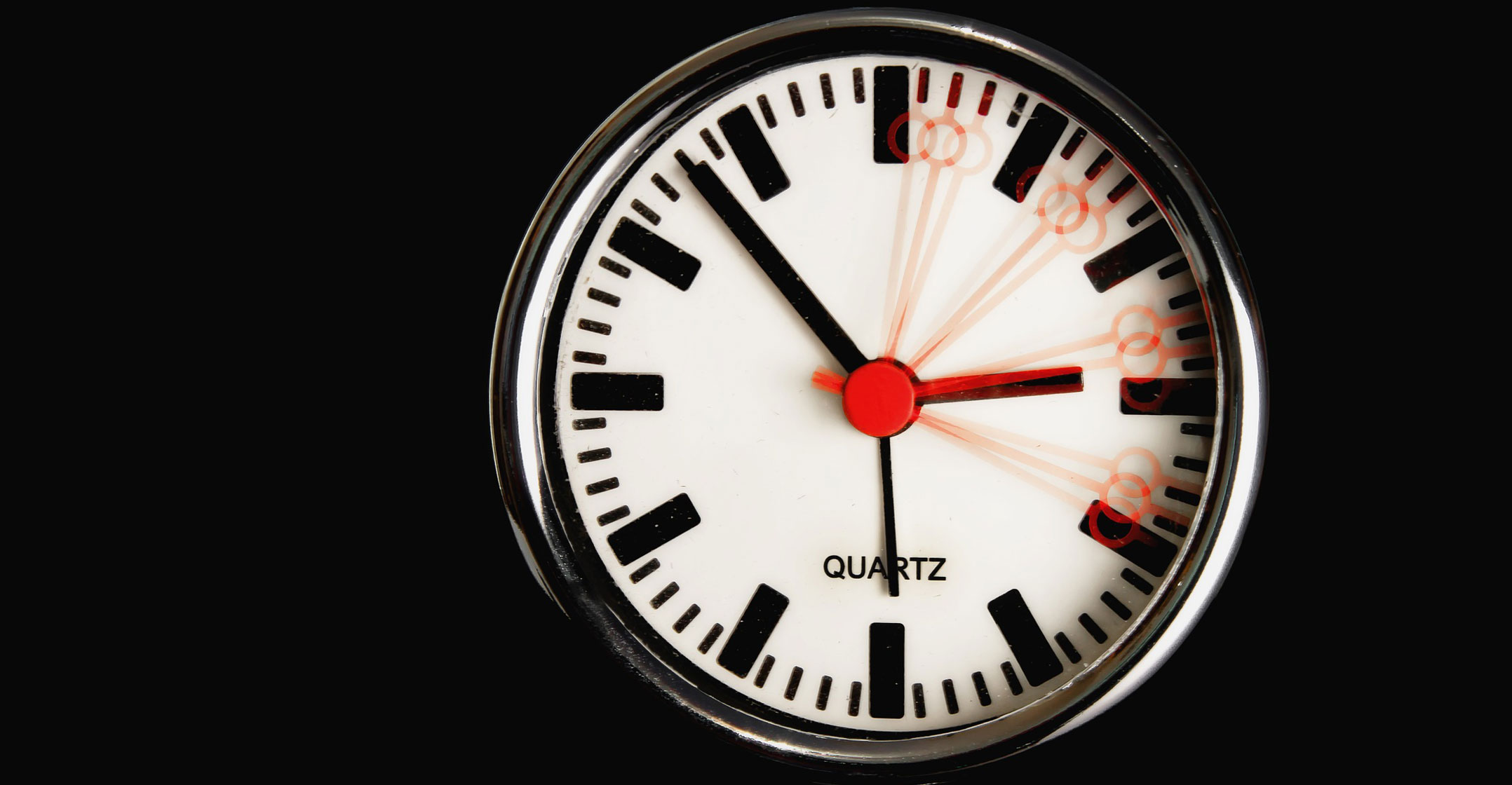
    But why do we need such accurate clocks? Although the atoms in the clock are supposed to be exactly the same wherever the clock sits and whoever looks at it, tiny useful differences can appear when the measurements of time are so precise.

    According to Einstein’s theory of general relativity, gravity distorts space-time, and we can measure this distortion. Optical clocks have already been used to detect the difference in the Earth’s gravitational field by moving just a centimetre in height.

    With more accurate clocks, maybe you could sense the creep in stress of the Earth’s crust and predict volcanic eruptions. Gravitational waves produced by distant black hole mergers have been seen – maybe we will now be able to detect much weaker waves from less cataclysmic events using a pair of satellites with optical clocks.The Conversation

    • Written by Ben Murdin, professor of photonics and quantum sciences, University of Surrey
    • This article is republished from The Conversation under a Creative Commons licence


    top
    WhatsApp YouTube Follow on Google News Add as preferred source on Google
    Share. Facebook Twitter LinkedIn WhatsApp Telegram Email Copy Link
    Previous ArticleWatch | Journey to the enterprise cloud with SUSE
    Next Article Fridges, microwaves fall prey to global chip shortage

    Related Posts

    18GW in unplanned breakdowns cripple Eskom

    2 November 2021

    Nersa kicks the Karpowership can down the road

    13 September 2021

    If you think South African load shedding is bad, try Zimbabwe’s

    13 September 2021
    Company News
    Huawei turns 25 in South Africa, celebrates with major device discounts

    Huawei turns 25 in South Africa, celebrates with major device discounts

    30 January 2026
    Phishing has not disappeared, but it has grown up - KnowBe4

    Phishing has not disappeared, but it has grown up

    30 January 2026
    Smartphone affordability: South Africa's new economic divide - PayJoy

    Smartphone affordability: South Africa’s new economic divide

    29 January 2026
    Opinion
    South Africa's skills advantage is being overlooked at home - Richard Firth

    South Africa’s skills advantage is being overlooked at home

    29 January 2026
    Why Elon Musk's Starlink is a 'hard no' for me - Songezo Zibi

    Why Elon Musk’s Starlink is a ‘hard no’ for me

    26 January 2026
    South Africa's new fibre broadband battle - Duncan McLeod

    South Africa’s new fibre broadband battle

    20 January 2026

    Subscribe to Updates

    Get the best South African technology news and analysis delivered to your e-mail inbox every morning.

    Latest Posts
    Vuyani Jarana: Mobile coverage masks a deeper broadband failure

    Vuyani Jarana: Mobile coverage masks a deeper broadband failure

    30 January 2026
    TCS+ | How Cloud On Demand is helping SA businesses succeed in the cloud - Xhenia Rhode, Dion Kalicharan

    TCS+ | Cloud On Demand and Consnet: inside a real-world AWS partner success story

    30 January 2026
    Huawei turns 25 in South Africa, celebrates with major device discounts

    Huawei turns 25 in South Africa, celebrates with major device discounts

    30 January 2026
    SABC Plus to flight Microsoft AI training videos

    SABC Plus to flight Microsoft AI training videos

    30 January 2026
    © 2009 - 2026 NewsCentral Media
    • Cookie policy (ZA)
    • TechCentral – privacy and Popia

    Type above and press Enter to search. Press Esc to cancel.

    Manage consent

    TechCentral uses cookies to enhance its offerings. Consenting to these technologies allows us to serve you better. Not consenting or withdrawing consent may adversely affect certain features and functions of the website.

    Functional Always active
    The technical storage or access is strictly necessary for the legitimate purpose of enabling the use of a specific service explicitly requested by the subscriber or user, or for the sole purpose of carrying out the transmission of a communication over an electronic communications network.
    Preferences
    The technical storage or access is necessary for the legitimate purpose of storing preferences that are not requested by the subscriber or user.
    Statistics
    The technical storage or access that is used exclusively for statistical purposes. The technical storage or access that is used exclusively for anonymous statistical purposes. Without a subpoena, voluntary compliance on the part of your Internet Service Provider, or additional records from a third party, information stored or retrieved for this purpose alone cannot usually be used to identify you.
    Marketing
    The technical storage or access is required to create user profiles to send advertising, or to track the user on a website or across several websites for similar marketing purposes.
    • Manage options
    • Manage services
    • Manage {vendor_count} vendors
    • Read more about these purposes
    View preferences
    • {title}
    • {title}
    • {title}