
Close Menu
TechCentralTechCentral

    Subscribe to the newsletter

    Get the best South African technology news and analysis delivered to your e-mail inbox every morning.

    Facebook X (Twitter) YouTube LinkedIn
    WhatsApp Facebook X (Twitter) LinkedIn YouTube
    TechCentralTechCentral
    • News
      Gaping holes in South African government cyber defences

      Gaping holes in South African government cyber defences

      2 April 2026
      EV charging start-up Charge bypasses JSE for token-based raise - Joubert Roux

      EV charging start-up Charge bypasses JSE for token-based raise

      2 April 2026
      Ring, reject, repeat: South Africa's spam call crisis

      Ring, reject, repeat: South Africa’s spam call crisis

      2 April 2026
      Four astronauts begin humanity's return to the moon - Artemis II

      Four astronauts begin humanity’s return to the moon

      2 April 2026
      Sars to give every taxpayer a digital identity in sweeping tech overhaul

      Sars to give every taxpayer a digital identity in sweeping tech overhaul

      1 April 2026
    • World
      Amazon in talks to buy satellite operator Globalstar

      Amazon in talks to buy satellite operator Globalstar

      2 April 2026

      Apple plans to open Siri to rival AI services

      27 March 2026
      It's official: ads are coming to ChatGPT

      It’s official: ads are coming to ChatGPT

      23 March 2026
      Mystery Chinese AI model revealed to be Xiaomi's

      Mystery Chinese AI model revealed to be Xiaomi’s

      19 March 2026
      A mystery AI model has developers buzzing

      A mystery AI model has developers buzzing

      18 March 2026
    • In-depth
      The R18-billion tech giant hiding in plain sight - Jens Montanana

      The R16-billion tech giant hiding in plain sight

      26 March 2026
      The last generation of coders

      The last generation of coders

      18 February 2026
      Sentech is in dire straits

      Sentech is in dire straits

      10 February 2026
      How liberalisation is rewiring South Africa's power sector

      How liberalisation is rewiring South Africa’s power sector

      21 January 2026
      The top-performing South African tech shares of 2025

      The top-performing South African tech shares of 2025

      12 January 2026
    • TCS
      TCS | MTN's Divysh Joshi on the strategy behind Pi - Divyesh Joshi

      TCS | MTN’s Divyesh Joshi on the strategy behind Pi

      1 April 2026
      Anoosh Rooplal

      TCS | Anoosh Rooplal on the Post Office’s last stand

      27 March 2026
      Meet the CIO | HealthBridge CTO Anton Fatti on the future of digital health

      Meet the CIO | Healthbridge CTO Anton Fatti on the future of digital health

      23 March 2026
      TCS+ | Arctic Wolf unpacks the evolving threat landscape for SA businesses - Clare Loveridge and Jason Oehley

      TCS+ | Arctic Wolf unpacks the evolving threat landscape for SA businesses

      19 March 2026
      TCS+ | Vox Kiwi: a wireless solution promising a fibre-like experience - Theo van Zyl

      TCS+ | Vox Kiwi: a wireless solution promising a fibre-like experience

      13 March 2026
    • Opinion
      The conflict of interest at the heart of PayShap's slow adoption - Cheslyn Jacobs

      The conflict of interest at the heart of PayShap’s slow adoption

      26 March 2026
      South Africa's energy future hinges on getting wheeling right - Aishah Gire

      South Africa’s energy future hinges on getting wheeling right

      10 March 2026
      Hold the doom: the case for a South African comeback - Duncan McLeod

      Apple just dropped a bomb on the Windows world

      5 March 2026
      VC's centre of gravity is shifting - and South Africa is in the frame - Alison Collier

      VC’s centre of gravity is shifting – and South Africa is in the frame

      3 March 2026
      Hold the doom: the case for a South African comeback - Duncan McLeod

      Hold the doom: the case for a South African comeback

      26 February 2026
    • Company Hubs
      • 1Stream
      • Africa Data Centres
      • AfriGIS
      • Altron Digital Business
      • Altron Document Solutions
      • Altron Group
      • Arctic Wolf
      • Ascent Technology
      • AvertITD
      • BBD
      • Braintree
      • CallMiner
      • CambriLearn
      • CYBER1 Solutions
      • Digicloud Africa
      • Digimune
      • Domains.co.za
      • ESET
      • Euphoria Telecom
      • HOSTAFRICA
      • Incredible Business
      • iONLINE
      • IQbusiness
      • Iris Network Systems
      • Kaspersky
      • LSD Open
      • Mitel
      • NEC XON
      • Netstar
      • Network Platforms
      • Next DLP
      • Ovations
      • Paracon
      • Paratus
      • Q-KON
      • SevenC
      • SkyWire
      • Solid8 Technologies
      • Telit Cinterion
      • Telviva
      • Tenable
      • Vertiv
      • Videri Digital
      • Vodacom Business
      • Wipro
      • Workday
      • XLink
    • Sections
      • AI and machine learning
      • Banking
      • Broadcasting and Media
      • Cloud services
      • Contact centres and CX
      • Cryptocurrencies
      • Education and skills
      • Electronics and hardware
      • Energy and sustainability
      • Enterprise software
      • Financial services
      • HealthTech
      • Information security
      • Internet and connectivity
      • Internet of Things
      • Investment
      • IT services
      • Lifestyle
      • Motoring
      • Policy and regulation
      • Public sector
      • Retail and e-commerce
      • Satellite communications
      • Science
      • SMEs and start-ups
      • Social media
      • Talent and leadership
      • Telecoms
    • Events
    • Advertise
    TechCentralTechCentral
    Home » Sections » Energy and sustainability » Solar panic? The truth about SSEG, fines and municipal rules

    Solar panic? The truth about SSEG, fines and municipal rules

    What has been missing from the national conversation is a clear, calm explanation of what SSEG really is.
    By Johanna Horz14 April 2025
    Twitter LinkedIn Facebook WhatsApp Email Telegram Copy Link
    News Alerts
    WhatsApp

    Solar panic? The truth about SSEG, fines and municipal rulesDoom-filled headlines like “Hefty fines for solar users”, “Eskom penalties for solar households” and “Municipalities crack down on solar” have sent a ripple of anxiety through South Africa’s growing community of solar adopters. The result? Some South Africans have delayed or even cancelled their solar installations, worried about complex registration requirements, unexpected penalties or the uncertainty surrounding small-scale embedded generation (SSEG).

    This wave of hesitation is not just a setback for households; it also threatens to stall the broader Just Energy Transition. Clean energy job creation slows. Solar supply chains contract. And, paradoxically, pressure on Eskom’s grid intensifies. While 2024 brought some relief from load shedding, the return of outages in 2025 and continued grid instability make one thing clear: South Africa’s energy crisis is far from resolved.

    Solar-as-a-service provider Wetility saw this initial wave of concern among its customers, too. But what has been missing from the national conversation is a clearer, calmer explanation of what SSEG really is, why it matters and how South Africa’s approach aligns with global norms.

    A global norm

    In simple terms, embedded generators are systems that operate in parallel with the grid. When they’re under 1MVA, they are called small-scale embedded generators, or SSEGs. These include typical rooftop solar or small renewable setups for homes and businesses. SSEG – in this context, South Africa’s term for these customer-sited systems – is not an outlier. Equivalent systems exist worldwide, albeit under different names and regulatory frameworks.

    In the US, it is called distributed generation and often linked to net metering. In Germany, citizens are “prosumers” who produce and consume their own solar power. The UK refers to it as microgeneration. All these models allow households and businesses to generate their own power – typically solar – and sometimes sell the surplus back to the grid.

    What is consistent across all of them? Regulation. Government involvement is not unique to South Africa. Whether in Berlin or Bloemfontein, regulation exists to ensure systems are safe, grid-compatible and support national energy planning.

    Rooftop solarWhy the push for SSEG registration now?

    In 2023, South Africa endured its worst year of load shedding. In 2024, the grid stabilised – temporarily. The logical next step for government? Move from crisis management to structured planning.

    SSEG registration helps government and municipalities:

    • Ensure equipment safety and avoid unsafe DIY-style electrical connections;
    • Track local generation capacity to improve forecasting and infrastructure planning; and
    • Lay the foundation for possible future feed-in tariffs or export schemes.

    This is critically important, as the consequences of non-compliance can be life-threatening. For instance, if an anti-islanding device is not properly installed, a solar system may continue feeding electricity into the grid during planned outages, thereby posing a serious electrocution risk to Eskom technicians working on transmission lines during maintenance operations.

    Where things go wrong

    But while the why is logical, the how has proven difficult. The reality is that the SSEG process can feel – and often is – frustrating. It varies by municipality, many of which lack the digital systems or staffing needed to process registrations efficiently. Installers and customers often face delays of weeks or months.

    One additional layer of complexity is the financial pressure municipalities face. Many depend on electricity sales for 30-40% of their revenue. As households shift to solar, revenue drops. A 2017 Stellenbosch study showed potential losses of 0.6–2.4% in municipal income from grid-connected PV adoption.

    Read: Africa’s solar boom: 42% growth expected in 2025

    This financial pressure has left municipalities in a difficult position and created uncertainty for customers around potential future costs, some of which have yet to be determined. The processes are not always user-friendly, and that is why Wetility has committed to handling SSEG registration end to end, at no additional cost, for all our customers. It is part of our monthly subscription, whether you joined us yesterday or five years ago.

    More broadly, change and clarity is under way. Initiatives like the South African-German Energy Programme (Sagen) – a German-funded programme implemented by GIZ in partnership with South African government bodies – are working with local governments to modernise their business models, safely integrate SSEG and reimagine their roles in the future energy value chain.
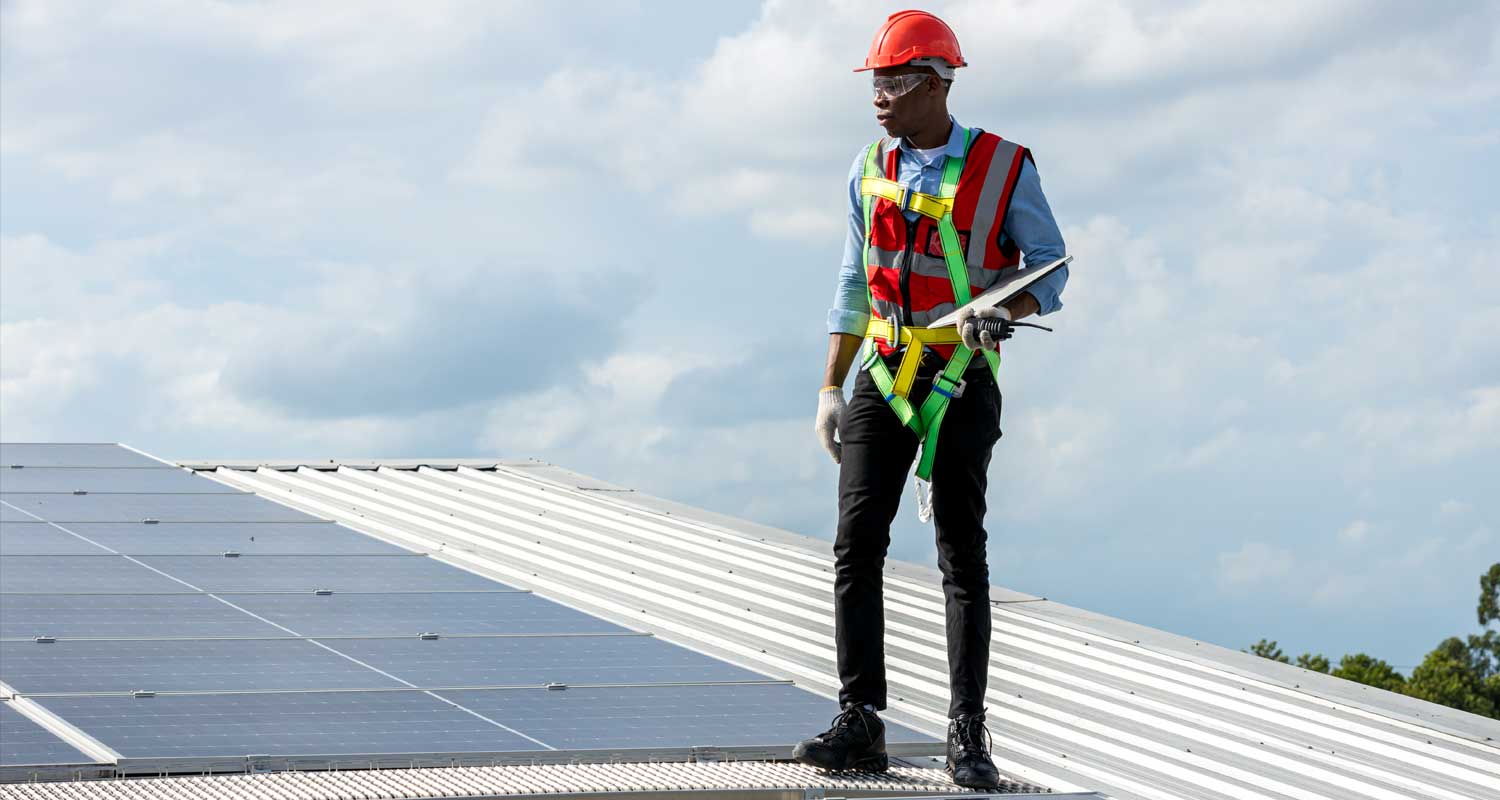
    Rooftop solarA call for collaboration

    Rather than retreating from SSEG due to fear, we need stronger collaboration between municipalities, regulators and the private sector. At Wetility, we are not here to replace municipalities or Eskom. We want to collaborate towards affordable, clean, and reliable energy for all South Africans.

    That is a vision worth pursuing. The stakes are high. Residential energy use is one of South Africa’s biggest sources of carbon emissions. Transitioning to rooftop solar is not just good for households – it is essential for meeting international climate commitments and limiting global warming to 1.5°C.

    But we cannot get there if fear stalls progress. SSEG is not something to fear – it is a natural, necessary part of the energy transition. And with the right partners, the right policies and the right process improvements, it can work for everyone.

    • The author, Johanna Horz, is chief of staff at Wetility
    Don’t miss:

    Solar panel prices to stay low for longer

    Follow TechCentral on Google News Add TechCentral as your preferred source on Google


    Eskom GIZ Sagen SSEG Wetility
    WhatsApp YouTube
    Share. Facebook Twitter LinkedIn WhatsApp Telegram Email Copy Link
    Previous ArticleVoys’ 2025 tech essentials for business owners: are you ready for the future?
    Next Article South Africa enters new era of electricity trading

    Related Posts

    Setback for South Africa's electricity market reform

    Setback for South Africa’s electricity market reform

    26 March 2026
    Eskom must build renewables or face extinction: Mteto Nyati

    Eskom must build renewables or face extinction: Mteto Nyati

    19 March 2026
    Setback for South Africa's electricity market reform

    Eskom marks 300 days without load shedding

    16 March 2026
    Add A Comment

    Comments are closed.

    Company News
    Synthesis helps financial enterprises transform with new Gemini Enterprise - Digicloud Africa

    Synthesis helps financial enterprises transform with new Gemini Enterprise

    2 April 2026
    The next churn wave is already in your contact centre conversations - CallMiner

    The next churn wave is already in your contact centre conversations

    2 April 2026
    Mining's problem isn't output, it's execution - Workday

    Mining’s problem isn’t output, it’s execution – Workday

    1 April 2026
    Opinion
    The conflict of interest at the heart of PayShap's slow adoption - Cheslyn Jacobs

    The conflict of interest at the heart of PayShap’s slow adoption

    26 March 2026
    South Africa's energy future hinges on getting wheeling right - Aishah Gire

    South Africa’s energy future hinges on getting wheeling right

    10 March 2026
    Hold the doom: the case for a South African comeback - Duncan McLeod

    Apple just dropped a bomb on the Windows world

    5 March 2026

    Subscribe to Updates

    Get the best South African technology news and analysis delivered to your e-mail inbox every morning.

    Latest Posts
    Gaping holes in South African government cyber defences

    Gaping holes in South African government cyber defences

    2 April 2026
    EV charging start-up Charge bypasses JSE for token-based raise - Joubert Roux

    EV charging start-up Charge bypasses JSE for token-based raise

    2 April 2026
    Ring, reject, repeat: South Africa's spam call crisis

    Ring, reject, repeat: South Africa’s spam call crisis

    2 April 2026
    Amazon in talks to buy satellite operator Globalstar

    Amazon in talks to buy satellite operator Globalstar

    2 April 2026
    © 2009 - 2026 NewsCentral Media
    • Cookie policy (ZA)
    • TechCentral – privacy and Popia

    Type above and press Enter to search. Press Esc to cancel.

    Manage consent

    TechCentral uses cookies to enhance its offerings. Consenting to these technologies allows us to serve you better. Not consenting or withdrawing consent may adversely affect certain features and functions of the website.

    Functional Always active
    The technical storage or access is strictly necessary for the legitimate purpose of enabling the use of a specific service explicitly requested by the subscriber or user, or for the sole purpose of carrying out the transmission of a communication over an electronic communications network.
    Preferences
    The technical storage or access is necessary for the legitimate purpose of storing preferences that are not requested by the subscriber or user.
    Statistics
    The technical storage or access that is used exclusively for statistical purposes. The technical storage or access that is used exclusively for anonymous statistical purposes. Without a subpoena, voluntary compliance on the part of your Internet Service Provider, or additional records from a third party, information stored or retrieved for this purpose alone cannot usually be used to identify you.
    Marketing
    The technical storage or access is required to create user profiles to send advertising, or to track the user on a website or across several websites for similar marketing purposes.
    • Manage options
    • Manage services
    • Manage {vendor_count} vendors
    • Read more about these purposes
    View preferences
    • {title}
    • {title}
    • {title}