Close Menu
TechCentralTechCentral

    Subscribe to the newsletter

    Get the best South African technology news and analysis delivered to your e-mail inbox every morning.

    Facebook X (Twitter) YouTube LinkedIn
    WhatsApp Facebook X (Twitter) LinkedIn YouTube
    TechCentralTechCentral
    • News
      Vuyani Jarana: Mobile coverage masks a deeper broadband failure

      Vuyani Jarana: Mobile coverage masks a deeper broadband failure

      30 January 2026
      SABC Plus to flight Microsoft AI training videos

      SABC Plus to flight Microsoft AI training videos

      30 January 2026
      Fibre ducts

      Fibre industry consolidation in KZN

      30 January 2026
      Watts & Wheels S1E3: 'BYD's Corolla Cross challenger'

      Watts & Wheels S1E3: ‘BYD’s Corolla Cross challenger’

      30 January 2026
      What ordinary South Africans really think of AI

      What ordinary South Africans really think of AI

      30 January 2026
    • World
      Apple acquires audio AI start-up Q.ai

      Apple acquires audio AI start-up Q.ai

      30 January 2026
      SpaceX IPO may be largest in history

      SpaceX IPO may be largest in history

      28 January 2026
      Nvidia throws AI at the weather

      Nvidia throws AI at weather forecasting

      27 January 2026
      Debate erupts over value of in-flight Wi-Fi

      Debate erupts over value of in-flight Wi-Fi

      26 January 2026
      Intel takes another hit - Intel CEO Lip-Bu Tan. Laure Andrillon/Reuters

      Intel takes another hit

      23 January 2026
    • In-depth
      How liberalisation is rewiring South Africa's power sector

      How liberalisation is rewiring South Africa’s power sector

      21 January 2026
      The top-performing South African tech shares of 2025

      The top-performing South African tech shares of 2025

      12 January 2026
      Digital authoritarianism grows as African states normalise internet blackouts

      Digital authoritarianism grows as African states normalise internet blackouts

      19 December 2025
      TechCentral's South African Newsmakers of 2025

      TechCentral’s South African Newsmakers of 2025

      18 December 2025
      Black Friday goes digital in South Africa as online spending surges to record high

      Black Friday goes digital in South Africa as online spending surges to record high

      4 December 2025
    • TCS
      TCS+ | How Cloud On Demand is helping SA businesses succeed in the cloud - Xhenia Rhode, Dion Kalicharan

      TCS+ | Cloud On Demand and Consnet: inside a real-world AWS partner success story

      30 January 2026
      Watts & Wheels S1E3: 'BYD's Corolla Cross challenger'

      Watts & Wheels S1E2: ‘China attacks, BMW digs in, Toyota’s sublime supercar’

      23 January 2026

      TCS+ | Why cybersecurity is becoming a competitive advantage for SA businesses

      20 January 2026
      Watts & Wheels S1E3: 'BYD's Corolla Cross challenger'

      Watts & Wheels: S1E1 – ‘William, Prince of Wheels’

      8 January 2026
      TCS+ | Africa's digital transformation - unlocking AI through cloud and culture - Cliff de Wit Accelera Digital Group

      TCS+ | Cloud without culture won’t deliver AI: Accelera’s Cliff de Wit

      12 December 2025
    • Opinion
      South Africa's skills advantage is being overlooked at home - Richard Firth

      South Africa’s skills advantage is being overlooked at home

      29 January 2026
      Why Elon Musk's Starlink is a 'hard no' for me - Songezo Zibi

      Why Elon Musk’s Starlink is a ‘hard no’ for me

      26 January 2026
      South Africa's new fibre broadband battle - Duncan McLeod

      South Africa’s new fibre broadband battle

      20 January 2026
      AI moves from pilots to production in South African companies - Nazia Pillay SAP

      AI moves from pilots to production in South African companies

      20 January 2026
      South Africa's new fibre broadband battle - Duncan McLeod

      ANC’s attack on Solly Malatsi shows how BEE dogma trumps economic reality

      14 December 2025
    • Company Hubs
      • Africa Data Centres
      • AfriGIS
      • Altron Digital Business
      • Altron Document Solutions
      • Altron Group
      • Arctic Wolf
      • AvertITD
      • Braintree
      • CallMiner
      • CambriLearn
      • CYBER1 Solutions
      • Digicloud Africa
      • Digimune
      • Domains.co.za
      • ESET
      • Euphoria Telecom
      • Incredible Business
      • iONLINE
      • IQbusiness
      • Iris Network Systems
      • LSD Open
      • NEC XON
      • Netstar
      • Network Platforms
      • Next DLP
      • Ovations
      • Paracon
      • Paratus
      • Q-KON
      • SevenC
      • SkyWire
      • Solid8 Technologies
      • Telit Cinterion
      • Tenable
      • Vertiv
      • Videri Digital
      • Vodacom Business
      • Wipro
      • Workday
      • XLink
    • Sections
      • AI and machine learning
      • Banking
      • Broadcasting and Media
      • Cloud services
      • Contact centres and CX
      • Cryptocurrencies
      • Education and skills
      • Electronics and hardware
      • Energy and sustainability
      • Enterprise software
      • Financial services
      • Information security
      • Internet and connectivity
      • Internet of Things
      • Investment
      • IT services
      • Lifestyle
      • Motoring
      • Public sector
      • Retail and e-commerce
      • Satellite communications
      • Science
      • SMEs and start-ups
      • Social media
      • Talent and leadership
      • Telecoms
    • Events
    • Advertise
    TechCentralTechCentral
    Home » Sections » Energy and sustainability » South Africa’s grim legacy of load shedding

    South Africa’s grim legacy of load shedding

    Government must urgently end the crisis by shifting decisively towards a renewable energy economy.
    By Mark Swilling19 April 2024
    Twitter LinkedIn Facebook WhatsApp Email Telegram Copy Link
    News Alerts
    WhatsApp

    In 1994, apartheid ended and the ANC won South Africa’s first-ever democratic elections, promising “Electricity for All” as part of its Reconstruction and Development Programme.

    Back then, only 36% of all South Africans had electricity in their homes. The development programme promised to double that number by electrifying an additional 2.5 million homes by 2000.

    This seemed achievable – during the 1980s, the state-owned power utility Eskom’s build programme was so aggressive it had surplus electricity. Some power stations even had to be mothballed. By 1994, South Africa’s coal industry was generating high-quality coal which was exported mainly to Europe. These earnings cross-subsidised low-quality, inexpensive coal provided by mines built next door to the coal-fired power stations, which was delivered affordably by conveyor belt. These factors made electricity very cheap.

    Government must urgently end the current crisis by shifting decisively towards a renewable energy economy

    Thirty years later, Eskom is the biggest challenge facing the country. It has a huge debt of over R400-billion despite receiving over R270-billion in government bailouts since 2008. Besides this, anyone who is 17 or younger has never experienced what it means to live without regular scheduled power cuts. These are a permanent feature of daily life and are causing an economic crisis.

    I have researched transitions for 30 years. If the South African government does not want to repeat the mistakes of the past, it must urgently end the current crisis by shifting decisively towards a renewable energy economy based on South Africa’s extraordinary wind and solar resources.

    What went wrong

    Just two years after apartheid ended, the ANC government discarded the Reconstruction and Development Programme in favour of a new macroeconomic policy: the Growth, Employment and Redistribution (Gear) policy, which was based on a set of neoliberal assumptions about a limited role for the state. Two years after that, a new white paper on energy predicted that South Africa would run out of energy by 2008 if new power stations were not built.

    Eskom tried to convince the government to allow it to build more power stations. But under the macroeconomic policy, the government decided that new power stations must be built by black-empowered businesses. For that to work, the prices of electricity needed to increase to make it financially viable for the businesses.

    Read: Load shedding crisis: government ‘should be ashamed’

    Exports were dependent on cheap electricity, however, so new power stations were never built. The white paper was accurate in predicting when the country would run out of power. Scheduled power cuts began in 2007 and have continued ever since. The then-president, Thabo Mbeki, apologised in 2007 for ignoring the need for new power stations.

    In 2008, Mbeki was ousted and Jacob Zuma came to power. This heralded the beginning of the state capture period. In 2010, the government took out its first big loan – of US$3.75-billion – from the World Bank to build two new coal-fired power stations, Medupi and Kusile. A shadow state was built, setting its sights on corruptly benefiting from the build. Zuma also concluded a deal with Russian President Vladimir Putin to build a fleet of nuclear power stations. Fortunately, when environmental activists took this to court, the deal was ruled illegal.

    At the same time, an Independent Power Producers Procurement Office was set up in 2010 to procure renewable energy as part of the wider Renewable Energy Independent Power Producers Procurement Programme. It rapidly expanded into a large number of renewable energy projects with a capacity of 6.2GW. Put into perspective, South Africa’s total coal-generated electricity capacity today is 48GW.

    In 2015, after this programme opened its fourth round of bids and selected 13 new renewable energy providers, Eskom’s two CEOs, Brian Molefe and Matshela Koko, refused to sign the power purchase agreements. This was the apex of the government’s failure to address the energy crisis. The factories that had opened to manufacture windmills and solar panels started to close down.

    This was a fatal error. If the Eskom CEOs had signed the power purchase agreements, it would have brought online 5GW of renewables. That would have eliminated 95% of the load shedding that South Africa has today.

    The current dilemma

    After becoming president in 2018, Cyril Ramaphosa merged the mineral resources and energy portfolios and the new minister, Gwede Mantashe, released an Integrated Resource Plan in 2019. This provided for a very large increase in the number of renewables and the closure of several coal-fired power stations. But Mantashe later delayed the procurement of renewables, deepening the crisis at Eskom.

    Pravin Gordhan, the minister of public enterprises and main shareholder representative for Eskom, said the solution was the unbundling of Eskom, provided for in the Eskom road map released in 2019.
    But unbundling took a long time. Dividing the utility up was approved in 2019 but the National Transmission Company was only set up in 2024.

    The power cuts continued, and by 2023 had reached their worst level, with outages occurring nearly every day

    By 2020, then-Eskom CEO Andre de Ruyter realised that unless large quantities of generating capacity were brought online very quickly, there would be permanent scheduled power cuts by 2025. (These became part of daily life sooner – by 2023.)

    Coal and nuclear plants could not be built quickly enough to end the permanent power cuts, but it takes about two years to build a wind or solar farm, De Ruyter argued. He later resigned from Eskom after Mantashe accused him of treason for allowing power cuts to happen.

    The power cuts continued, and by 2023 had reached their worst level, with outages occurring nearly every day, for up to 11 hours a day. Ramaphosa appointed an electricity minister, Kgosientsho Ramokgopa, and released the Energy Action Plan to end power cuts.

    This is starting to pay off. Performance of the coal-fired power stations is improving, and 30GW of renewables (almost half the existing installed capacity) is in the pipeline. It cost home and business owners R65-billion to buy rooftop solar systems that generate 4.4GW of electricity. Today, this has increased to 5.4GW of renewable energy, which I calculate has cost R75-billion to R80-billion. These actions have started to alleviate power cuts.

    Solutions

    The government is again split over how to move forward. The country’s latest national electricity plan (the 2023 Integrated Resource Plan) reverses the 2019 commitments to renewable energy and coal closure and proposes to keep the coal-fired power stations open (which will become increasingly costly and dysfunctional). It dramatically increases the emphasis on gas – it is a gas infrastructure plan and South Africa doesn’t have much gas. The country will have to import gas and pay in US dollars, thus increasing its dependence on the dollar.

    South Africa has some of the best wind and solar resources in the world. There is no need to force a shift from coal to gas. Instead, South Africa needs to transition to renewable energy plus backup, which is batteries and a substantial gas reserve.
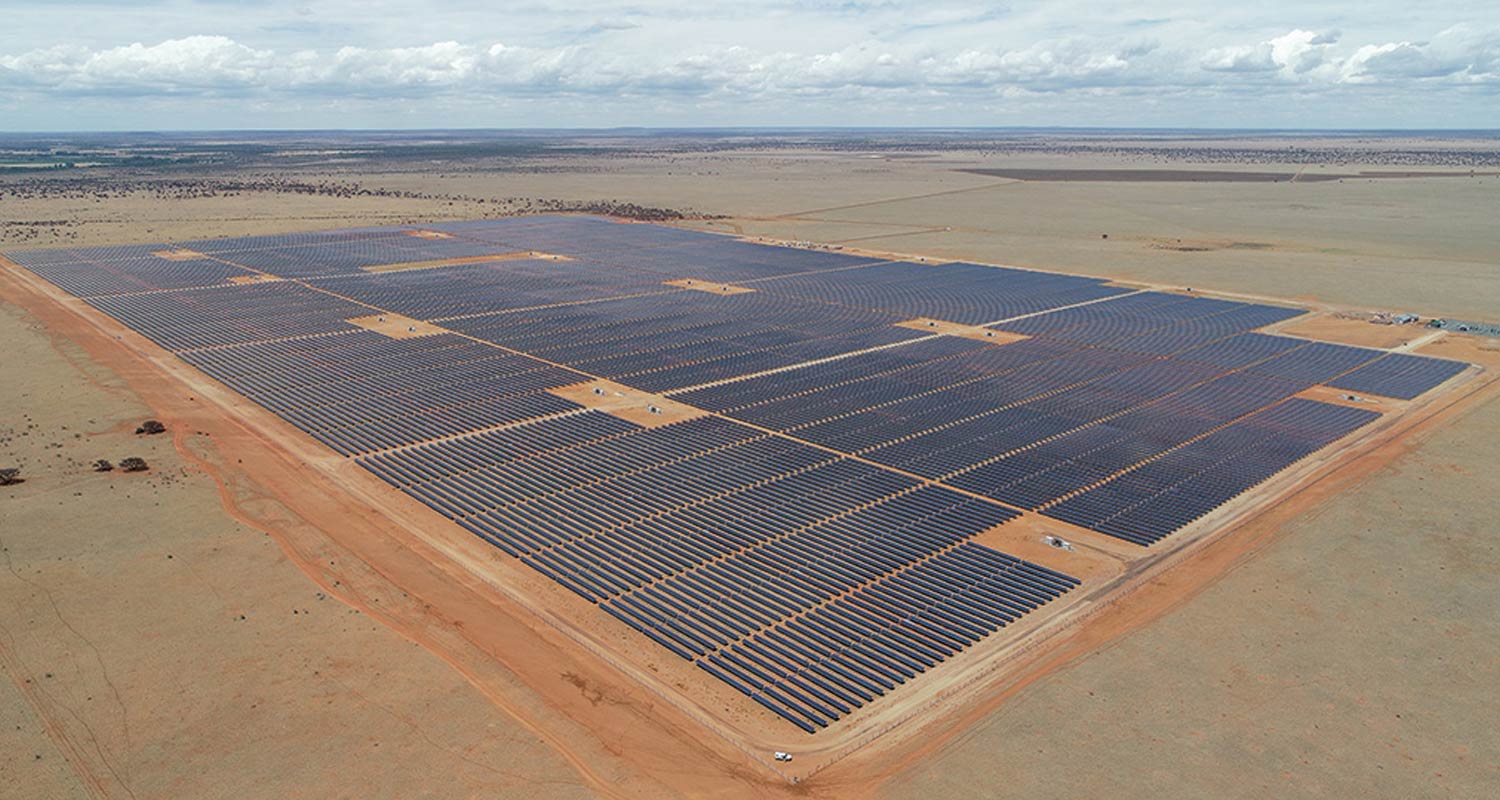
    The author argues that renewables are the key to solving South Africa’s energy crisis

    The latest national electricity plan is financially unviable and not aligned to climate commitments. The plan should be withdrawn and replaced with a realistic plan based on open-source modelling. Such a plan should not emerge from behind closed doors at the department of mineral resources & energy.The Conversation

    • The author, Mark Swilling, is distinguished professor of sustainable development, Stellenbosch University
    • This article is republished from The Conversation under a Creative Commons licence

    Get breaking news alerts from TechCentral on WhatsApp


    Cyril Ramaphosa Eskom Jacob Zuma Mark Swilling
    WhatsApp YouTube Follow on Google News Add as preferred source on Google
    Share. Facebook Twitter LinkedIn WhatsApp Telegram Email Copy Link
    Previous ArticleAfren Technologies redefines business connectivity
    Next Article Big changes coming for JSE-listed firms

    Related Posts

    BMW South Africa warns EV policy paralysis is stalling investment - Peter van Binsbergen

    BMW South Africa warns EV policy paralysis is stalling investment

    29 January 2026
    Outa warns homeowners against rushing to register rooftop solar

    Outa warns homeowners against rushing to register rooftop solar

    27 January 2026
    Digital IDs will launch before year-end, government says - Maropene Ramokgopa

    Digital IDs will launch before year-end, government says

    23 January 2026
    Company News
    Huawei turns 25 in South Africa, celebrates with major device discounts

    Huawei turns 25 in South Africa, celebrates with major device discounts

    30 January 2026
    Phishing has not disappeared, but it has grown up - KnowBe4

    Phishing has not disappeared, but it has grown up

    30 January 2026
    Smartphone affordability: South Africa's new economic divide - PayJoy

    Smartphone affordability: South Africa’s new economic divide

    29 January 2026
    Opinion
    South Africa's skills advantage is being overlooked at home - Richard Firth

    South Africa’s skills advantage is being overlooked at home

    29 January 2026
    Why Elon Musk's Starlink is a 'hard no' for me - Songezo Zibi

    Why Elon Musk’s Starlink is a ‘hard no’ for me

    26 January 2026
    South Africa's new fibre broadband battle - Duncan McLeod

    South Africa’s new fibre broadband battle

    20 January 2026

    Subscribe to Updates

    Get the best South African technology news and analysis delivered to your e-mail inbox every morning.

    Latest Posts
    Vuyani Jarana: Mobile coverage masks a deeper broadband failure

    Vuyani Jarana: Mobile coverage masks a deeper broadband failure

    30 January 2026
    TCS+ | How Cloud On Demand is helping SA businesses succeed in the cloud - Xhenia Rhode, Dion Kalicharan

    TCS+ | Cloud On Demand and Consnet: inside a real-world AWS partner success story

    30 January 2026
    Huawei turns 25 in South Africa, celebrates with major device discounts

    Huawei turns 25 in South Africa, celebrates with major device discounts

    30 January 2026
    SABC Plus to flight Microsoft AI training videos

    SABC Plus to flight Microsoft AI training videos

    30 January 2026
    © 2009 - 2026 NewsCentral Media
    • Cookie policy (ZA)
    • TechCentral – privacy and Popia

    Type above and press Enter to search. Press Esc to cancel.

    Manage consent

    TechCentral uses cookies to enhance its offerings. Consenting to these technologies allows us to serve you better. Not consenting or withdrawing consent may adversely affect certain features and functions of the website.

    Functional Always active
    The technical storage or access is strictly necessary for the legitimate purpose of enabling the use of a specific service explicitly requested by the subscriber or user, or for the sole purpose of carrying out the transmission of a communication over an electronic communications network.
    Preferences
    The technical storage or access is necessary for the legitimate purpose of storing preferences that are not requested by the subscriber or user.
    Statistics
    The technical storage or access that is used exclusively for statistical purposes. The technical storage or access that is used exclusively for anonymous statistical purposes. Without a subpoena, voluntary compliance on the part of your Internet Service Provider, or additional records from a third party, information stored or retrieved for this purpose alone cannot usually be used to identify you.
    Marketing
    The technical storage or access is required to create user profiles to send advertising, or to track the user on a website or across several websites for similar marketing purposes.
    • Manage options
    • Manage services
    • Manage {vendor_count} vendors
    • Read more about these purposes
    View preferences
    • {title}
    • {title}
    • {title}