Last week, Ukrainian drone operators found that their satellite links stopped working above about 160km/h. Interceptor drones built to hunt down Russian attack drones suddenly couldn’t keep up with their targets. Nobody in Kyiv had been warned.
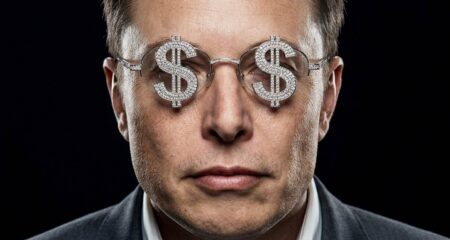
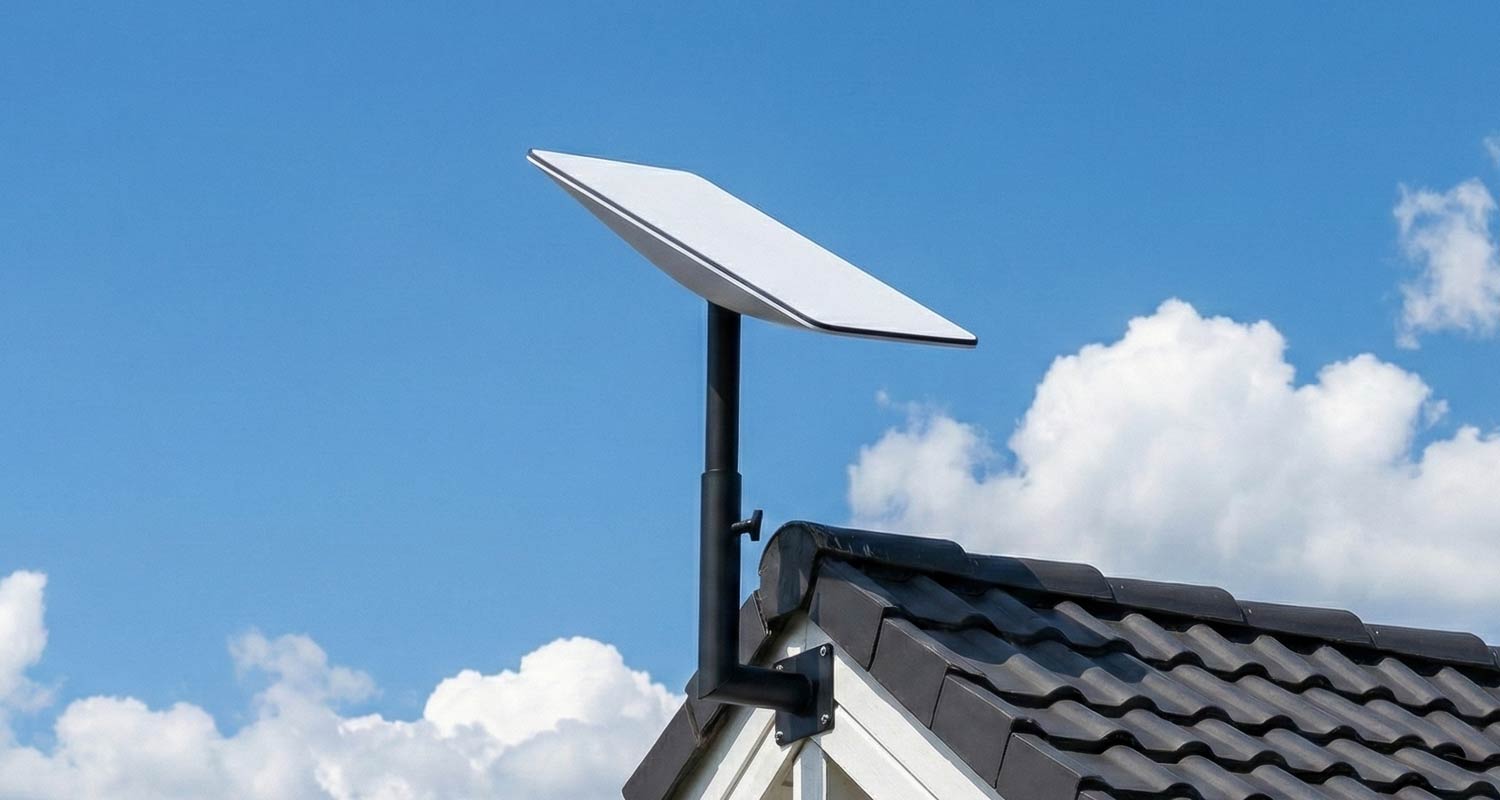
The cap hit Starshield, the military version of Elon Musk’s Starlink. Who ordered it depends on whom you read. Three US officials told Reuters it came from a White House directive to the Pentagon. The Telegraph reported that Musk pitched the idea to Donald Trump, who agreed. On Tuesday, the Wall Street Journal reported that Musk had ordered it himself.
Musk said on X that limits were “decided by the US military and ultimately Potus”, referring to the US president. Trump said he didn’t know who was responsible. His defence secretary, Pete Hegseth, said Starlink “has the option to make decisions concerning its terms of service”.
In 2023, Musk confirmed he had refused Kyiv’s request to use Starlink for a drone attack on Russian ships off Crimea.
Whether it was Musk or Trump hardly matters. One company, answerable to its founder and to Washington, degraded a country’s communications overnight for reasons that had nothing to do with the people relying on the service. In Ukraine, soldiers and civilians pay for that with their lives. Elsewhere, the cost would be lost business, cut-off clinics and emergency services left without a link.
For three years, South Africa’s Starlink debate has been almost entirely about empowerment. SpaceX won’t sell 30% of a local subsidiary to historically disadvantaged groups. Communications minister Solly Malatsi has tried to open a route through equity-equivalent investment programmes, and communications regulator Icasa says that route needs a change to the Electronic Communications Act.
More important question
That fight matters to the people having it, to be sure, but it has crowded out a more important question: who controls the switch?
South Africa is already exposed. And Starlink is building direct-to-phone services that could one day carry ordinary mobile traffic. Farms, mines, lodges and rural clinics already lean on satellite links where fibre and towers don’t reach. The deeper satellites sink into South Africa’s networks, the more it matters whose finger is on the switch, and what happens when that person loses his temper.
Icasa already knows how to ask difficult questions of satellite operators. It has told them that where their gateway Earth stations sit outside the country, as is normal for low-Earth orbit networks, they must show how lawful interception will work. If the state can insist on being able to listen in, it can insist that nobody outside the country can switch the service off.
It’s something that should be written into every satellite licence. No throttling, no geographic cut-offs and no deliberate degradation of service aimed at a customer, a region or the country, except on the order of a South African court or the regulator. Make the penalty the licence itself, plus fines large enough to register with a company that listed at a valuation of US$2-trillion.
The best protection against one operator’s switch is several operators. South Africa should license as many satellite constellations as it can, as quickly as it can.
The queue is forming. Amazon’s Leo constellation is coming through Herotel’s Evry service, with a commercial launch expected in 2027. Eutelsat’s OneWeb is available through local resellers. China’s SpaceSail, the Qianfan constellation, has signalled that it wants to provide services in South Africa, too.
License all of them, including the Chinese. A Chinese constellation carries its own political risks, and anyone who thinks Beijing would never pull a lever should look at how it runs its own internet. But depending on one superpower’s satellites is no safer than depending on another’s. A country whose businesses, mines, farms and emergency services can move between three or four constellations is far harder to hold hostage than one hooked on a single provider.
South Africa can’t build a constellation of its own. But it can refuse to let any foreign operator become indispensable, and it can set the terms on which they all operate.
Let Starlink in, along with Amazon, the Europeans and the Chinese. Then make it a condition of every licence that nobody gets to flick the switch on South African soil. – © 2026 NewsCentral Media
- The author, Duncan McLeod, is editor of TechCentral