


Close Menu
TechCentralTechCentral

    Subscribe to the newsletter

    Get the best South African technology news and analysis delivered to your e-mail inbox every morning.

    Facebook X (Twitter) YouTube LinkedIn
    WhatsApp Facebook X (Twitter) LinkedIn YouTube
    TechCentralTechCentral
    • News
      MVNO business shines in Cell C's first post-listing results - Jorges Mendes

      MVNO business shines in Cell C’s first post-listing results

      13 February 2026
      Ramaphosa presses ahead with Eskom break-up - Cyril Ramaphosa

      Ramaphosa presses ahead with Eskom break-up

      13 February 2026
      Cell C cleans up its balance sheet but faces tough trading reality

      Cell C cleans up its balance sheet but faces tough trading reality

      13 February 2026
      The key technology takeaways from Ramaphosa's 2026 Sona - Cyril Ramaphosa

      The key technology takeaways from Ramaphosa’s 2026 Sona

      13 February 2026
      Toyota SA CEO: NEV inaction will cost South Africa its motoring industry - Andrew Kirby

      Toyota SA CEO: NEV inaction will cost South Africa its motoring industry

      12 February 2026
    • World
      Russia bans WhatsApp

      Russia bans WhatsApp

      12 February 2026
      EU regulators take aim at WhatsApp

      EU regulators take aim at WhatsApp

      9 February 2026
      Musk hits brakes on Mars mission

      Musk hits brakes on Mars mission

      9 February 2026
      Crypto firm accidentally sends R700-billion in bitcoin to its users

      Crypto firm accidentally sends R700-billion in bitcoin to its users

      8 February 2026
      AI won't replace software, says Nvidia CEO amid market rout - Jensen Huang

      AI won’t replace software, says Nvidia CEO amid market rout

      4 February 2026
    • In-depth
      How liberalisation is rewiring South Africa's power sector

      How liberalisation is rewiring South Africa’s power sector

      21 January 2026
      The top-performing South African tech shares of 2025

      The top-performing South African tech shares of 2025

      12 January 2026
      Digital authoritarianism grows as African states normalise internet blackouts

      Digital authoritarianism grows as African states normalise internet blackouts

      19 December 2025
      TechCentral's South African Newsmakers of 2025

      TechCentral’s South African Newsmakers of 2025

      18 December 2025
      Black Friday goes digital in South Africa as online spending surges to record high

      Black Friday goes digital in South Africa as online spending surges to record high

      4 December 2025
    • TCS
      Watts & Wheels S1E4: 'We drive an electric Uber'

      Watts & Wheels S1E4: ‘We drive an electric Uber’

      10 February 2026
      TCS+ | How Cloud On Demand is helping SA businesses succeed in the cloud - Xhenia Rhode, Dion Kalicharan

      TCS+ | Cloud On Demand and Consnet: inside a real-world AWS partner success story

      30 January 2026
      Watts & Wheels S1E4: 'We drive an electric Uber'

      Watts & Wheels S1E3: ‘BYD’s Corolla Cross challenger’

      30 January 2026
      Watts & Wheels S1E4: 'We drive an electric Uber'

      Watts & Wheels S1E2: ‘China attacks, BMW digs in, Toyota’s sublime supercar’

      23 January 2026

      TCS+ | Why cybersecurity is becoming a competitive advantage for SA businesses

      20 January 2026
    • Opinion
      A million reasons monopolies don't work - Duncan McLeod

      A million reasons monopolies don’t work

      10 February 2026
      Eskom unbundling U-turn threatens to undo hard-won electricity gains - Busi Mavuso

      Eskom unbundling U-turn threatens to undo hard-won electricity gains

      9 February 2026
      South Africa's skills advantage is being overlooked at home - Richard Firth

      South Africa’s skills advantage is being overlooked at home

      29 January 2026
      Why Elon Musk's Starlink is a 'hard no' for me - Songezo Zibi

      Why Elon Musk’s Starlink is a ‘hard no’ for me

      26 January 2026
      A million reasons monopolies don't work - Duncan McLeod

      South Africa’s new fibre broadband battle

      20 January 2026
    • Company Hubs
      • Africa Data Centres
      • AfriGIS
      • Altron Digital Business
      • Altron Document Solutions
      • Altron Group
      • Arctic Wolf
      • AvertITD
      • Braintree
      • CallMiner
      • CambriLearn
      • CYBER1 Solutions
      • Digicloud Africa
      • Digimune
      • Domains.co.za
      • ESET
      • Euphoria Telecom
      • Incredible Business
      • iONLINE
      • IQbusiness
      • Iris Network Systems
      • LSD Open
      • Mitel
      • NEC XON
      • Netstar
      • Network Platforms
      • Next DLP
      • Ovations
      • Paracon
      • Paratus
      • Q-KON
      • SevenC
      • SkyWire
      • Solid8 Technologies
      • Telit Cinterion
      • Tenable
      • Vertiv
      • Videri Digital
      • Vodacom Business
      • Wipro
      • Workday
      • XLink
    • Sections
      • AI and machine learning
      • Banking
      • Broadcasting and Media
      • Cloud services
      • Contact centres and CX
      • Cryptocurrencies
      • Education and skills
      • Electronics and hardware
      • Energy and sustainability
      • Enterprise software
      • Financial services
      • Information security
      • Internet and connectivity
      • Internet of Things
      • Investment
      • IT services
      • Lifestyle
      • Motoring
      • Public sector
      • Retail and e-commerce
      • Satellite communications
      • Science
      • SMEs and start-ups
      • Social media
      • Talent and leadership
      • Telecoms
    • Events
    • Advertise
    TechCentralTechCentral
    Home » Sections » Energy and sustainability » Why South Africa struggles to end load shedding

    Why South Africa struggles to end load shedding

    A government monopoly in the generation, transmission, distribution and sale of electricity is highly inefficient.
    By Eustace Davie30 January 2024
    Twitter LinkedIn Facebook WhatsApp Email Telegram Copy Link
    News Alerts
    WhatsApp

    Worldwide experience has revealed that a government-owned vertical monopoly in the generation, transmission, distribution and sale of electricity is the most inefficient arrangement for attaining the lowest-cost and most reliable delivery to consumers.

    Many countries have thus set out to remedy the deficiencies by changing their electricity distribution and generation structures. The South African government, which inherited an electricity monopoly from its pre-democracy predecessor, did not embark on urgently needed reform to bring the country’s electricity system into line with modern experience.

    The state-owned enterprise Eskom now probably embodies a case study of everything that should not be done if a government wishes to achieve the best electricity results for its citizens. South Africa’s experience with its electricity delivery systems has demonstrated that such systems should be planned and developed with great care. Experience has shown electricity generation and delivery systems should not be undertaken by teams under the control of government officials.

    The transmission grid should be owned and managed by an experienced independent grid management company

    To remove potential conflict between Eskom and the entry of independent power producers (IPPs), the transmission grid should be owned and managed by an experienced independent grid management company.

    The UK government sold its transmission grid to the National Power Company, subject to price and other regulation by Ofgem to solve this problem. In 2009, the EU issued a directive to member countries that reads: “Without effective separation of networks from activities of generation and supply (effective unbundling), there is an inherent risk of discrimination, not only in the operation of the network but also in the incentives for vertically integrated undertakings to invest adequately in their networks.”

    A longer-term Southern African objective could include connecting all IPPs in Southern Africa to a common grid that eventually covers all sub-Saharan grids, which would link with the South African and sub-Saharan grids as they extend northwards.

    Learn from the NERC

    As this process occurs it would appear from the American experience and the growth of production in the southern areas of Africa, that a good case can be made for the establishment of a competent organisation, similar to the North American Electricity Reliability Corporation (NERC), to monitor the additions to the African grids to ensure reliability and security.

    The NERC is a not-for-profit international regulatory authority whose mission is to assure the effective reduction of risks to the reliability and security of the grid. It develops and enforces reliability standards and annually assesses seasonal and long‐term reliability. It monitors the bulk power system through system awareness, and educates, trains and certifies industry personnel.

    Read: Eskom in dire straits

    The NERC’s area of responsibility spans US, Canada and the northern portion of Baja California in Mexico. It is the electric reliability organisation for North America, subject to oversight by the federal energy regulatory commission and governmental authorities in Canada. NERC’s area of authority therefore includes owners and operators of the bulk power system, which serves nearly 400 million people.

    Details were recently revealed of plans to create a grid that would incorporate the following 12 sub-Saharan countries: South Africa, Mozambique, Burundi, Tanzania, Kenya, Uganda, Ethiopia, Sudan, Chad, Nigeria, Malawi and Niger. The team of electricity economists that conducted the cost calculations for this large African project were from China, Turkey and Nigeria.

    The plans are in the initial stages, but all aspects of the feasibility of the project have apparently been confirmed in principle. Should the project be adopted and confirmed, South Africa will have to conduct much groundwork.

    Participation in such a project may be just what Eskom needs to bring it out of the load-shedding malaise into which the SOE has fallen. A substantial change in the management of Eskom would be inevitable.

    In the longer term, if the building of the envisaged power grid is completed successfully and in good time, the integrated grids would transform the economies of the entire sub-Saharan Africa.

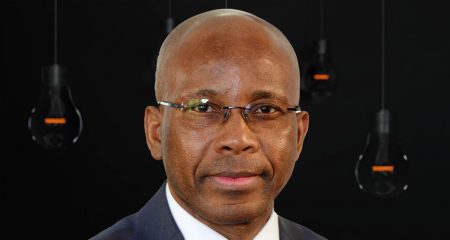
    • The author, Eustace Davie, is a director of the Free Market Foundation and author of Unchain the Child
    Get breaking news alerts from TechCentral on WhatsApp


    Eskom Eustace Davie Free Market Foundation
    WhatsApp YouTube Follow on Google News Add as preferred source on Google
    Share. Facebook Twitter LinkedIn WhatsApp Telegram Email Copy Link
    Previous ArticleWatch out, Apple! Patent wars come to smartwatches
    Next Article Surprising strength in South Africa’s IT services market

    Related Posts

    Nersa blunder triggers sharper electricity tariff increases

    Nersa blunder triggers sharper electricity tariff increases

    9 February 2026
    Eskom unbundling U-turn threatens to undo hard-won electricity gains - Busi Mavuso

    Eskom unbundling U-turn threatens to undo hard-won electricity gains

    9 February 2026
    Eskom lifts load reduction for 140 000 customers

    Eskom lifts load reduction for 140 000 customers

    8 February 2026
    Company News
    Cell C delivers maiden results with growth momentum, financial flexibility - Jorges Mendes

    Cell C delivers maiden results with growth momentum, financial flexibility

    13 February 2026
    Start-up king joins Paratus Rwanda - Innocent Mutimura

    Start-up king joins Paratus Rwanda

    13 February 2026
    How NEC XON tackled identity risk for a major telco - Michael de Neuilly Rice

    How NEC XON tackled identity risk for a major telco

    11 February 2026
    Opinion
    A million reasons monopolies don't work - Duncan McLeod

    A million reasons monopolies don’t work

    10 February 2026
    Eskom unbundling U-turn threatens to undo hard-won electricity gains - Busi Mavuso

    Eskom unbundling U-turn threatens to undo hard-won electricity gains

    9 February 2026
    South Africa's skills advantage is being overlooked at home - Richard Firth

    South Africa’s skills advantage is being overlooked at home

    29 January 2026

    Subscribe to Updates

    Get the best South African technology news and analysis delivered to your e-mail inbox every morning.

    Latest Posts
    Cell C delivers maiden results with growth momentum, financial flexibility - Jorges Mendes

    Cell C delivers maiden results with growth momentum, financial flexibility

    13 February 2026
    MVNO business shines in Cell C's first post-listing results - Jorges Mendes

    MVNO business shines in Cell C’s first post-listing results

    13 February 2026
    Start-up king joins Paratus Rwanda - Innocent Mutimura

    Start-up king joins Paratus Rwanda

    13 February 2026
    Ramaphosa presses ahead with Eskom break-up - Cyril Ramaphosa

    Ramaphosa presses ahead with Eskom break-up

    13 February 2026
    © 2009 - 2026 NewsCentral Media
    • Cookie policy (ZA)
    • TechCentral – privacy and Popia

    Type above and press Enter to search. Press Esc to cancel.

    Manage consent

    TechCentral uses cookies to enhance its offerings. Consenting to these technologies allows us to serve you better. Not consenting or withdrawing consent may adversely affect certain features and functions of the website.

    Functional Always active
    The technical storage or access is strictly necessary for the legitimate purpose of enabling the use of a specific service explicitly requested by the subscriber or user, or for the sole purpose of carrying out the transmission of a communication over an electronic communications network.
    Preferences
    The technical storage or access is necessary for the legitimate purpose of storing preferences that are not requested by the subscriber or user.
    Statistics
    The technical storage or access that is used exclusively for statistical purposes. The technical storage or access that is used exclusively for anonymous statistical purposes. Without a subpoena, voluntary compliance on the part of your Internet Service Provider, or additional records from a third party, information stored or retrieved for this purpose alone cannot usually be used to identify you.
    Marketing
    The technical storage or access is required to create user profiles to send advertising, or to track the user on a website or across several websites for similar marketing purposes.
    • Manage options
    • Manage services
    • Manage {vendor_count} vendors
    • Read more about these purposes
    View preferences
    • {title}
    • {title}
    • {title}