Close Menu
TechCentralTechCentral

    Subscribe to the newsletter

    Get the best South African technology news and analysis delivered to your e-mail inbox every morning.

    Facebook X (Twitter) YouTube LinkedIn
    WhatsApp Facebook X (Twitter) LinkedIn YouTube
    TechCentralTechCentral
    • News
      Fewer stores, more Bash: TFG's online pivot gathers pace

      Fewer stores, more Bash: TFG’s online pivot gathers pace

      6 November 2026
      Tesla pulls the plug on the Cybertruck

      Tesla pulls the plug on the Cybertruck

      6 November 2026
      AA boss gives South Africa's car industry five years - Bobby Ramagwede

      AA boss gives South Africa’s car industry five years

      6 November 2026
      AI's black box may not be so black after all

      AI’s black box may not be so black after all

      6 November 2026
      Big wind farms drive a surge in private power registrations

      Big wind farms drive a surge in private power registrations

      6 November 2026
    • World
      John Ternus faces first big test as Apple CEO - John Ternus

      John Ternus faces first big test as Apple CEO

      2 November 2026
      Alleged Israeli spy company heavily targeted Starlink users

      How online ads were used to hunt Starlink users

      28 October 2026
      Anthropic's IPO stands alone

      Anthropic’s IPO stands alone

      23 October 2026
      PHP flaws trigger global scramble as hackers pounce

      PHP flaws trigger global scramble as hackers pounce

      22 October 2026
      OpenAI turns the tables on Apple in trade secrets fight

      OpenAI turns the tables on Apple in trade secrets fight

      15 October 2026
    • In-depth
      Ducking hell: inside Apple's hidden list of words the iPhone won't suggest

      Ducking hell: inside Apple’s hidden list of words the iPhone won’t suggest

      6 November 2026
      Why investors are souring on Netflix

      Why investors are souring on Netflix

      22 October 2026

      10 days that changed the course of AI

      21 September 2026
      Meta to the AI industry: slow down without us - Mark Zuckerberg

      Meta to the AI industry: slow down without us

      16 September 2026
      Google DeepMind CEO Demis Hassabis. Image: John Sears

      The plan to stop AI from breaking the world

      16 July 2026
    • TCS
      TCS+ | Old Mutual's Celiwe Ross on leading people through AI - Old Mutual

      TCS+ | Old Mutual’s Celiwe Ross on leading people through AI

      6 November 2026
      TCS+ | How the Apple ecosystem drives productivity for SMEs - Sudesh Pillay iStore and Kevin McLennan

      TCS+ | How the Apple ecosystem drives productivity for SMEs

      6 November 2026
      TCS+ | Vox on AI, data rules and omnichannel communication for SMEs

      TCS+ | Vox on AI, data rules and omnichannel communication for SMEs

      26 October 2026
      TCS | The Cape Town firm quietly connecting Eskom, Pep and 6 000 ATMs - Réan van Niekerk, Metacom

      TCS | The Cape Town firm quietly connecting Eskom, Pep and 6 000 ATMs

      23 October 2026
      TCS+ | Boards are underestimating the cost of a cyberattack, says Arctic Wolf - Jason Oehley and Andre Den Hond

      TCS+ | Boards are underestimating the cost of a cyberattack, says Arctic Wolf

      22 October 2026
    • Opinion
      AI's boardroom honeymoon is over - Gary Stocks

      AI’s boardroom honeymoon is over

      22 October 2026
      Before South Africa licenses Starlink, it should look at Ukraine - Duncan McLeod

      Before South Africa licenses Starlink, it should look at Ukraine

      21 October 2026
      Nonkqubela Thathakahle Jordan-Dyani

      Why cybersecurity is now a national security issue for South Africa

      15 October 2026
      When a machine can choose, who does it become? Fanie van Rooyen

      When a machine can choose, who does it become?

      9 October 2026
      Let South Africans jailbreak their way to digital sovereignty - Dirk de Vos

      Let South Africans jailbreak their way to digital sovereignty

      5 October 2026
    • Company News
      • 1Stream
      • Africa Data Centres
      • AfriGIS
      • Altron Digital Business
      • Altron Document Solutions
      • Altron Group
      • Arctic Wolf
      • Ascent Technology
      • AvertITD
      • BBD
      • Braintree
      • CallMiner
      • CambriLearn
      • CM.com
      • Contactable
      • CYBER1 Solutions
      • Digicloud Africa
      • Digimune
      • Domains.co.za
      • ESET
      • Euphoria Telecom
      • HOSTAFRICA
      • Incredible Business
      • iONLINE
      • IQbusiness
      • Iris Network Systems
      • Kaspersky
      • LSD Open
      • Mitel
      • NEC XON
      • Netstar
      • Network Platforms
      • Next DLP
      • Ovations
      • Paracon
      • Paratus
      • Publishared
      • Q-KON
      • SevenC
      • SkyWire
      • Solid8 Technologies
      • Telit Cinterion
      • Telviva
      • Tenable
      • Vertiv
      • Videri Digital
      • Vodacom Business
      • Vox
      • Wipro
      • Workday
      • XLink
    • Sections
      • AI and machine learning
      • Banking
      • Broadcasting and media
      • Cloud services
      • Contact centres and CX
      • Cryptocurrencies
      • Education and skills
      • Electronics and hardware
      • Energy and sustainability
      • Enterprise software
      • Fintech and payments
      • HealthTech
      • Information security
      • Internet and connectivity
      • Internet of things
      • Investment
      • IT services
      • Lifestyle
      • Policy and regulation
      • Public sector
      • Retail and e-commerce
      • Satellite communications
      • Science
      • SMEs and start-ups
      • Social media
      • Talent and leadership
      • Telecoms
      • Watts & Wheels
    • Events
    • Advertise
    TechCentralTechCentral
    Home » Sections » Science » South African astronomy has a long, rich history of discovery

    South African astronomy has a long, rich history of discovery

    By The Conversation18 January 2021
    Twitter LinkedIn Facebook WhatsApp Email Telegram Copy Link
    Get breaking news on WhatsApp

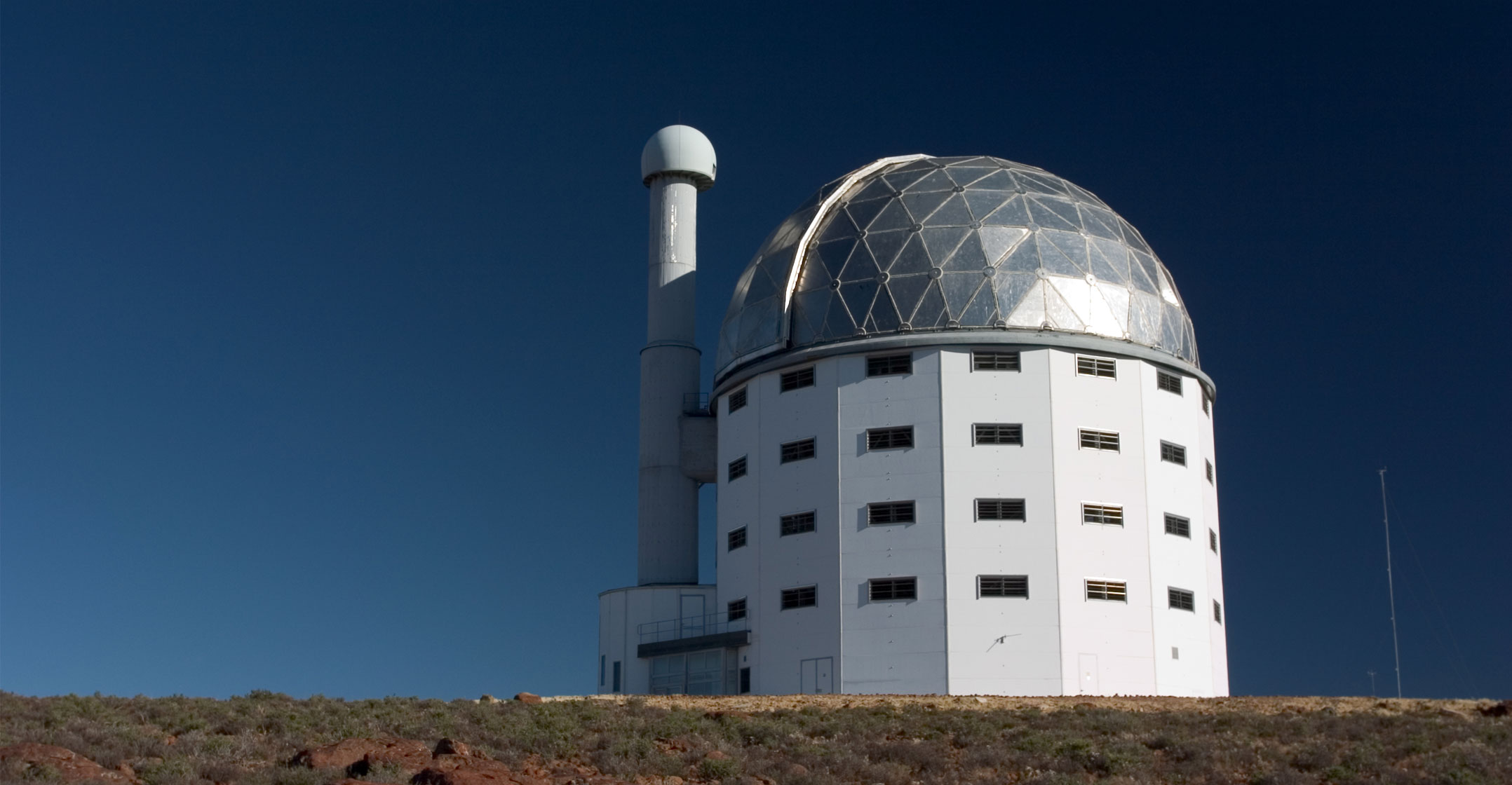
    The Southern African Large Telescope in Sutherland

    The South African Astronomical Observatory in Cape Town is the oldest permanent observatory in the southern hemisphere: It turned 200 in 2020.

    This observatory is a fundamental part of South Africa’s long history of astronomical research, which began when French academic Nicolas-Louis de La Caille visited Cape Town from 1751 to 1753. He undertook a careful examination of every square degree of the southern sky. This resulted in the first comprehensive sky survey ever made, in either hemisphere.

    The Royal Observatory, Cape Town of Good Hope (today the South African Astronomical Observatory) was established in 1820. It became – and remained for 150 years – the most important source of star positions in the southern hemisphere sky. This was in terms of both accuracy and the number of measurements made. In the years that followed its foundation, the observatory’s laborious work led to important scientific discoveries.

    Cape astronomers were responsible for, among other things, the first measurement of the distance to a star; the first photographic sky survey and the accurate measurement of the distance to the sun. They were at the forefront of developments in stellar spectroscopy. This is the detailed analysis of a star’s light to find out its composition and movement towards or away from the sun. They also determined the shape of the Earth in the southern hemisphere and conducted the first accurate countrywide survey measurements of Southern Africa.

    Measuring stellar distances

    In 1543, the mathematician and astronomer Nicolaus Copernicus asserted that Earth orbits the sun. This meant that people should be able to observe the apparent shift in the position of the nearest stars from different points in the Earth’s orbit. But that had not been observed in the centuries that followed. The reason was, of course, that even the nearest stars are incredibly far away and the effect being looked for is very small.

    When the Royal Observatory was founded in 1820, it was equipped with the most accurate star position measuring devices available. Eleven years later, Thomas Henderson used those devices to make the first believable measurements of this effect, known as “parallax”. By observing the angular “movement” of Alpha Centauri – still the second closest star – and knowing also the size of Earth’s orbit, this gave the distance to the star by simple trigonometry.

    When the Royal Observatory was founded in 1820, it was equipped with the most accurate star position measuring devices available

    A different technology, photography, would lead to more important astronomical discoveries at the Cape. All observatories in the 19th century made precise observations of star positions one by one and published catalogues of these. In 1882, the head of the Royal Observatory, David Gill, was surprised to receive a letter from a Mr Simpson, an amateur photographer in Aberdeen, a town elsewhere in the Cape. Simpson had managed to photograph a bright comet that had just appeared. His photographic plates were sensitive enough to register stars in the background. This led to a “lightbulb” moment for Gill: He realised that the positions of stars could now be recorded in quantity on a permanent medium, more reliably than any visual observer could ever hope to do.

    So, he set up a special photographic telescope using the largest lens that he could find and set about making the first photographic star catalogue. This was called the Cape Photographic Durchmusterung after its much more laboriously compiled northern hemisphere equivalent, put together in Bonn, Germany.

    But it wasn’t just Cape Town that hosted an important astronomical site. In 1903, the Johannesburg Observatory was established. It achieved its greatest success in 1915 when its director, Robert Innes, discovered a very faint star near Alpha Centauri.

    On various grounds he claimed it to be the nearest star to Earth; it took many years of investigation before this could be verified. The new discovery was named “Proxima Centauri”, meaning the nearest in the constellation Centaurus. Not only was it the nearest star but at that time of discovery it was the least luminous star ever discovered. Other dimmer stars have been found since, but Proxima still retains its nearest star status and its distance has been thoroughly verified from space satellites.

    Doubling the size of the universe

    In 1948, the private Radcliffe Foundation in the UK set up in Pretoria what was for a time the largest telescope in the southern hemisphere and joint fourth largest in the world. This is a title currently held by the Southern African Large Telescope.

    Early on in the Radcliffe’s existence the then director, David Thackeray, and his colleague Adriaan Wesselink discovered in our neighbouring galaxy the Large Magellanic Cloud, a number of RR Lyrae variable stars that astronomers using smaller telescopes could not detect. These are stars that change their brightness in a well-defined manner over a cycle of a few days and whose average “wattage” is completely predictable.

    By measuring the Magellanic Cloud stars’ average apparent brightness and comparing them to other RR Lyrae stars at known distances they determined that the cosmic distance scale originally published two decades before by Edwin Hubble and others was underestimated by about a factor of two. In effect, they doubled the size of the universe. This result was announced to great acclaim at the triennial meeting of the International Astronomical Union in 1952.

    More to come

    Today, South African astronomy remains at the forefront of many initiatives and discoveries. It has become a leader in the field of radio astronomy with the MeerKAT telescope near Carnarvon and will within a decade be the host of an international project, the Square Kilometre Array.

    This article is adapted from a piece that initially appeared in the South African National Research Foundation’s Science Matters Magazine.The Conversation

    • Written by Ian Glass, associate research astronomer, South African Astronomical Observatory
    • This article is republished from The Conversation under a Creative Commons licence

    Add TechCentral as a preferred source on GoogleFollow TechCentral on Google NewsGet breaking news on WhatsApp


    Ian Glass SAAO South African Astronomical Observatory top
    WhatsApp YouTube
    Share. Facebook Twitter LinkedIn WhatsApp Telegram Email Copy Link
    Previous ArticleInside CD Projekt’s Cyberpunk 2077 launch fiasco
    Next Article Load shedding: The short-term outlook is dire

    Related Posts

    The hole in the law above the Karoo

    The hole in the law above the Karoo

    26 August 2026
    Blood Moon to dazzle South Africa in rare total lunar eclipse

    Blood Moon to dazzle South Africa in rare total lunar eclipse

    7 September 2025
    Outer space is coming to the Mother City - IAU General Assembly

    Outer space is coming to the Mother City

    1 August 2024
    Company News
    XLink brings dual-network resilience to eSim

    XLink brings dual-network resilience to eSim

    6 November 2026
    CambriLearn parents can now ask AI whether their child went to class

    CambriLearn parents can now ask AI whether their child went to class

    6 November 2026
    'There was hunger for alternatives': PSET launches at Purcon 2026 - Ebenezer Smith

    ‘There was hunger for alternatives’: PSET launches at Purcon 2026

    6 November 2026
    Opinion
    AI's boardroom honeymoon is over - Gary Stocks

    AI’s boardroom honeymoon is over

    22 October 2026
    Before South Africa licenses Starlink, it should look at Ukraine - Duncan McLeod

    Before South Africa licenses Starlink, it should look at Ukraine

    21 October 2026
    Nonkqubela Thathakahle Jordan-Dyani

    Why cybersecurity is now a national security issue for South Africa

    15 October 2026

    Subscribe to Updates

    Get the best South African technology news and analysis delivered to your e-mail inbox every morning.

    Latest Posts
    Fewer stores, more Bash: TFG's online pivot gathers pace

    Fewer stores, more Bash: TFG’s online pivot gathers pace

    6 November 2026
    Tesla pulls the plug on the Cybertruck

    Tesla pulls the plug on the Cybertruck

    6 November 2026
    AA boss gives South Africa's car industry five years - Bobby Ramagwede

    AA boss gives South Africa’s car industry five years

    6 November 2026
    AI's black box may not be so black after all

    AI’s black box may not be so black after all

    6 November 2026
    © 2009 - 2026 NewsCentral Media
    Built and maintained by Chronon
    • Cookie policy (ZA)
    • TechCentral – privacy and Popia

    Type above and press Enter to search. Press Esc to cancel.

    Manage consent

    TechCentral uses cookies to enhance its offerings. Consenting to these technologies allows us to serve you better. Not consenting or withdrawing consent may adversely affect certain features and functions of the website.

    Functional Always active
    The technical storage or access is strictly necessary for the legitimate purpose of enabling the use of a specific service explicitly requested by the subscriber or user, or for the sole purpose of carrying out the transmission of a communication over an electronic communications network.
    Preferences
    The technical storage or access is necessary for the legitimate purpose of storing preferences that are not requested by the subscriber or user.
    Statistics
    The technical storage or access that is used exclusively for statistical purposes. The technical storage or access that is used exclusively for anonymous statistical purposes. Without a subpoena, voluntary compliance on the part of your Internet Service Provider, or additional records from a third party, information stored or retrieved for this purpose alone cannot usually be used to identify you.
    Marketing
    The technical storage or access is required to create user profiles to send advertising, or to track the user on a website or across several websites for similar marketing purposes.
    • Manage options
    • Manage services
    • Manage {vendor_count} vendors
    • Read more about these purposes
    View preferences
    • {title}
    • {title}
    • {title}
    🇿🇦 Sign up to the TechCentral newsletter