Close Menu
TechCentralTechCentral

    Subscribe to the newsletter

    Get the best South African technology news and analysis delivered to your e-mail inbox every morning.

    Facebook X (Twitter) YouTube LinkedIn
    WhatsApp Facebook X (Twitter) LinkedIn YouTube
    TechCentralTechCentral
    • News
      Everything you wanted to know about EVs but were afraid to ask

      Everything you wanted to know about EVs but were afraid to ask

      22 July 2026
      Bitcoin at $65 000: stalled, or simply early?

      Bitcoin at $65 000: stalled, or simply early?

      22 July 2026
      Smart ID renewals go mobile - Absa CEO Kenny Fihla with home affairs minister Leon Schreiber

      Smart ID renewals go mobile

      22 July 2026
      South African inflation surges to 5% - a two-year high

      South African inflation surges to 5% – a two-year high

      22 July 2026
      Pepkor builds R21-billion fintech giant - and plans to list it - Pieter Erasmus

      Pepkor builds R21-billion fintech giant – and plans to list it

      22 July 2026
    • World
      Meta AI will now tell parents if their teen is in crisis

      Meta AI will now tell parents if their teen is in crisis

      17 July 2026
      IBM shares crash 25% as AI upends software spending - Arvind Krishna

      IBM shares crash 25% as AI upends software spending

      15 July 2026
      Jony Ive's first OpenAI device: an AI smart speaker - Jony Ive and Sam Altman

      Jony Ive’s first OpenAI device: an AI smart speaker

      15 July 2026
      Stripe, Advent in talks to buy PayPal for $53-billion

      Stripe, Advent in talks to buy PayPal for $53-billion

      15 July 2026
      Memory crisis sends smartphone market into steep decline

      Memory crisis sends smartphone market into steep decline

      13 July 2026
    • In-depth
      The plan to stop AI from breaking the world - Google DeepMind CEO Demis Hassabis. Image: John Sears

      The plan to stop AI from breaking the world

      16 July 2026
      The internet has a Strait of Hormuz problem

      The internet has a Strait of Hormuz problem

      15 July 2026
      AI boom sparks rally, frenzy and fear

      AI boom sparks rally, frenzy and fear

      11 June 2026
      Every plug-in hybrid on sale in South Africa, ranked by price - Lamborghini Temerario

      Every plug-in hybrid on sale in South Africa, ranked by price

      7 June 2026
      What Wi-Fi 8 will mean for wireless networks

      What Wi-Fi 8 will mean for wireless networks

      1 June 2026
    • TCS
      The rands-and-cents case for electric trucks - William Kelly Watts & Wheels with Wills

      The rands-and-cents case for electric trucks

      20 July 2026
      Watts & Wheels S1E7: 'Ferrari's EV breaks the internet'

      Watts & Wheels S1E7: ‘Ferrari’s EV breaks the internet’

      8 July 2026
      TCS+ | How Tracker is turning vehicle data into business strategy - Silvia Schollenberger

      TCS+ | How Tracker is turning vehicle data into business strategy

      1 July 2026
      TCS+ | IBM Bob: an AI-powered 'development partner' for the enterprise - David Spurway

      TCS+ | IBM Bob: an AI-powered development partner for the enterprise

      30 June 2026
      Watts & Wheels S1E6: 'A flawless Alfa and a bakkie that divides'

      Watts & Wheels S1E6: ‘A flawless Alfa and a bakkie that divides’

      17 June 2026
    • Opinion
      Selling vapour is corporate suicide in slow motion - Jannie van Zyl

      Selling vapour is corporate suicide in slow motion

      16 July 2026
      Brazil's online gambling crackdown is a lesson for South Africa

      How Amazon outmanoeuvred Starlink in South Africa

      15 July 2026
      The Popia problem with agentic AI - Herman Haasbroek

      The Popia problem with agentic AI

      14 July 2026
      The author, Fanie van Rooyen

      South Africa can still catch the AI wave – here’s how

      7 July 2026
      The author, Fanie van Rooyen

      The AI utopia South Africa can’t afford

      1 July 2026
    • Company Hubs
      • 1Stream
      • Africa Data Centres
      • AfriGIS
      • Altron Digital Business
      • Altron Document Solutions
      • Altron Group
      • Arctic Wolf
      • Ascent Technology
      • AvertITD
      • BBD
      • Braintree
      • CallMiner
      • CambriLearn
      • CM Telecom
      • Contactable
      • CYBER1 Solutions
      • Digicloud Africa
      • Digimune
      • Domains.co.za
      • ESET
      • Euphoria Telecom
      • HOSTAFRICA
      • Incredible Business
      • iONLINE
      • IQbusiness
      • Iris Network Systems
      • Kaspersky
      • LSD Open
      • Mitel
      • NEC XON
      • Netstar
      • Network Platforms
      • Next DLP
      • Ovations
      • Paracon
      • Paratus
      • Q-KON
      • SevenC
      • SkyWire
      • Solid8 Technologies
      • Telit Cinterion
      • Telviva
      • Tenable
      • Vertiv
      • Videri Digital
      • Vodacom Business
      • Vox
      • Wipro
      • Workday
      • XLink
    • Sections
      • AI and machine learning
      • Banking
      • Broadcasting and Media
      • Cloud services
      • Contact centres and CX
      • Cryptocurrencies
      • Education and skills
      • Electronics and hardware
      • Energy and sustainability
      • Enterprise software
      • Financial services
      • HealthTech
      • Information security
      • Internet and connectivity
      • Internet of Things
      • Investment
      • IT services
      • Lifestyle
      • Policy and regulation
      • Public sector
      • Retail and e-commerce
      • Satellite communications
      • Science
      • SMEs and start-ups
      • Social media
      • Talent and leadership
      • Telecoms
      • Watts & Wheels
    • Events
    • Advertise
    TechCentralTechCentral
    Home » Sections » Energy and sustainability » South Africans are building private alternatives to Eskom

    South Africans are building private alternatives to Eskom

    The result of Eskom's woes is that South Africans are increasingly being forced to explore alternative sources of electricity.
    By Hartmut Winkler21 January 2023
    Twitter LinkedIn Facebook WhatsApp Email Telegram Copy Link
    News Alerts
    WhatsApp

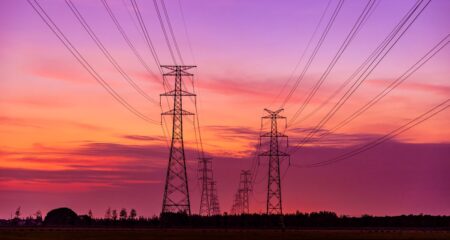
    South Africans have been battered by power shortages for several years. These have worsened to the point that towards the end of 2022, Eskom had only half of its power generation capacity operational.

    This has forced Eskom to escalate its rotational power cuts. By mid-January 2023, users were typically without electricity for eight to 10 hours a day. The situation is unlikely to improve much in the short to medium term. It’s expected that this year, especially as power demand increases in winter, the country’s electricity supply will decline to the point where power may sometimes be available for only 12 hours a day.

    Nor is the situation expected to improve in the medium to long term. The national electricity utility is in a precarious financial situation.

    Fifteen years ago, South Africans had access to abundant electricity at some of the cheapest pricing in the world

    The result is that South Africans are increasingly being forced to explore alternative sources of electricity. From big companies down to small households, entities are even considering whether it is possible to disconnect from the Eskom grid entirely and produce all their electricity in-house.

    Fifteen years ago, South Africans had access to abundant electricity at some of the cheapest pricing in the world. But since then electricity tariffs have skyrocketed at an average of four times the inflation rate.

    Factories, mines, farms, businesses and individuals are now choosing to reduce their dependence on Eskom’s network by supplementing their electricity with in-house power generation. While this lowers demand on the Eskom power supply, the level at which this has been happening so far is insufficient to substantially reduce power cuts. The construction of larger private solar plants, already initiated by some bigger entities, as well as the growing interest in rooftop solar in residential areas, will gradually be felt. But this, too, will not stop power cuts completely.

    Read: Ramaphosa to skip Davos to attend to Eskom crisis

    Some entities may go as far as cutting themselves off from Eskom entirely. How feasible is this?

    The obstacles

    Getting by without a connection to the national electricity grid is not new to many South Africans. The apartheid government deliberately slowed electrification of black residential areas and especially of the country’s rural areas. Where there was electricity supply far from the urban centres, it was largely arranged for the benefit of mining operations and white farming communities.

    In the 1990s, under the new democratic government, Eskom made concerted efforts to expand its supply and services to some of the most remote rural areas. This garnered wide praise and even yielded the Financial Times Global Energy Award. The result was that the bulk of the country’s population began to enjoy access to what was then unlimited electricity. It was also relatively cheap.

    But this had unintended consequences. Even when individuals felt drawn to the notion of carbon-free renewable energy, the simplicity of sourcing reliable, low-cost power from Eskom made all alternatives uncompetitive.

    Read: Mantashe to get political oversight of Eskom

    The second biggest obstacle has been that until about 10 years ago solar was expensive. The cost then dropped dramatically between 2011 and 2021: in line with international trends, by a factor of 10.

    The frequent Eskom power cuts accompanied by large price increases, and the drop in the price of solar electricity coupled with better storage options, have changed the equation completely.
    The alternatives

    Three on-site power options are briefly discussed.

    • Diesel generators: This well-established technology is already common in rural communities and was adopted by many households and businesses during the earlier waves of power cuts. But the diesel option isn’t cheap, and fuel is subject to price fluctuations. On top of this, generators require maintenance, they tend to be noisy and they emit fumes.
    • Biogas: This is produced from rotting agricultural leftovers or organic waste that collects in municipal landfills. South Africa’s agricultural sector produces ample fuel for this technology, so it is likely to see wider application in farming communities. But it’s impractical for residential and business use.
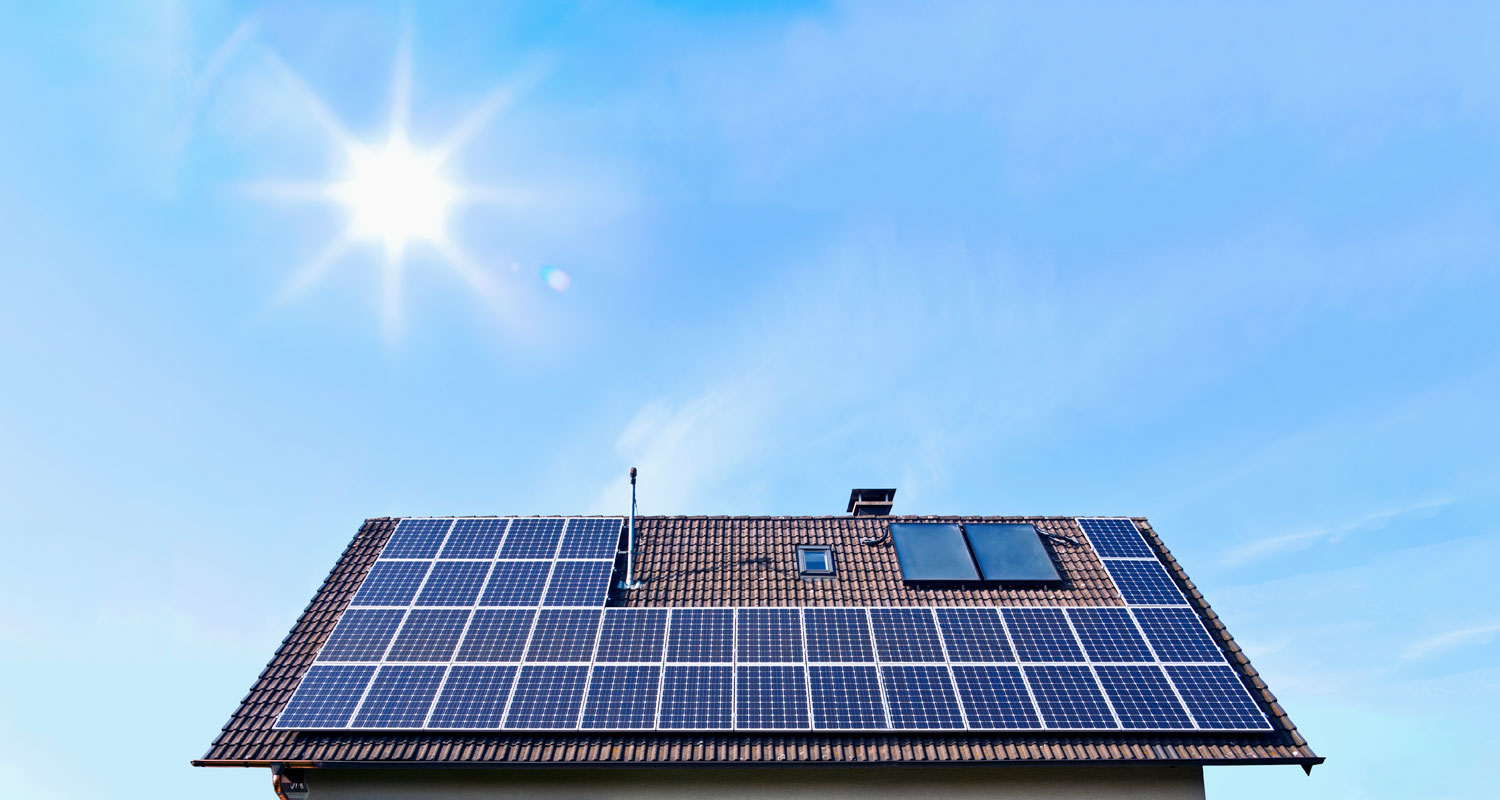
    • On-site solar installation: South Africa has ample sunshine. In addition, solar panel prices have dropped massively over the last decade. Efficient large-scale battery storage options have also become increasingly feasible. The persistent downside of solar installations is that they won’t bridge lengthy cloudy spells.

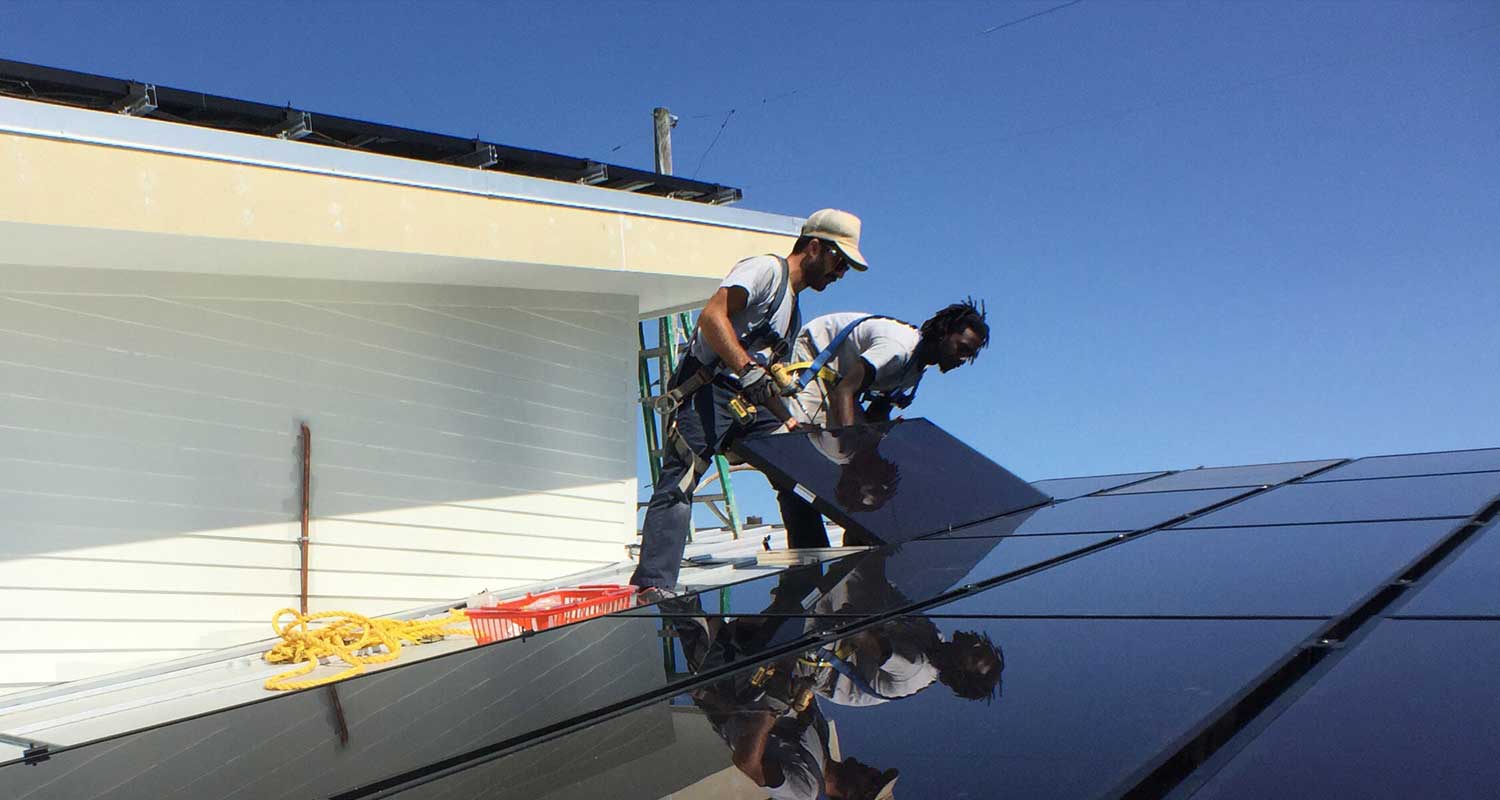
    The initial impetus for the grand move to solar rooftop has been provided by large enterprises with the financial capacity to invest in what amounts to full-blown private solar farms. These include mines, factories, shopping malls and agricultural estates. These enterprises expect to recover their investment costs in just a few years.

    Smaller entities, including typical households, are beginning to follow this trend.

    Exiting the grid, or not

    While it’s possible in theory to install enough solar panels and battery storage to see a household through a week without sunshine, this is still far from a financially optimal solution.

    Those that have invested in in-house solar capacity currently retain their access to Eskom electricity for periods when solar power is unavailable or not sufficient. Their primary aim is to lower their electricity bills and to have some backup power during the temporary Eskom blackouts.

    Panel numbers and battery capacity can in theory be increased until it becomes possible to have electricity for days. In this way they can bridge lengthy periods of cloudiness. But it’s costly to acquire equipment.

    South Africa is, however, a country that enjoys unusually many sunshine hours. This may well tempt those that are able to get by with occasional power interruptions to abandon the Eskom grid entirely, especially if punitive tariffs are imposed on those seeking only occasional Eskom backup power.

    Read: Government to take on Eskom debt in staggered way

    Medium and large companies requiring interruption-free power are however likely to opt for the hybrid model of self-generated electricity with Eskom backup. This trend has started and will grow. But it is clear that the past paradigm of complete reliance on Eskom is going to change forever.The Conversation

    Get TechCentral’s daily newsletter

    • The author, Hartmut Winkler, is professor of physics, University of Johannesburg
    • This article is republished from The Conversation

    Follow TechCentral on Google News Add TechCentral as your preferred source on Google


    Eskom Hartmut Winkler
    WhatsApp YouTube
    Share. Facebook Twitter LinkedIn WhatsApp Telegram Email Copy Link
    Previous ArticleKarpowership to get regulatory decision by March
    Next Article Microsoft kicks off high-risk tech earnings season

    Related Posts

    Eskom quashes Koeberg contamination reports

    Eskom scrambles to quash Koeberg contamination reports

    19 July 2026
    Eskom appoints group executive for renewable energy - Rivoningo Mnisi

    Eskom Green cleared for take-off

    16 July 2026
    Trading rules near as Eskom tools up to compete - Dan Marokane

    Trading rules near as Eskom tools up to compete

    13 July 2026
    Company News
    Is your cloud PBX a hacker's back door? Centracom

    Is your cloud PBX a hacker’s back door?

    22 July 2026

    Africa’s biggest entrepreneurship gathering heads for Cape Town

    22 July 2026
    Cloud adoption is done. Execution is the new frontier - Cloud on Demand

    Cloud adoption is done. Execution is the new frontier

    21 July 2026
    Opinion
    Selling vapour is corporate suicide in slow motion - Jannie van Zyl

    Selling vapour is corporate suicide in slow motion

    16 July 2026
    Brazil's online gambling crackdown is a lesson for South Africa

    How Amazon outmanoeuvred Starlink in South Africa

    15 July 2026
    The Popia problem with agentic AI - Herman Haasbroek

    The Popia problem with agentic AI

    14 July 2026

    Subscribe to Updates

    Get the best South African technology news and analysis delivered to your e-mail inbox every morning.

    Latest Posts
    Everything you wanted to know about EVs but were afraid to ask

    Everything you wanted to know about EVs but were afraid to ask

    22 July 2026
    Is your cloud PBX a hacker's back door? Centracom

    Is your cloud PBX a hacker’s back door?

    22 July 2026
    Bitcoin at $65 000: stalled, or simply early?

    Bitcoin at $65 000: stalled, or simply early?

    22 July 2026
    Smart ID renewals go mobile - Absa CEO Kenny Fihla with home affairs minister Leon Schreiber

    Smart ID renewals go mobile

    22 July 2026
    © 2009 - 2026 NewsCentral Media
    Built and maintained by Chronon
    • Cookie policy (ZA)
    • TechCentral – privacy and Popia

    Type above and press Enter to search. Press Esc to cancel.

    Manage consent

    TechCentral uses cookies to enhance its offerings. Consenting to these technologies allows us to serve you better. Not consenting or withdrawing consent may adversely affect certain features and functions of the website.

    Functional Always active
    The technical storage or access is strictly necessary for the legitimate purpose of enabling the use of a specific service explicitly requested by the subscriber or user, or for the sole purpose of carrying out the transmission of a communication over an electronic communications network.
    Preferences
    The technical storage or access is necessary for the legitimate purpose of storing preferences that are not requested by the subscriber or user.
    Statistics
    The technical storage or access that is used exclusively for statistical purposes. The technical storage or access that is used exclusively for anonymous statistical purposes. Without a subpoena, voluntary compliance on the part of your Internet Service Provider, or additional records from a third party, information stored or retrieved for this purpose alone cannot usually be used to identify you.
    Marketing
    The technical storage or access is required to create user profiles to send advertising, or to track the user on a website or across several websites for similar marketing purposes.
    • Manage options
    • Manage services
    • Manage {vendor_count} vendors
    • Read more about these purposes
    View preferences
    • {title}
    • {title}
    • {title}