
Close Menu
TechCentralTechCentral

    Subscribe to the newsletter

    Get the best South African technology news and analysis delivered to your e-mail inbox every morning.

    Facebook X (Twitter) YouTube LinkedIn
    WhatsApp Facebook X (Twitter) LinkedIn YouTube
    TechCentralTechCentral
    • News
      Haier plants its flag in South Africa

      Haier plants its flag in South Africa

      2 February 2026
      Microsoft's winning formula is starting to fray - Satya Nadella

      Microsoft’s winning formula may be starting to fray

      2 February 2026
      Meet the CIO | Inside the JSE's tech engine with CIO Tebalo Tsoaeli

      Meet the CIO | Inside the JSE’s tech engine with CIO Tebalo Tsoaeli

      2 February 2026
      Crypto has gone mainstream - will South African regulators catch up in 2026? - Marius Reitz

      Crypto has gone mainstream – will South African regulators catch up in 2026?

      2 February 2026
      Sixty60 smashes 100 million orders

      Shoprite keeps Sixty60 momentum as group sales rise 7.2%

      2 February 2026
    • World
      Apple acquires audio AI start-up Q.ai

      Apple acquires audio AI start-up Q.ai

      30 January 2026
      SpaceX IPO may be largest in history

      SpaceX IPO may be largest in history

      28 January 2026
      Nvidia throws AI at the weather

      Nvidia throws AI at weather forecasting

      27 January 2026
      Debate erupts over value of in-flight Wi-Fi

      Debate erupts over value of in-flight Wi-Fi

      26 January 2026
      Intel takes another hit - Intel CEO Lip-Bu Tan. Laure Andrillon/Reuters

      Intel takes another hit

      23 January 2026
    • In-depth
      How liberalisation is rewiring South Africa's power sector

      How liberalisation is rewiring South Africa’s power sector

      21 January 2026
      The top-performing South African tech shares of 2025

      The top-performing South African tech shares of 2025

      12 January 2026
      Digital authoritarianism grows as African states normalise internet blackouts

      Digital authoritarianism grows as African states normalise internet blackouts

      19 December 2025
      TechCentral's South African Newsmakers of 2025

      TechCentral’s South African Newsmakers of 2025

      18 December 2025
      Black Friday goes digital in South Africa as online spending surges to record high

      Black Friday goes digital in South Africa as online spending surges to record high

      4 December 2025
    • TCS
      TCS+ | How Cloud On Demand is helping SA businesses succeed in the cloud - Xhenia Rhode, Dion Kalicharan

      TCS+ | Cloud On Demand and Consnet: inside a real-world AWS partner success story

      30 January 2026
      Watts & Wheels S1E3: 'BYD's Corolla Cross challenger'

      Watts & Wheels S1E3: ‘BYD’s Corolla Cross challenger’

      30 January 2026
      Watts & Wheels S1E3: 'BYD's Corolla Cross challenger'

      Watts & Wheels S1E2: ‘China attacks, BMW digs in, Toyota’s sublime supercar’

      23 January 2026

      TCS+ | Why cybersecurity is becoming a competitive advantage for SA businesses

      20 January 2026
      Watts & Wheels S1E3: 'BYD's Corolla Cross challenger'

      Watts & Wheels: S1E1 – ‘William, Prince of Wheels’

      8 January 2026
    • Opinion
      South Africa's skills advantage is being overlooked at home - Richard Firth

      South Africa’s skills advantage is being overlooked at home

      29 January 2026
      Why Elon Musk's Starlink is a 'hard no' for me - Songezo Zibi

      Why Elon Musk’s Starlink is a ‘hard no’ for me

      26 January 2026
      South Africa's new fibre broadband battle - Duncan McLeod

      South Africa’s new fibre broadband battle

      20 January 2026
      AI moves from pilots to production in South African companies - Nazia Pillay SAP

      AI moves from pilots to production in South African companies

      20 January 2026
      South Africa's new fibre broadband battle - Duncan McLeod

      ANC’s attack on Solly Malatsi shows how BEE dogma trumps economic reality

      14 December 2025
    • Company Hubs
      • Africa Data Centres
      • AfriGIS
      • Altron Digital Business
      • Altron Document Solutions
      • Altron Group
      • Arctic Wolf
      • AvertITD
      • Braintree
      • CallMiner
      • CambriLearn
      • CYBER1 Solutions
      • Digicloud Africa
      • Digimune
      • Domains.co.za
      • ESET
      • Euphoria Telecom
      • Incredible Business
      • iONLINE
      • IQbusiness
      • Iris Network Systems
      • LSD Open
      • NEC XON
      • Netstar
      • Network Platforms
      • Next DLP
      • Ovations
      • Paracon
      • Paratus
      • Q-KON
      • SevenC
      • SkyWire
      • Solid8 Technologies
      • Telit Cinterion
      • Tenable
      • Vertiv
      • Videri Digital
      • Vodacom Business
      • Wipro
      • Workday
      • XLink
    • Sections
      • AI and machine learning
      • Banking
      • Broadcasting and Media
      • Cloud services
      • Contact centres and CX
      • Cryptocurrencies
      • Education and skills
      • Electronics and hardware
      • Energy and sustainability
      • Enterprise software
      • Financial services
      • Information security
      • Internet and connectivity
      • Internet of Things
      • Investment
      • IT services
      • Lifestyle
      • Motoring
      • Public sector
      • Retail and e-commerce
      • Satellite communications
      • Science
      • SMEs and start-ups
      • Social media
      • Talent and leadership
      • Telecoms
    • Events
    • Advertise
    TechCentralTechCentral
    Home » World » Space junk is our new ‘tragedy of the commons’

    Space junk is our new ‘tragedy of the commons’

    By Agency Staff19 April 2021
    Twitter LinkedIn Facebook WhatsApp Email Telegram Copy Link
    News Alerts
    WhatsApp

    It’s getting crowded up there, and awfully dangerous. By up there, I mean space — and not the far-off areas that concern astronomers and science fiction, but the closer orbits where we humans keep putting our satellites.

    As those objects crash or break down, their flotsam and jetsam creates belts of debris, shooting into other satellites, rockets and space vehicles. Some orbits could eventually become unusable. That would be a disaster, disrupting much of modern life. It could even start a war.

    It’s hardly the first time that we, Homo sapiens, treat a shared resource irresponsibly. What scholars call the “tragedy of the commons” is what results when we ruin something because we all profit from exploiting it and can’t exclude others from doing the same. Classic examples include overgrazing public lands, overfishing the oceans and polluting the atmosphere.

    If space has so far received less attention than our forests, seas or air, it’s because we’ve had less time to junk it up

    If space has so far received less attention than our forests, seas or air, it’s because we’ve had less time to junk it up. But we’re catching up fast. We’ve launched thousands of satellites into space and keep adding more — one private company, SpaceX, has put up more than a thousand just in the past year.

    These objects collide, malfunction and misbehave in other ways. As a result, about 28 000 fragments of junk are zipping around up there, and that count includes only the shrapnel we can track. Statistical models suggests that almost a million objects the size of hand grenades are orbiting the Earth, and many, many millions of things the size of bullets. Owing to their astronomical speeds, even those small pellets can take out an astronaut, a satellite or even the International Space Station.

    Armadas

    Besides wreaking physical damage, these armadas of satellites and their associated junk create other problems. Their electromagnetic radiation increasingly causes radio frequency interference. The debris also scatters light, so that scientists with their telescopes can no longer peer through these clouds of man-made dust and into deep space.

    Even more ominously, space is nowadays also the fifth domain of warfare — alongside land, sea, air and cyberspace. The US, Russia and China in particular, but also other ambitious powers from India to France, are arming themselves to take out each other’s satellites offensively, preemptively or defensively. The new weaponry includes everything from physical missiles to lasers, electronic jamming and cyberattacks.

    The problem is that it’ll become increasingly harder for adversaries to tell why their own satellites suddenly went down or fell silent. It could be ordinary “space weather”, the naturally occurring storms of charged solar particles. It could be a collision with debris. Or it could be hostile action. The uncertainty could lead to mistaken retaliations and war.
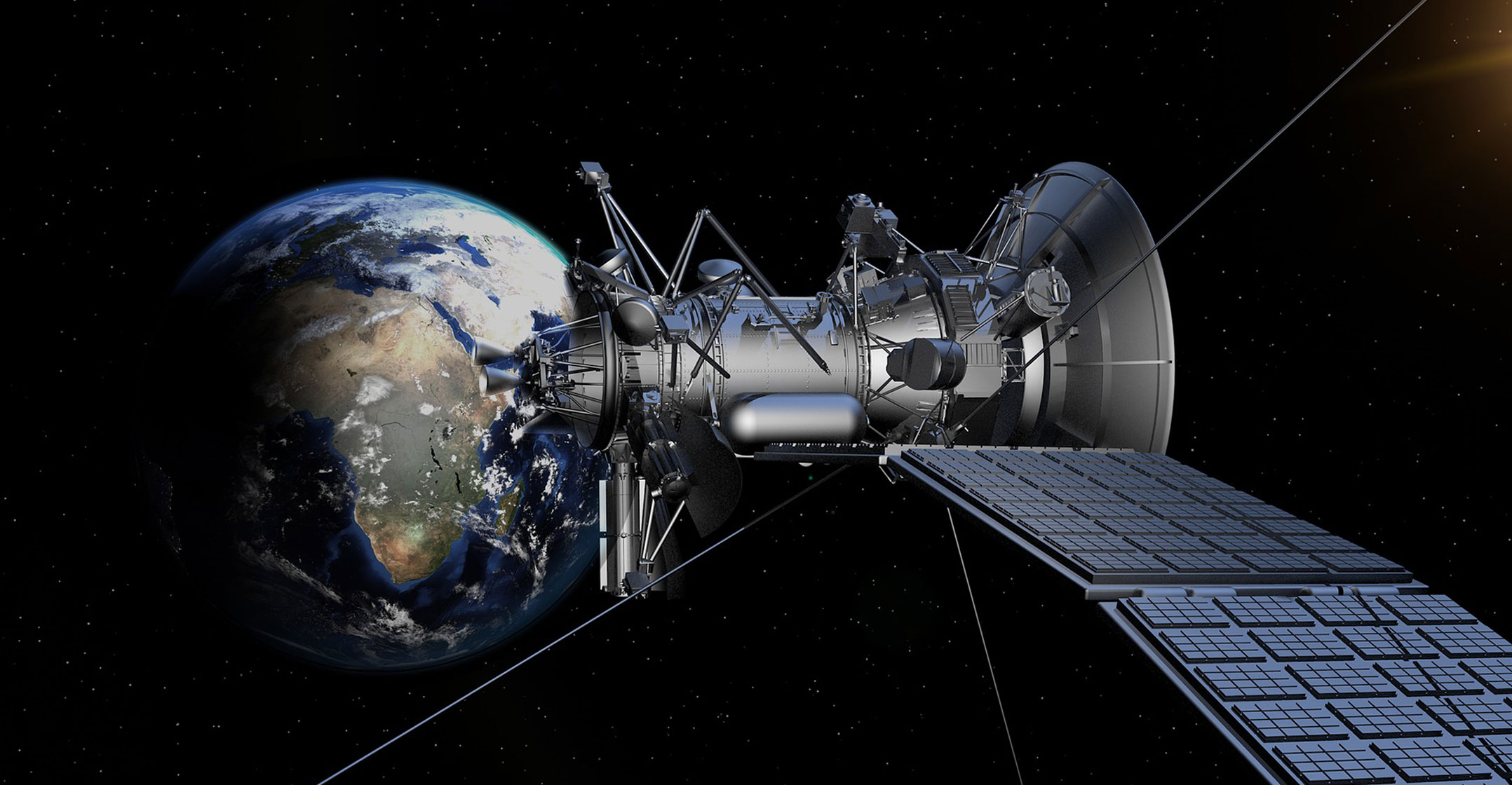
    If any of these bad scenarios ever takes place, modernity as we know it would be put on pause. Satellite technology is nowadays baked into almost all our other information systems, not only the GPS navigation in our phones and cars but also our Internet connections, telecommunications and more.

    Once we grasp the problem as being a tragedy of the commons, both its daunting scale and its only possible solution become clear. As with overfishing, overgrazing or pollution, the incentives are skewed against cooperation. Why should any nation or firm stop cluttering up space — or even bear the cost and risk of starting to clean it up — if that lets others pull ahead?

    And yet cooperation is the only way forward. That’s why treaties and regimes exist in multilateral forums, above all the United Nations and its agencies, to regulate the oceans and other commons. Even space in theory has its international talking shops, including the UN’s Committee on the Peaceful Uses of Outer Space. But it doesn’t deal with military uses of the orbits, and is largely toothless otherwise.

    This means that the major powers must elevate space governance to the level of other threats to humanity, from climate change to nuclear proliferation. They should publicly label the problem a tragedy of the commons and signal their readiness to begin negotiations, regardless of other conflicts they have with one another. The US is the obvious nation to take the lead. China, Russia and others should reciprocate. Space, like the planet it surrounds, is Earth’s commons. It mustn’t turn into tragedy.  — By Andreas Kluth, (c) 2021 Bloomberg LP


    SpaceX top
    WhatsApp YouTube Follow on Google News Add as preferred source on Google
    Share. Facebook Twitter LinkedIn WhatsApp Telegram Email Copy Link
    Previous ArticleMTN to list next month in Rwanda
    Next Article Bitcoin slumps 14%

    Related Posts

    Starlink updates privacy policy to allow consumer data to train AI

    Privacy alarm as SpaceX opens Starlink user data to AI models

    2 February 2026
    A single Musk super-company may be taking shape - Elon Musk

    A single Musk super-company may be taking shape

    30 January 2026
    SpaceX IPO may be largest in history

    SpaceX IPO may be largest in history

    28 January 2026
    Company News
    Breaking silos with SAS: Agile insurance in an uncertain world

    Breaking silos with SAS: agile insurance in an uncertain world

    2 February 2026
    Stellar year expected for Digicloud Africa and its reseller partners - Gregory MacLennan

    Stellar year expected for Digicloud Africa and its reseller partners

    2 February 2026
    How to subscribe to South Africa's best tech podcasts - TechCentral

    How to subscribe to South Africa’s best tech podcasts

    2 February 2026
    Opinion
    South Africa's skills advantage is being overlooked at home - Richard Firth

    South Africa’s skills advantage is being overlooked at home

    29 January 2026
    Why Elon Musk's Starlink is a 'hard no' for me - Songezo Zibi

    Why Elon Musk’s Starlink is a ‘hard no’ for me

    26 January 2026
    South Africa's new fibre broadband battle - Duncan McLeod

    South Africa’s new fibre broadband battle

    20 January 2026

    Subscribe to Updates

    Get the best South African technology news and analysis delivered to your e-mail inbox every morning.

    Latest Posts
    Haier plants its flag in South Africa

    Haier plants its flag in South Africa

    2 February 2026
    Microsoft's winning formula is starting to fray - Satya Nadella

    Microsoft’s winning formula may be starting to fray

    2 February 2026
    Meet the CIO | Inside the JSE's tech engine with CIO Tebalo Tsoaeli

    Meet the CIO | Inside the JSE’s tech engine with CIO Tebalo Tsoaeli

    2 February 2026
    Crypto has gone mainstream - will South African regulators catch up in 2026? - Marius Reitz

    Crypto has gone mainstream – will South African regulators catch up in 2026?

    2 February 2026
    © 2009 - 2026 NewsCentral Media
    • Cookie policy (ZA)
    • TechCentral – privacy and Popia

    Type above and press Enter to search. Press Esc to cancel.

    Manage consent

    TechCentral uses cookies to enhance its offerings. Consenting to these technologies allows us to serve you better. Not consenting or withdrawing consent may adversely affect certain features and functions of the website.

    Functional Always active
    The technical storage or access is strictly necessary for the legitimate purpose of enabling the use of a specific service explicitly requested by the subscriber or user, or for the sole purpose of carrying out the transmission of a communication over an electronic communications network.
    Preferences
    The technical storage or access is necessary for the legitimate purpose of storing preferences that are not requested by the subscriber or user.
    Statistics
    The technical storage or access that is used exclusively for statistical purposes. The technical storage or access that is used exclusively for anonymous statistical purposes. Without a subpoena, voluntary compliance on the part of your Internet Service Provider, or additional records from a third party, information stored or retrieved for this purpose alone cannot usually be used to identify you.
    Marketing
    The technical storage or access is required to create user profiles to send advertising, or to track the user on a website or across several websites for similar marketing purposes.
    • Manage options
    • Manage services
    • Manage {vendor_count} vendors
    • Read more about these purposes
    View preferences
    • {title}
    • {title}
    • {title}