

Close Menu
TechCentralTechCentral

    Subscribe to the newsletter

    Get the best South African technology news and analysis delivered to your e-mail inbox every morning.

    Facebook X (Twitter) YouTube LinkedIn
    WhatsApp Facebook X (Twitter) LinkedIn YouTube
    TechCentralTechCentral
    • News
      Post Office on the brink of collapse

      Post Office on the brink of collapse

      13 March 2026
      New policy direction targets South Africa's municipal broadband logjam - Solly Malatsi

      New policy direction targets South Africa’s municipal broadband logjam

      13 March 2026
      How electronic warfare is threatening ships and their crews

      How electronic warfare is threatening ships and their crews

      13 March 2026
      Rand slumps for second week

      Rand slumps for second week

      13 March 2026
      Parliament opens nominations for Icasa council seats

      Parliament opens nominations for Icasa council seats

      13 March 2026
    • World
      Musk launches Macrohard in cheeky nod to Microsoft - Elon Musk

      Musk launches Macrohard in cheeky nod to Microsoft

      12 March 2026
      Europe is building an alternative to Microsoft Office

      Europe is building an alternative to Microsoft Office

      11 March 2026
      Microsoft bets on Anthropic as it loosens ties with OpenAI

      Microsoft bets on Anthropic as it loosens ties with OpenAI

      10 March 2026
      World hit by worst oil shock since the 1970s

      World hit by worst oil shock since the 1970s

      9 March 2026
      iStore prices MacBook Neo at R11 999 in South Africa

      Apple debuts MacBook Neo to challenge Windows PCs, Chromebooks

      5 March 2026
    • In-depth
      The last generation of coders

      The last generation of coders

      18 February 2026
      Sentech is in dire straits

      Sentech is in dire straits

      10 February 2026
      How liberalisation is rewiring South Africa's power sector

      How liberalisation is rewiring South Africa’s power sector

      21 January 2026
      The top-performing South African tech shares of 2025

      The top-performing South African tech shares of 2025

      12 January 2026
      Digital authoritarianism grows as African states normalise internet blackouts

      Digital authoritarianism grows as African states normalise internet blackouts

      19 December 2025
    • TCS
      TCS+ | Vox Kiwi: a wireless solution promising a fibre-like experience - Theo van Zyl

      TCS+ | Vox Kiwi: a wireless solution promising a fibre-like experience

      13 March 2026
      TCS+ | Flipping the narrative on AI in the Global South - Josefin Rosén

      TCS+ | Flipping the narrative on AI in the Global South

      13 March 2026
      TCS | Sink or swim? Antony Makins on how AI is rewriting the rules of work

      TCS | Sink or swim? Antony Makins on how AI is rewriting the rules of work

      5 March 2026
      TCS+ | Bolt ups the ante on platform safety - Simo Kalajdzic

      TCS+ | Bolt ups the ante on platform safety

      4 March 2026
      Watts & Wheels S1E4: 'We drive an electric Uber'

      Watts & Wheels S1E4: ‘We drive an electric Uber’

      10 February 2026
    • Opinion
      South Africa's energy future hinges on getting wheeling right - Aishah Gire

      South Africa’s energy future hinges on getting wheeling right

      10 March 2026
      Hold the doom: the case for a South African comeback - Duncan McLeod

      Apple just dropped a bomb on the Windows world

      5 March 2026
      VC's centre of gravity is shifting - and South Africa is in the frame - Alison Collier

      VC’s centre of gravity is shifting – and South Africa is in the frame

      3 March 2026
      Hold the doom: the case for a South African comeback - Duncan McLeod

      Hold the doom: the case for a South African comeback

      26 February 2026
      The AI fraud crisis your bank is not ready for - Andries Maritz

      The AI fraud crisis your bank is not ready for

      18 February 2026
    • Company Hubs
      • 1Stream
      • Africa Data Centres
      • AfriGIS
      • Altron Digital Business
      • Altron Document Solutions
      • Altron Group
      • Arctic Wolf
      • AvertITD
      • Braintree
      • CallMiner
      • CambriLearn
      • CYBER1 Solutions
      • Digicloud Africa
      • Digimune
      • Domains.co.za
      • ESET
      • Euphoria Telecom
      • HOSTAFRICA
      • Incredible Business
      • iONLINE
      • IQbusiness
      • Iris Network Systems
      • LSD Open
      • Mitel
      • NEC XON
      • Netstar
      • Network Platforms
      • Next DLP
      • Ovations
      • Paracon
      • Paratus
      • Q-KON
      • SevenC
      • SkyWire
      • Solid8 Technologies
      • Telit Cinterion
      • Tenable
      • Vertiv
      • Videri Digital
      • Vodacom Business
      • Wipro
      • Workday
      • XLink
    • Sections
      • AI and machine learning
      • Banking
      • Broadcasting and Media
      • Cloud services
      • Contact centres and CX
      • Cryptocurrencies
      • Education and skills
      • Electronics and hardware
      • Energy and sustainability
      • Enterprise software
      • Financial services
      • HealthTech
      • Information security
      • Internet and connectivity
      • Internet of Things
      • Investment
      • IT services
      • Lifestyle
      • Motoring
      • Policy and regulation
      • Public sector
      • Retail and e-commerce
      • Satellite communications
      • Science
      • SMEs and start-ups
      • Social media
      • Talent and leadership
      • Telecoms
    • Events
    • Advertise
    TechCentralTechCentral
    Home » In-depth » Synthetic biology: genetic engineering on steroids

    Synthetic biology: genetic engineering on steroids

    By Editor16 March 2012
    Twitter LinkedIn Facebook WhatsApp Email Telegram Copy Link
    News Alerts
    WhatsApp

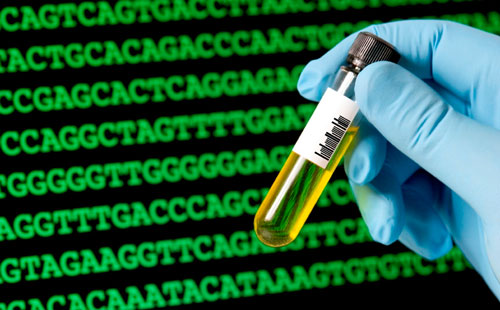
    Whether or not we agree with it, we’re all pretty used to the idea of genetic engineering. Our food chain is full of GM crops and pretty soon we may be genetically modified ourselves. But synthetic biology takes the idea even further.

    Instead of merely modifying existing organisms, synthetic biology aims to create entirely new organisms, often for large-scale industrial or agricultural use. Speaking at this year’s South by South West (SXSW) Interactive festival, a panel of experts discussed the state of this rapidly evolving field.

    Christina Agapakis, a synthetic biology academic from the University of California in Los Angeles, explains that the field is so new that it doesn’t even have a dictionary definition yet. She quotes Jim Collins, a biomedical engineer from Boston University who coined the phrase “genetic engineering on steroids”.

    But where genetic engineering involves moving small numbers of genes between organisms, synthetic biology is much more radical. It not only involves moving large numbers of genes between organisms, but also uses principles from both computer science and traditional engineering.

    In synthetic biology, “parts” of DNA are literally what they sound like: functional units that can be plugged together to create useful structures. Some of them are like switches that turn genes on or off, while others have specific functions like producing a chemical.

    MIT has a public-parts registry, which Agapakis describes as a “giant freezer for pieces of DNA” that can be used to engineer new organisms. These parts are all open source so that researchers can “mix and match” them freely.

    So, what can these synthetic organisms do? Agapakis shows an example of a light-sensitive “film” made of billions of synthetic bacteria that change colour when exposed to light. Her example comes from the first International Genetically Engineered Machine (IGEM) competition held in 2004 — now an annual event aimed at encouraging the development of synthetic biology around the world.

    More recent IGEM entrants have managed astounding feats. A team from Valencia University created a 96-pixel LCD-style “screen” using electrically sensitive yeast cells. Another team from Tokyo made bacteria that played Sudoku, and a team from Newcastle made a bacteria that fills cracks in concrete with a hard substance.

    Patrick Boyle, a graduate student at Harvard Medical School, explains: “With biology, the software is the hardware. When you engineer a genome you’re essentially creating a self-replicating machine. It’s as though your iPad could make copies of itself.”

    He shows an example of a biological “image processor” — a beefed up version of Agapakis’s earlier example — complete with cells that can do “edge detection” of the image they are capturing by communicating with each other. “The really cool thing here is that these cells are doing this in parallel — so with biology you can have billions of parallel processors.”

    For Boyle, the possibilities of this technology extend beyond biotech’s traditional roles in industries like biofuel. “Engineered biology can help us solve a lot of the real problems we have now in fields like food, medicine and materials.”

    The “engineering” part of genetic engineering has always been somewhat metaphorical, but in synthetic biology it’s entirely literal. Jason Kelly, founder of Ginkgo BioWorks, explains how they use engineering practices and tools to design, test and manufacture entirely new organisms.

    The company puts a strong emphasis on staples of engineering such as computer-aided design (CAD), automation, unit testing and quality assurance. It has a bank of industrial laboratory robots that do most of the manual work, leaving the engineers to concentrate on perfecting the manufacturing and design processes.

    Even Ginkgo’s supply chain is modelled on tradition. Engineers literally send an e-mail to a supplier requesting a genetic “part”. A while later a vial arrives with the required component and it’s fed into the production line.

    As far as Kelly is concerned, the possibilities for the field are limitless. “Biology is a programmable engineering substrate that operates at the nanoscale. It’s essentially proven — we’re just building infrastructure to make engineering it predictable.”

    What’s more, Kelly’s team only needs to produce tiny amounts of the new organism. Their customers then reproduce it at scale in their own facilities. “We’re essentially writing biological enterprise software which we then ship off to our customers who replicate it at scale.”

    But it’s clear that this is more than just business for Kelly. He calls the end of oil “one of the fundamental challenges for our generation to solve”. And he counterpoints the trendy idea, espoused by Mark Andreessen, that software is eating the world. “You can’t eat software.”

    If the brilliant and optimistic young people on this panel are anything to go by, synthetic biology will not just change the world irrevocably, it will also change the world for the better. We may not be comfortable with some of its ideas, but at least synthetic biology is in the hands of idealists. Let’s hope it stays there.  — Alistair Fairweather, TechCentral

    • Subscribe to our free daily newsletter
    • Follow us on Twitter or on Google+ or on Facebook
    • Visit our sister website, SportsCentral (still in beta)
    Follow TechCentral on Google News Add TechCentral as your preferred source on Google


    Christina Agapakis Jim Collins Patrick Boyle
    WhatsApp YouTube
    Share. Facebook Twitter LinkedIn WhatsApp Telegram Email Copy Link
    Previous ArticleSocial network paves the Waze
    Next Article Questions over hasty police IT tender
    Company News
    Households still under big pressure, Altron Fintech index shows

    Households still under big pressure, Altron Fintech index shows

    13 March 2026
    How AI is changing the way we work - Angela Ho, Obsidian Systems

    How AI is changing the way we work

    12 March 2026
    Domains.co.za introduces complete domain protection service

    Domains.co.za introduces complete domain protection service

    12 March 2026
    Opinion
    South Africa's energy future hinges on getting wheeling right - Aishah Gire

    South Africa’s energy future hinges on getting wheeling right

    10 March 2026
    Hold the doom: the case for a South African comeback - Duncan McLeod

    Apple just dropped a bomb on the Windows world

    5 March 2026
    VC's centre of gravity is shifting - and South Africa is in the frame - Alison Collier

    VC’s centre of gravity is shifting – and South Africa is in the frame

    3 March 2026

    Subscribe to Updates

    Get the best South African technology news and analysis delivered to your e-mail inbox every morning.

    Latest Posts
    Post Office on the brink of collapse

    Post Office on the brink of collapse

    13 March 2026
    New policy direction targets South Africa's municipal broadband logjam - Solly Malatsi

    New policy direction targets South Africa’s municipal broadband logjam

    13 March 2026
    How electronic warfare is threatening ships and their crews

    How electronic warfare is threatening ships and their crews

    13 March 2026
    Rand slumps for second week

    Rand slumps for second week

    13 March 2026
    © 2009 - 2026 NewsCentral Media
    • Cookie policy (ZA)
    • TechCentral – privacy and Popia

    Type above and press Enter to search. Press Esc to cancel.

    Manage consent

    TechCentral uses cookies to enhance its offerings. Consenting to these technologies allows us to serve you better. Not consenting or withdrawing consent may adversely affect certain features and functions of the website.

    Functional Always active
    The technical storage or access is strictly necessary for the legitimate purpose of enabling the use of a specific service explicitly requested by the subscriber or user, or for the sole purpose of carrying out the transmission of a communication over an electronic communications network.
    Preferences
    The technical storage or access is necessary for the legitimate purpose of storing preferences that are not requested by the subscriber or user.
    Statistics
    The technical storage or access that is used exclusively for statistical purposes. The technical storage or access that is used exclusively for anonymous statistical purposes. Without a subpoena, voluntary compliance on the part of your Internet Service Provider, or additional records from a third party, information stored or retrieved for this purpose alone cannot usually be used to identify you.
    Marketing
    The technical storage or access is required to create user profiles to send advertising, or to track the user on a website or across several websites for similar marketing purposes.
    • Manage options
    • Manage services
    • Manage {vendor_count} vendors
    • Read more about these purposes
    View preferences
    • {title}
    • {title}
    • {title}