Close Menu
TechCentralTechCentral

    Subscribe to the newsletter

    Get the best South African technology news and analysis delivered to your e-mail inbox every morning.

    Facebook X (Twitter) YouTube LinkedIn
    WhatsApp Facebook X (Twitter) LinkedIn YouTube
    TechCentralTechCentral
    • News
      Intel is back in the game - Intel CEO Lip-Bu Tan. Laure Andrillon/Reuters

      Intel is back in the game

      24 July 2026
      Fat bonuses at Telkom despite group missing own targets - Serame Taukobong

      Fat bonuses at Telkom despite group missing own targets

      23 July 2026
      TCS | How Optasia lends billions to people banks can't see - Salvador Anglada

      TCS | How Optasia lends billions to people banks can’t see

      23 July 2026
      Massive changes coming to Amazon Prime Video - Jeff Bezos

      Massive changes coming to Amazon Prime Video

      23 July 2026
      Load shedding is over - and that's exposing a new energy crisis

      Load shedding is over – and that’s exposing a new energy crisis

      23 July 2026
    • World
      Meta AI will now tell parents if their teen is in crisis

      Meta AI will now tell parents if their teen is in crisis

      17 July 2026
      IBM shares crash 25% as AI upends software spending - Arvind Krishna

      IBM shares crash 25% as AI upends software spending

      15 July 2026
      Jony Ive's first OpenAI device: an AI smart speaker - Jony Ive and Sam Altman

      Jony Ive’s first OpenAI device: an AI smart speaker

      15 July 2026
      Stripe, Advent in talks to buy PayPal for $53-billion

      Stripe, Advent in talks to buy PayPal for $53-billion

      15 July 2026
      Memory crisis sends smartphone market into steep decline

      Memory crisis sends smartphone market into steep decline

      13 July 2026
    • In-depth
      The plan to stop AI from breaking the world - Google DeepMind CEO Demis Hassabis. Image: John Sears

      The plan to stop AI from breaking the world

      16 July 2026
      The internet has a Strait of Hormuz problem

      The internet has a Strait of Hormuz problem

      15 July 2026
      AI boom sparks rally, frenzy and fear

      AI boom sparks rally, frenzy and fear

      11 June 2026
      Every plug-in hybrid on sale in South Africa, ranked by price - Lamborghini Temerario

      Every plug-in hybrid on sale in South Africa, ranked by price

      7 June 2026
      What Wi-Fi 8 will mean for wireless networks

      What Wi-Fi 8 will mean for wireless networks

      1 June 2026
    • TCS
      The rands-and-cents case for electric trucks - William Kelly Watts & Wheels with Wills

      The rands-and-cents case for electric trucks

      20 July 2026
      Watts & Wheels S1E7: 'Ferrari's EV breaks the internet'

      Watts & Wheels S1E7: ‘Ferrari’s EV breaks the internet’

      8 July 2026
      TCS | Pick n Pay's Enrico Ferigolli on Penny, the AI that shops for you

      TCS | Pick n Pay’s Enrico Ferigolli on Penny, the AI that shops for you

      2 July 2026
      TCS+ | How Tracker is turning vehicle data into business strategy - Silvia Schollenberger

      TCS+ | How Tracker is turning vehicle data into business strategy

      1 July 2026
      TCS+ | IBM Bob: an AI-powered 'development partner' for the enterprise - David Spurway

      TCS+ | IBM Bob: an AI-powered development partner for the enterprise

      30 June 2026
    • Opinion
      Selling vapour is corporate suicide in slow motion - Jannie van Zyl

      Selling vapour is corporate suicide in slow motion

      16 July 2026
      Brazil's online gambling crackdown is a lesson for South Africa

      How Amazon outmanoeuvred Starlink in South Africa

      15 July 2026
      The Popia problem with agentic AI - Herman Haasbroek

      The Popia problem with agentic AI

      14 July 2026
      The author, Fanie van Rooyen

      South Africa can still catch the AI wave – here’s how

      7 July 2026
      The author, Fanie van Rooyen

      The AI utopia South Africa can’t afford

      1 July 2026
    • Company Hubs
      • 1Stream
      • Africa Data Centres
      • AfriGIS
      • Altron Digital Business
      • Altron Document Solutions
      • Altron Group
      • Arctic Wolf
      • Ascent Technology
      • AvertITD
      • BBD
      • Braintree
      • CallMiner
      • CambriLearn
      • CM Telecom
      • Contactable
      • CYBER1 Solutions
      • Digicloud Africa
      • Digimune
      • Domains.co.za
      • ESET
      • Euphoria Telecom
      • HOSTAFRICA
      • Incredible Business
      • iONLINE
      • IQbusiness
      • Iris Network Systems
      • Kaspersky
      • LSD Open
      • Mitel
      • NEC XON
      • Netstar
      • Network Platforms
      • Next DLP
      • Ovations
      • Paracon
      • Paratus
      • Q-KON
      • SevenC
      • SkyWire
      • Solid8 Technologies
      • Telit Cinterion
      • Telviva
      • Tenable
      • Vertiv
      • Videri Digital
      • Vodacom Business
      • Vox
      • Wipro
      • Workday
      • XLink
    • Sections
      • AI and machine learning
      • Banking
      • Broadcasting and Media
      • Cloud services
      • Contact centres and CX
      • Cryptocurrencies
      • Education and skills
      • Electronics and hardware
      • Energy and sustainability
      • Enterprise software
      • Financial services
      • HealthTech
      • Information security
      • Internet and connectivity
      • Internet of Things
      • Investment
      • IT services
      • Lifestyle
      • Policy and regulation
      • Public sector
      • Retail and e-commerce
      • Satellite communications
      • Science
      • SMEs and start-ups
      • Social media
      • Talent and leadership
      • Telecoms
      • Watts & Wheels
    • Events
    • Advertise
    TechCentralTechCentral
    Home » Editor's pick » The appeal of analogue in a digital world

    The appeal of analogue in a digital world

    By The Conversation12 January 2015
    Twitter LinkedIn Facebook WhatsApp Email Telegram Copy Link
    News Alerts
    WhatsApp
    Back to the future?
    Back to the future?

    Everyday objects with network connections that can collect and share data or be remotely controlled — the Internet of things (IoT) — promise to transform the way we interact with the world around us by fusing the physical and digital into what is gradually being referred to as “phygital”.

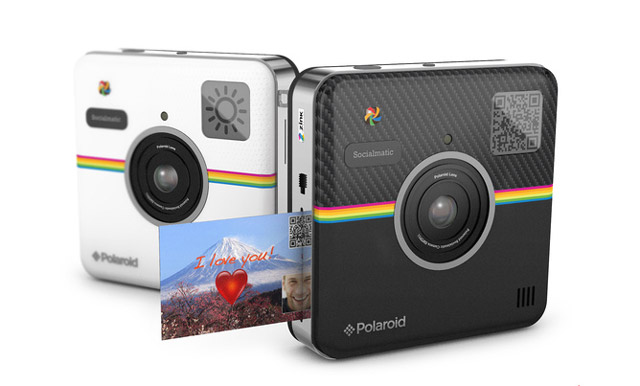
    As an example, take the new Socialmatic camera by Polaroid. The camera updates the original instant-print Polaroid film camera developed in the 1960s to a digital camera with built-in printer that is also network-connected to share images directly to social media sites. In a somewhat knowing, self-referencing way, the camera is shaped like a giant Instagram logo — the original photo app whose “retro” filters re-popularised the look of film to a generation raised on digital.

    Is the appeal of analogue in a digital world simply nostalgia for the old days, or a growing trend?

    With the Polaroid camera it’s both. The concept of such a physical-digital hybrid camera was initially conceived in 2009, developed further in 2012, unveiled in May 2013 and is due for release in 2015. Why has it taken so long to come to fruition? Perhaps because it’s only in recent years that the approach of the IoT has reinvigorated people’s interest in the appeal of hybrid analogue-digital objects.

    The hybridisation of physical and digital elements can be found in other fields, such as in videogames and toys. In fact, physical game pieces are becoming a popular addition to traditional ones and mobile digital gaming, such as real-world game character figurines like Captain Jack Sparrow. Large game studios such as Disney Infinity and Activision are merging their videogame and toy divisions into exciting seamless experiences through game titles such as Skylanders and Disney Infinity.

    These games include collectible real-world figurines that can be imported (through digital imaging) into the videogame, so that characters from Skylanders or Disney can come alive in the videogame world. In mobile games such as Tangible Play’s Osmo, real-world objects are used in combination with an iPad to bring children back towards physical play, solving puzzles with blocks or by playing word games with physical letter tiles.

    These games have been a terrific success — Skylanders has sold 175m toys and reached the top 20 highest-selling videogame franchises of all time, with similar results for Disney Infinity and Osmo. The appeal for physical toys in a digital game world has given rise to a whole new genre of hybrid “phygital” games.

    The fact this has managed to win over digitally minded youngsters shows real promise for its appeal to a more technologically sceptical older generation.

    The appeal of analogue
    But what makes our experience with the analogue world and physical objects so magical even in today’s digitally dominated world?

    Looking back at early childhood development, it’s through touch we first perceive and make sense of the world around us. The physical, material nature of objects, their colour, texture, shape, size, weight and smell engage our senses. That is why many still prefer actual books to e-books: it’s the warm feel of paper as opposed to the coolness of plastic and metal. The fresh aroma of a new book, or the pungent scent of an old volume, something simply absent from its digital counterpart. The rustle of turning pages compared to the clicking of an e-reader. All-in-all, a truly multisensory experience.

    Even in a marketplace increasingly dominated by online shopping, physically interacting with products is still relevant and why physical stores still have an important role to play. For example, major brands such as Apple retain high street stores because the physical experience and interaction with the company’s products remains at the heart of the shopping experience.

    And it is here that analogue’s appeal wins out: by fulfilling our need to make the intangible tangible, in order for to meaningfully interpret the world around us.

    Being tangible also means being able to easily share something. Certainly this is true of printed photos, passing them around to spark conversation or attaching a treasured image to the fridge — things digital photos cannot do. Making play physical encourages collaboration between the generations, where games with physical pieces can be enjoyed by young and old without the need to master any digital skills.

    We live in an increasingly digital age, but despite this — perhaps because of this — the yearning for analogue is re-emerging. Despite all the progress possible through increased digitisation of the world, the physical is deeply imprinted in our biological and psychological makeup, and is how we make sense of our world. It’s here to stay.

    • The ConversationEmmanuel Tsekleves is senior lecturer in design interactions at Lancaster University
    • This article was originally published on The Conversation

    Follow TechCentral on Google News Add TechCentral as your preferred source on Google


    Activision Disney Infinity Emmanuel Tsekleves Instagram Polaroid
    WhatsApp YouTube
    Share. Facebook Twitter LinkedIn WhatsApp Telegram Email Copy Link
    Previous ArticleEskom bailout inappropriate: Nene
    Next Article Eskom hopes to avoid rolling blackouts

    Related Posts

    Meta AI will now tell parents if their teen is in crisis

    Meta AI will now tell parents if their teen is in crisis

    17 July 2026
    World's first teen social media ban is failing

    World’s first teen social media ban is failing

    7 July 2026
    WhatsApp starts charging South Africans - for the extras

    WhatsApp starts charging South Africans – for the extras

    19 June 2026
    Company News
    Why Africa's cloud needs more than one path

    Why Africa’s cloud needs more than one path

    23 July 2026
    Samsung's new Galaxy Z series: foldables, perfected

    Samsung’s new Galaxy Z series: foldables, perfected

    22 July 2026
    Is your cloud PBX a hacker's back door? Centracom

    Is your cloud PBX a hacker’s back door?

    22 July 2026
    Opinion
    Selling vapour is corporate suicide in slow motion - Jannie van Zyl

    Selling vapour is corporate suicide in slow motion

    16 July 2026
    Brazil's online gambling crackdown is a lesson for South Africa

    How Amazon outmanoeuvred Starlink in South Africa

    15 July 2026
    The Popia problem with agentic AI - Herman Haasbroek

    The Popia problem with agentic AI

    14 July 2026

    Subscribe to Updates

    Get the best South African technology news and analysis delivered to your e-mail inbox every morning.

    Latest Posts
    Intel is back in the game - Intel CEO Lip-Bu Tan. Laure Andrillon/Reuters

    Intel is back in the game

    24 July 2026
    Fat bonuses at Telkom despite group missing own targets - Serame Taukobong

    Fat bonuses at Telkom despite group missing own targets

    23 July 2026
    TCS | How Optasia lends billions to people banks can't see - Salvador Anglada

    TCS | How Optasia lends billions to people banks can’t see

    23 July 2026
    Massive changes coming to Amazon Prime Video - Jeff Bezos

    Massive changes coming to Amazon Prime Video

    23 July 2026
    © 2009 - 2026 NewsCentral Media
    Built and maintained by Chronon
    • Cookie policy (ZA)
    • TechCentral – privacy and Popia

    Type above and press Enter to search. Press Esc to cancel.

    Manage consent

    TechCentral uses cookies to enhance its offerings. Consenting to these technologies allows us to serve you better. Not consenting or withdrawing consent may adversely affect certain features and functions of the website.

    Functional Always active
    The technical storage or access is strictly necessary for the legitimate purpose of enabling the use of a specific service explicitly requested by the subscriber or user, or for the sole purpose of carrying out the transmission of a communication over an electronic communications network.
    Preferences
    The technical storage or access is necessary for the legitimate purpose of storing preferences that are not requested by the subscriber or user.
    Statistics
    The technical storage or access that is used exclusively for statistical purposes. The technical storage or access that is used exclusively for anonymous statistical purposes. Without a subpoena, voluntary compliance on the part of your Internet Service Provider, or additional records from a third party, information stored or retrieved for this purpose alone cannot usually be used to identify you.
    Marketing
    The technical storage or access is required to create user profiles to send advertising, or to track the user on a website or across several websites for similar marketing purposes.
    • Manage options
    • Manage services
    • Manage {vendor_count} vendors
    • Read more about these purposes
    View preferences
    • {title}
    • {title}
    • {title}