Close Menu
TechCentralTechCentral

    Subscribe to the newsletter

    Get the best South African technology news and analysis delivered to your e-mail inbox every morning.

    Facebook X (Twitter) YouTube LinkedIn
    WhatsApp Facebook X (Twitter) LinkedIn YouTube
    TechCentralTechCentral
    • News
      Cabinet hands the Post Office a board, but not a bailout

      Cabinet hands the Post Office a board, but not a bailout

      5 June 2026
      In South Africa, the bundle is the new battleground

      In South Africa, the bundle is the new battleground

      5 June 2026
      Bash powers TFG online sales as group profit tumbles

      Bash powers TFG online sales as group profit tumbles

      5 June 2026
      Surplus groceries, straight from the browser - Still Good co-founders Lorenzo Parisi and Nabeel Gool

      Surplus groceries, straight from the browser

      5 June 2026
      What happens when AI no longer needs us to improve

      What happens when AI no longer needs us to improve

      5 June 2026
    • World
      Meta takes on OpenAI and Anthropic in enterprise AI

      Meta takes on OpenAI and Anthropic in enterprise AI

      4 June 2026
      AI demand sparks 'chipflation' warning

      AI demand sparks ‘chipflation’ warning

      4 June 2026
      Astronomers discover exoplanets with magnetic fields

      Strange winds reveal magnetic fields on distant ‘hot Jupiters’

      2 June 2026
      AI giant Anthropic files for landmark US listing

      AI giant Anthropic files for landmark US listing

      1 June 2026
      Dell guns for MacBook Neo with low-cost laptop

      Dell guns for MacBook Neo with low-cost laptop

      1 June 2026
    • In-depth
      What Wi-Fi 8 will mean for wireless networks

      What Wi-Fi 8 will mean for wireless networks

      1 June 2026
      Alfa's electric rebel - Alfa Romeo Junior Elettrica Veloce

      Alfa’s electric rebel

      29 April 2026
      Africa switches on as Europe dims the lights

      Africa switches on as Europe dims the lights

      9 April 2026
      The biggest untapped EV market on Earth is hiding in plain sight

      The biggest untapped EV market on Earth is hiding in plain sight

      1 April 2026
      AI, cybersecurity power standout year for Datatec - Jens Montanana

      The R16-billion tech giant hiding in plain sight

      26 March 2026
    • TCS
      TCS | Charge's R1.8-billion bet on an off-grid EV future - Charge chairman Joubert Roux

      TCS | Charge’s R1.8-billion bet on an off-grid EV future

      18 May 2026
      TCS+ | The Up&Up Group on the hidden cost of AI - Jason Harrison

      TCS+ | The Up&Up Group on the hidden cost of AI

      13 May 2026
      Michael Rossouw

      TCS+ | The retirement decision most South Africans get wrong

      6 May 2026
      TCS | The Cape Town start-up listening for TB with AI - Braden van Breda

      TCS | The Cape Town start-up listening for TB with AI

      4 May 2026

      TCS+ | ‘The ISP for ISPs’: Vox’s shift to wholesale aggregator

      20 April 2026
    • Opinion

      Clashing judgments leave South Africa’s crypto law unsettled

      2 June 2026
      The author, Pambos Soteriades

      The trap inside South Africa’s banking MVNO boom

      1 June 2026
      The hidden cost of social media age bans is everyone's privacy - Petrus Potgieter

      The hidden cost of social media age bans is everyone’s privacy

      29 May 2026
      Treasury's crypto crackdown is a betrayal of Mandela's promise - Duncan McLeod

      Treasury’s crypto crackdown is a betrayal of Mandela’s promise

      22 May 2026
      South Africa is sleepwalking into another AI policy failure - Celeste Labuschagne

      South Africa is sleepwalking into another AI policy failure

      20 May 2026
    • Company Hubs
      • 1Stream
      • Africa Data Centres
      • AfriGIS
      • Altron Digital Business
      • Altron Document Solutions
      • Altron Group
      • Arctic Wolf
      • Ascent Technology
      • AvertITD
      • BBD
      • Braintree
      • CallMiner
      • CambriLearn
      • CM Telecom
      • Contactable
      • CYBER1 Solutions
      • Digicloud Africa
      • Digimune
      • Domains.co.za
      • ESET
      • Euphoria Telecom
      • HOSTAFRICA
      • Incredible Business
      • iONLINE
      • IQbusiness
      • Iris Network Systems
      • Kaspersky
      • LSD Open
      • Mitel
      • NEC XON
      • Netstar
      • Network Platforms
      • Next DLP
      • Ovations
      • Paracon
      • Paratus
      • Q-KON
      • SevenC
      • SkyWire
      • Solid8 Technologies
      • Telit Cinterion
      • Telviva
      • Tenable
      • Vertiv
      • Videri Digital
      • Vodacom Business
      • Wipro
      • Workday
      • XLink
    • Sections
      • AI and machine learning
      • Banking
      • Broadcasting and Media
      • Cloud services
      • Contact centres and CX
      • Cryptocurrencies
      • Education and skills
      • Electronics and hardware
      • Energy and sustainability
      • Enterprise software
      • Financial services
      • HealthTech
      • Information security
      • Internet and connectivity
      • Internet of Things
      • Investment
      • IT services
      • Lifestyle
      • Motoring
      • Policy and regulation
      • Public sector
      • Retail and e-commerce
      • Satellite communications
      • Science
      • SMEs and start-ups
      • Social media
      • Talent and leadership
      • Telecoms
    • Events
    • Advertise
    TechCentralTechCentral
    Home » A » The futility of online censorship

    The futility of online censorship

    By Editor5 August 2013
    Twitter LinkedIn Facebook WhatsApp Email Telegram Copy Link
    News Alerts
    WhatsApp

    keyboard-640

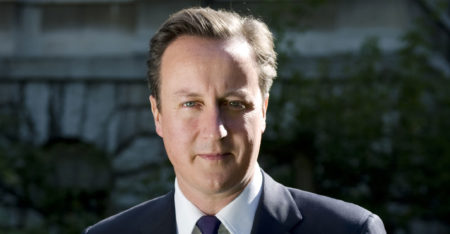
    It was disappointing to learn that Britain’s prime minister, David Cameron, is planning to go ahead with a scheme to censor his citizens’ access to the Internet. His statements were accompanied by the same tired refrain that we have heard many times in the past: “I’m doing it for the children.”

    If the prime minister’s assertion sounds familiar to us in South Africa, it is because it is this same logic that was used to ban the film Of Good Report (now unbanned, on appeal). Our Film and Publications Board felt that censoring a work of genuine artistic merit was an acceptable cost for cracking down on child pornography. Cameron’s plan has similar roots. He claims that censoring the Internet is necessary to stop illegal pornography from being accessed by paedophiles, and the Film and Publication Board’s actions leave me concerned that local legislators might attempt to follow Cameron’s lead.

    My first point is the most important, so I’m going to state it unambiguously right at the start: censoring the Internet will not have even the slightest effect on child pornography, its creation, distribution or popularity. If Cameron’s efforts really are aimed at curtailing the abuse of children, then they are a farce.

    This is because paedophiles do not obtain their pornography from the regular Internet. They use specialised software to access the so-called “deep Web”, which consists of websites that are not indexed by search engines. Saying, as Cameron does, that companies such as Google need to “do more” to combat child pornography betrays a very poor understanding of these issues. Google already blocks any site that it feels is harmful and the real storehouses of child pornography do not fall under its area of influence.

    Anyone who knows anything about the loose group of secret websites that perpetuate the spread of child pornography already knows this. So it comes as a surprise that Cameron and his supporters did not.

    Followers of Cameron’s way of thinking may counter criticism of the plan by pointing out that it is also intended to prevent children from accessing legal pornography and that the entire effort is going to be of an “opt-in” nature. This means that individuals can turn the censorship off if they wish to access banned content, which will include things deemed harmful to society, such as  rape, but also all forms of legal pornography as well.

    The problem with this argument is that they are conflating genuinely damaging material, such as those that support rape, with all forms of legal pornography. Thus, they must be including (one assumes) artwork that contains nudity. If this is the case, then overcensorship becomes almost certain. Even if the filter they employ is 99% accurate (a figure that technical experts say is laughably optimistic) it would still mean that literally millions of sites will be wrongfully banned.

    Second, what do they intend to do if a website contains generally benign ingredients, with the occasional risqué picture slipped in? If those websites get a free pass, then the filter is meaningless. But if those websites get banned en masse, then Facebook, Twitter, YouTube, 9Gag, Instagram and Tumblr will all be censored.

    This brings us to a further problem: this form of censorship erodes “Net neutrality”. Net neutrality is the idea that it is wrong to privilege some Internet services over others and that every website should be given an equal chance to attract visitors. We currently have a high degree of Net neutrality, which is a good thing.

    But picture what would happen if Facebook and a tiny Web start-up both found themselves on the UK’s blacklist. Facebook is a multibillion-dollar business. I doubt Mark Zuckerberg’s morning coffee would be cold before an army of lawyers would be paratrooped into Number 10 to ask the prime minister what the hell he thought he was doing. By contrast, a smaller Web business, struggling to survive in its early days, would most likely be strangled of clients and simply die. In an environment such as this, secondary businesses that rely on websites, such as advertisers, will find themselves forced to use only the larger sites, because only they can guarantee freedom from restriction.

    The truth is that the Internet is too varied, too complex and too important to hand control of it over to any one group, and freedom of the Internet is already being slowly eroded around the world. Australia has similar restrictive laws to those proposed by Cameron and its implementation has been racked by controversy since the start. Accusations of a lack of transparency have gone hand in hand with claims of overcensorship.

    Russia, too, has a blacklist of websites-that-shall-not-be-named. I’m sure it will surprise no one to learn that the Committee to Protect Journalists has alleged that some of the banned websites are those of news organisations that dared to report on corruption in the government of Vladimir Putin.

    In both the Australian and Russian cases, as in the UK, censorship laws were supposedly implemented “for the children”. Well, I have bad news for parents: if your children are truly determined to find pornography, there is little you can do to stop them — and an Internet blacklist will not much help. Indeed, this might be the most compelling reason to oppose an Internet pornography filter: it simply will not work. No government, and certainly no service provider, has the resources to police the entire Internet. If the government of Iran, which employs draconian censorship policies, is unable to keep porn away from its citizens, then it’s hard to see how Cameron plans to do better.

    One can, of course, automate the process by restricting certain keywords, but this is actually even worse. Do you need a support group for “violent abuse”? Then I’m afraid no results will be found. Are you a registered sex therapist looking to advertise? Your phone will never ring.

    But are these problems not perhaps worth it in order to combat child pornography and the abuse from which it stems? Not surprisingly, the answer is no, because law enforcement already possesses ample power to crack down on those who make or distribute child pornography or who commit other acts of child abuse.

    To take the example of two recent South African cases, Johannes Kleinhans and Sifiso Makhubo, additional laws regulating the Internet would not have been of any help. Kleinhans was found to be in possession of illegal imagery and he was successfully prosecuted using existing laws. The 122 cases of rape Makhubo was accused of before he killed himself in his cell last week did not involve the Internet at all.

    And, as the banning of Of Good Report has shown, even existing laws can go too far if they are applied haphazardly or without an appreciation of the issues at stake.

    So, to my fellow South Africans and our friends in the UK, I say: we need to stop this, right now. Because censorship of the Internet is catching on — even though it restricts freedom of speech and privileges the powerful — it doesn’t work and doesn’t help. People who support such measures do so because they believe that they will protect children. But they won’t.

    If you are a parent and you are concerned that your children might be exposed to something that troubles them, the only real solution is to cultivate the kind of relationship with your children so they know that, if they are unsure about something, they can always come to you for help.

    Sadly, sentiments such as these do not make for catchy headlines and that is the real issue here. Cameron’s efforts are not about helping children. They are a political Trojan horse, plain and simple.

    • Andrew Verrijdt is a psychologist
    • This piece was first published in the Mail & Guardian. Visit the M&G Online, the smart news source

    Follow TechCentral on Google News Add TechCentral as your preferred source on Google


    Andrew Verrijdt David Cameron
    WhatsApp YouTube
    Share. Facebook Twitter LinkedIn WhatsApp Telegram Email Copy Link
    Previous ArticleTelkom’s apology: too little, too late
    Next Article Telkom wage dispute resolved

    Related Posts

    Politicians are cashing in on the tech boom

    16 April 2021

    Why undermining encryption is an awful idea

    14 January 2016

    Why Adobe Flash must die

    20 July 2015
    Company News
    The real hurdle for South Africa's AI voicebots isn't the AI - 1Stream

    The real hurdle for South Africa’s AI voicebots isn’t the AI

    5 June 2026
    The real cloud challenge isn't adoption – it's doing it well

    The real cloud challenge isn’t adoption – it’s doing it well

    5 June 2026
    Payments Live returns to Johannesburg for 2nd edition

    Payments Live returns to Johannesburg for 2nd edition

    4 June 2026
    Opinion

    Clashing judgments leave South Africa’s crypto law unsettled

    2 June 2026
    The author, Pambos Soteriades

    The trap inside South Africa’s banking MVNO boom

    1 June 2026
    The hidden cost of social media age bans is everyone's privacy - Petrus Potgieter

    The hidden cost of social media age bans is everyone’s privacy

    29 May 2026

    Subscribe to Updates

    Get the best South African technology news and analysis delivered to your e-mail inbox every morning.

    Latest Posts
    Cabinet hands the Post Office a board, but not a bailout

    Cabinet hands the Post Office a board, but not a bailout

    5 June 2026
    In South Africa, the bundle is the new battleground

    In South Africa, the bundle is the new battleground

    5 June 2026
    Bash powers TFG online sales as group profit tumbles

    Bash powers TFG online sales as group profit tumbles

    5 June 2026
    Surplus groceries, straight from the browser - Still Good co-founders Lorenzo Parisi and Nabeel Gool

    Surplus groceries, straight from the browser

    5 June 2026
    © 2009 - 2026 NewsCentral Media
    • Cookie policy (ZA)
    • TechCentral – privacy and Popia

    Type above and press Enter to search. Press Esc to cancel.

    Manage consent

    TechCentral uses cookies to enhance its offerings. Consenting to these technologies allows us to serve you better. Not consenting or withdrawing consent may adversely affect certain features and functions of the website.

    Functional Always active
    The technical storage or access is strictly necessary for the legitimate purpose of enabling the use of a specific service explicitly requested by the subscriber or user, or for the sole purpose of carrying out the transmission of a communication over an electronic communications network.
    Preferences
    The technical storage or access is necessary for the legitimate purpose of storing preferences that are not requested by the subscriber or user.
    Statistics
    The technical storage or access that is used exclusively for statistical purposes. The technical storage or access that is used exclusively for anonymous statistical purposes. Without a subpoena, voluntary compliance on the part of your Internet Service Provider, or additional records from a third party, information stored or retrieved for this purpose alone cannot usually be used to identify you.
    Marketing
    The technical storage or access is required to create user profiles to send advertising, or to track the user on a website or across several websites for similar marketing purposes.
    • Manage options
    • Manage services
    • Manage {vendor_count} vendors
    • Read more about these purposes
    View preferences
    • {title}
    • {title}
    • {title}