Close Menu
TechCentralTechCentral

    Subscribe to the newsletter

    Get the best South African technology news and analysis delivered to your e-mail inbox every morning.

    Facebook X (Twitter) YouTube LinkedIn
    WhatsApp Facebook X (Twitter) LinkedIn YouTube
    TechCentralTechCentral
    • News
      The Post Office is out of options - Anoosh Rooplal

      The Post Office is out of options

      24 March 2026
      Namibia rejects Starlink

      Namibia rejects Starlink

      24 March 2026
      Optasia wants to do for banks what it did for telcos - Salvador Anglada

      Optasia wants to do for banks what it did for telcos

      24 March 2026
      Sanlam appoints group chief AI officer - Theo Mabaso

      Sanlam appoints group chief AI officer

      24 March 2026
      SA's digital economy is booming - but so is the fraud that comes with it - Nomvuyiso Batyi

      SA’s digital economy is booming – but so is the fraud that comes with it

      24 March 2026
    • World
      It's official: ads are coming to ChatGPT

      It’s official: ads are coming to ChatGPT

      23 March 2026
      Mystery Chinese AI model revealed to be Xiaomi's

      Mystery Chinese AI model revealed to be Xiaomi’s

      19 March 2026
      A mystery AI model has developers buzzing

      A mystery AI model has developers buzzing

      18 March 2026
      Samsung's trifold gamble ends in retreat

      Samsung’s trifold gamble ends in retreat

      17 March 2026
      Nvidia targets $1-trillion in AI chip sales as inference demand surges - Jensen Huang

      Nvidia targets $1-trillion in AI chip sales as inference demand surges

      17 March 2026
    • In-depth
      The last generation of coders

      The last generation of coders

      18 February 2026
      Sentech is in dire straits

      Sentech is in dire straits

      10 February 2026
      How liberalisation is rewiring South Africa's power sector

      How liberalisation is rewiring South Africa’s power sector

      21 January 2026
      The top-performing South African tech shares of 2025

      The top-performing South African tech shares of 2025

      12 January 2026
      Digital authoritarianism grows as African states normalise internet blackouts

      Digital authoritarianism grows as African states normalise internet blackouts

      19 December 2025
    • TCS
      Meet the CIO | HealthBridge CTO Anton Fatti on the future of digital health

      Meet the CIO | Healthbridge CTO Anton Fatti on the future of digital health

      23 March 2026
      TCS+ | Arctic Wolf unpacks the evolving threat landscape for SA businesses - Clare Loveridge and Jason Oehley

      TCS+ | Arctic Wolf unpacks the evolving threat landscape for SA businesses

      19 March 2026
      TCS+ | Vox Kiwi: a wireless solution promising a fibre-like experience - Theo van Zyl

      TCS+ | Vox Kiwi: a wireless solution promising a fibre-like experience

      13 March 2026
      TCS+ | Flipping the narrative on AI in the Global South - Josefin Rosén

      TCS+ | Flipping the narrative on AI in the Global South

      13 March 2026
      TCS | Sink or swim? Antony Makins on how AI is rewriting the rules of work

      TCS | Sink or swim? Antony Makins on how AI is rewriting the rules of work

      5 March 2026
    • Opinion
      South Africa's energy future hinges on getting wheeling right - Aishah Gire

      South Africa’s energy future hinges on getting wheeling right

      10 March 2026
      Hold the doom: the case for a South African comeback - Duncan McLeod

      Apple just dropped a bomb on the Windows world

      5 March 2026
      VC's centre of gravity is shifting - and South Africa is in the frame - Alison Collier

      VC’s centre of gravity is shifting – and South Africa is in the frame

      3 March 2026
      Hold the doom: the case for a South African comeback - Duncan McLeod

      Hold the doom: the case for a South African comeback

      26 February 2026
      The AI fraud crisis your bank is not ready for - Andries Maritz

      The AI fraud crisis your bank is not ready for

      18 February 2026
    • Company Hubs
      • 1Stream
      • Africa Data Centres
      • AfriGIS
      • Altron Digital Business
      • Altron Document Solutions
      • Altron Group
      • Arctic Wolf
      • Ascent Technology
      • AvertITD
      • Braintree
      • CallMiner
      • CambriLearn
      • CYBER1 Solutions
      • Digicloud Africa
      • Digimune
      • Domains.co.za
      • ESET
      • Euphoria Telecom
      • HOSTAFRICA
      • Incredible Business
      • iONLINE
      • IQbusiness
      • Iris Network Systems
      • LSD Open
      • Mitel
      • NEC XON
      • Netstar
      • Network Platforms
      • Next DLP
      • Ovations
      • Paracon
      • Paratus
      • Q-KON
      • SevenC
      • SkyWire
      • Solid8 Technologies
      • Telit Cinterion
      • Tenable
      • Vertiv
      • Videri Digital
      • Vodacom Business
      • Wipro
      • Workday
      • XLink
    • Sections
      • AI and machine learning
      • Banking
      • Broadcasting and Media
      • Cloud services
      • Contact centres and CX
      • Cryptocurrencies
      • Education and skills
      • Electronics and hardware
      • Energy and sustainability
      • Enterprise software
      • Financial services
      • HealthTech
      • Information security
      • Internet and connectivity
      • Internet of Things
      • Investment
      • IT services
      • Lifestyle
      • Motoring
      • Policy and regulation
      • Public sector
      • Retail and e-commerce
      • Satellite communications
      • Science
      • SMEs and start-ups
      • Social media
      • Talent and leadership
      • Telecoms
    • Events
    • Advertise
    TechCentralTechCentral
    Home » Sections » Science » The incredible science behind China’s moon landing

    The incredible science behind China’s moon landing

    By The Conversation4 January 2019
    Twitter LinkedIn Facebook WhatsApp Email Telegram Copy Link
    News Alerts
    WhatsApp

    In a spectacular few days for solar system exploration — during which Nasa whizzed the New Horizons spacecraft past the Kuiper Belt object 2009 MU69 (somewhat controversially nicknamed “Ultima Thule”) and eased OSIRIS-REx into orbit about the asteroid Bennu — the Chinese National Space Administration (CNSA) has set its Chang’e 4 lander and rover down on the far side of the moon.

    Chang’e is the name of the Chinese moon goddess — and Chang’e 4 builds on the success of the Chang’e 3 lander, which touched down on the moon in December 2013.

    This new landing is far from being a mundane event. Only the US and the Soviet Union have ever landed spacecraft on the moon before. Those were either steered by humans on board or, if uncrewed, relied on luck for a safe landing. Chang’e 4 used a downward-looking camera and hazard avoidance software to steer itself to a flat and sufficiently boulder-free landing spot, as it slowed its descent using retrorockets — an impressive technological feat.

    This new landing is far from being a mundane event. Only the US and the Soviet Union have ever landed spacecraft on the moon before

    Crucially, any spacecraft on the lunar far side cannot “see” the Earth, and so it can neither send to nor receive a radio signal from its control centre on Earth. To circumvent this problem, CNSA placed a relay satellite in a cunning “halo orbit” around a point in space sufficiently far beyond the moon that it can always see both the lunar far side and the Earth above the lunar horizon. The relay satellite is called Queqiao, which means “Magpie Bridge”, recalling a bridge formed by birds across the Milky Way in Chinese mythology.

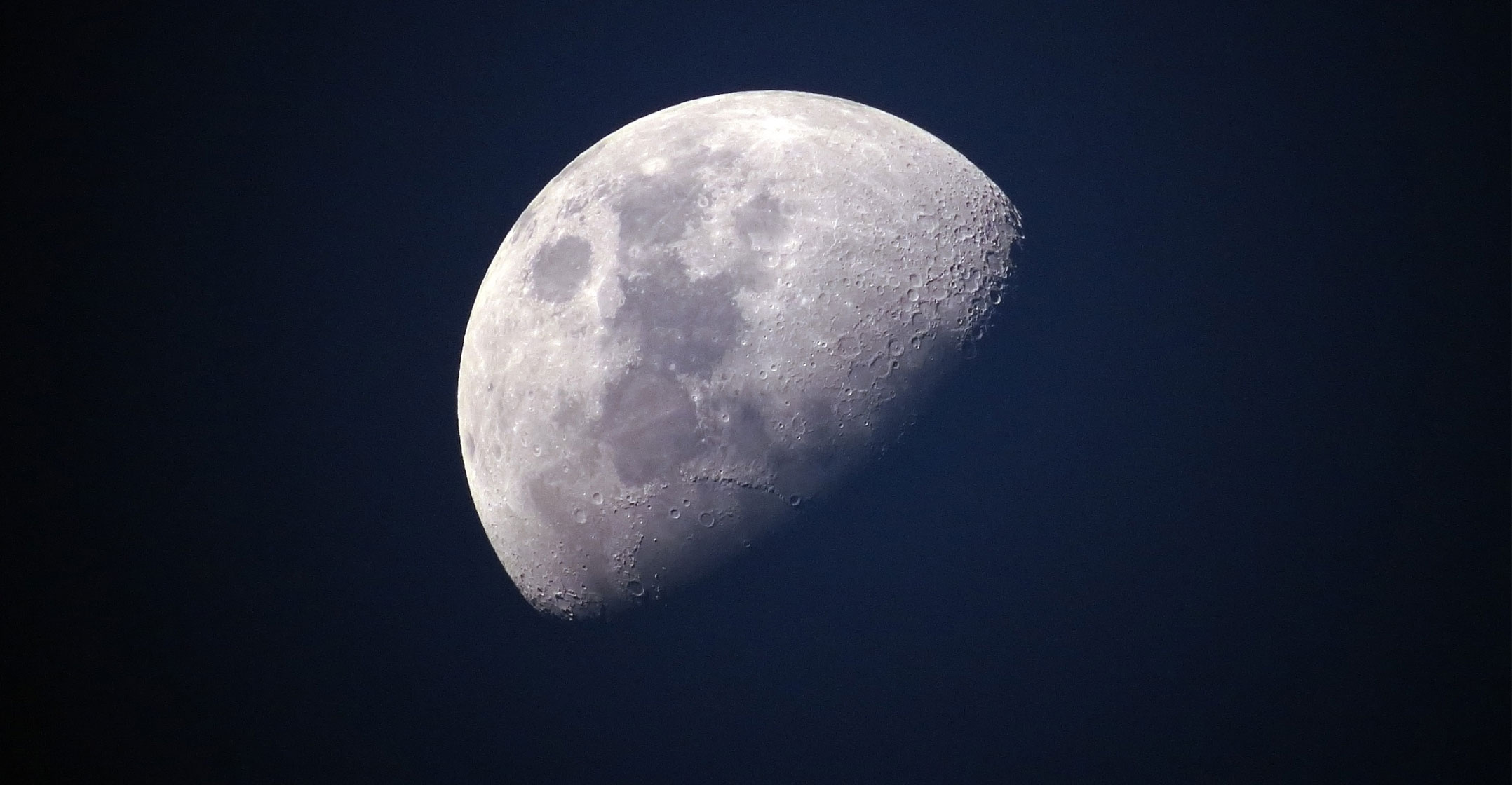
    This is the first time ever that anyone has landed a probe on the far side of the moon. That side sees just as much sunlight as the Earth-facing side of the moon, so is not literally a “dark side”, as it is often casually called. However, it is metaphorically dark, in that the moon’s rotation acts to keep that side facing away from the Earth as it progresses round its orbit, and its nature was unknown before the space age.

    Special

    The far side of the moon differs from the near side in having far less area covered by dark lava flows (the lunar maria or “seas”). There is also a 2 500km wide depression known as the South Pole-Aitken (SPA) basin occupying much of the southern part of the far side. This is probably the scar of a very ancient impact — and because it is about 8km deep it provides a window through the moon’s crust and into the mantle that underlies it. It is special in that it never became flooded by lava like the large impact basins on the near side.

    The chosen landing site, Von Karman crater, is in the north of the SPA basin about half way between the south pole and the equator, and punches a little deeper than the surrounding basin floor. This gives the rover the best possible chance of locating rocks that originated from deeper inside the moon than have been analysed before — offering a chance to learn more about how the satellite formed.
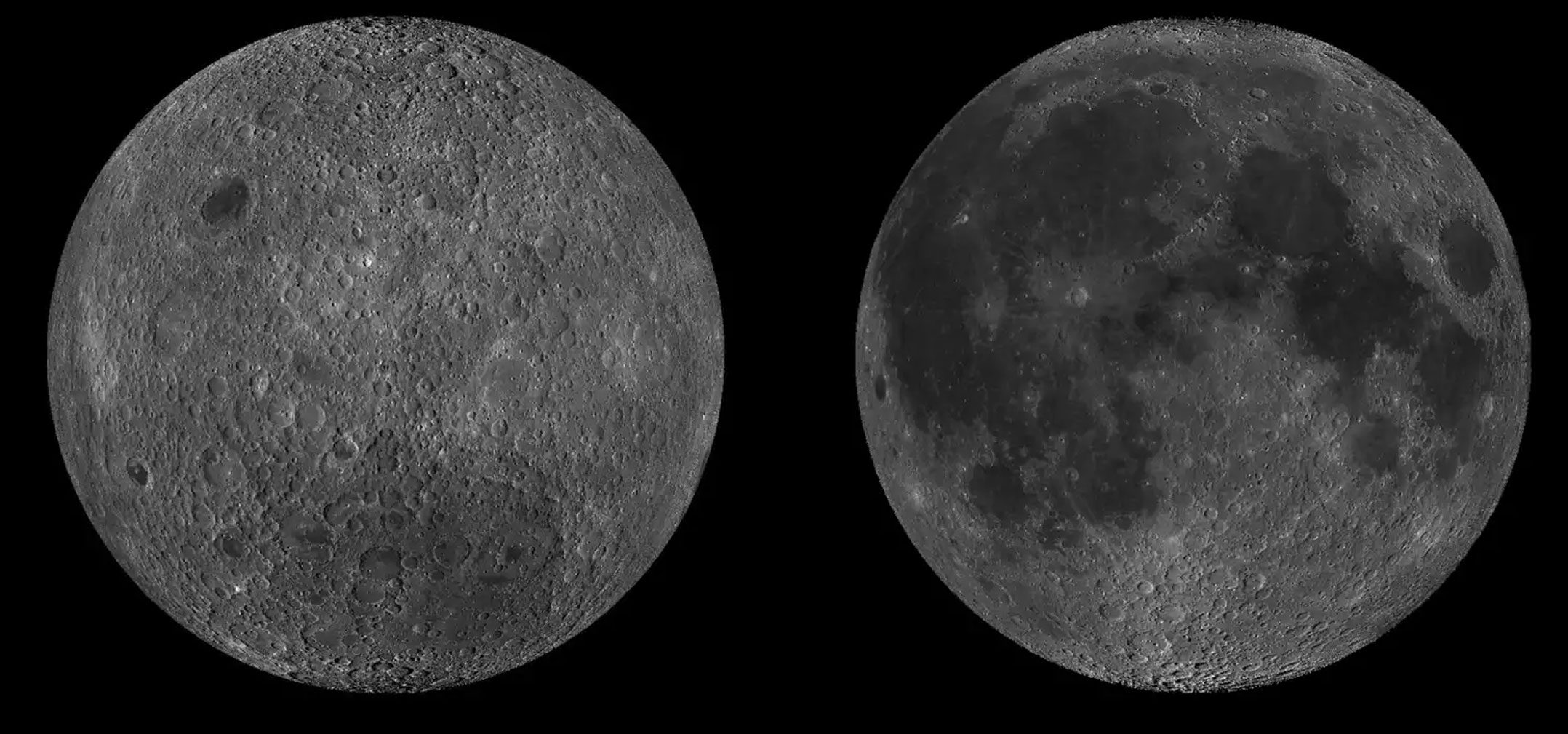
    Lunar far (left) and near (right) sides. Nasa/LROC Quickmap

    There is some lava on the floor of Von Karman (which is what makes it a smooth, and hence fairly safe, place to land), however, but the rover will probably not have to travel far to find some lumps of rock redistributed from the exposed floor of the SPA by later, smaller, impacts.

    The solar powered six-wheeled rover is only 140kg, and measures 1.5 metres in its longest dimension. Its nominal lifetime is three months, but with luck it may keep going for more than a year. Its science instruments are a camera, a ground-penetrating radar (to measure the depth and physical state of the lunar regolith or “soil”), an imaging spectrometer that will give some information on the mineralogy of the rocks and regolith, and a Swedish instrument to look at how the solar wind interacts with the surface.

    China’s next step will probably be Chang’e 5, a mission to bring samples back to Earth…

    This science payload is relatively modest, and doesn’t take best advantage of being inside the SPA basin. But just landing on the far side is nevertheless a notable milestone. China’s next step will probably be Chang’e 5, a mission to bring samples back to Earth from a region of apparently young lavas on the near side.

    Measuring their age by laboratory techniques on Earth will provide an important piece for the jigsaw of lunar chronology, which is missing because these have never been sampled. Bizarrely, this was originally scheduled to happen before Chang’e 4, but was delayed by problems with the heavy-lift Long March 5 rocket.

    China’s further steps in lunar exploration will clearly include a crewed landing, probably within five to 10 years. In partial preparation for this, the static part of the Chang’e 4 lander includes a 3kg sealed biosphere within which potato seeds and silkworm eggs will be encouraged to germinate and hatch. This could help unveil whether the carbon dioxide exhaled from the larvae can be balanced by the amount taken up by the seedlings during photosynthesis.

    Ultimately, that’s one small step towards a sustainable closed ecosystem on the moon.The Conversation

    • Written by David Rothery, professor of planetary geosciences, The Open University
    • This article is republished from The Conversation under a Creative Commons licence

    Follow TechCentral on Google News Add TechCentral as your preferred source on Google


    David Rothery Nasa top
    WhatsApp YouTube
    Share. Facebook Twitter LinkedIn WhatsApp Telegram Email Copy Link
    Previous ArticleIntel AI to fight poaching in Africa
    Next Article Huawei demotes workers for tweeting from an iPhone

    Related Posts

    Musk hits brakes on Mars mission

    Musk hits brakes on Mars mission

    9 February 2026
    Breaking free from legacy thinking in banks: AI, automation and the agentic operating model - Steve Burke iqbusiness

    Breaking free from legacy thinking in banks: AI, automation and the agentic operating model

    15 January 2026
    Starlink satellite anomaly creates debris in rare orbital mishap

    Starlink satellite anomaly creates debris in rare orbital mishap

    19 December 2025
    Company News
    AnyDesk - high-performance remote access built for the modern enterprise

    AnyDesk – high-performance remote access built for the modern enterprise

    23 March 2026

    How South African executives can crack the AI ROI code

    20 March 2026
    Africa's first Nvidia RTX Pro GPU servers have landed

    Africa’s first Nvidia RTX Pro GPU servers have landed

    19 March 2026
    Opinion
    South Africa's energy future hinges on getting wheeling right - Aishah Gire

    South Africa’s energy future hinges on getting wheeling right

    10 March 2026
    Hold the doom: the case for a South African comeback - Duncan McLeod

    Apple just dropped a bomb on the Windows world

    5 March 2026
    VC's centre of gravity is shifting - and South Africa is in the frame - Alison Collier

    VC’s centre of gravity is shifting – and South Africa is in the frame

    3 March 2026

    Subscribe to Updates

    Get the best South African technology news and analysis delivered to your e-mail inbox every morning.

    Latest Posts
    The Post Office is out of options - Anoosh Rooplal

    The Post Office is out of options

    24 March 2026
    Namibia rejects Starlink

    Namibia rejects Starlink

    24 March 2026
    Optasia wants to do for banks what it did for telcos - Salvador Anglada

    Optasia wants to do for banks what it did for telcos

    24 March 2026
    Sanlam appoints group chief AI officer - Theo Mabaso

    Sanlam appoints group chief AI officer

    24 March 2026
    © 2009 - 2026 NewsCentral Media
    • Cookie policy (ZA)
    • TechCentral – privacy and Popia

    Type above and press Enter to search. Press Esc to cancel.

    Manage consent

    TechCentral uses cookies to enhance its offerings. Consenting to these technologies allows us to serve you better. Not consenting or withdrawing consent may adversely affect certain features and functions of the website.

    Functional Always active
    The technical storage or access is strictly necessary for the legitimate purpose of enabling the use of a specific service explicitly requested by the subscriber or user, or for the sole purpose of carrying out the transmission of a communication over an electronic communications network.
    Preferences
    The technical storage or access is necessary for the legitimate purpose of storing preferences that are not requested by the subscriber or user.
    Statistics
    The technical storage or access that is used exclusively for statistical purposes. The technical storage or access that is used exclusively for anonymous statistical purposes. Without a subpoena, voluntary compliance on the part of your Internet Service Provider, or additional records from a third party, information stored or retrieved for this purpose alone cannot usually be used to identify you.
    Marketing
    The technical storage or access is required to create user profiles to send advertising, or to track the user on a website or across several websites for similar marketing purposes.
    • Manage options
    • Manage services
    • Manage {vendor_count} vendors
    • Read more about these purposes
    View preferences
    • {title}
    • {title}
    • {title}