Close Menu
TechCentralTechCentral

    Subscribe to the newsletter

    Get the best South African technology news and analysis delivered to your e-mail inbox every morning.

    Facebook X (Twitter) YouTube LinkedIn
    WhatsApp Facebook X (Twitter) LinkedIn YouTube
    TechCentralTechCentral
    • News
      SABC+ buckles as 477 000 fans pile in for Bafana opener

      SABC+ buckles as 477 000 fans pile in for Bafana opener

      12 June 2026
      The dizzying scale of Elon Musk's fortune

      The dizzying scale of Elon Musk’s fortune

      12 June 2026
      How Sixty60 turned lockdown luck into a lasting lead

      How Sixty60 turned lockdown luck into a lasting lead

      12 June 2026
      How a tiny SA team is using AI to challenge accounting's big boys - Tayla Dandridge stub

      How a tiny SA team is using AI to challenge accounting’s big boys

      12 June 2026
      The world has minted its first dollar trillionaire - Elon Musk

      The world has minted its first dollar trillionaire

      12 June 2026
    • World
      Trouble at Xbox

      Trouble at Xbox

      11 June 2026
      Meta declares war on Israeli spyware firm

      Meta declares war on Israeli spyware firm

      8 June 2026
      Meta takes on OpenAI and Anthropic in enterprise AI

      Meta takes on OpenAI and Anthropic in enterprise AI

      4 June 2026
      AI demand sparks 'chipflation' warning

      AI demand sparks ‘chipflation’ warning

      4 June 2026
      Astronomers discover exoplanets with magnetic fields

      Strange winds reveal magnetic fields on distant ‘hot Jupiters’

      2 June 2026
    • In-depth
      AI boom sparks rally, frenzy and fear

      AI boom sparks rally, frenzy and fear

      11 June 2026
      Every plug-in hybrid on sale in South Africa, ranked by price - Lamborghini Temerario

      Every plug-in hybrid on sale in South Africa, ranked by price

      7 June 2026
      What Wi-Fi 8 will mean for wireless networks

      What Wi-Fi 8 will mean for wireless networks

      1 June 2026
      Alfa's electric rebel - Alfa Romeo Junior Elettrica Veloce

      Alfa’s electric rebel

      29 April 2026
      Africa switches on as Europe dims the lights

      Africa switches on as Europe dims the lights

      9 April 2026
    • TCS
      Watts & Wheels S1E5: 'A Bentley of the bush and a car that swims'

      Watts & Wheels S1E5: ‘A Bentley of the bush and a car that swims’

      8 June 2026
      TCS | Charge's R1.8-billion bet on an off-grid EV future - Charge chairman Joubert Roux

      TCS | Charge’s R1.8-billion bet on an off-grid EV future

      18 May 2026
      TCS+ | The Up&Up Group on the hidden cost of AI - Jason Harrison

      TCS+ | The Up&Up Group on the hidden cost of AI

      13 May 2026
      Michael Rossouw

      TCS+ | The retirement decision most South Africans get wrong

      6 May 2026
      TCS | The Cape Town start-up listening for TB with AI - Braden van Breda

      TCS | The Cape Town start-up listening for TB with AI

      4 May 2026
    • Opinion
      The clock is ticking on South African banks' biggest advantage - Pambos Soteriades

      The clock is ticking on South African banks’ biggest advantage

      9 June 2026

      Clashing judgments leave South Africa’s crypto law unsettled

      2 June 2026
      The clock is ticking on South African banks' biggest advantage - Pambos Soteriades

      The trap inside South Africa’s banking MVNO boom

      1 June 2026
      The hidden cost of social media age bans is everyone's privacy - Petrus Potgieter

      The hidden cost of social media age bans is everyone’s privacy

      29 May 2026
      Treasury's crypto crackdown is a betrayal of Mandela's promise - Duncan McLeod

      Treasury’s crypto crackdown is a betrayal of Mandela’s promise

      22 May 2026
    • Company Hubs
      • 1Stream
      • Africa Data Centres
      • AfriGIS
      • Altron Digital Business
      • Altron Document Solutions
      • Altron Group
      • Arctic Wolf
      • Ascent Technology
      • AvertITD
      • BBD
      • Braintree
      • CallMiner
      • CambriLearn
      • CM Telecom
      • Contactable
      • CYBER1 Solutions
      • Digicloud Africa
      • Digimune
      • Domains.co.za
      • ESET
      • Euphoria Telecom
      • HOSTAFRICA
      • Incredible Business
      • iONLINE
      • IQbusiness
      • Iris Network Systems
      • Kaspersky
      • LSD Open
      • Mitel
      • NEC XON
      • Netstar
      • Network Platforms
      • Next DLP
      • Ovations
      • Paracon
      • Paratus
      • Q-KON
      • SevenC
      • SkyWire
      • Solid8 Technologies
      • Telit Cinterion
      • Telviva
      • Tenable
      • Vertiv
      • Videri Digital
      • Vodacom Business
      • Wipro
      • Workday
      • XLink
    • Sections
      • AI and machine learning
      • Banking
      • Broadcasting and Media
      • Cloud services
      • Contact centres and CX
      • Cryptocurrencies
      • Education and skills
      • Electronics and hardware
      • Energy and sustainability
      • Enterprise software
      • Financial services
      • HealthTech
      • Information security
      • Internet and connectivity
      • Internet of Things
      • Investment
      • IT services
      • Lifestyle
      • Motoring
      • Policy and regulation
      • Public sector
      • Retail and e-commerce
      • Satellite communications
      • Science
      • SMEs and start-ups
      • Social media
      • Talent and leadership
      • Telecoms
    • Events
    • Advertise
    TechCentralTechCentral
    Home » Sections » Electronics and hardware » The real reason you still can’t use your phone on a plane

    The real reason you still can’t use your phone on a plane

    By The Conversation22 November 2018
    Twitter LinkedIn Facebook WhatsApp Email Telegram Copy Link
    News Alerts
    WhatsApp

    Cellphone use is no longer completely forbidden on planes. We used to have to turn our phones off and store them when we flew commercially, but now can keep them on as long as they are in “aeroplane mode”.

    Why? What’s changed? Weren’t planes supposed to fall out of the sky should some forgetful flier leave their phone on? And what really would happen if everyone started yakking away during cross-country flights?

    First some basics on how cellphone systems work. When you make or receive a call, your phone looks for the closest cell tower to connect to. Each tower services an area (a “cell”) that may be as large as 80km in radius over flat terrain, or much smaller in radius in hilly areas or dense urban zones.

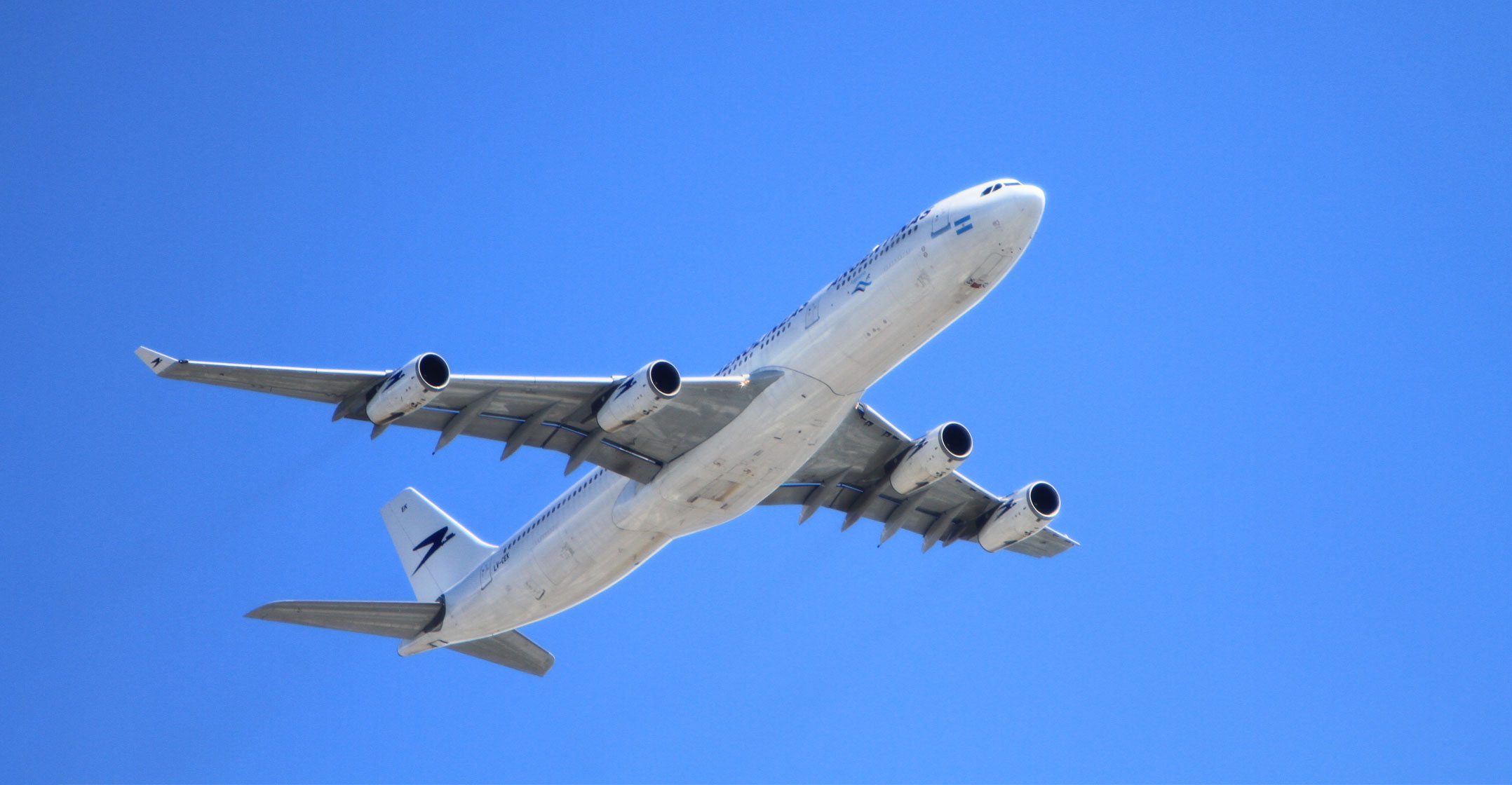
    Aeroplanes are incredibly complex machines, filled with electronics and critical systems required to perform the modern miracle that is flight

    As you move from one cell to another, say on your daily commute, your cellphone call gets handed off from one tower to the next. It requires a fair bit of work on the part of the overall system to make these transitions seem seamless to you. There are also built-in expectations about how often these handoffs should happen (not very), the speed of the user (highway speeds at most), and your altitude (somewhere near the ground).

    Cellular use on a plane at cruising altitude breaks all three of these expectations. Simply put, calls in the sky may interfere with the proper functioning of this complex system — particularly if a couple hundred passengers all had their cellular radios on — such that users on the ground are affected.

    That all sounds like a service issue, not a safety one. What would happen if someone kept their phone’s cellular functions on while enjoying the view at 10 000 metres? Likely, nothing. And that’s a good thing, since even when their use was completely banned, people left them on all the time, whether intentionally or not.

    Non-negligible risk

    But there is a non-negligible risk that using your phone could interfere with critical systems on the plane.
    Although most modern phones no longer do this, GSM (2G) phones were notorious for interfering with other electronic systems. Former owners will recall the “buzz” you heard in your stereo or speakerphone when making a call. Now, imagine this buzz being picked up by a sensitive navigation system. You don’t need to be technically minded to understand that might not be good.

    Researchers found that electromagnetic emissions from personal electronic devices can interfere with a plane’s systems. Specifically, those in the 800-900MHz range can interfere with unshielded cockpit instrumentation. This is a particular issue on older aircraft. Newer planes are designed to deal with the huge amount of electronics the flying public takes onto aeroplanes.

    Aeroplanes are incredibly complex machines, filled with electronics and critical systems required to perform the modern miracle that is flight. The thing about complex systems is that it’s usually impossible to test how safe they are under every conceivable contingency. Given how many new phones come on the market each year, it would be challenging to test how every model might interfere with the systems on each aircraft in the commercial fleet worldwide. So airplane manufacturers work to “harden” the critical systems on their planes to make them less susceptible to interference from electronics.

    Cellphones used to be just that, a phone. You used it to call and text people. Arguably, the “phone” is now the least used function — think about the time you spend making calls versus everything else you do with it. So frequent fliers chafed at having to put their phone away for hours.

    People were using laptops, cameras, video players, tablets, electronic games and so on, so why not smartphones?

    Although the Federal Communications Commission in the US, for example, governs the use of cellular phones on planes, the Federal Aviation Administration governs the use of electronic devices on planes. If a device doesn’t interfere with the aircraft’s communication or navigation systems, it can be used on planes. People were using laptops, cameras, video players, tablets, electronic games and so on, so why not smartphones? After all, this single device now performs the functions of all those others. Hence, the FAA ruled they may be used, but only if the cellular radio was switched off. Enter “aeroplane mode”.

    By adding this mode, device manufacturers have made our lives easier. When you flip on this feature, it turns off your phone’s cellular radio so you can’t make phone calls or text. It also turns off Wi-Fi and Bluetooth, but both of those can be re-enabled and used on planes.

    Prohibited

    Airlines continue to innovate. Delta, for example, offers free access to certain messaging apps like Facebook Messenger and WhatsApp, which work over Wi-Fi. But cellular texting, which needs the cellular radio, is still prohibited.

    Of course, some people still want to be able to make phone calls while in flight. Sadly, for those of us in the flying public who don’t want to sit next to someone loudly blabbing away on a long flight, this day may come. Airlines are experimenting with “picocells”, which are like mini, low-power cell towers within the plane itself. Since this is the closest “tower” a phone on a plane would find, it would not connect to any towers on the ground, eliminating the FCC’s concerns. Your call would be routed like a VoIP call using the plane’s onboard Internet provider system.

    As for how to keep the rest of us from erupting like Samuel L Jackson — “Enough is enough! I’ve had it with these (daggone) cellphones on this (daggone) plane!” — perhaps airlines will create “cell-free zones” like the ones in trains and other public places.The Conversation

    • Sven Bilén is professor of engineering design, electrical engineering and aerospace engineering, Pennsylvania State University
    • This article is republished from The Conversation under a Creative Commons licence

    Follow TechCentral on Google News Add TechCentral as your preferred source on Google


    Sven Bilén top
    WhatsApp YouTube
    Share. Facebook Twitter LinkedIn WhatsApp Telegram Email Copy Link
    Previous ArticleEasiest way to fix Facebook? Break it up
    Next Article Interest rates hiked for first time since 2016

    Related Posts

    18GW in unplanned breakdowns cripple Eskom

    2 November 2021

    Nersa kicks the Karpowership can down the road

    13 September 2021

    If you think South African load shedding is bad, try Zimbabwe’s

    13 September 2021
    Company News
    When jammers kill the signal, AI goes blind too - Rory Atkinson Orange Logistics Sigfox South Africa

    When jammers kill the signal, AI goes blind too

    12 June 2026
    Hisense, Makro team up for winter laundry promotion

    Hisense, Makro team up for winter laundry promotion

    12 June 2026
    Workday Horizon shows SA firms how to make AI deliver - Kiv Moodley

    Workday Horizon shows SA firms how to make AI deliver

    12 June 2026
    Opinion
    The clock is ticking on South African banks' biggest advantage - Pambos Soteriades

    The clock is ticking on South African banks’ biggest advantage

    9 June 2026

    Clashing judgments leave South Africa’s crypto law unsettled

    2 June 2026
    The clock is ticking on South African banks' biggest advantage - Pambos Soteriades

    The trap inside South Africa’s banking MVNO boom

    1 June 2026

    Subscribe to Updates

    Get the best South African technology news and analysis delivered to your e-mail inbox every morning.

    Latest Posts
    SABC+ buckles as 477 000 fans pile in for Bafana opener

    SABC+ buckles as 477 000 fans pile in for Bafana opener

    12 June 2026
    The dizzying scale of Elon Musk's fortune

    The dizzying scale of Elon Musk’s fortune

    12 June 2026
    How Sixty60 turned lockdown luck into a lasting lead

    How Sixty60 turned lockdown luck into a lasting lead

    12 June 2026
    When jammers kill the signal, AI goes blind too - Rory Atkinson Orange Logistics Sigfox South Africa

    When jammers kill the signal, AI goes blind too

    12 June 2026
    © 2009 - 2026 NewsCentral Media
    • Cookie policy (ZA)
    • TechCentral – privacy and Popia

    Type above and press Enter to search. Press Esc to cancel.

    Manage consent

    TechCentral uses cookies to enhance its offerings. Consenting to these technologies allows us to serve you better. Not consenting or withdrawing consent may adversely affect certain features and functions of the website.

    Functional Always active
    The technical storage or access is strictly necessary for the legitimate purpose of enabling the use of a specific service explicitly requested by the subscriber or user, or for the sole purpose of carrying out the transmission of a communication over an electronic communications network.
    Preferences
    The technical storage or access is necessary for the legitimate purpose of storing preferences that are not requested by the subscriber or user.
    Statistics
    The technical storage or access that is used exclusively for statistical purposes. The technical storage or access that is used exclusively for anonymous statistical purposes. Without a subpoena, voluntary compliance on the part of your Internet Service Provider, or additional records from a third party, information stored or retrieved for this purpose alone cannot usually be used to identify you.
    Marketing
    The technical storage or access is required to create user profiles to send advertising, or to track the user on a website or across several websites for similar marketing purposes.
    • Manage options
    • Manage services
    • Manage {vendor_count} vendors
    • Read more about these purposes
    View preferences
    • {title}
    • {title}
    • {title}