Close Menu
TechCentralTechCentral

    Subscribe to the newsletter

    Get the best South African technology news and analysis delivered to your e-mail inbox every morning.

    Facebook X (Twitter) YouTube LinkedIn
    WhatsApp Facebook X (Twitter) LinkedIn YouTube
    TechCentralTechCentral
    • News
      South Africa's 3G networks could go dark within two years - Dejan Kastelic

      South Africa’s 3G networks could go dark within two years

      28 October 2026
      Vodacom books R23-billion Safaricom gain as court fight rages

      Vodacom books R23-billion Safaricom gain as court fight rages

      28 October 2026
      Canal+ takes a knife to DStv prices

      Canal+ takes a knife to DStv prices

      28 October 2026
      South Africa risks return to money-laundering grey list - Busi Mavuso

      South Africa risks return to money-laundering grey list

      28 October 2026
      The hidden cost of owning a folding phone

      The hidden cost of owning a folding phone

      28 October 2026
    • World
      Anthropic's IPO stands alone

      Anthropic’s IPO stands alone

      23 October 2026
      PHP flaws trigger global scramble as hackers pounce

      PHP flaws trigger global scramble as hackers pounce

      22 October 2026
      OpenAI turns the tables on Apple in trade secrets fight

      OpenAI turns the tables on Apple in trade secrets fight

      15 October 2026
      Google's Gemini 4 Argon is finally here

      Google’s Gemini 4 Argon is finally here

      14 October 2026
      Apple's new HomeView smart home hub

      Apple takes another shot at the smart home

      13 October 2026
    • In-depth
      Why investors are souring on Netflix

      Why investors are souring on Netflix

      22 October 2026

      10 days that changed the course of AI

      21 September 2026
      Meta to the AI industry: slow down without us - Mark Zuckerberg

      Meta to the AI industry: slow down without us

      16 September 2026
      Google DeepMind CEO Demis Hassabis. Image: John Sears

      The plan to stop AI from breaking the world

      16 July 2026
      The internet has a Strait of Hormuz problem

      The internet has a Strait of Hormuz problem

      15 July 2026
    • TCS
      TCS+ | Vox on AI, data rules and omnichannel communication for SMEs

      TCS+ | Vox on AI, data rules and omnichannel communication for SMEs

      26 October 2026
      TCS | The Cape Town firm quietly connecting Eskom, Pep and 6 000 ATMs - Réan van Niekerk, Metacom

      TCS | The Cape Town firm quietly connecting Eskom, Pep and 6 000 ATMs

      23 October 2026
      TCS+ | Boards are underestimating the cost of a cyberattack, says Arctic Wolf - Jason Oehley and Andre Den Hond

      TCS+ | Boards are underestimating the cost of a cyberattack, says Arctic Wolf

      22 October 2026
      W&W | LDV's Gerhard Moolman on electric bakkies, fleet orders and 'school fees'

      W&W | LDV’s Gerhard Moolman on electric bakkies and fleets

      9 October 2026
      TCS | Frogfoot sees bigger fibre deals coming - TechCentral Show guests Abraham van der Merwe and Shane Chorley

      TCS | Frogfoot sees bigger fibre deals coming

      8 October 2026
    • Opinion
      AI's boardroom honeymoon is over - Gary Stocks

      AI’s boardroom honeymoon is over

      22 October 2026
      Before South Africa licenses Starlink, it should look at Ukraine - Duncan McLeod

      Before South Africa licenses Starlink, it should look at Ukraine

      21 October 2026
      Nonkqubela Thathakahle Jordan-Dyani

      Why cybersecurity is now a national security issue for South Africa

      15 October 2026
      When a machine can choose, who does it become? Fanie van Rooyen

      When a machine can choose, who does it become?

      9 October 2026
      Let South Africans jailbreak their way to digital sovereignty - Dirk de Vos

      Let South Africans jailbreak their way to digital sovereignty

      5 October 2026
    • Company News
      • 1Stream
      • Africa Data Centres
      • AfriGIS
      • Altron Digital Business
      • Altron Document Solutions
      • Altron Group
      • Arctic Wolf
      • Ascent Technology
      • AvertITD
      • BBD
      • Braintree
      • CallMiner
      • CambriLearn
      • CM.com
      • Contactable
      • CYBER1 Solutions
      • Digicloud Africa
      • Digimune
      • Domains.co.za
      • ESET
      • Euphoria Telecom
      • HOSTAFRICA
      • Incredible Business
      • iONLINE
      • IQbusiness
      • Iris Network Systems
      • Kaspersky
      • LSD Open
      • Mitel
      • NEC XON
      • Netstar
      • Network Platforms
      • Next DLP
      • Ovations
      • Paracon
      • Paratus
      • Publishared
      • Q-KON
      • SevenC
      • SkyWire
      • Solid8 Technologies
      • Telit Cinterion
      • Telviva
      • Tenable
      • Vertiv
      • Videri Digital
      • Vodacom Business
      • Vox
      • Wipro
      • Workday
      • XLink
    • Sections
      • AI and machine learning
      • Banking
      • Broadcasting and media
      • Cloud services
      • Contact centres and CX
      • Cryptocurrencies
      • Education and skills
      • Electronics and hardware
      • Energy and sustainability
      • Enterprise software
      • Fintech and payments
      • HealthTech
      • Information security
      • Internet and connectivity
      • Internet of things
      • Investment
      • IT services
      • Lifestyle
      • Policy and regulation
      • Public sector
      • Retail and e-commerce
      • Satellite communications
      • Science
      • SMEs and start-ups
      • Social media
      • Talent and leadership
      • Telecoms
      • Watts & Wheels
    • Events
    • Advertise
    TechCentralTechCentral
    Home » Sections » Broadcasting and media » The rest of the Web pays for Google and Facebook to be free

    The rest of the Web pays for Google and Facebook to be free

    By Alex Webb3 March 2021
    Twitter LinkedIn Facebook WhatsApp Email Telegram Copy Link
    Get breaking news on WhatsApp

    Google and Facebook make a lot of noise about how their main services are free to use. And it’s true, they are. But what they don’t highlight is their role in making almost everything else we consume online more expensive.

    Consider all the paywalls and paid services that are rolling out across the Internet. News, films, music and even theatrical streaming are now available for a subscription fee. The latest example is Twitter, which announced last week that it plans a paid product, dubbed “Super Follows”, where users can charge followers for “premium” tweets and other content. The move is a way for the company to decrease its dependence on advertising revenue — a pot of money that’s increasingly being swallowed up by just Google and Facebook.

    If online power, and the ad revenue that comes with it, continues to concentrate within those two platforms, expect what you watch, read or listen to elsewhere on the Web to start costing you money.

    Perhaps now we can forge a better understanding of the value of content. It costs money to produce, so it should also cost money to consume

    Before the Internet, advertising subsidised all the media we consumed, from TV and radio to magazines and newspapers. This ad-supported model made its way to the Web and conditioned us to expect online content to be free. News organisations, for example, didn’t charge readers, in the misguided hope that more eyeballs on their stories would bring in more revenue from the banner ads they displayed.

    In the past decade, however, that ad money has gone overwhelmingly to the search and social media giants. Last year, Google and Facebook hoovered up 74% of the US$300-billion spent globally to advertise on the Web, according to the World Advertising Research Council. That’s left everyone else who had been reliant on ads scrambling to make ends meet.

    Privelege

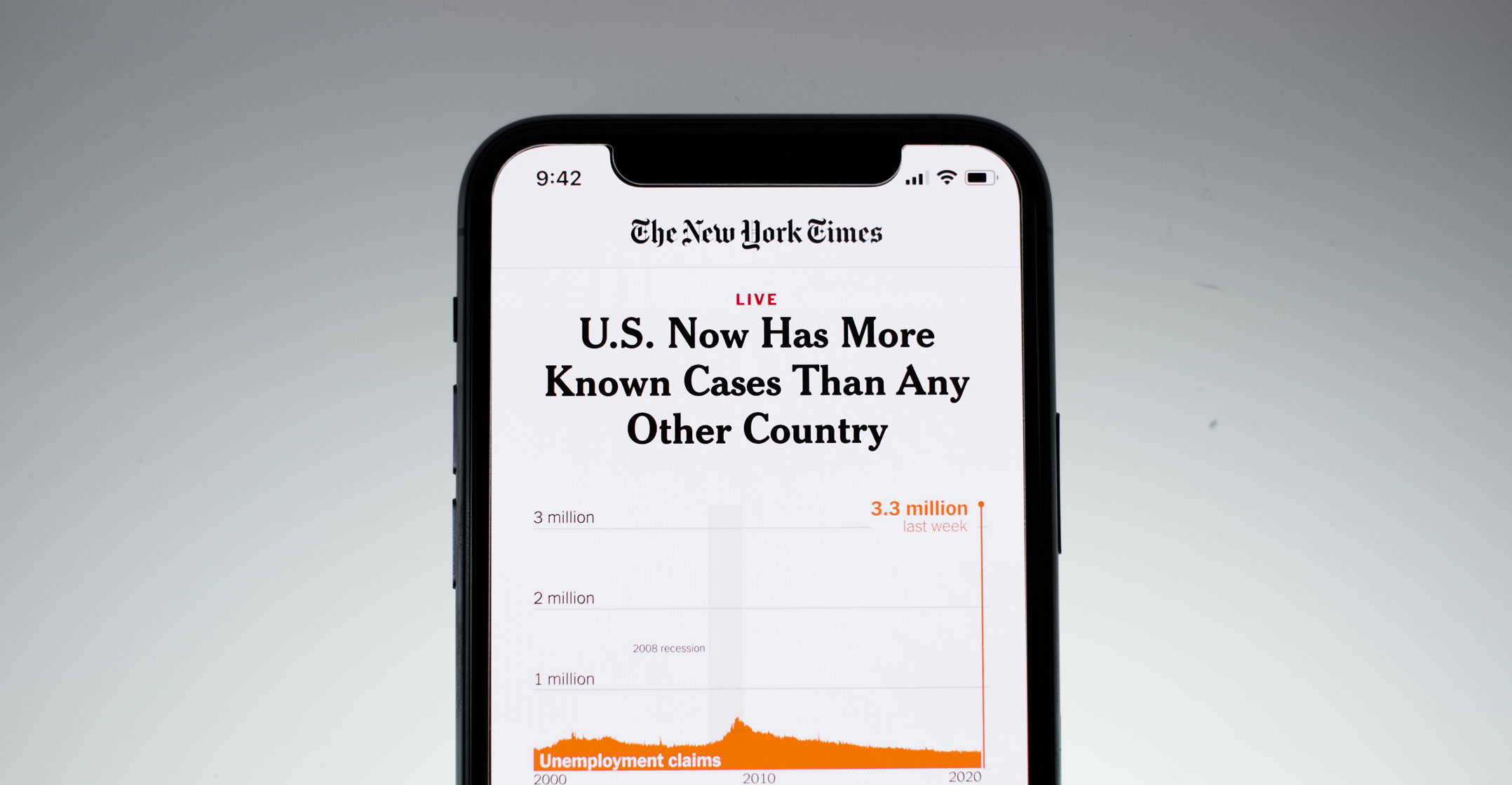
    Advertising was always more lucrative than simply selling to consumers. Back in 2006, the New York Times charged readers an average of $534 for a subscription, while it brought in a further $1 064 per subscriber from ads. Papers rarely had to increase their newsstand prices because they were able to eke out more money from advertisers instead, often well ahead of the pace of inflation.

    Now that privilege is reserved for the tech giants. Since 2017, Facebook has almost doubled its average revenue per user in the US and Canada to $159/year, by serving up more ads and increasing prices when it needs to. Analysts expect Facebook’s total revenue to more than double again to $176-billion by 2024.

    From a consumer perspective, you could argue that search and social networking should be free — after all, they are utilities that practically everyone uses — while more specific services should have a price tag. Twitter’s Super Follows and Substack, which offers subscriptions to individual writers’ newsletters, lets you pay for what you want: Where one person might be willing to spend on someone’s tweets about currency trading, another could choose to pay for a newsletter dedicated to gluten-free cooking.
    Pay up!

    This system might be more efficient, since you are theoretically only paying for the media you want, but that doesn’t mean it will be cheaper for consumers. The rise of video-on-demand services like Netflix and Disney+ has demonstrated as much. People who cut the cord on traditional pay-television packages have learnt that the new normal of multiple subscriptions isn’t necessarily any cheaper than the old world.

    Yes, you get better, more convenient and largely ad-free viewing — but there’s a good chance you’re paying more for it. The same applies to Twitter and Substack, where signing up to just four writers’ output at $5/month each is already more than the cost of a $17 New York Times subscription, which gives you a greater breadth of coverage.

    Super Follows are only likely to be a small part of Twitter’s business, at least at first. But taken in concert with the rise of paywalls, subscription streaming and video-on-demand, the fact that even a new-ish media company like Twitter needs to add a paid layer points to a world where everything aside from Google and Facebook has a cost of entry.

    That might not be a bad thing, but we should recognise the trade we’ve made from ad-subsidised media to ad-subsidised search and social networking. Perhaps now we can forge a better understanding of the value of content. It costs money to produce, so it should also cost money to consume.  — (c) 2021 Bloomberg LP

    Add TechCentral as a preferred source on GoogleFollow TechCentral on Google NewsGet breaking news on WhatsApp


    Alex Webb Facebook Google New York Times top Twitter
    WhatsApp YouTube
    Share. Facebook Twitter LinkedIn WhatsApp Telegram Email Copy Link
    Previous ArticleBackspace: ‘Meanwhile, in the Land Down Under’
    Next Article Uber drivers in South Africa: Employees or independent contractors?

    Related Posts

    Alleged Israeli spy company heavily targeted Starlink users

    How online ads were used to hunt Starlink users

    28 October 2026
    Companies rein in AI spending as running costs mount

    Companies rein in AI spending as running costs mount

    27 October 2026
    Governing AI in African markets: from principles to practice

    Governing AI in African markets: from principles to practice

    27 October 2026
    Company News

    The key to AI search visibility is human attention: media agency Connect

    28 October 2026
    Why customers still feel unheard when automation works exactly as designed - CallMiner

    Why customers still feel unheard when automation works exactly as designed

    28 October 2026
    Telviva earns ISO/IEC 27001:2022 certification for information security - Antony Russell

    Telviva earns ISO/IEC 27001:2022 certification for information security

    27 October 2026
    Opinion
    AI's boardroom honeymoon is over - Gary Stocks

    AI’s boardroom honeymoon is over

    22 October 2026
    Before South Africa licenses Starlink, it should look at Ukraine - Duncan McLeod

    Before South Africa licenses Starlink, it should look at Ukraine

    21 October 2026
    Nonkqubela Thathakahle Jordan-Dyani

    Why cybersecurity is now a national security issue for South Africa

    15 October 2026

    Subscribe to Updates

    Get the best South African technology news and analysis delivered to your e-mail inbox every morning.

    Latest Posts
    South Africa's 3G networks could go dark within two years - Dejan Kastelic

    South Africa’s 3G networks could go dark within two years

    28 October 2026
    Vodacom books R23-billion Safaricom gain as court fight rages

    Vodacom books R23-billion Safaricom gain as court fight rages

    28 October 2026
    Canal+ takes a knife to DStv prices

    Canal+ takes a knife to DStv prices

    28 October 2026
    South Africa risks return to money-laundering grey list - Busi Mavuso

    South Africa risks return to money-laundering grey list

    28 October 2026
    © 2009 - 2026 NewsCentral Media
    Built and maintained by Chronon
    • Cookie policy (ZA)
    • TechCentral – privacy and Popia

    Type above and press Enter to search. Press Esc to cancel.

    Manage consent

    TechCentral uses cookies to enhance its offerings. Consenting to these technologies allows us to serve you better. Not consenting or withdrawing consent may adversely affect certain features and functions of the website.

    Functional Always active
    The technical storage or access is strictly necessary for the legitimate purpose of enabling the use of a specific service explicitly requested by the subscriber or user, or for the sole purpose of carrying out the transmission of a communication over an electronic communications network.
    Preferences
    The technical storage or access is necessary for the legitimate purpose of storing preferences that are not requested by the subscriber or user.
    Statistics
    The technical storage or access that is used exclusively for statistical purposes. The technical storage or access that is used exclusively for anonymous statistical purposes. Without a subpoena, voluntary compliance on the part of your Internet Service Provider, or additional records from a third party, information stored or retrieved for this purpose alone cannot usually be used to identify you.
    Marketing
    The technical storage or access is required to create user profiles to send advertising, or to track the user on a website or across several websites for similar marketing purposes.
    • Manage options
    • Manage services
    • Manage {vendor_count} vendors
    • Read more about these purposes
    View preferences
    • {title}
    • {title}
    • {title}
    🇿🇦 Sign up to the TechCentral newsletter