Close Menu
TechCentralTechCentral

    Subscribe to the newsletter

    Get the best South African technology news and analysis delivered to your e-mail inbox every morning.

    Facebook X (Twitter) YouTube LinkedIn
    WhatsApp Facebook X (Twitter) LinkedIn YouTube
    TechCentralTechCentral
    • News
      MultiChoice scraps annual DStv price hikes for 2026 - David Mignot

      MultiChoice scraps annual DStv price hike

      20 February 2026
      What Gen Z really thinks about the tech world it inherited - Tinashe Mazodze

      What Gen Z really thinks about the tech world it inherited

      20 February 2026
      Showmax 'can't continue' in its current form

      Showmax ‘can’t continue’ in its current form

      20 February 2026
      Free Market Foundation slams treasury's proposed gambling tax

      Free Market Foundation slams treasury’s proposed gambling tax

      20 February 2026
      South Africa's dynamic spectrum breakthrough - Paul Colmer

      South Africa’s dynamic spectrum breakthrough

      20 February 2026
    • World
      Prominent Southern African journalist targeted with Predator spyware

      Prominent Southern African journalist targeted with Predator spyware

      18 February 2026
      More drama in Warner Bros tug of war

      More drama in Warner Bros tug of war

      17 February 2026
      Russia bans WhatsApp

      Russia bans WhatsApp

      12 February 2026
      EU regulators take aim at WhatsApp

      EU regulators take aim at WhatsApp

      9 February 2026
      Musk hits brakes on Mars mission

      Musk hits brakes on Mars mission

      9 February 2026
    • In-depth
      How liberalisation is rewiring South Africa's power sector

      How liberalisation is rewiring South Africa’s power sector

      21 January 2026
      The top-performing South African tech shares of 2025

      The top-performing South African tech shares of 2025

      12 January 2026
      Digital authoritarianism grows as African states normalise internet blackouts

      Digital authoritarianism grows as African states normalise internet blackouts

      19 December 2025
      TechCentral's South African Newsmakers of 2025

      TechCentral’s South African Newsmakers of 2025

      18 December 2025
      Black Friday goes digital in South Africa as online spending surges to record high

      Black Friday goes digital in South Africa as online spending surges to record high

      4 December 2025
    • TCS
      Watts & Wheels S1E4: 'We drive an electric Uber'

      Watts & Wheels S1E4: ‘We drive an electric Uber’

      10 February 2026
      TCS+ | How Cloud On Demand is helping SA businesses succeed in the cloud - Xhenia Rhode, Dion Kalicharan

      TCS+ | Cloud On Demand and Consnet: inside a real-world AWS partner success story

      30 January 2026
      Watts & Wheels S1E4: 'We drive an electric Uber'

      Watts & Wheels S1E3: ‘BYD’s Corolla Cross challenger’

      30 January 2026
      Watts & Wheels S1E4: 'We drive an electric Uber'

      Watts & Wheels S1E2: ‘China attacks, BMW digs in, Toyota’s sublime supercar’

      23 January 2026

      TCS+ | Why cybersecurity is becoming a competitive advantage for SA businesses

      20 January 2026
    • Opinion
      A million reasons monopolies don't work - Duncan McLeod

      A million reasons monopolies don’t work

      10 February 2026
      The author, Business Leadership South Africa CEO Busi Mavuso

      Eskom unbundling U-turn threatens to undo hard-won electricity gains

      9 February 2026
      South Africa's skills advantage is being overlooked at home - Richard Firth

      South Africa’s skills advantage is being overlooked at home

      29 January 2026
      Why Elon Musk's Starlink is a 'hard no' for me - Songezo Zibi

      Why Elon Musk’s Starlink is a ‘hard no’ for me

      26 January 2026
      A million reasons monopolies don't work - Duncan McLeod

      South Africa’s new fibre broadband battle

      20 January 2026
    • Company Hubs
      • Africa Data Centres
      • AfriGIS
      • Altron Digital Business
      • Altron Document Solutions
      • Altron Group
      • Arctic Wolf
      • AvertITD
      • Braintree
      • CallMiner
      • CambriLearn
      • CYBER1 Solutions
      • Digicloud Africa
      • Digimune
      • Domains.co.za
      • ESET
      • Euphoria Telecom
      • Incredible Business
      • iONLINE
      • IQbusiness
      • Iris Network Systems
      • LSD Open
      • Mitel
      • NEC XON
      • Netstar
      • Network Platforms
      • Next DLP
      • Ovations
      • Paracon
      • Paratus
      • Q-KON
      • SevenC
      • SkyWire
      • Solid8 Technologies
      • Telit Cinterion
      • Tenable
      • Vertiv
      • Videri Digital
      • Vodacom Business
      • Wipro
      • Workday
      • XLink
    • Sections
      • AI and machine learning
      • Banking
      • Broadcasting and Media
      • Cloud services
      • Contact centres and CX
      • Cryptocurrencies
      • Education and skills
      • Electronics and hardware
      • Energy and sustainability
      • Enterprise software
      • Financial services
      • Information security
      • Internet and connectivity
      • Internet of Things
      • Investment
      • IT services
      • Lifestyle
      • Motoring
      • Public sector
      • Retail and e-commerce
      • Satellite communications
      • Science
      • SMEs and start-ups
      • Social media
      • Talent and leadership
      • Telecoms
    • Events
    • Advertise
    TechCentralTechCentral
    Home » Sections » Social media » TikTok founder races to save hit app as Trump threatens ban

    TikTok founder races to save hit app as Trump threatens ban

    By Agency Staff23 July 2020
    Twitter LinkedIn Facebook WhatsApp Email Telegram Copy Link
    News Alerts
    WhatsApp
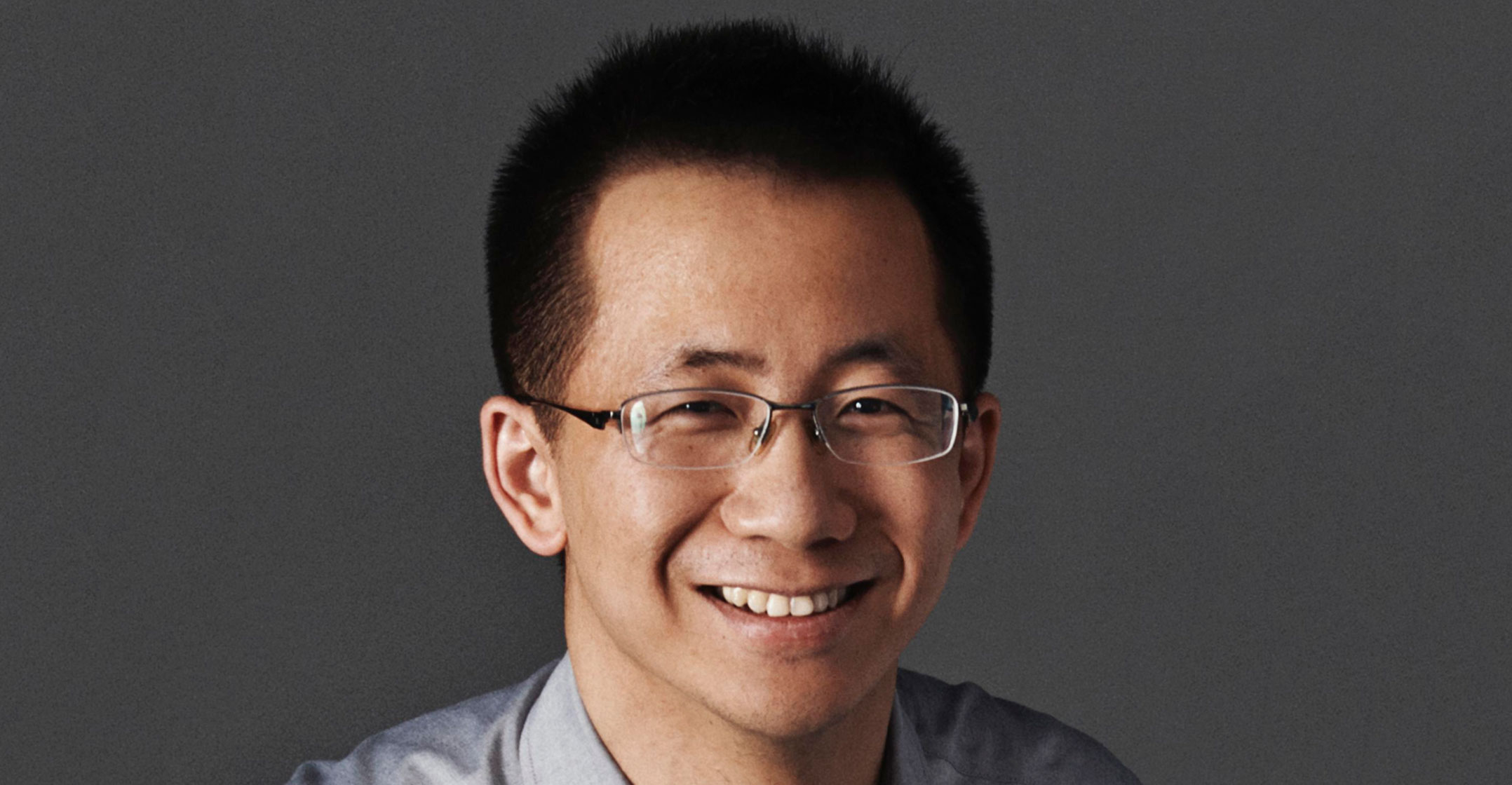
    Zhang Yiming

    Zhang Yiming is the little-known Chinese entrepreneur who built TikTok into one of the most promising franchises on the Internet. Now the brainy, combative founder is under pressure to save the business from Trump administration threats.

    Venture investors in TikTok parent ByteDance have approached Zhang with a range of proposals to address US concerns that the short-video app is a security threat, according to people familiar with the matter. They include selling a majority stake in TikTok to American interests, perhaps strategic investors or the venture firms themselves, said the people, asking not to be identified because the talks are private.

    Zhang, who controls the company, has so far resisted. He’s tried building up TikTok’s operations in the US, hiring an American CEO and reassuring regulators that user data will not be shared outside the country. TikTok has also stepped up its lobbying in Washington, DC and signalled it would create 10 000 jobs in the country.

    Trump could add TikTok to the US Entity List, which would compel Apple and Google to drop the service from their app stores

    It hasn’t been enough. This month, Donald Trump said he’s considering banning the app in the US, while adviser Peter Navarro said the app would face penalties for “information warfare” against the US. A decision is likely to come before the elections in November so time is running short for Zhang.

    “We are moving down a path of techno-nationalism,” says Samm Sacks, a fellow on cybersecurity policy and China digital economy at the New America think tank.

    Trump has the power to cripple the business. The president could add TikTok to the US Entity List, which would compel American companies such as Apple and Google to drop the service from their app stores. In addition, the US committee on foreign investment in the US, better known as CFIUS, is reviewing ByteDance’s 2017 purchase of the business that became TikTok and could force a spin-off. Either move would hammer the value of the business.

    That has people close to Zhang stepping up their push for quick action to preserve the value of the franchise. Here is a look at the scenarios Zhang, ByteDance and its investors are considering to save TikTok.

    Sell TikTok to US investors

    ByteDance’s venture investors, including Sequoia Capital, have urged Zhang to sell a majority stake in TikTok. The idea is that TikTok could become a US company, while ByteDance retains a minority stake. This scenario has been discussed for months with various iterations, including a group of venture firms or strategic partners buying the additional equity, according to one person involved in the talks.

    Talks are detailed enough that they’ve debated whether ByteDance should continue to hold any board seats and whether US authorities would likely back off, the person said. Neil Shen, the head of Sequoia China who backed the start-up early on, has supported this idea. Sequoia declined to comment.

    “Since publicly announcing two weeks ago that we are evaluating changes to the corporate structure of the TikTok business, there have been numerous suggestions made by external people not involved in the company’s internal discussions,” TikTok said in a statement. “We do not comment on rumours or speculation. We are very confident in the long-term success of TikTok and will make our plans public when we have something to announce.”
    The biggest hurdle to such a deal is Zhang’s desire to keep control of TikTok. He has resisted because he thinks the service is evolving into one of a handful of major online advertising businesses, alongside Facebook and Google. He has already endured a TikTok ban in India, its largest market by users. His instincts are to fight. He has scrapped with the authorities in Beijing over politically sensitive content and with Chinese publishers over allegations of copyright infringement.

    Price is another challenge. TikTok’s value is surging, with estimates ranging from US$20-billion to $40-billion. The real promise is in the future if it can follow the growth path of Facebook or Google. It’s not clear venture investors, which also include General Atlantic and SoftBank Group, could raise enough capital to buy a majority stake at a price that would satisfy Zhang, one person said.

    Any deal would also face enormous risks because time is running short. Buyers may have to agree to a deal with ByteDance without knowing whether the US government would then forgo a ban. One venture investor said it’s essentially impossible to complete a deal in time.

    Sell just TikTok’s US business

    A more modest scenario under discussion is separating TikTok’s US operations, while ByteDance retains full ownership in the rest of the world, the person said. This would make the deal more affordable for venture firms and would allow Zhang to retain control over most of the operations. It may also assuage US regulators because user data would be under the control of a local company.

    The US is a relatively modest part of ByteDance’s overall business. The TikTok app has been downloaded more than 165 million times in the country, according to Sensor Tower estimates, compared to more than two billion times globally, including its Chinese equivalent.

    The drawback of a US TikTok is that the operation would lose the synergies of a global company. Advertisers that have flocked to the service would have to deal with two different entities. Engineers working on TikTok’s software may also struggle to deal with user bases that are segmented into different geographic regions. If the US business continues to use algorithms and intellectual property from Beijing headquarters, American politicians may still have concerns over security.

    Split ByteDance into China and everywhere else

    A more dramatic alternative would be for Zhang to separate ByteDance in China and abroad. In theory, he could set up a global headquarters in the US or the UK to run all of ByteDance’s businesses outside of his home country. Although his company is best known for TikTok, it is an ambitious software developer, with popular smartphone apps for news, entertainment and more. Such a separation would proactively address concerns about Chinese control over ByteDance’s entire family of apps.

    The company’s China business, already substantial, is growing fast. The domestic version of TikTok, Douyin, is a bigger business than the short-video service has outside the country. ByteDance is also expanding in the country into new services, including education.

    Make ByteDance an American company

    Perhaps the most unlikely option would be for Zhang to move to the US and run ByteDance from there. The native of Longyan has spent an increasing amount of time in California in recent years as ByteDance has expanded abroad. The US visa programmes for exceptional workers would almost certainly cover the founder, meaning he could become a citizen in less than a year, one person said. Parallels would be Rupert Murdoch or Elon Musk, the person said.

    Such a move would be very controversial in his home country. Chinese who move abroad typically keep a low profile to avoid becoming a lighting rod.

    TikTok has already hired former Walt Disney executive Kevin Mayer as CEO and he also serves as chief operating officer of ByteDance.
    “TikTok is led by an American CEO, with hundreds of employees and key leaders across safety, security, product and public policy here in the US,” a company spokesperson has said. “We have never provided user data to the Chinese government, nor would we do so if asked.”

    In the end, Zhang may opt to do nothing and deal with Trump’s decision after it’s made. ByteDance is already the most valuable start-up in the world, according to CB Insights. Its valuation, $75-billion during its last official fundraising, surged to as much as $140-billion in private share transactions earlier this year, according to one person close to the matter.

    While a US ban on TikTok would hurt that lofty total, ByteDance’s valuation would likely remain above $100-billion, the person said. Clarity would also allow the CEO to focus on building the next major competitor on China’s Internet, beside Tencent and Alibaba Group. Investment bankers have pitched Zhang for months on an initial public offering, despite the US threats, because investors are so hungry for new offerings. That’s a sign of the business’s stability, even though the company has said it’s in no rush to go public.  — Reported by Zheping Huang and Katie Roof, (c) 2020 Bloomberg LP

    Follow TechCentral on Google News Add TechCentral as your preferred source on Google


    Alibaba ByteDance Donald Trump Tencent TikTok top Zhang Yiming
    WhatsApp YouTube
    Share. Facebook Twitter LinkedIn WhatsApp Telegram Email Copy Link
    Previous ArticleMicrosoft shares dip as cloud growth slows to below 50%
    Next Article TechCentral’s CxO Insights: Meet Hollard’s Jacky Mampana

    Related Posts

    What Gen Z really thinks about the tech world it inherited - Tinashe Mazodze

    What Gen Z really thinks about the tech world it inherited

    20 February 2026
    Here comes the next wave of Chinese AI models

    Here comes the next wave of Chinese AI models

    12 February 2026
    Meta, TikTok, YouTube to stand trial on youth addiction claims

    Meta, TikTok, YouTube to stand trial on youth addiction claims

    27 January 2026
    Company News
    Service is everyone's problem now - and that's exactly why the Atlassian Service Collection matters

    Service is everyone’s problem now – why the Atlassian Service Collection matters

    20 February 2026
    Customers have new expectations. Is your CX ready? 1Stream

    Customers have new expectations. Is your CX ready?

    19 February 2026
    South Africa's cybersecurity challenge is not a tool problem - Nicholas Applewhite, Trinexia South Africa

    South Africa’s cybersecurity challenge is not a tool problem

    19 February 2026
    Opinion
    A million reasons monopolies don't work - Duncan McLeod

    A million reasons monopolies don’t work

    10 February 2026
    The author, Business Leadership South Africa CEO Busi Mavuso

    Eskom unbundling U-turn threatens to undo hard-won electricity gains

    9 February 2026
    South Africa's skills advantage is being overlooked at home - Richard Firth

    South Africa’s skills advantage is being overlooked at home

    29 January 2026

    Subscribe to Updates

    Get the best South African technology news and analysis delivered to your e-mail inbox every morning.

    Latest Posts
    MultiChoice scraps annual DStv price hikes for 2026 - David Mignot

    MultiChoice scraps annual DStv price hike

    20 February 2026
    What Gen Z really thinks about the tech world it inherited - Tinashe Mazodze

    What Gen Z really thinks about the tech world it inherited

    20 February 2026
    Showmax 'can't continue' in its current form

    Showmax ‘can’t continue’ in its current form

    20 February 2026
    Free Market Foundation slams treasury's proposed gambling tax

    Free Market Foundation slams treasury’s proposed gambling tax

    20 February 2026
    © 2009 - 2026 NewsCentral Media
    • Cookie policy (ZA)
    • TechCentral – privacy and Popia

    Type above and press Enter to search. Press Esc to cancel.

    Manage consent

    TechCentral uses cookies to enhance its offerings. Consenting to these technologies allows us to serve you better. Not consenting or withdrawing consent may adversely affect certain features and functions of the website.

    Functional Always active
    The technical storage or access is strictly necessary for the legitimate purpose of enabling the use of a specific service explicitly requested by the subscriber or user, or for the sole purpose of carrying out the transmission of a communication over an electronic communications network.
    Preferences
    The technical storage or access is necessary for the legitimate purpose of storing preferences that are not requested by the subscriber or user.
    Statistics
    The technical storage or access that is used exclusively for statistical purposes. The technical storage or access that is used exclusively for anonymous statistical purposes. Without a subpoena, voluntary compliance on the part of your Internet Service Provider, or additional records from a third party, information stored or retrieved for this purpose alone cannot usually be used to identify you.
    Marketing
    The technical storage or access is required to create user profiles to send advertising, or to track the user on a website or across several websites for similar marketing purposes.
    • Manage options
    • Manage services
    • Manage {vendor_count} vendors
    • Read more about these purposes
    View preferences
    • {title}
    • {title}
    • {title}