
Close Menu
TechCentralTechCentral

    Subscribe to the newsletter

    Get the best South African technology news and analysis delivered to your e-mail inbox every morning.

    Facebook X (Twitter) YouTube LinkedIn
    WhatsApp Facebook X (Twitter) LinkedIn YouTube
    TechCentralTechCentral
    • News
      Nedbank hires MTN's former tech chief as group CIO - Nikos Angelopoulos

      Nedbank hires MTN’s former tech chief as group CIO

      31 July 2026
      Eskom's diesel bill falls 86% as breakdowns hit eight-year low

      Eskom’s diesel bill falls 86% as breakdowns hit eight-year low

      31 July 2026
      Ramaphosa signs off on taking the grid away from Eskom

      Ramaphosa signs off on taking the grid away from Eskom

      31 July 2026
      Microsoft just had the biggest day in stock market history

      Microsoft just had the biggest day in stock market history

      31 July 2026
      MTN Nigeria's growth engine stalled in second quarter - Karl Toriola

      MTN Nigeria’s growth engine stalled in second quarter

      31 July 2026
    • World
      Meta AI will now tell parents if their teen is in crisis

      Meta AI will now tell parents if their teen is in crisis

      17 July 2026
      IBM shares crash 25% as AI upends software spending - Arvind Krishna

      IBM shares crash 25% as AI upends software spending

      15 July 2026
      Jony Ive's first OpenAI device: an AI smart speaker - Jony Ive and Sam Altman

      Jony Ive’s first OpenAI device: an AI smart speaker

      15 July 2026
      Stripe, Advent in talks to buy PayPal for $53-billion

      Stripe, Advent in talks to buy PayPal for $53-billion

      15 July 2026
      Memory crisis sends smartphone market into steep decline

      Memory crisis sends smartphone market into steep decline

      13 July 2026
    • In-depth
      The plan to stop AI from breaking the world - Google DeepMind CEO Demis Hassabis. Image: John Sears

      The plan to stop AI from breaking the world

      16 July 2026
      The internet has a Strait of Hormuz problem

      The internet has a Strait of Hormuz problem

      15 July 2026
      AI boom sparks rally, frenzy and fear

      AI boom sparks rally, frenzy and fear

      11 June 2026
      Every plug-in hybrid on sale in South Africa, ranked by price - Lamborghini Temerario

      Every plug-in hybrid on sale in South Africa, ranked by price

      7 June 2026
      What Wi-Fi 8 will mean for wireless networks

      What Wi-Fi 8 will mean for wireless networks

      1 June 2026
    • TCS
      TCS+ | Why South African workers must become supervisors of digital labour - Accelera Digital Group Cliff de Wit

      TCS+ | Why South African workers must become supervisors of digital labour

      31 July 2026
      TCS | Rapid deployment rules can't work without municipalities: ACT - Nomvuyiso Batyi

      TCS | Icasa’s rules skip the real bottleneck: ACT

      30 July 2026
      TCS+ | iStore Business on why Apple makes sense for SMEs - Sudesh Pillay and Tamia Nontsikelelo

      TCS+ | iStore Business on why Apple makes sense for SMEs

      30 July 2026
      TCS+ | A smarter approach to cloud for South African businesses - Joel Chacko and Jonathan Oaker

      TCS+ | A smarter approach to cloud for South African businesses

      28 July 2026
      TCS | How Optasia lends billions to people banks can't see - Salvador Anglada

      TCS | How Optasia lends billions to people banks can’t see

      23 July 2026
    • Opinion
      The author, Jannie van Zyl

      Selling vapour is corporate suicide in slow motion

      16 July 2026
      Brazil's online gambling crackdown is a lesson for South Africa

      How Amazon outmanoeuvred Starlink in South Africa

      15 July 2026
      The Popia problem with agentic AI - Herman Haasbroek

      The Popia problem with agentic AI

      14 July 2026
      The author, Fanie van Rooyen

      South Africa can still catch the AI wave – here’s how

      7 July 2026
      The author, Fanie van Rooyen

      The AI utopia South Africa can’t afford

      1 July 2026
    • Company Hubs
      • 1Stream
      • Africa Data Centres
      • AfriGIS
      • Altron Digital Business
      • Altron Document Solutions
      • Altron Group
      • Arctic Wolf
      • Ascent Technology
      • AvertITD
      • BBD
      • Braintree
      • CallMiner
      • CambriLearn
      • CM Telecom
      • Contactable
      • CYBER1 Solutions
      • Digicloud Africa
      • Digimune
      • Domains.co.za
      • ESET
      • Euphoria Telecom
      • HOSTAFRICA
      • Incredible Business
      • iONLINE
      • IQbusiness
      • Iris Network Systems
      • Kaspersky
      • LSD Open
      • Mitel
      • NEC XON
      • Netstar
      • Network Platforms
      • Next DLP
      • Ovations
      • Paracon
      • Paratus
      • Q-KON
      • SevenC
      • SkyWire
      • Solid8 Technologies
      • Telit Cinterion
      • Telviva
      • Tenable
      • Vertiv
      • Videri Digital
      • Vodacom Business
      • Vox
      • Wipro
      • Workday
      • XLink
    • Sections
      • AI and machine learning
      • Banking
      • Broadcasting and Media
      • Cloud services
      • Contact centres and CX
      • Cryptocurrencies
      • Education and skills
      • Electronics and hardware
      • Energy and sustainability
      • Enterprise software
      • Financial services
      • HealthTech
      • Information security
      • Internet and connectivity
      • Internet of Things
      • Investment
      • IT services
      • Lifestyle
      • Policy and regulation
      • Public sector
      • Retail and e-commerce
      • Satellite communications
      • Science
      • SMEs and start-ups
      • Social media
      • Talent and leadership
      • Telecoms
      • Watts & Wheels
    • Events
    • Advertise
    TechCentralTechCentral
    Home » In-depth » TopTV flop gobbles up state funds

    TopTV flop gobbles up state funds

    By Editor10 May 2013
    Twitter LinkedIn Facebook WhatsApp Email Telegram Copy Link
    News Alerts
    WhatsApp

    TopTV-640

    Perhaps best known for its foray into ­pornography, TopTV’s anti-climax in the world of broadcasting has resulted in a little-known fact: South Africa has suffered a loss of almost R1,2bn because of this venture, which critics say it should not have flirted with in the first place.

    Three arms of government — the Industrial Development Corp (IDC), the National Empowerment Fund (NEF) and the Development Bank of Southern Africa (DBSA) — with mandates ranging from job creation to black economic empowerment, placed their bets on pay TV. They lost.

    TopTV was launched in 2010 with 68% black ownership and an aim to provide South African viewers with more choice and affordability in an industry where high barriers to entry have prevented many South Africans from accessing subscription television.

    Given the success of Naspers’s MultiChoice platform and lack of competition in the industry, investors clambered in and contributed millions to support this new offering.

    But things soon turned sour and, in October last year, the company was placed under business rescue. According to TopTV acting CEO Eddie Mbalo, the broadcaster has between 140 000 and 145 000 subscribers. Original estimates were that the company would break even at 350 000 subscribers.

    In all, the IDC, through an R890m investment in On Digital Media (ODM) and TopTV, became the majority shareholder with more than 30%. The NEF invested R121m and held an 11,4% shareholding, while the DBSA, which is wholly owned by the South African government, also became involved as a preferential creditor when it lent the company more than R200m.

    Recently, TopTV created a stir when it approached the Independent Communications Authority of South Africa for permission to air porn. On 24 April, after a lengthy process, it gave permission to TopTV to broadcast three adult-content channels which, once running, are expected to be lucrative.

    But it didn’t come soon enough for the pay-TV station. On 30 April, shareholders adopted a business rescue plan that will result in StarTimes, a Chinese pay-TV company, buying a 20% stake in the company for less than R100m. Through the formation of a company called Newco, StarTimes will pay out creditors and restructure the company. The plan is structured in such a way that the 20% shareholding will effectively give StarTimes 65% of the profit, leaving the remaining shareholders with just 35%.

    For this share in the profit, StarTimes is paying just R98,4m, valuing the entire company at about R150m. The result is that the IDC’s share in Newco will now be 5% and the NEF’s 1,45%. The DBSA will be paid out R30m, while the rest of its loan will be converted to a 1,99% shareholding.

    The three have made a collective R1,17bn loss on their investment. The IDC’s stake of 5% is currently worth R7,5m and it is likely to be paid out R7,7m as a preference shareholder (an R874,8m loss). The NEF’s 1,45% shareholding is worth R2,17m (a R119,13m loss on investment). The DBSA will get R30m and its 1,99% shareholding is currently worth R3m (a R176m loss).

    The IDC is an enabler of the ­government’s development agenda. Its mandate primarily includes creating new jobs, promoting economic growth and industrial development and being proactive in creating new industries.

    The IDC said that this, its first investment in pay-TV, was in line with its “strategic rationale to invest in On Digital Media”, particularly to introduce choice for the consumer and penetrate the lower-income market, thereby making access to pay-TV products more affordable. It said television broadcasting would replace radio as a priority area, “in line with the industrial policy action plan to invest in ­priority sectors”. The NEF, an arm of the department of trade & industry, between 2004 and 2010 provided R1,7bn in funding to more than 220 businesses, an average of R7,7m, suggesting that its R121m investment in TopTV was large by its standards.

    Choice to consumers
    The NEF’s mandate is to be a catalyst for broad-based black economic empowerment. Hlengiwe Makhathini, NEF’s divisional executive of venture capital and corporate finance, said the investment was motivated by the fact that the “TopTV project created new capacity in the South African economy and contributes directly to the transformation of the pay-TV sector, thereby offering choice to consumers”.

    She said it was the first such investment undertaken by the NEF but that each proposal for funding was considered on merit and the experience with TopTV would not necessarily prejudice other similar requests for funding.

    Because the company is currently in business rescue, the fund said it would be incorrect to register its investment as a loss. Only the DBSA would have benefited had TopTV been liquidated as it was the preferential creditor. However, it would have received only a portion of the money it was owed as the company does not have sufficient funds. The bank, which focuses on energy, water and transport infrastructure, said its mandate also extended to addressing market failure.

    “ODM’s business model of diversifying competition in pay-television content to South Africa consumers, in particular the targeted LSM [living standards measures] niche market, was seen as an opportunity to address the challenge of having one operator,” said DBSA communications manager Jacky Mashapu.
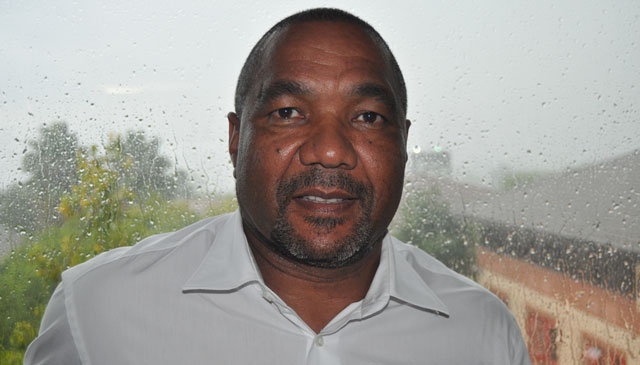
    Eddie Mbalo
    Eddie Mbalo

    The bank said its loan was in support of an enterprise development initiative of the IDC and that “funding of this initiative forms part of the DBSA’s ICT strategy”. It said its investment took the form of a senior secured loan, which was advanced only after the borrower had fulfilled the condition of ensuring that it had more than 200 000 subscribers on its books.

    DBSA said it had made a specific impairment when ODM entered into business rescue but did not write off its claim against the company. It felt its debt for equity conversion [in Newco] should result in it recouping its original investment. The development bank itself posted a R370m loss in 2011 and is being restuctured, which will result in it cutting almost 50% of its staff.

    Whatever the reason the state saw fit to get mixed up in pay television, job creation was not one of them. In February 2012, TopTV, employed only about 320 people.

    “If the imperative is employment creation, it is incredibly expensive funding,” said Adrian Saville, chief investment officer at Cannon Asset Managers. With overall state funding adding up to R1,2bn, that is approximately R3,7m/job, compared to the R9bn jobs fund which aims to create 150 000 over three years (at about R60 000/job).

    Historically, Saville said, the government had favoured investment in television, radio and newspapers. “The focus has been on television and radio specifically as these are seen as strategic assets although, in recent years, there has been substantial liberalisation and restructuring of the industry, particularly radio and television.”

    He said the government might have made a good investment partner because the barriers to entry in the industry were high, “which means you need a capital partner who is going to be patient, quite long-sighted, not rushing at profit and have deep pockets. Government facilitation would also promote transformative ownership, whether by gender or colour, and may have some role to play in that regard.”

    Saville said investing in such a venture was a good idea if it was done correctly, and, although the entry of StarTimes was not first prize, TopTV was in “a better position than where they were before business rescue”. The authorisation to air adult content would also probably prove ­”incredibly lucrative”.

    Last month, the M&G reported on its website that Mergan Moodley, the founder of On Digital Media, said he was “very concerned” that the IDC had run the company into the ground for the sole purpose of offering it to prospective Chinese investors for “nothing”. He said it was a sad reflection of how “political meddling and stakeholder interference is destroying the broadcast industry”.

    The IDC responded, saying the allegations were “without substance whatsoever” and that the IDC “had at all times acted as a responsible shareholder”.

    Eustace Davie, a director of the Free Market Foundation, said government participation was a threat to economic growth and “the South African government is steadily intruding on the private sector and taking up an increasing part in the economy”.

    He said the 2013 index of economic freedom found Hong Kong to have the freest economy in the world, while South Africa fell under the “moderately free” category, moving down world rankings from 64th in 2009 to 74th today.

    “Government gets involved in newspapers, radio and TV only in order to broadcast its message,” Davie said. “Competition from a totally private TV service or radio station does make it behave better.”  — (c) 2013 Mail & Guardian

    • Visit the Mail & Guardian Online, the smart news source

    Follow TechCentral on Google News Add TechCentral as your preferred source on Google


    Adrian Saville Cannon Asset Managers DBSA DStv Eddie Mbalo Hlengiwe Makhathini IDC Mergan Moodley MultiChoice NEF ODM On Digital Media StarTimes TopTV
    WhatsApp YouTube
    Share. Facebook Twitter LinkedIn WhatsApp Telegram Email Copy Link
    Previous ArticlePule may lose Telkom, Sentech oversight
    Next Article Prime time, all the time

    Related Posts

    DStv's subscriber count has gone dark

    DStv’s subscriber count has gone dark

    28 July 2026
    Canal+ concedes MultiChoice turnaround is not won - Maxime Saada

    Canal+ concedes MultiChoice turnaround is not won

    28 July 2026
    Canal+ bought out Showmax minority shareholder before killing it

    Canal+ bought out Showmax minority shareholder before killing it

    28 July 2026
    Company News
    Domains.co.za launches self-hosted n8n VPS hosting

    Domains.co.za launches self-hosted n8n VPS hosting

    31 July 2026
    Smarter.tech '26 shows why smarter technology begins with context - Obsidian Systems

    Context is the missing piece in enterprise AI: Obsidian

    31 July 2026
    Huawei launches 12 intelligent transport solutions in South Africa - Sam Tang

    Huawei launches 12 intelligent transport solutions in South Africa

    30 July 2026
    Opinion
    The author, Jannie van Zyl

    Selling vapour is corporate suicide in slow motion

    16 July 2026
    Brazil's online gambling crackdown is a lesson for South Africa

    How Amazon outmanoeuvred Starlink in South Africa

    15 July 2026
    The Popia problem with agentic AI - Herman Haasbroek

    The Popia problem with agentic AI

    14 July 2026

    Subscribe to Updates

    Get the best South African technology news and analysis delivered to your e-mail inbox every morning.

    Latest Posts
    Nedbank hires MTN's former tech chief as group CIO - Nikos Angelopoulos

    Nedbank hires MTN’s former tech chief as group CIO

    31 July 2026
    Eskom's diesel bill falls 86% as breakdowns hit eight-year low

    Eskom’s diesel bill falls 86% as breakdowns hit eight-year low

    31 July 2026
    Ramaphosa signs off on taking the grid away from Eskom

    Ramaphosa signs off on taking the grid away from Eskom

    31 July 2026
    TCS+ | Why South African workers must become supervisors of digital labour - Accelera Digital Group Cliff de Wit

    TCS+ | Why South African workers must become supervisors of digital labour

    31 July 2026
    © 2009 - 2026 NewsCentral Media
    Built and maintained by Chronon
    • Cookie policy (ZA)
    • TechCentral – privacy and Popia

    Type above and press Enter to search. Press Esc to cancel.

    Manage consent

    TechCentral uses cookies to enhance its offerings. Consenting to these technologies allows us to serve you better. Not consenting or withdrawing consent may adversely affect certain features and functions of the website.

    Functional Always active
    The technical storage or access is strictly necessary for the legitimate purpose of enabling the use of a specific service explicitly requested by the subscriber or user, or for the sole purpose of carrying out the transmission of a communication over an electronic communications network.
    Preferences
    The technical storage or access is necessary for the legitimate purpose of storing preferences that are not requested by the subscriber or user.
    Statistics
    The technical storage or access that is used exclusively for statistical purposes. The technical storage or access that is used exclusively for anonymous statistical purposes. Without a subpoena, voluntary compliance on the part of your Internet Service Provider, or additional records from a third party, information stored or retrieved for this purpose alone cannot usually be used to identify you.
    Marketing
    The technical storage or access is required to create user profiles to send advertising, or to track the user on a website or across several websites for similar marketing purposes.
    • Manage options
    • Manage services
    • Manage {vendor_count} vendors
    • Read more about these purposes
    View preferences
    • {title}
    • {title}
    • {title}