Close Menu
TechCentralTechCentral

    Subscribe to the newsletter

    Get the best South African technology news and analysis delivered to your e-mail inbox every morning.

    Facebook X (Twitter) YouTube LinkedIn
    WhatsApp Facebook X (Twitter) LinkedIn YouTube
    TechCentralTechCentral
    • News
      MultiChoice scraps annual DStv price hikes for 2026 - David Mignot

      MultiChoice scraps annual DStv price hike

      20 February 2026
      What Gen Z really thinks about the tech world it inherited - Tinashe Mazodze

      What Gen Z really thinks about the tech world it inherited

      20 February 2026
      Showmax 'can't continue' in its current form

      Showmax ‘can’t continue’ in its current form

      20 February 2026
      Free Market Foundation slams treasury's proposed gambling tax

      Free Market Foundation slams treasury’s proposed gambling tax

      20 February 2026
      South Africa's dynamic spectrum breakthrough - Paul Colmer

      South Africa’s dynamic spectrum breakthrough

      20 February 2026
    • World
      Prominent Southern African journalist targeted with Predator spyware

      Prominent Southern African journalist targeted with Predator spyware

      18 February 2026
      More drama in Warner Bros tug of war

      More drama in Warner Bros tug of war

      17 February 2026
      Russia bans WhatsApp

      Russia bans WhatsApp

      12 February 2026
      EU regulators take aim at WhatsApp

      EU regulators take aim at WhatsApp

      9 February 2026
      Musk hits brakes on Mars mission

      Musk hits brakes on Mars mission

      9 February 2026
    • In-depth
      How liberalisation is rewiring South Africa's power sector

      How liberalisation is rewiring South Africa’s power sector

      21 January 2026
      The top-performing South African tech shares of 2025

      The top-performing South African tech shares of 2025

      12 January 2026
      Digital authoritarianism grows as African states normalise internet blackouts

      Digital authoritarianism grows as African states normalise internet blackouts

      19 December 2025
      TechCentral's South African Newsmakers of 2025

      TechCentral’s South African Newsmakers of 2025

      18 December 2025
      Black Friday goes digital in South Africa as online spending surges to record high

      Black Friday goes digital in South Africa as online spending surges to record high

      4 December 2025
    • TCS
      Watts & Wheels S1E4: 'We drive an electric Uber'

      Watts & Wheels S1E4: ‘We drive an electric Uber’

      10 February 2026
      TCS+ | How Cloud On Demand is helping SA businesses succeed in the cloud - Xhenia Rhode, Dion Kalicharan

      TCS+ | Cloud On Demand and Consnet: inside a real-world AWS partner success story

      30 January 2026
      Watts & Wheels S1E4: 'We drive an electric Uber'

      Watts & Wheels S1E3: ‘BYD’s Corolla Cross challenger’

      30 January 2026
      Watts & Wheels S1E4: 'We drive an electric Uber'

      Watts & Wheels S1E2: ‘China attacks, BMW digs in, Toyota’s sublime supercar’

      23 January 2026

      TCS+ | Why cybersecurity is becoming a competitive advantage for SA businesses

      20 January 2026
    • Opinion
      A million reasons monopolies don't work - Duncan McLeod

      A million reasons monopolies don’t work

      10 February 2026
      The author, Business Leadership South Africa CEO Busi Mavuso

      Eskom unbundling U-turn threatens to undo hard-won electricity gains

      9 February 2026
      South Africa's skills advantage is being overlooked at home - Richard Firth

      South Africa’s skills advantage is being overlooked at home

      29 January 2026
      Why Elon Musk's Starlink is a 'hard no' for me - Songezo Zibi

      Why Elon Musk’s Starlink is a ‘hard no’ for me

      26 January 2026
      A million reasons monopolies don't work - Duncan McLeod

      South Africa’s new fibre broadband battle

      20 January 2026
    • Company Hubs
      • Africa Data Centres
      • AfriGIS
      • Altron Digital Business
      • Altron Document Solutions
      • Altron Group
      • Arctic Wolf
      • AvertITD
      • Braintree
      • CallMiner
      • CambriLearn
      • CYBER1 Solutions
      • Digicloud Africa
      • Digimune
      • Domains.co.za
      • ESET
      • Euphoria Telecom
      • Incredible Business
      • iONLINE
      • IQbusiness
      • Iris Network Systems
      • LSD Open
      • Mitel
      • NEC XON
      • Netstar
      • Network Platforms
      • Next DLP
      • Ovations
      • Paracon
      • Paratus
      • Q-KON
      • SevenC
      • SkyWire
      • Solid8 Technologies
      • Telit Cinterion
      • Tenable
      • Vertiv
      • Videri Digital
      • Vodacom Business
      • Wipro
      • Workday
      • XLink
    • Sections
      • AI and machine learning
      • Banking
      • Broadcasting and Media
      • Cloud services
      • Contact centres and CX
      • Cryptocurrencies
      • Education and skills
      • Electronics and hardware
      • Energy and sustainability
      • Enterprise software
      • Financial services
      • Information security
      • Internet and connectivity
      • Internet of Things
      • Investment
      • IT services
      • Lifestyle
      • Motoring
      • Public sector
      • Retail and e-commerce
      • Satellite communications
      • Science
      • SMEs and start-ups
      • Social media
      • Talent and leadership
      • Telecoms
    • Events
    • Advertise
    TechCentralTechCentral
    Home » Opinion » Roger Hislop » TV white spaces could revolutionise SA telecoms

    TV white spaces could revolutionise SA telecoms

    By Roger Hislop5 July 2018
    Twitter LinkedIn Facebook WhatsApp Email Telegram Copy Link
    News Alerts
    WhatsApp

    By finally publishing regulations on the use of television white spaces (TVWS), communications regulator Icasa has paved the way for two significant turning points in the country’s roll-out of Internet access to its citizens.

    The first is the provision of much cheaper broadband networks that offer Internet connectivity to currently underserviced areas — both semi-urban and rural. The second is the potential development of an entirely new, entrepreneurial-flavoured industry to install and manage those networks, creating greater choice for consumers.
    The best way to understand TVWS technology is to think of our old analogue television sets that we manually tuned in to our favourite stations — remember those?

    In this country, where we have only a handful of terrestrial stations, there is a lot of “snow” on the VHF and UHF bands between stations. These are the gaps or “white spaces” that can be used for other broadcasts, or for broadband Internet networks.

    Of course, nobody wants interference with their television signal while they are enjoying their favourite series, movie or rugby match. After all, we pay TV licence fees, in part to guarantee clear broadcasts. So, one of the most fundamental issues with TVWS technology is the allocation of those unused channels, in a way that there is no intrusion on the primary users.

    Icasa’s regulations have allocated the frequency band 470MHz to 694MHz to TVWS, excluding the radio astronomy sub-band 606MHz to 614MHz

    This is far easier in South Africa, where we have few broadcasters with a handful of channels each, and where Sentech mostly operates the transmitters for them. In more developed countries, with a multitude of signal distributors and literally hundreds of stations, there are relatively few white spaces. Most African countries share our pattern — few broadcasters, with plentiful spectrum available for secondary use.

    Icasa’s regulations have allocated the frequency band 470MHz to 694MHz to TVWS, excluding the radio astronomy sub-band 606MHz to 614MHz, and specify the requirement for a national reference geo-location spectrum database (the GLDB) that has a list of primary users and where they are using their channels in various parts of the country.

    This means that any white spaces base stations or devices will regularly ping a database with their GPS coordinates, requesting an empty channel. The database does a look-up of its listed TV transmitters and by calculating which broadcast towers are transmitting and to where, it then allocates the TVWS device a free channel, and if necessary, can instruct it to vacate a channel and move to another.

    By granting non-exclusive use of this very desirable spectrum, the cost to network operators is lowered, and spectrum can even be reallocated in the case of a national emergency, where additional radio capacity is required. The 400MHz to 700MHz range is attractive because lower frequencies provide excellent penetration and propagation, making roll-out of mid-speed networks over long distances easy — perfect for underserviced areas.

    Bleeding-edge technology

    Of course, this is still all theory. While the technology has been proven in several trials, it’s still bleeding-edge, yet to be rolled out at a large commercial scale.

    I suspect that our major mobile network operators might not jump at implementing it themselves, despite their rural roll-out mandates. The fact is that their business models are based on providing as premium a service as their intrinsically expensive infrastructure can offer, to clients that in turn pay a premium for this privilege. Offering “best effort” but uncapped service at the lowest possible cost to the consumer is just not in their DNA.

    It is, however, in the DNA of independent wireless operators like those that are members of the Wireless Access Providers’ Association (Wapa), who already use shared spectrum in the Wi-Fi bands to provide low-cost broadband.

    Operators do not need vast capital reserves to install TVWS networks in the way that the mobile operators need to fund their infrastructure. A TVWS radio can be obtained for less than US$600, and costs are decreasing rapidly. They are not power-hungry and can easily be solar-powered. And finally, there is no paying of spectrum licence fees.
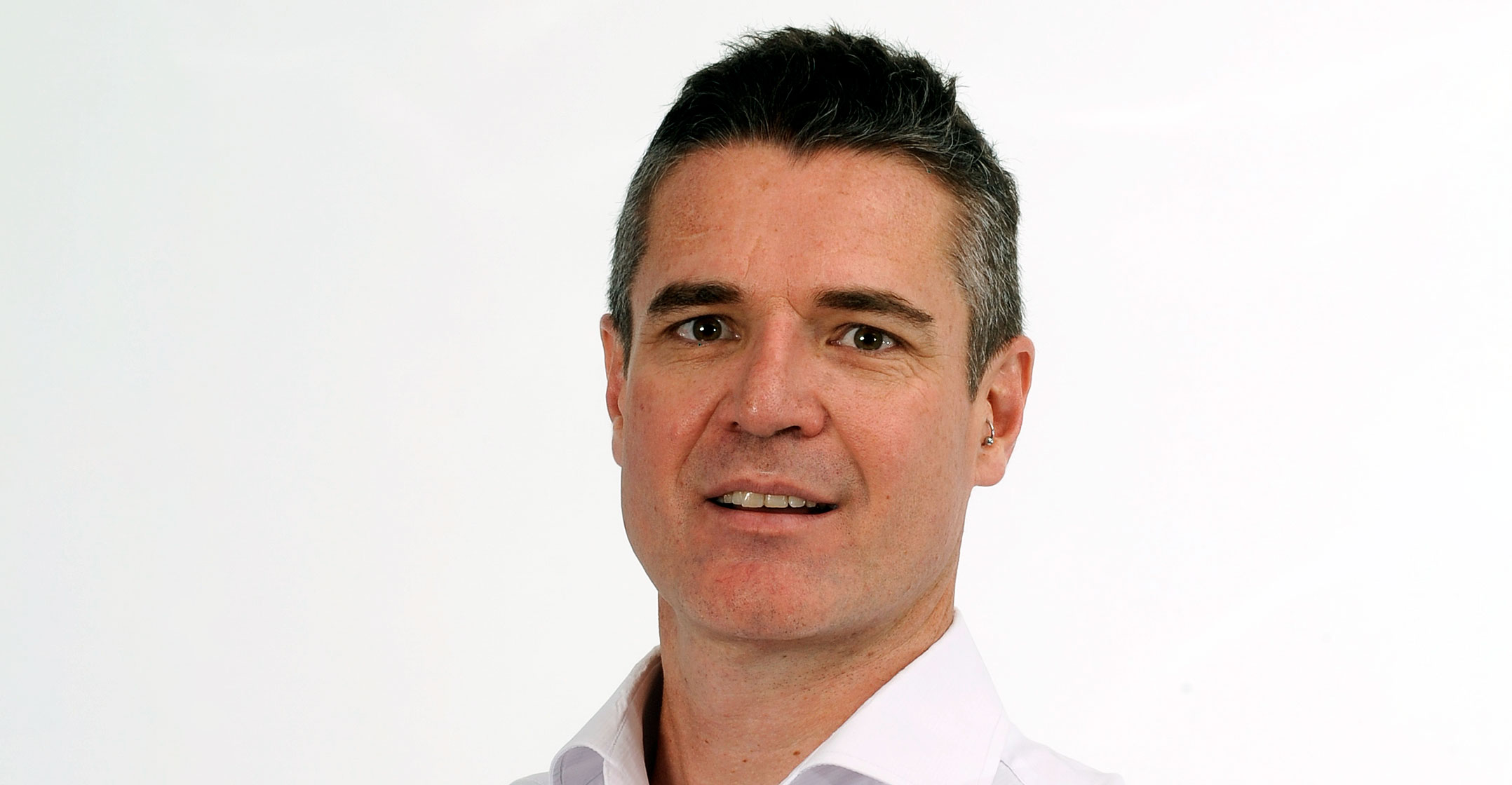
    Internet Solutions’ Roger Hislop argues that it’s time to put Icasa’s regulations into effect

    In other words, for TVWS operators the barriers to entry and operating costs are low. This means that the possibility for an entirely new generation of disruptive network service providers to enter the sector is very real.

    What will be critical, I believe, is understanding the needs of people in underserviced communities where basic uncapped services costing R20-30/month are essential. I say this because in rural areas, paying even R50/month for an LTE data bundle is incredibly limiting, both financially and practically.

    In these areas, running out of data in the middle of a WhatsApp exchange means that these citizens are completely cut off, unable to communicate using the channels that wealthier individuals take for granted. Buying new mobile data is not always easy for people in rural areas, and that’s assuming they can afford it.

    For sustainable, practical Internet access for communication and economic participation, underserviced communities must be offered affordable uncapped services.

    An organisation like Wapa has many members with exactly the entrepreneurial mindset to lead the way in developing South Africa’s first commercial TVWS broadband networks. The only thing stopping them was a regulatory framework which, as of March this year, we now have.

    It is time to put the new regulations into effect — the regulator should appoint an operator of the central “reference” geolocation database. Then exciting times can unfold for the South African telecoms industry. I eagerly anticipate a telecoms revolution — to the benefit of more of our people.

    • Roger Hislop is senior engineer for research and development at Internet Solutions
    Follow TechCentral on Google News Add TechCentral as your preferred source on Google


    Icasa Internet Solutions Roger Hislop top
    WhatsApp YouTube
    Share. Facebook Twitter LinkedIn WhatsApp Telegram Email Copy Link
    Previous ArticleVodacom to show off 5G at the races
    Next Article Hackers up the ante on SA companies

    Related Posts

    South Africa's dynamic spectrum breakthrough - Paul Colmer

    South Africa’s dynamic spectrum breakthrough

    20 February 2026
    Icasa gears up for South Africa's next big spectrum auction - Tshiamo Maluleka-Disemelo

    Icasa gears up for South Africa’s next big spectrum auction

    17 February 2026
    Starlink expands public advocacy campaign as it pushes for SA licence

    Starlink expands public advocacy campaign as it pushes for SA licence

    17 February 2026
    Company News
    Service is everyone's problem now - and that's exactly why the Atlassian Service Collection matters

    Service is everyone’s problem now – why the Atlassian Service Collection matters

    20 February 2026
    Customers have new expectations. Is your CX ready? 1Stream

    Customers have new expectations. Is your CX ready?

    19 February 2026
    South Africa's cybersecurity challenge is not a tool problem - Nicholas Applewhite, Trinexia South Africa

    South Africa’s cybersecurity challenge is not a tool problem

    19 February 2026
    Opinion
    A million reasons monopolies don't work - Duncan McLeod

    A million reasons monopolies don’t work

    10 February 2026
    The author, Business Leadership South Africa CEO Busi Mavuso

    Eskom unbundling U-turn threatens to undo hard-won electricity gains

    9 February 2026
    South Africa's skills advantage is being overlooked at home - Richard Firth

    South Africa’s skills advantage is being overlooked at home

    29 January 2026

    Subscribe to Updates

    Get the best South African technology news and analysis delivered to your e-mail inbox every morning.

    Latest Posts
    MultiChoice scraps annual DStv price hikes for 2026 - David Mignot

    MultiChoice scraps annual DStv price hike

    20 February 2026
    What Gen Z really thinks about the tech world it inherited - Tinashe Mazodze

    What Gen Z really thinks about the tech world it inherited

    20 February 2026
    Showmax 'can't continue' in its current form

    Showmax ‘can’t continue’ in its current form

    20 February 2026
    Free Market Foundation slams treasury's proposed gambling tax

    Free Market Foundation slams treasury’s proposed gambling tax

    20 February 2026
    © 2009 - 2026 NewsCentral Media
    • Cookie policy (ZA)
    • TechCentral – privacy and Popia

    Type above and press Enter to search. Press Esc to cancel.

    Manage consent

    TechCentral uses cookies to enhance its offerings. Consenting to these technologies allows us to serve you better. Not consenting or withdrawing consent may adversely affect certain features and functions of the website.

    Functional Always active
    The technical storage or access is strictly necessary for the legitimate purpose of enabling the use of a specific service explicitly requested by the subscriber or user, or for the sole purpose of carrying out the transmission of a communication over an electronic communications network.
    Preferences
    The technical storage or access is necessary for the legitimate purpose of storing preferences that are not requested by the subscriber or user.
    Statistics
    The technical storage or access that is used exclusively for statistical purposes. The technical storage or access that is used exclusively for anonymous statistical purposes. Without a subpoena, voluntary compliance on the part of your Internet Service Provider, or additional records from a third party, information stored or retrieved for this purpose alone cannot usually be used to identify you.
    Marketing
    The technical storage or access is required to create user profiles to send advertising, or to track the user on a website or across several websites for similar marketing purposes.
    • Manage options
    • Manage services
    • Manage {vendor_count} vendors
    • Read more about these purposes
    View preferences
    • {title}
    • {title}
    • {title}