Close Menu
TechCentralTechCentral

    Subscribe to the newsletter

    Get the best South African technology news and analysis delivered to your e-mail inbox every morning.

    Facebook X (Twitter) YouTube LinkedIn
    WhatsApp Facebook X (Twitter) LinkedIn YouTube
    TechCentralTechCentral
    • News
      Why Telkom is pouring capex into IT - Serame Taukobong

      Why Telkom is pouring capital spending into IT

      2 June 2026
      Telkom's data growth story still has years to run: CEO

      Telkom’s data growth story still has years to run: CEO

      2 June 2026
      Reserve Bank draws a line on inflation - Lesetja Kganyago. Siphiwe Sibeko/Reuters

      Reserve Bank draws a line on inflation

      2 June 2026

      Clashing judgments leave South Africa’s crypto law unsettled

      2 June 2026
      Telkom's four-year SIU standoff awaits a final ruling

      Telkom’s four-year SIU standoff awaits a final ruling

      2 June 2026
    • World
      Astronomers discover exoplanets with magnetic fields

      Strange winds reveal magnetic fields on distant ‘hot Jupiters’

      2 June 2026
      Nvidia's first CPUs to debut in Windows laptops this week

      Nvidia CPUs to debut in Windows laptops this week

      31 May 2026
      Watch: Bezos rocket erupts in fireball during ground test

      Watch: Bezos rocket erupts in fireball during ground test

      29 May 2026
      AI boom hands Samsung chip workers life-changing bonuses

      AI boom hands Samsung chip workers life-changing bonuses

      27 May 2026
      Luce lit: Ferrari unveils its first electric car

      Luce lit: Ferrari unveils its first electric car

      26 May 2026
    • In-depth
      Alfa's electric rebel - Alfa Romeo Junior Elettrica Veloce

      Alfa’s electric rebel

      29 April 2026
      Africa switches on as Europe dims the lights

      Africa switches on as Europe dims the lights

      9 April 2026
      The biggest untapped EV market on Earth is hiding in plain sight

      The biggest untapped EV market on Earth is hiding in plain sight

      1 April 2026
      AI, cybersecurity power standout year for Datatec - Jens Montanana

      The R16-billion tech giant hiding in plain sight

      26 March 2026
      The last generation of coders

      The last generation of coders

      18 February 2026
    • TCS
      TCS | Charge's R1.8-billion bet on an off-grid EV future - Charge chairman Joubert Roux

      TCS | Charge’s R1.8-billion bet on an off-grid EV future

      18 May 2026
      TCS+ | The Up&Up Group on the hidden cost of AI - Jason Harrison

      TCS+ | The Up&Up Group on the hidden cost of AI

      13 May 2026
      Michael Rossouw

      TCS+ | The retirement decision most South Africans get wrong

      6 May 2026
      TCS | The Cape Town start-up listening for TB with AI - Braden van Breda

      TCS | The Cape Town start-up listening for TB with AI

      4 May 2026

      TCS+ | ‘The ISP for ISPs’: Vox’s shift to wholesale aggregator

      20 April 2026
    • Opinion
      Treasury's crypto crackdown is a betrayal of Mandela's promise - Duncan McLeod

      Treasury’s crypto crackdown is a betrayal of Mandela’s promise

      22 May 2026
      South Africa is sleepwalking into another AI policy failure - Celeste Labuschagne

      South Africa is sleepwalking into another AI policy failure

      20 May 2026
      AI won't fix your culture - it will expose it - Jackie Kennedy

      AI won’t fix your culture – it will expose it

      19 May 2026
      Treasury's crypto crackdown is a betrayal of Mandela's promise - Duncan McLeod

      Free calls, dead voice and Shameel Joosub’s Spanish ghost

      22 April 2026
      The conflict of interest at the heart of PayShap's slow adoption - Cheslyn Jacobs

      The conflict of interest at the heart of PayShap’s slow adoption

      26 March 2026
    • Company Hubs
      • 1Stream
      • Africa Data Centres
      • AfriGIS
      • Altron Digital Business
      • Altron Document Solutions
      • Altron Group
      • Arctic Wolf
      • Ascent Technology
      • AvertITD
      • BBD
      • Braintree
      • CallMiner
      • CambriLearn
      • CM Telecom
      • Contactable
      • CYBER1 Solutions
      • Digicloud Africa
      • Digimune
      • Domains.co.za
      • ESET
      • Euphoria Telecom
      • HOSTAFRICA
      • Incredible Business
      • iONLINE
      • IQbusiness
      • Iris Network Systems
      • Kaspersky
      • LSD Open
      • Mitel
      • NEC XON
      • Netstar
      • Network Platforms
      • Next DLP
      • Ovations
      • Paracon
      • Paratus
      • Q-KON
      • SevenC
      • SkyWire
      • Solid8 Technologies
      • Telit Cinterion
      • Telviva
      • Tenable
      • Vertiv
      • Videri Digital
      • Vodacom Business
      • Wipro
      • Workday
      • XLink
    • Sections
      • AI and machine learning
      • Banking
      • Broadcasting and Media
      • Cloud services
      • Contact centres and CX
      • Cryptocurrencies
      • Education and skills
      • Electronics and hardware
      • Energy and sustainability
      • Enterprise software
      • Financial services
      • HealthTech
      • Information security
      • Internet and connectivity
      • Internet of Things
      • Investment
      • IT services
      • Lifestyle
      • Motoring
      • Policy and regulation
      • Public sector
      • Retail and e-commerce
      • Satellite communications
      • Science
      • SMEs and start-ups
      • Social media
      • Talent and leadership
      • Telecoms
    • Events
    • Advertise
    TechCentralTechCentral
    Home » Current affairs » Nitty-gritty of SA’s annual budget

    Nitty-gritty of SA’s annual budget

    By Staff Reporter22 February 2017
    Twitter LinkedIn Facebook WhatsApp Email Telegram Copy Link
    News Alerts
    WhatsApp

    Finance minister Pravin Gordhan delivered the 2017 budget speech in parliament on 22 February 2017. Watch the full presentation here:

    Government budgets across the world are often delivered with some fanfare. South Africa is no exception. In February every year, South Africa’s minister of finance presents his budget speech to parliament amid national excitement.

    As the biggest event in parliament besides the state-of-the-nation address by the president, the budget speech sparks robust and emotional debates.

    Although attention is focused on the speech, there’s a great deal about the budget process that isn’t well known. For example, it is incorrect to say that the minister “announces” the final budget. Budget proposals only have legal standing once parliament has followed a process to approve them.

    What this means is that important components of the budget are still being processed months after the minister gives his speech. While it’s true that tax changes announced by the minister come into effect immediately, they can in fact be reversed months later.

    The reason for this process is that it gives the public and its political representatives final oversight of budget decisions. This is appropriate given that the budget has profound implications for the lives of ordinary citizens and can have a major impact on economic activity. For example, raising revenue through taxes and allocating a large proportion to social spending can significantly reduce inequality.

    Ultimately, a budget reflects the social and economic responsibilities, and priorities, of government, balanced against the responsibility to ensure public finances are sustainably managed.

    The legal process

    The country’s constitution requires that there be a process for parliament to amend “money bills”. These are proposed pieces of legislation that would either change the way revenue is raised, or the way in which government funds are allocated for expenditure. Most revenue raised through taxes goes into the national revenue fund. An allocation of these funds is called an “appropriation” because, to be spent, the money has to be appropriated from the fund.

    The Money Bills Act that outlines this process is oriented around four main components of the budget that must be approved. These are:

    • The fiscal framework: This provides estimates for overall government expenditure, revenue and, importantly, borrowing for the coming fiscal year.
    • Revenue proposals: How government plans to raise revenue, including any changes in taxes or tariffs and any new taxes.
    • The division of revenue bill: This determines how revenue is split across the local, provincial and national spheres of government.
    • The appropriations bill: This determines how funds for national functions are split across departments and other entities.

    The fiscal framework and revenue proposals must be approved by parliament’s two finance committees, while the Division of Revenue and Appropriations Bills must be approved by the appropriations committees. South Africa’s two houses of parliament — the national assembly and the national council of provinces — then need to consider and adopt the reports of these committees.

    Beyond the speech, many professionals, analysts, journalists and politicians, interact with the budget review. It contains a lot of useful and interesting information, which is one reason South Africa scores highly in international budget transparency measures. But besides a table showing the proposed fiscal framework, and a section describing revenue proposals, it is mostly of no legal significance. The critical documents are the actual pieces of legislation.
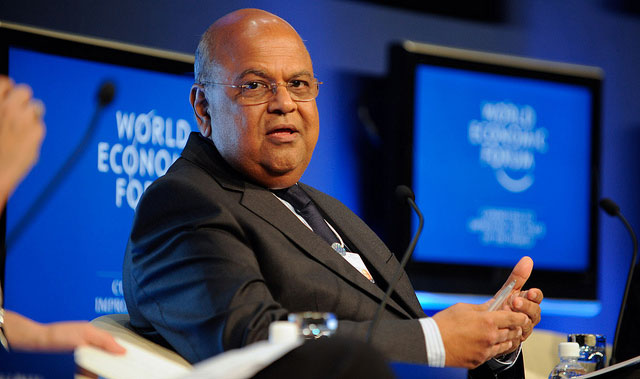
    Pravin Gordhan

    What parliament must approve

    Within 16 days after the minister has delivered his speech, the finance committees of the two houses must hold meetings and public hearings. Each committee must also submit a report to the relevant house indicating whether they approve the fiscal framework and revenue proposals, or propose amendments.

    There are a few oddities. For example, the actual bills that contain the tax proposals are often only given final consideration six months later in the year. So, in theory, a tax change could be announced in the budget, be given initial approval by parliament and then six months after it has already been implemented be amended or rejected.

    Although it confers significant powers on parliament, the Money Bills Act also imposes strict constraints. The rationale is that it obliges members of parliament to first agree on a sustainable level of national government borrowing (debt) before entertaining demands or requests from various spheres of government, or national departments, for more funds. Some view this as a “fiscally conservative” approach, although it’s possible to get around the constraints if there is a genuine desire or need to do so.

    The turnaround time for the fiscal framework decision is only 16 days. The time for the division of revenue is also short: only 35 days to get the bill passed. Bear in mind this requires consulting with all relevant stakeholders, holding public hearings, drafting committee reports and debating the reports in the national assembly and the national council of provinces.

    But there’s a full four months to pass the Appropriations Bill, which determines how money is split across national departments and other institutions. The reason for this is that the process requires consideration of all the relevant “votes” (allocation to specific departments or institutions). And any substantial changes to how money is going to be allocated would need to be negotiated across multiple votes.

    Public input and accountability

    The South African budget approval process is accompanied by an extensive public consultation process, required by the constitution and Money Bills Act. While the minister of finance asks for public input prior to the budget speech, there is only so much scope for him to accommodate suggestions. Given how technical the budget is, the national treasury has to focus its drafting efforts on engaging with national, provincial and local government. The parliamentary process therefore ensures that the public get the opportunity to make inputs into the final decisions.

    South Africa’s parliament has not yet, to my knowledge, made meaningful amendments to the budget. There are two main reasons: lack of political inclination and lack of technical capacity.

    Nevertheless, in a time when there are concerns about interference in the sound management of public finances and a greater appreciation for parliament’s oversight function, it may be reassuring to know that it has substantial oversight powers in this area.The Conversation The Conversation

    Follow TechCentral on Google News Add TechCentral as your preferred source on Google


    Budget Speech 2017 livestream budget speech livestream budget speech online Pravin Gordhan Seán Mfundza Muller
    WhatsApp YouTube
    Share. Facebook Twitter LinkedIn WhatsApp Telegram Email Copy Link
    Previous ArticleThe brave new world of work
    Next Article Uber ups security for SA drivers

    Related Posts

    Pravin Gordhan was that rare thing: an honest politician

    Pravin Gordhan was that rare thing: an honest politician

    14 September 2024
    Pravin Gordhan, who led fight against state capture, dies at 75

    Pravin Gordhan, who led fight against state capture, has died

    13 September 2024
    Netflix, Warner Bros deal raises fresh headaches for MultiChoice - Duncan McLeod

    Post Office debacle shows ANC is out of ideas

    28 May 2024
    Company News
    The hidden infrastructure behind AI - Open Access Data Centres OADC

    The hidden infrastructure behind AI

    2 June 2026
    Addressing the 57% blind spot: Kaspersky on measuring SOC effectiveness

    Addressing the 57% blind spot: Kaspersky on measuring SOC effectiveness

    2 June 2026
    Strike48 report: security leaders wary of AI agents - Maidar Secure

    Strike48 report: security leaders wary of AI agents

    2 June 2026
    Opinion
    Treasury's crypto crackdown is a betrayal of Mandela's promise - Duncan McLeod

    Treasury’s crypto crackdown is a betrayal of Mandela’s promise

    22 May 2026
    South Africa is sleepwalking into another AI policy failure - Celeste Labuschagne

    South Africa is sleepwalking into another AI policy failure

    20 May 2026
    AI won't fix your culture - it will expose it - Jackie Kennedy

    AI won’t fix your culture – it will expose it

    19 May 2026

    Subscribe to Updates

    Get the best South African technology news and analysis delivered to your e-mail inbox every morning.

    Latest Posts
    Why Telkom is pouring capex into IT - Serame Taukobong

    Why Telkom is pouring capital spending into IT

    2 June 2026
    Telkom's data growth story still has years to run: CEO

    Telkom’s data growth story still has years to run: CEO

    2 June 2026
    Reserve Bank draws a line on inflation - Lesetja Kganyago. Siphiwe Sibeko/Reuters

    Reserve Bank draws a line on inflation

    2 June 2026
    Astronomers discover exoplanets with magnetic fields

    Strange winds reveal magnetic fields on distant ‘hot Jupiters’

    2 June 2026
    © 2009 - 2026 NewsCentral Media
    • Cookie policy (ZA)
    • TechCentral – privacy and Popia

    Type above and press Enter to search. Press Esc to cancel.

    Manage consent

    TechCentral uses cookies to enhance its offerings. Consenting to these technologies allows us to serve you better. Not consenting or withdrawing consent may adversely affect certain features and functions of the website.

    Functional Always active
    The technical storage or access is strictly necessary for the legitimate purpose of enabling the use of a specific service explicitly requested by the subscriber or user, or for the sole purpose of carrying out the transmission of a communication over an electronic communications network.
    Preferences
    The technical storage or access is necessary for the legitimate purpose of storing preferences that are not requested by the subscriber or user.
    Statistics
    The technical storage or access that is used exclusively for statistical purposes. The technical storage or access that is used exclusively for anonymous statistical purposes. Without a subpoena, voluntary compliance on the part of your Internet Service Provider, or additional records from a third party, information stored or retrieved for this purpose alone cannot usually be used to identify you.
    Marketing
    The technical storage or access is required to create user profiles to send advertising, or to track the user on a website or across several websites for similar marketing purposes.
    • Manage options
    • Manage services
    • Manage {vendor_count} vendors
    • Read more about these purposes
    View preferences
    • {title}
    • {title}
    • {title}